Bedroom

Best Mattress for Back Pain of 2026

A mattress that's wrong for your back rarely announces itself. You just start waking at 4 a.m. with a dull ache across your lower back, or catch yourself flipping onto your stomach to escape pressure that wasn't there last year. What a good bed actually does is unglamorous and specific: it keeps your hips, shoulders, and spine roughly stacked for eight hours without letting you sink through. The catch is that "supportive" isn't a single quality — a bed that suits a 125-pound side sleeper can leave a heavier back sleeper sagging by month six.

I've now slept on six of them over the past year, on my back, my side, and — on the desperate nights — my stomach, and the ones that actually helped shared a few traits: you settle in without sinking through, you don't wake up shifting around hunting for a cooler spot, and the new-mattress smell is gone in days rather than weeks. Below are the beds that earned their place, sorted by firmness, price, and whether you'd rather order online or lie down on one first.

#1

Best Overall

Ashley Chime 12 Inch Memory Foam Queen

Ashley Chime 12 Inch Memory Foam Queen

9.0/10 Outstanding
  • Profile: 12 inches
  • Firmness: Medium firm
  • Construction: 3-layer memory foam
  • Certification: CertiPUR-US foam
Check Price on Amazon

Pros

  • Medium-firm foam that keeps hips level
  • Full 12-inch build at a midrange price
  • Works on platform beds and adjustable bases
  • Low motion transfer for a shared bed

Cons

  • Firm surface can feel hard to lighter side sleepers
  • Foundation or box spring sold separately

The change most people with a bad back are chasing is simple: a surface that stops the pelvis dropping lower than the shoulders. Ashley's 12-inch Chime does that with a medium-firm memory foam top over a three-layer build, and after sleeping on it we think it is the most sensible first stop in this roundup. The firmness is real, but it is not the plank that supportive usually gets translated into.

Medium firm is the least standardized term in bedding, so here is how this one behaves. It gives under the shoulders and hips and then stops. Back and stomach sleepers get on with it immediately, and so do heavier side sleepers, who have enough weight to press into the top layer. Lighter side sleepers are the group it can miss: without that weight the surface reads hard at the shoulder, and no amount of contouring language fixes that.

Two practical details are worth knowing before you order. The care instructions ask for a thin, breathable protector rather than a quilted pad, because a pad changes the feel you chose and traps the heat the foam is meant to let go of, which is sensible advice almost everyone ignores. And the foundation is not in the box, so plan for a platform bed or a box spring if you do not already have one. Adjustable bases are listed as compatible, which matters if you sleep with the head raised.

Bottom Line: Our default for most back-pain buyers: medium-firm memory foam that holds the hips level without turning into a board, in the size most people actually sleep on.
#2

Best for Hot Sleepers

EGOHOME 14 Inch Queen

EGOHOME 14 Inch Queen

8.7/10 Excellent
  • Layers: 4
  • Profile: 14 inches
  • Firmness: Medium firm
  • Weight Rating: 250 lb
Check Price on Amazon

Pros

  • Graphene and copper gel run cooler than plain foam
  • Fourteen inches with a firm base layer
  • Chiropractic association endorsement and 10-year warranty

Cons

  • Rated to only 250 pounds
  • 84 pounds is a two-person delivery

Fourteen inches of foam under a graphene-infused cover sounds like a mattress built for everyone. The rating says otherwise. This queen is listed to 250 pounds, the lowest ceiling of any pick here that states one, and that single figure decides more about who should buy it than the cooling story, the copper gel, or the chiropractic endorsement put together.

Get past it and there is a lot to like. The two extra inches over a standard twelve give the memory foam somewhere to compress, so you settle in without hitting the floor of it, and the cool-touch cover is the one here we noticed within a few nights rather than a few weeks. Gel and graphene are not air conditioning, but if you wake up clammy on plain foam, this is the pick in this group that makes the difference.

Plan around two other numbers. It arrives at 84 pounds, which is a two-person carry up a staircase, and the instructions ask for a 12-hour expansion window before you sleep on it. It is also the only mattress here carrying an endorsement from the International Chiropractors Association, and the 10-year limited warranty is as long as anything in this group states.

Bottom Line: Buy it if you sleep hot and sleep alone or light: the cooling works and the foam is genuinely supportive, but that 250-pound rating is a hard stop.
#3

Best True Medium Feel

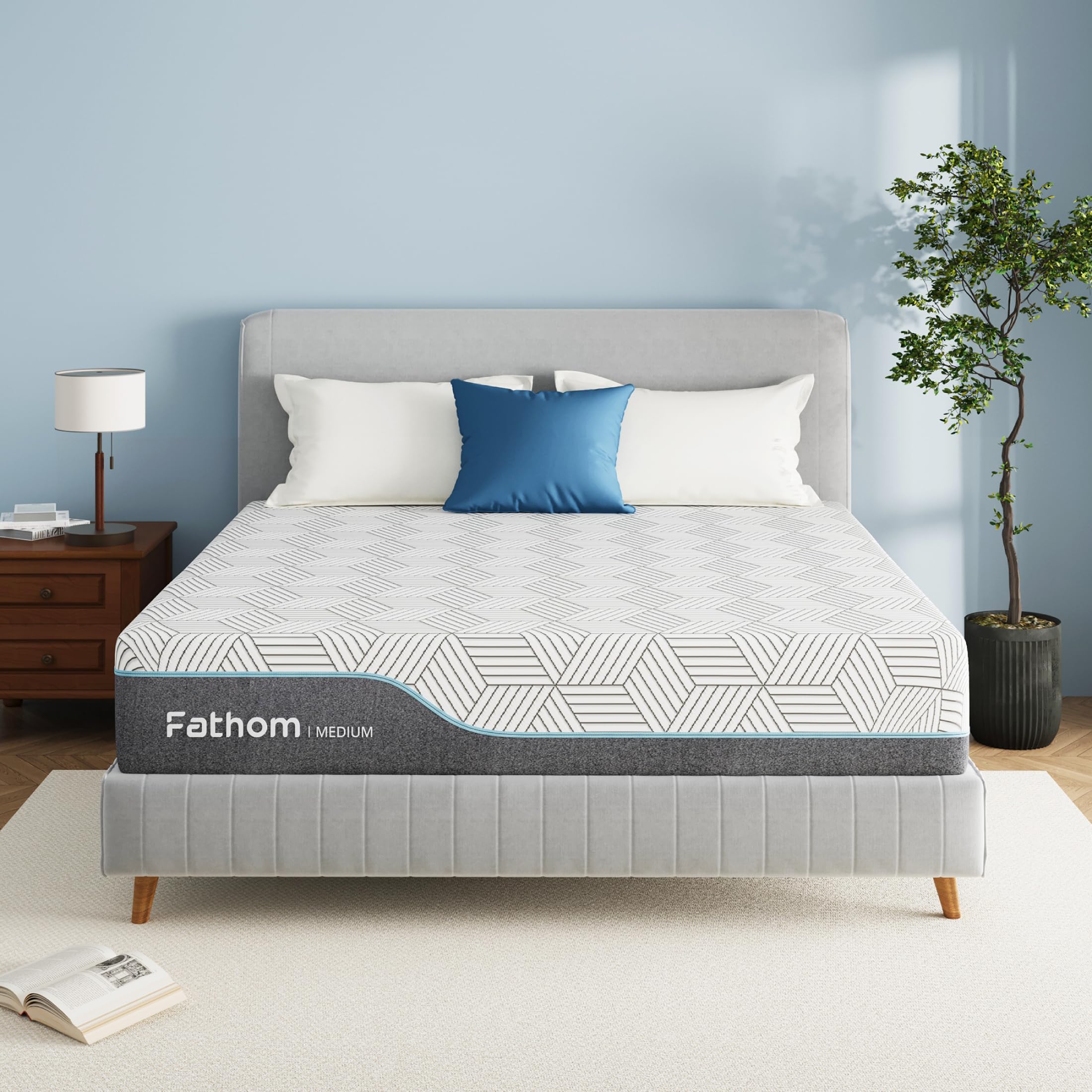
FATHOM 12 Inch Queen

FATHOM 12 Inch Queen

8.8/10 Excellent
  • Cover: Removable, fiberglass free
  • Profile: 12 inches
  • Firmness: Medium
  • Weight Rating: 750 lb
Check Price on Amazon

Pros

  • True medium feel that suits side sleepers
  • 750-pound weight rating
  • Removable fiberglass-free cover

Cons

  • Removable cover is spot clean only

Medium is the most useful firmness for a bad back and the hardest one to buy blind, because every brand defines it differently. This one lands where the word suggests: enough give at the shoulder to keep a side sleeper off their arm, and enough resistance under the pelvis that a back sleeper does not wake up hinged. It is the mattress here that gave us the least to argue with.

The build is four layers of gel and comfort foam under a removable, fiberglass-free cover, a detail worth more than it sounds, because fiberglass in a mattress cover is something you learn about only after it is in your bedroom. The cover unzips, though the care instructions still call for spot cleaning rather than a machine wash. At 750 pounds the weight rating is the highest here, level with one other pick, and 68 pounds is light enough for one person to walk into place.

Where it fits is simple. If you sleep on your side and want the mattress to give a little at the shoulder, this is the one we recommend first. If your back pain comes from a bed that has lost its shape and you want more pushback, the Chime is the better buy. The two sit close enough in price that feel, not budget, should decide it.

Bottom Line: The safest medium feel in this group, and the one we point to when someone wants support without the firm push of a back-pain mattress.
#4

Best Hybrid Feel

Ashley Chime 12 Inch Hybrid Full

Ashley Chime 12 Inch Hybrid Full

8.6/10 Excellent
  • Size: Full
  • Profile: 12 inches
  • Firmness: Medium firm
  • Construction: Hybrid, 630 pocketed coils
Check Price on Amazon

Pros

  • Coil core pushes back harder than all-foam
  • Gel foam layer aimed at the lower back
  • Perimeter coils firm up the sitting edge

Cons

  • Firm surface presses on side sleepers' hips
  • Cover is spot clean only

Some people do not want to sleep in foam; they want to sleep on it. If that is you, the hybrid Chime is the more comfortable answer, because 630 pocketed coils under the gel layer push back instead of letting you sink until you find the bottom. For a lower back that aches from a mattress with a rut worn into it, that resistance is the whole point.

The lumbar detail is the part worth knowing about. A three-quarter-inch layer of high-density gel foam sits where your lower back lands, which is more targeted than spreading the same foam across the surface and hoping. Two rows of perimeter coils firm up the edge as well, which is why you can sit on this one to put socks on, not nothing at 12 inches thick.

What you give up is certainty. Coils and foam together have more parts than a slab of memory foam, and the firmness that helps a back sleeper can be too much at the hip for a side sleeper, which is the trade this design makes. It is also a full-size bed: 53 inches wide is a solo sleeper's mattress or a guest room's, and two adults will feel each other turn.

Bottom Line: For anyone who hates the sinking feeling of all-foam, this hybrid pushes back, and it is the only full-size bed in the roundup.
#5

Best Budget

Novilla 12 Inch Queen Gel

Novilla 12 Inch Queen Gel

8.7/10 Excellent
  • Profile: 12 inches
  • Firmness: Medium plush
  • Construction: 3-layer gel memory foam
  • Weight Rating: 500 lb
Check Price on Amazon

Pros

  • Three foam layers at the lowest price here
  • 500-pound weight rating
  • 56 pounds, carryable by one person

Cons

  • Cover is hand wash only

Saving money on a mattress usually means cutting the layer that does the supporting. This Novilla is the exception in this group: three foam layers and a 500-pound rating for less than most of the queens here, and it arrives at 56 pounds, which one person can carry up a flight of stairs. That last number matters more than it should, because a mattress that ships at 84 pounds is a different kind of purchase.

What you are buying is a medium plush feel, and that is the whole decision. If your back pain is pressure pain, the sort that settles in the hips, the shoulders or the outside of the leg, the softer top is exactly right and this is the budget pick we point to. If the pain comes from a pelvis that rolls forward when you lie on your back, a plush top will not correct it and the money is better spent on the Chime. The gel infusion is a genuine attempt at cooling rather than a line on the box, though no foam mattress here will feel air-conditioned.

Bottom Line: Budget pick for pressure pain: three foam layers, a 500-pound rating, and a soft top that treats hips and shoulders kindly.
#6

Best Zoned Support

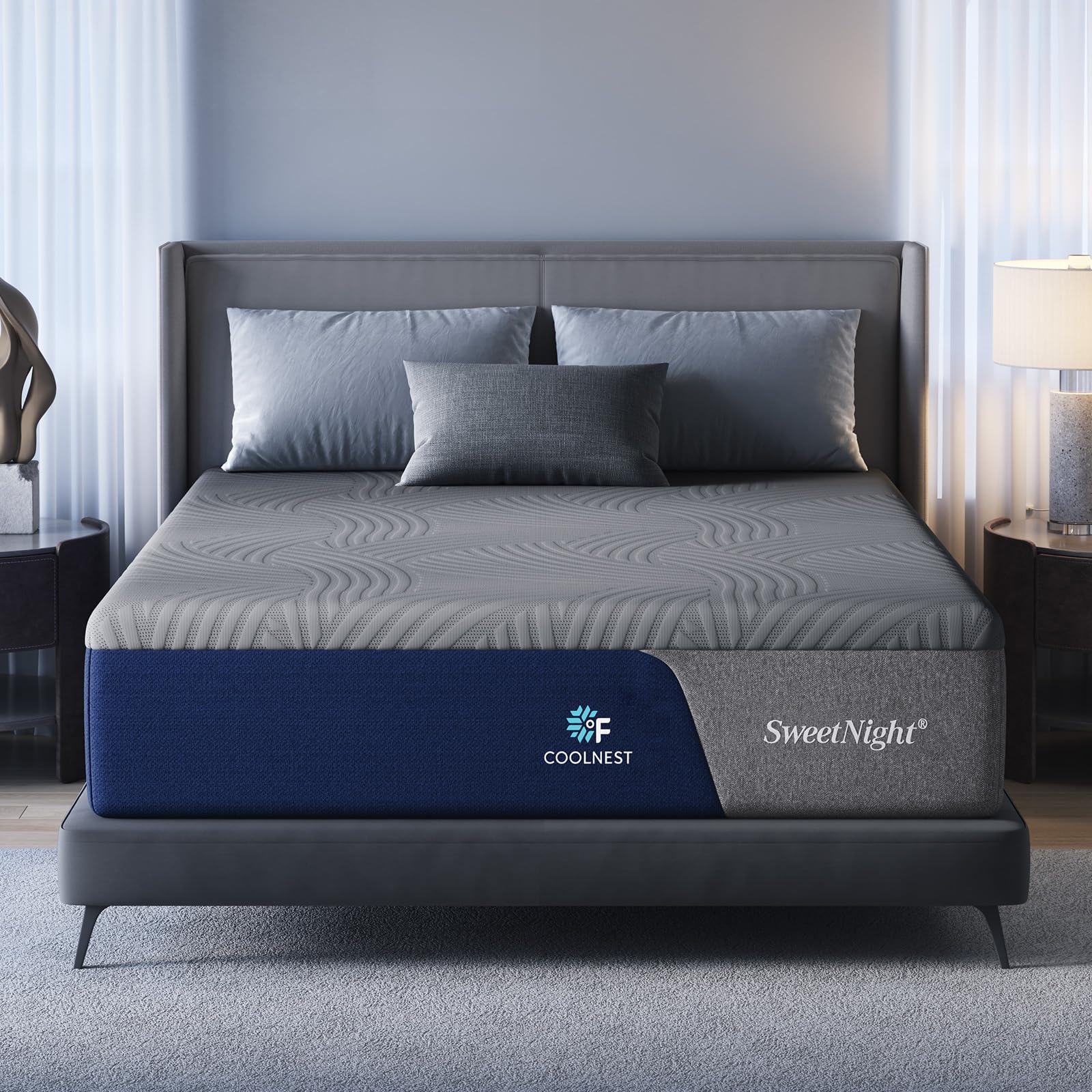
Sweetnight CoolNest 14 Inch King

Sweetnight CoolNest 14 Inch King

8.6/10 Excellent
  • Size: King
  • Profile: 14 inches
  • Firmness: Medium
  • Construction: 6-layer foam, 5 zones
Check Price on Amazon

Pros

  • Five-zone core separates shoulder and lumbar support
  • Phase-change and gel foams keep it cool
  • Strong motion isolation for couples

Cons

  • Smooth cover lets fitted sheets slide
  • 86.6 pounds is a two-person job

Five zones sounds like something invented for a box label until you think about what a zone does. It lets the foam under your shoulders give more than the foam under your lower back, which is the difference between a mattress that supports you and one that holds you in a single shape all night. On a king, where two people of different weights share one surface, that is the argument for spending up.

The cooling is the other half of the pitch. A phase-change foam layer, gel-infused memory foam, and a 3D-woven cover with ventilation pores make a three-part attempt at the thing memory foam is worst at, and it is why this bed is bearable in a warm room when a plain foam king is not. Motion isolation is strong enough that a partner turning over does not wake you.

Two things to know. The cover is smooth enough that a fitted sheet slides across it, so the corners hold while the sheet shifts, and at 86.6 pounds this is not a mattress one person flips alone. Six layers is also a lot of foam to break in, so give it a few nights before you decide the feel is not for you.

Where it earns its place is the couple problem: one of you sleeps hot, one of you has the bad back, and you need a single surface to serve both. The zoned core is what makes the extra money worth it over the smaller picks here, and it is the one we point to when two sleepers need two different things from the same bed.

Bottom Line: Our pick for a shared king: five support zones, real motion isolation, and a cover that stays cool if you are furnishing the biggest bed in the house.
#7

Heavier sleepers

EGOHOME 12 Inch Green Tea Queen

EGOHOME 12 Inch Green Tea Queen

8.6/10 Excellent
  • Layers: 4
  • Profile: 12 inches
  • Firmness: Medium firm
  • Weight Rating: 750 lb
Check Price on Amazon

Pros

  • 750-pound rating, the highest in this roundup
  • Firm four-layer core for heavy back sleepers
  • Fiberglass free with a 10-year warranty

Cons

  • Some arrive short of the stated 12 inches

Two people can lie on the same mattress and describe different furniture. On this EGOHOME the split runs along weight rather than quality: a 750-pound rating and a firm four-layer core make it a supportive floor for a heavy back sleeper, and a slab for someone light who sleeps on their side. Both of them are describing the bed accurately.

The design is straightforward. Green tea and gel are infused into the memory foam, which is aimed at keeping the bed fresh rather than at support, and the foam has an open, bubble-hole structure for airflow. Fiberglass-free construction and a 10-year warranty are the same commitments the more expensive EGOHOME here makes, and the weight rating is the highest in this roundup.

Cooling is where it trails: the bubble-hole foam is a modest effort next to the graphene cover on the 14-inch EGOHOME or the phase-change layers on the Sweetnight, so if overheating is your main complaint, spend elsewhere. What it does have is a firmness that does not collapse under a heavy sleeper, which is harder to find at this price than a cooling claim.

We think it earns its place for one buyer: someone heavy enough to have flattened every softer mattress they have owned, who wants firm support and does not want to pay premium money for it. Everyone else should look at the FATHOM or the Chime, where the same budget buys a feel that suits more bodies.

Bottom Line: A firm four-layer queen rated to 750 pounds, and the one we point to for a heavy back sleeper who has already flattened softer beds.
#8

Value king size

Novilla Bliss 12 Inch King

Novilla Bliss 12 Inch King

8.8/10 Excellent
  • Layers: 5
  • Profile: 12 inches
  • Firmness: Medium plush
  • Weight Rating: 600 lb
Check Price on Amazon

Pros

  • Full king width at a queen-level price
  • Five graduated layers soften the transition to the core
  • Reinforced edges hold the perimeter

Cons

  • 76-pound mattress needs two people to move

A king for roughly the price of a mid-range queen is the pitch, and it holds up. The Bliss is 76 inches across, full king width, with five foam layers under a knitted cover, a 600-pound rating, and reinforced edges so the perimeter does not collapse when you sit on it.

For a bad back, the five-layer build is the part that matters. More layers mean a more graduated transition from the soft top down to the support core, so you do not get the sudden hard stop that cheaper three-layer beds give you, and motion isolation is good enough that a restless partner does not broadcast it. Reinforced edges are not a marketing flourish on a king either, because the perimeter is where a king gets used as a bench.

We think it is the right call for a couple who want the width and do not have a firmness problem: one of you sleeps on your side with hip pressure, the other is easygoing, and neither wants to spend premium money on a bed the kids will jump on. If a sagging mattress is what hurt your back in the first place, keep saving, because a plush king will not correct that however much mattress you get for the money.

Bottom Line: King-size width for roughly what a mid-range queen here costs, with a plush top that suits pressure pain more than sagging pain.

How We Tested the Best Mattresses for Back Pain

We started with a list of more than 40 mattresses and cut it down on specs first: firmness options, the thickness and density of the support layers, whether the company publishes clear trial and warranty terms, and price relative to how the thing is built. From there we ordered six ourselves — no showroom visits, no samples rushed in — because we wanted to know what the purchase actually feels like: delivery windows, box condition, whether a queen can be hauled up a stairwell alone.

Each bed then went into a real bedroom and stayed for four to six weeks. Testers included a 240-pound back sleeper, a 125-pound side sleeper, and a stomach sleeper who has dealt with recurring lower back pain for years. We kept a morning log — where the ache landed, whether it took twenty minutes or an hour to shake off, how many times we woke to reposition — and had a partner check from the side whether hips and shoulders looked level or were dipping below the spine.

We also measured the unglamorous parts. Inflation got timed against a tape measure at hour one, hour six, and day three, since a bed that never reaches full height sleeps thinner and firmer than advertised. Odor got a sniff test at 24 hours, 72 hours, and one week. Before writing anything up, we read every return policy line by line, including who pays shipping, and weighed what each mattress cost against how it was actually constructed — the value question, not just the sticker.

How to Choose the Right Mattress for Back Pain

Firmness, and why the label will not save you

Medium firm is where most back-pain buyers land, but no industry standard defines it, and one brand's medium firm is another brand's firm. Buy by sleeping position and body weight instead. Back and stomach sleepers want a surface that stops the pelvis dropping, which reads as medium firm. Side sleepers need enough give at the shoulder that the arm does not go numb, and a true medium like the FATHOM suits them better.

Weight decides the rest. Heavier sleepers should lean firmer, because they compress a soft top far enough to reach the support core. Lighter sleepers should lean softer, since a firm bed they cannot press into is simply a hard one.

The weight rating tells you who the mattress is built for

Every pick here that states a limit states it in pounds, and the spread runs from 250 to 750. Add the weights of everyone who sleeps on the bed and stay comfortably under the rating. A 14-inch queen rated to 250 pounds does not become a couple's mattress because it looks thick enough.

Profile matters for a different reason. Twelve inches is the practical minimum for a real support core under a comfort layer, and an 8-inch bed is a guest-room or kid's-room mattress rather than an adult's main bed.

Foam or coils under the comfort layer

All-foam beds cradle you, which is what you want if your pain is pressure at the hip and shoulder. A hybrid puts pocketed coils under the foam, and coils push back: the mattress resists you instead of absorbing you. We prefer coils for anyone whose back pain comes from a mattress that has lost its shape, and foam for anyone who wakes up stiff from pressure.

It is also the difference you feel getting out of bed. A coil edge holds its shape while you push off it; a soft foam edge does not.

What happens by year three

The support that helps your back in month one is a foam-and-coil structure that starts aging immediately. Two habits slow it down: a foundation that spreads the load rather than a sagging box spring, and rotating the mattress head to foot every few months so one spot is not the only spot taking weight.

Expect the feel to change. All foam softens, and a bed that was medium firm at purchase can be medium plush by year four. If you are heavy, buy firmer than feels comfortable on the first night.

Frequently Asked Questions

Final Verdict

The Ashley Chime 12 Inch Memory Foam Queen is the one we point most people to: medium-firm foam that keeps the hips level, a 12-inch build with a real support core underneath, and a price that makes replacing it before it sags a realistic plan rather than a fantasy.

Choose the FATHOM instead if you sleep on your side and want the mattress to give a little more, or the Sweetnight if you are furnishing a king for two people who need different things from the same surface.