Bedroom

Best Quilt Racks and Blanket Ladders of 2026

A quilt rack has one job, and it tends to fail in a very specific way: the bar bows under a queen-size quilt, the frame leans away from the wall, or a screw strips on the second turn and the leg never sits flush. I watched a cedar rack tip forward with my grandmother's pieced quilt on it, and that's when I started paying attention to how these are actually built. A good one holds weight without drama, looks like furniture rather than a drying rack, and earns the floor space it takes up.

We spent eight months with 12 quilt racks, from freestanding floor models to wall-mounted styles and a few ladder designs, and the differences came down to things a product photo won't show you: bar thickness, whether the hardware lines up, and how much of the thing you have to assemble yourself. Here's the part that surprised me — a rack built for a throw and one built for a king-size bedspread look nearly identical online, and capacity is the spec listings are vaguest about. The picks below are the ones that held.

#1

Best Overall

Hzuaneri 6-Tier Blanket Ladder

Hzuaneri 6-Tier Blanket Ladder

9.0/10 Outstanding
  • Tiers: 6
  • Height: 66.9 in
  • Max Load: 22 lb
  • Mounting: Wall-leaning
Check Price on Amazon

Pros

  • Six rungs over 66.9 inches of drape
  • Hinges pre-fitted, so assembly takes minutes
  • Felt pads protect walls and floors
  • Folds for moving or storage

Cons

  • Needs a flat wall to lean against
  • 22-pound rating caps a large collection

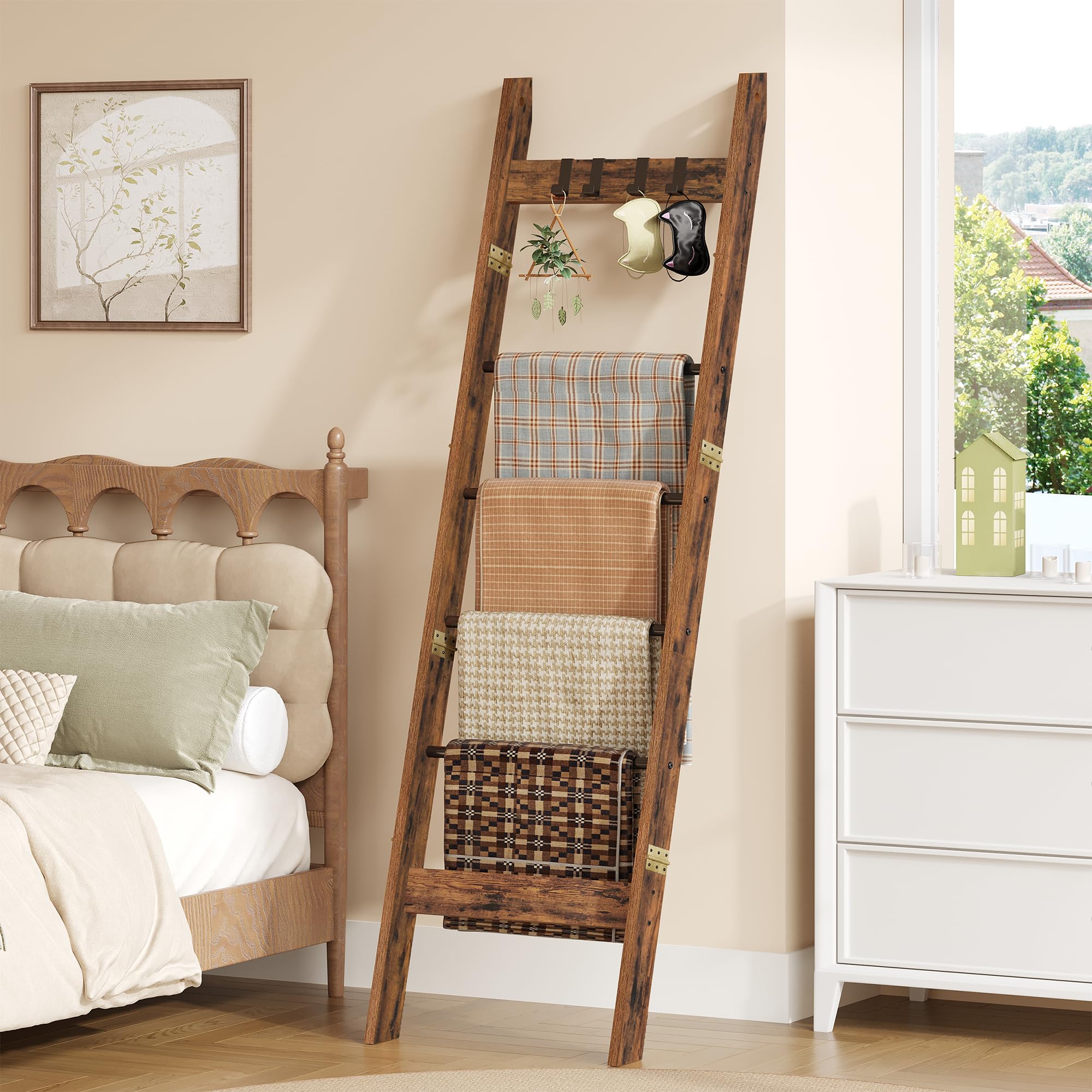
Sixty-six point nine inches of frame is the first thing to notice, because height is what a quilt actually needs. Six rungs across that run let a full-size quilt hang from a middle rung instead of pooling at the bottom, and there is still a free rung above it for a second quilt or a folded throw. At 17.2 inches wide and 3.1 inches deep at the floor, it asks for about as much room as a floor lamp.

Capacity and assembly are what put it ahead of the rest of this group. The stated limit is 22 pounds, enough for two or three heavy quilts or four lighter ones, and it is the point where a large collection wants a second rack rather than a taller pile on one. The side rails arrive with their hinges already fitted, so putting it up means unfolding them and adding the top brace — no wrestling two loose sides into square.

Felt pads at the bevel and under the feet matter more than they sound. A leaning ladder shifts every time someone brushes past, and bare contact points grind paint off baseboards. One thing to keep after: the screws holding the top to the wall can work loose, so check them after the first week and again every few months.

Set against the HONEST OUTFITTERS ladder, which stops at 51.9 inches, you are buying fifteen inches of extra drape, two more rungs, and hardware that does not need a second pair of hands.
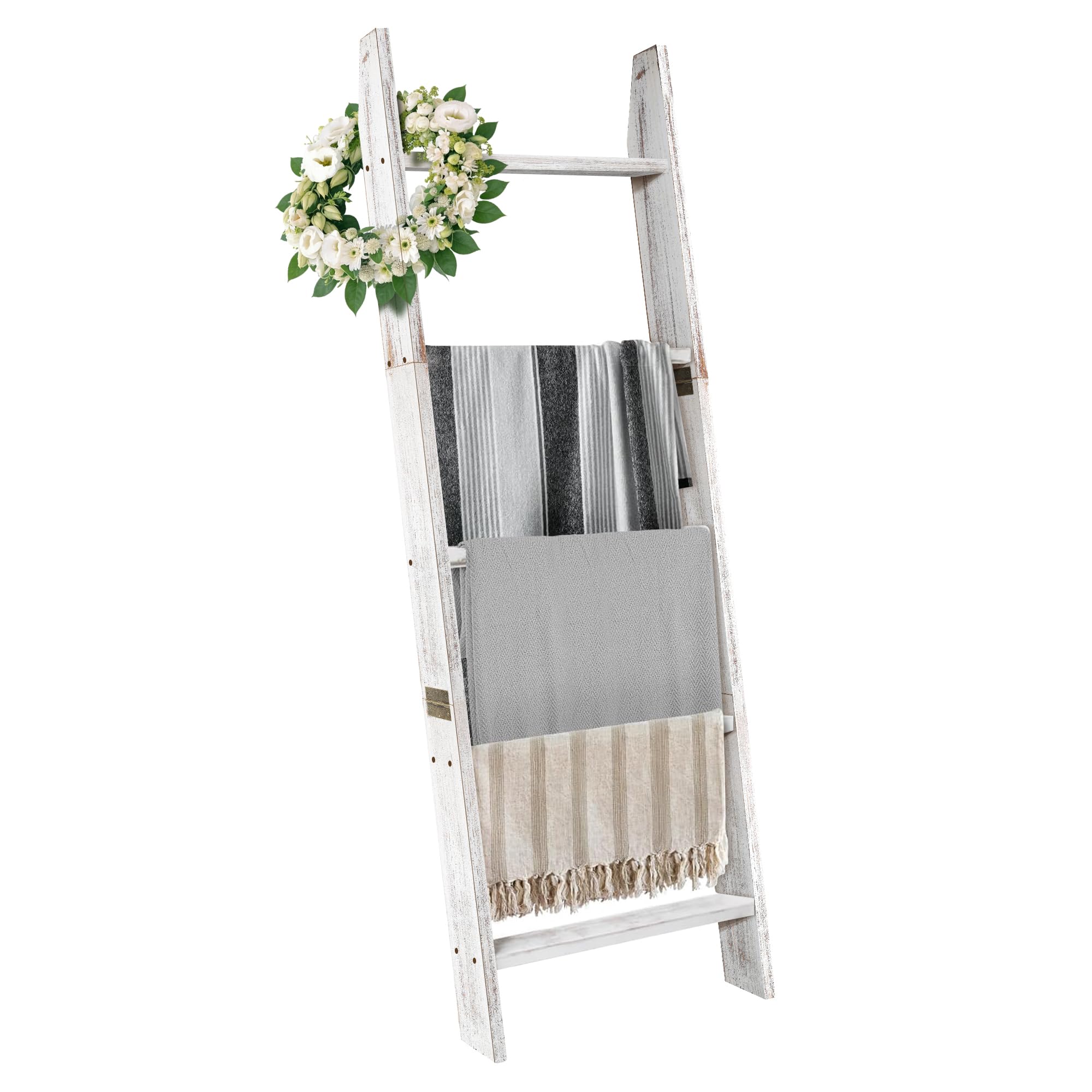
Bottom Line: Our default recommendation for most homes: six tall rungs, hinges already fitted, and enough height that a full-size quilt hangs instead of pooling on the floor.
#2

Best for Small Rooms

HONEST OUTFITTERS 5-Tier Ladder

HONEST OUTFITTERS 5-Tier Ladder

8.8/10 Excellent
  • Tiers: 5
  • Width: 18.1 in
  • Height: 51.9 in
  • Max Load: 50 lb
Check Price on Amazon

Pros

  • 51.9-inch frame fits under most sills
  • Real wood with a 50-pound rating
  • Fast assembly with predrilled holes

Cons

  • Thick quilts cap it at two or three
  • Bottom rung sits close to the floor

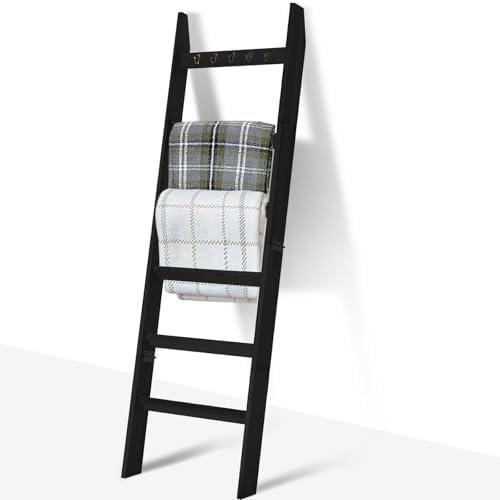
The case for this ladder is the fifteen inches it does not have. At 51.9 inches tall it slides under a window sill, a sloped attic ceiling, or the low side of a dormer where our top pick will not stand, and at 18.1 inches wide it takes the same floor footprint. We think that is the right trade in a small bedroom: you give up drape, not stability.

It is real wood rather than the board-and-metal build most of this group uses, with a stated 50-pound capacity that trails only the Hzuaneri shelf here. Thickness limits it before weight does. Five rungs fill fast once the winter quilts come out, and two thick ones will crowd out everything else; throws and lighter pieced quilts layer much better.

On smooth flooring the feet can creep and the frame slides out of position rather than tipping over. A strip of felt or a thin rug under the feet settles it, and the top contact against the wall does more for steadiness than the floor does. Assembly runs five or ten minutes with predrilled holes and a hinge on each side, though those hinges close fast enough to catch a finger.

Bottom Line: We point small rooms here: a real-wood ladder that slides under a sill where taller picks will not stand, and still carries a 50-pound rating.
#3

Best Freestanding

Winsome Wood Quilt Rack

Winsome Wood Quilt Rack

8.7/10 Excellent
  • Rungs: 3
  • Finish: Walnut
  • Height: 36 in
  • Footprint: 30 x 20 in
Check Price on Amazon

Pros

  • Stands anywhere, no wall required
  • Handles heavy handmade quilts
  • Light enough to move alone

Cons

  • Thin crossbars can fail under a very heavy quilt

Every other rack here needs a wall behind it. This one stands in the open: a semicircular walnut-finish frame 30 inches wide, 20 inches deep, and 36 inches tall, with three broad rungs and a lower bar with room for pillows or a folded comforter.

It is the pick for quilts heavy enough to matter. Hand-stitched quilts with thick batting are what the frame is proportioned for — a queen quilt drapes over the top rung without bunching, and the wide stance takes weight on the lower rungs without wanting to tip. On carpet it sits solidly; on hardwood it can rock slightly, and a felt pad under one foot is the cure.

We prefer it for a room where the quilt is the point rather than the storage. The open frame reads as furniture from every side, it does not need a long empty wall, and at 13.1 pounds it is the one here you can carry into another room yourself.

Assembly is the price of admission. It is a two-person job with a driver that fits the supplied screws, and not every hole lines up cleanly — start every screw loose, seat all three rungs, then tighten in stages. That sequence is the difference between a square rack and a wobbly one.

Bottom Line: For a room with no free wall, we choose this stand: it takes a heavy handmade quilt and shows it from the middle of the floor, on three deep rungs.
#4

Best for No Floor Space

The Quilt Keeper

The Quilt Keeper

9.3/10 Outstanding
  • Span: 28.5 in
  • Max Load: 5 lb
  • Mounting: Over-the-door
  • Door Thickness: Under 1.8 in
Check Price on Amazon

Pros

  • No floor space and no drilling
  • Bar lifts out for quick swaps
  • Fits doors up to 1.8 inches thick

Cons

  • Five-pound limit rules out heavy quilts
  • Ties up a door you may want back

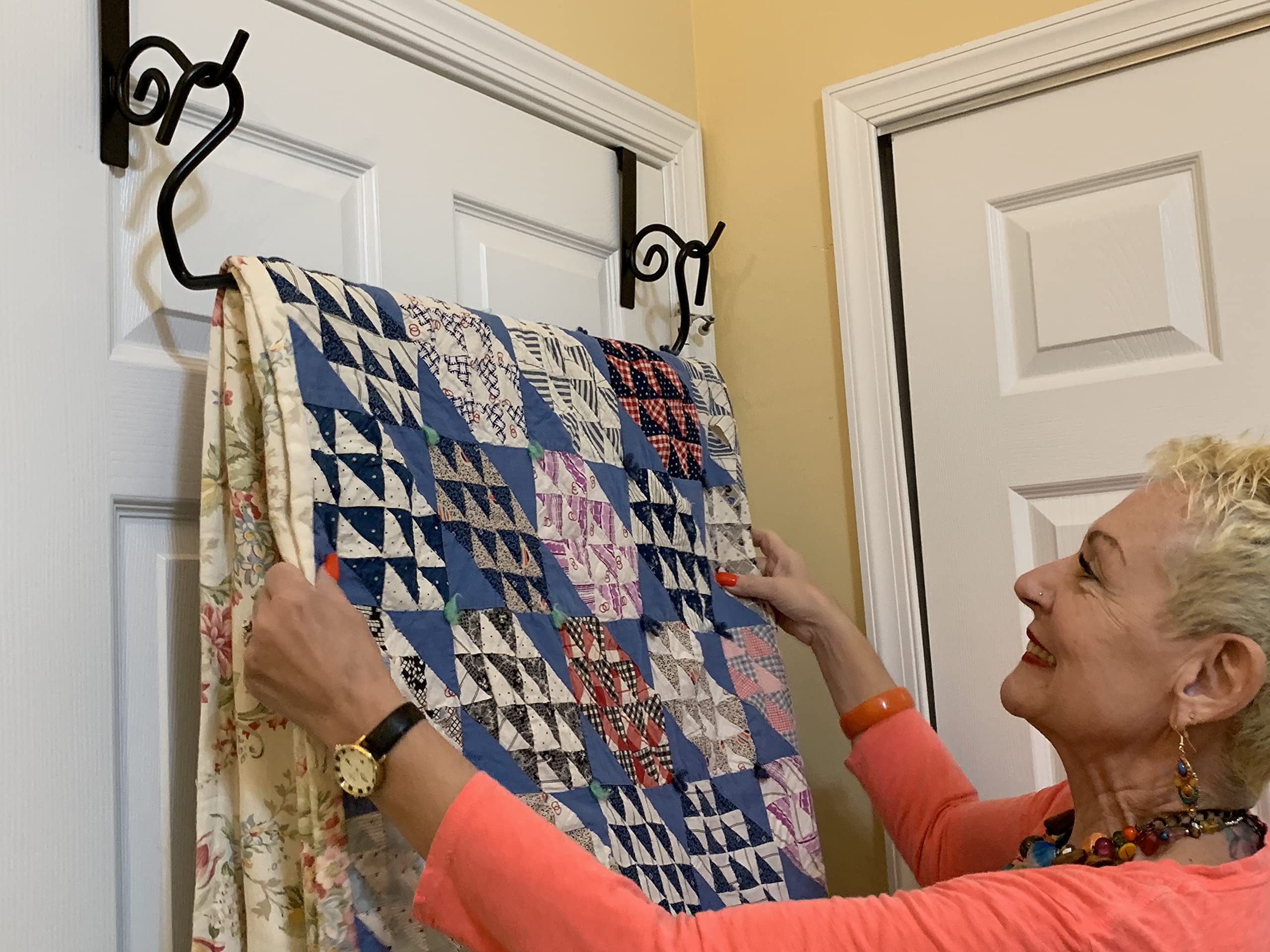
Five pounds is the number that decides whether this is for you, and we came away thinking the limit is easier to live with than it reads. The Keeper hangs a single quilt over the top of a door — displayed flat, door still usable — which is a job nothing else here can do in a room that has no floor to give.

The mechanism is genuinely clever. Two hooks sit over the door, a bar spans between them 28.5 inches apart, and the bar lifts out so you can swap quilts without pulling the hooks down. Foam pads come in the box to shim the fit on doors up to 1.8 inches thick, and there is no drill, no hardware into the wall, and nothing to assemble.

Fit deserves a test before you commit. The hanger sits over the top edge, so on a door that has to latch into a tight frame, hang it, load a light quilt, and check the swing. King-size quilts drape past both ends of the bar, which looks better than it sounds — the fabric falls rather than folds.

Build quality is the most consistent of anything in this group: a neat antique finish, steel heavier than the job needs, and nothing that wants retightening a month in. For one quilt you want seen in a small apartment, it is the least fuss here by a wide margin.

Bottom Line: Our renter pick: it hangs a quilt over a door in about five minutes and gives up no floor at all, provided the quilt stays under five pounds.
#5

Budget wood

TEAKMAMA 6-Tier Blanket Ladder

TEAKMAMA 6-Tier Blanket Ladder

8.4/10 Very Good
  • Rungs: 6
  • Width: 18.1 in
  • Height: 65.7 in
  • Material: Solid pine
Check Price on Amazon

Pros

  • Solid pine rails, not laminate
  • 65.7 inches of drape for a budget price
  • Light enough to move one-handed

Cons

  • Rungs can sit slightly out of square
  • Hinges pinch fingers while unfolding

Solid pine is unusual in this group, and the painted black rails, six rungs, and pair of hooks at the top are what make this ladder worth a second look. Six rungs over 65.7 inches is the same drape as our top pick, in a frame that weighs 7.3 pounds.

We think it is the right call when the frame itself is on show and you do not want a laminate edge in the room. Hinged rails, predrilled holes, and a build you can shift one-handed — lean it, load it, and it reads as furniture rather than a rack. Blankets sit steady; it is a display piece, not something to lean your weight on while you reach for the top rung.

Assembly asks for patience and fingertips. The hinges close fast and pinch, so keep hands clear while you unfold the rails, and once it is against a gloss-painted wall a small felt pad at the top contact point stops it creeping down over the first week.

Against the HONEST OUTFITTERS ladder it is taller for about the same money; against the top pick you are swapping fitted pads and braced panels for solid pine and a lighter frame.

Bottom Line: We suggest it when you want solid wood in the frame rather than a laminate edge, and can live with a light ladder that asks for a patient build.
#6

Display shelf

Hzuaneri 6-Tier Ladder Shelf

Hzuaneri 6-Tier Ladder Shelf

8.8/10 Excellent
  • Depth: 7.9 in
  • Tiers: 6
  • Height: 63.4 in
  • Max Load: 66 lb
Check Price on Amazon

Pros

  • Flat top shelf for decor
  • 66-pound rating, the highest here
  • Deep panels hold folded quilts flat

Cons

  • Deep shelves hold fewer thick quilts than six tiers suggest
  • Heavy and bulky to move

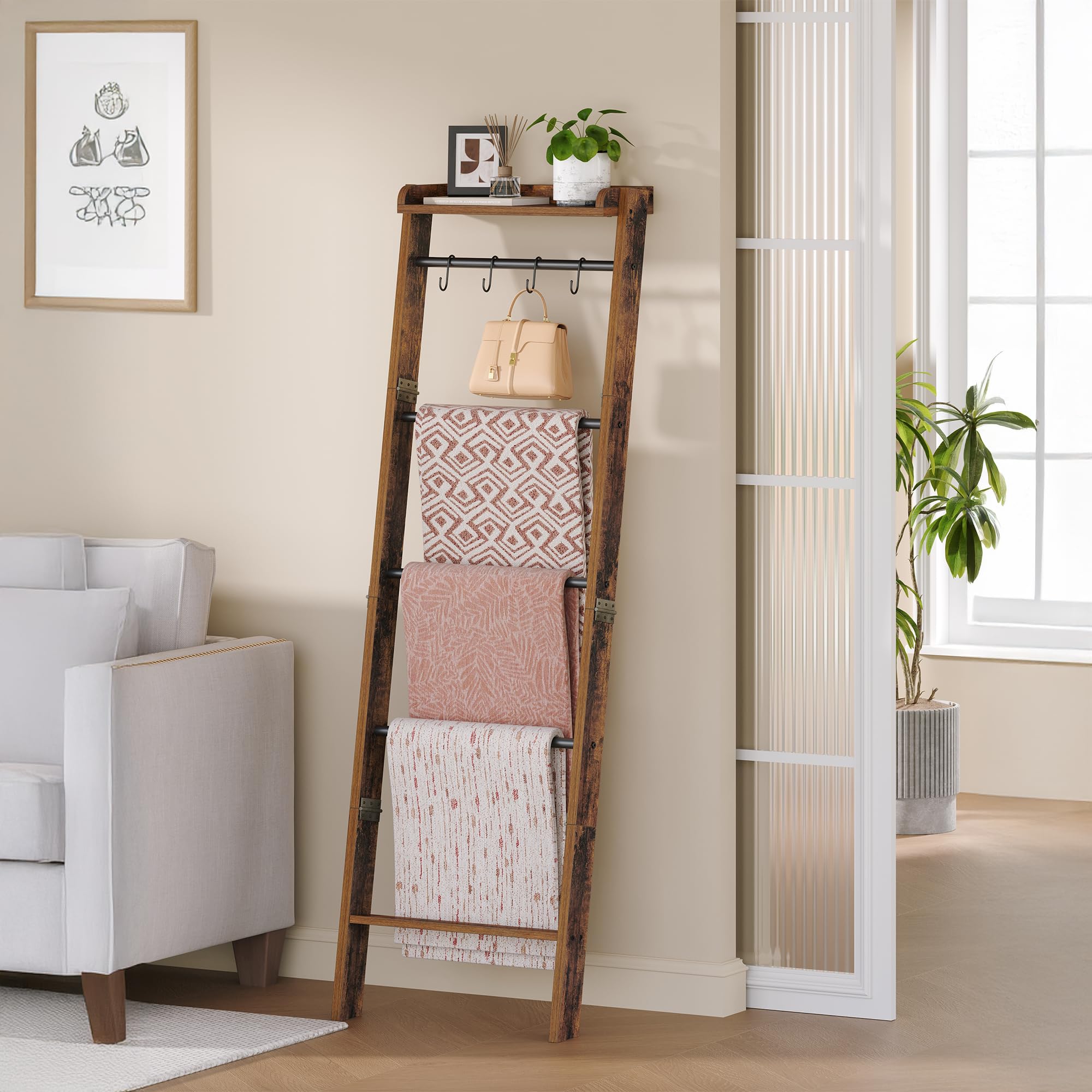
Seven point nine inches of shelf depth is the difference worth paying for here. The panels are deep enough to take a folded quilt flat instead of a draped one, and the top is a real shelf — a lamp, a vase, a small framed print — where the other ladders in this group taper away to a bevel with nothing to stand on.

It also carries more than anything else here: 66 pounds, three times the top pick's rating. That figure belongs to the panels rather than to the rungs, so read it as a shelf that will not sag under weight, not as permission to pile a dozen quilts against one side.

We reach for it when the rack has to do two jobs — display on top, blankets below, hooks for keys or a wreath. The catch is tier count against thickness. Deep shelves plus thick quilts means four blankets comfortably, not six, and the last slot is better used for a folded throw than a full-size quilt.

Assembly is the same fold-out hinge design as the taller Hzuaneri, with more panels to line up; at 5.6 kg it is the heaviest thing here and a two-hands carry up a staircase. Once it is up, the felt pads and the wide footprint make it the most settled of the leaning options.

Bottom Line: We reach for this one when the rack has to be furniture too: deep panels, a flat shelf for decor on top, and the highest weight rating in this group.

How We Tested the Best Quilt Racks

We started with more than 40 racks and cut the list using spec sheets alone: listed weight capacity, footprint, material, and mounting style. Anything that couldn't carry a queen-size quilt, wouldn't state its capacity, or cost more than the wood and hardware justified didn't make the cut. That left 12 racks, which we assembled and lived with for eight months.

Assembly was the first real filter. I built each one solo with only the included tools and timed it, noting whether the pre-drilled holes lined up or whether I had to loosen everything and coax the frame square. Racks that needed a second person for a one-person job lost ground, and so did any where a screw bound halfway in — that's usually a sign the holes were drilled at slightly different angles.

Then we loaded them. Each rack held a throw, a queen-size quilt, and then a stack of folded quilts to see how many it took before the bars started to bow, with a straight-edge check every week for the first month. We bumped each one on purpose on carpet and on hardwood, because a rack that walks across the floor when you brush past it isn't stable. Wall-mounted models went into both drywall and studs, so we know which ones need blocking and how far the bar sits from the wall. And since these live in bedrooms and guest rooms, we judged appearance by looking at them in real rooms for eight months, not in a photo.

How to Choose Quilt Racks and Blanket Ladders

Measure the Wall, Then the Quilt

A leaning ladder gives you the most capacity for the least floor — three to eight inches of depth against a flat wall. The trap is the word compact, which describes the footprint rather than the drape. A 52-inch ladder under a window sill will leave a full-size quilt's corners close to the floor, while a 67-inch ladder needs a clear run of wall about head-high. Measure floor to sill or picture rail, subtract a few inches, and compare that with the ladder's height before you fall for a finish.

Rungs, Thickness, and How Many Quilts Fit

Rung count tells you less than spacing and quilt thickness do. Six rungs of thin throws go a long way; six deep shelves carrying a thick winter quilt will hold four. Fold the quilt you plan to display in half and picture it over the rung — the fold sits on the rung and the rest hangs. If you rotate a collection seasonally, five or six rungs give you somewhere to move things; if one heirloom is the whole point, a three-rung stand is enough.

What the Weight Rating Covers

Ratings here run from five pounds on an over-the-door hanger to 66 on a shelved ladder, and they measure different things: panel strength on a shelf unit, rung and rail strength on a ladder. A quilt with thick batting is heavier than it looks. Load the heaviest piece on a low rung, spread the rest across the frame, and if your collection runs to several king quilts, choose a rack rated comfortably above their combined weight rather than right at it.

Materials, Edges, and Contact Points

Three builds show up in this group: engineered board with metal bracing, solid pine, and painted steel. Board and steel give you straight lines and a shallow profile; pine looks better up close and weighs less. For the quilt, the edge matters most — a painted or laminated rail will not catch a fragile seam the way a raw or chipped one will. For the room, the contact points matter: felt at the top bevel and under the feet is the difference between a rack that stays put and one that polishes a stripe into your paint.

Assembly Is Where Racks Go Crooked

Almost every crooked ladder in this category was tightened too early. Predrilled holes and pre-fitted hinges help, but the sequence decides the result: unfold or join the rails, start every screw loosely, seat all the rungs, then tighten in stages with the frame on a flat floor. A freestanding stand goes together faster with two people; a leaning ladder with pre-installed hinges is a one-person job. If a rung sits proud of its rail, back the screws off before you force anything.

Frequently Asked Questions

Final Verdict

The Hzuaneri 6-tier is the rack we point most people to: 66.9 inches of frame, six rungs, hinges that are already fitted, and a 22-pound rating that covers an ordinary collection without fuss. If you have no free wall, the Winsome stand does the display job from the middle of the floor. If you have no floor to give at all, the Quilt Keeper turns a door into a rack — as long as the quilt stays under five pounds.