Bedroom

Best Room Divider for a Studio Apartment of 2026

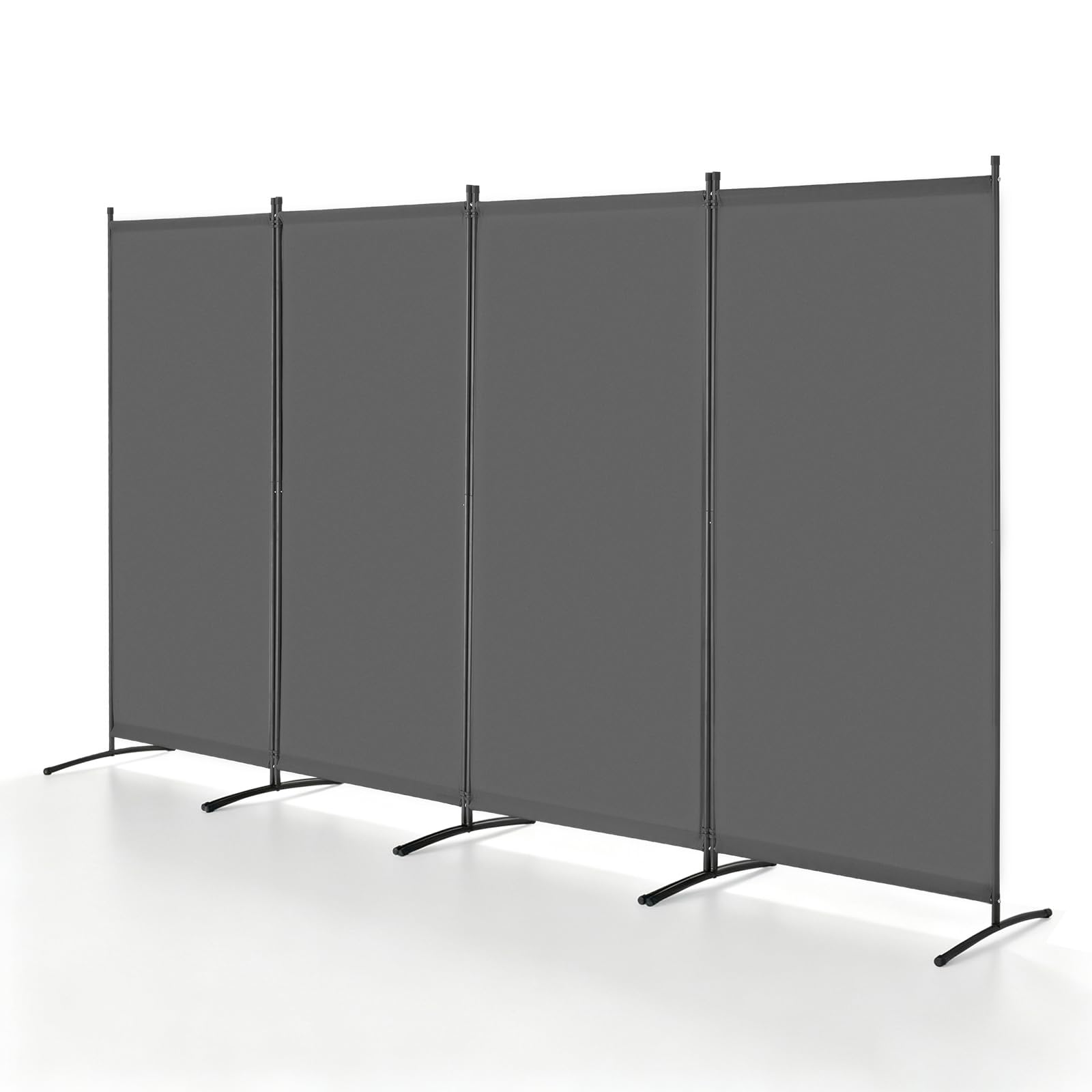
A room divider has to do two jobs that pull against each other. It should look like furniture you'd choose to keep, and it should act like a wall — blocking sightlines, staying put when someone brushes past. Most commit to one and quietly fail at the other. The right one earns its floor space by giving you a room you didn't have: a bedroom that isn't also the living room, a desk that disappears at dinnertime, a corner where a guest can sleep without staring at your kitchen.

I set up twelve of them in a 480-square-foot studio and left each standing for weeks at a stretch, since that's the only way to learn whether a hinge loosens or a panel begins to lean. Here's what nobody tells a first-time buyer: height matters more than width. A divider under about five and a half feet tall only hides what sits below eye level — fine beside a desk, useless around a bed. The picks below are the ones that held their shape.

#1

Best Overall

Roundhill Japanese 4-Panel Screen

Roundhill Japanese 4-Panel Screen

9.1/10 Outstanding
  • Panels: 4
  • Weight: 11 lb
  • Panel Material: Rice paper over wood
  • Open Dimensions: 71"W x 71"H
Check Price on Amazon

Pros

  • Blocks sightlines while letting daylight through
  • 11 pounds and fully assembled out of the box
  • Folds flat for storage between uses

Cons

  • Rice paper can tear if it gets knocked

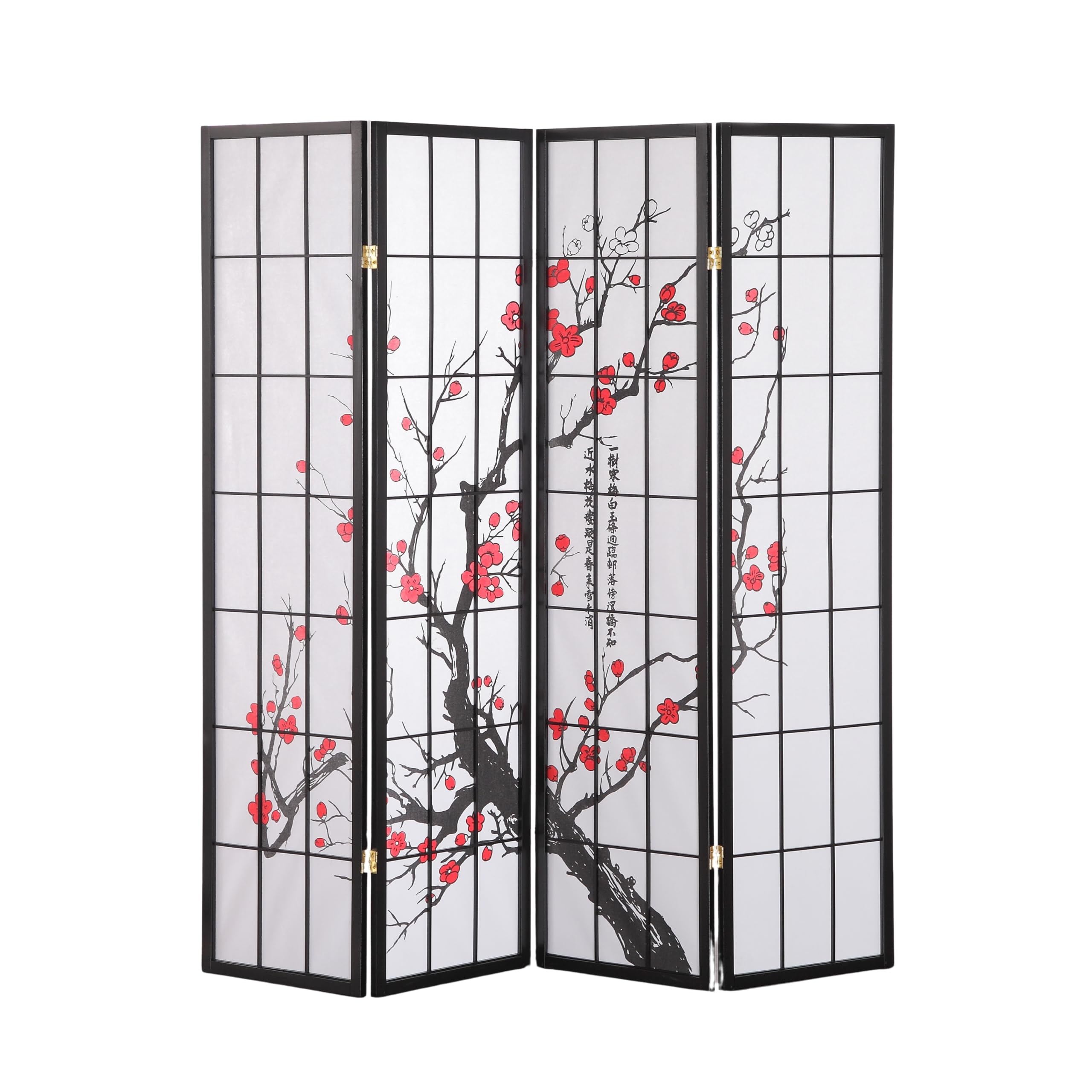
Most dividers trade privacy for light, and in a studio that's a bad bargain: you screen off the bed and the corner behind it turns into a cave. This one doesn't make you choose. The white rice paper stops the sightline — you can't see the bed, the desk, or the pile of laundry behind it — while daylight keeps coming through, so the half of the room you've closed off stays usable. That balance is why it's the pick here for the ordinary studio job.

The numbers are friendly to one person: 71 inches tall, 71 inches across when fully open, four 18-inch panels, 11 pounds. It arrives assembled and folds flat like a book, and we moved it around the flat without a second thought about the weight. You can also open it partway and leave it angled into a corner, which is how it earns its keep — a wall at nine in the evening, a folded screen against the wall by noon.

The print is the other decision. Plum blossom on black is lovely and it is not neutral; in an all-white rental it will be the loudest thing in the room, and you should want that. At 71 inches it also leaves a good foot of air above the frame, so it screens a bed from a sofa at a distance rather than walling anything off completely — which, in a studio, is usually the point.
Bottom Line: We recommend the Roundhill as the default studio divider: it hides what's behind it, keeps the daylight in the room, and folds away in seconds.
#2

Best with Built-In Storage

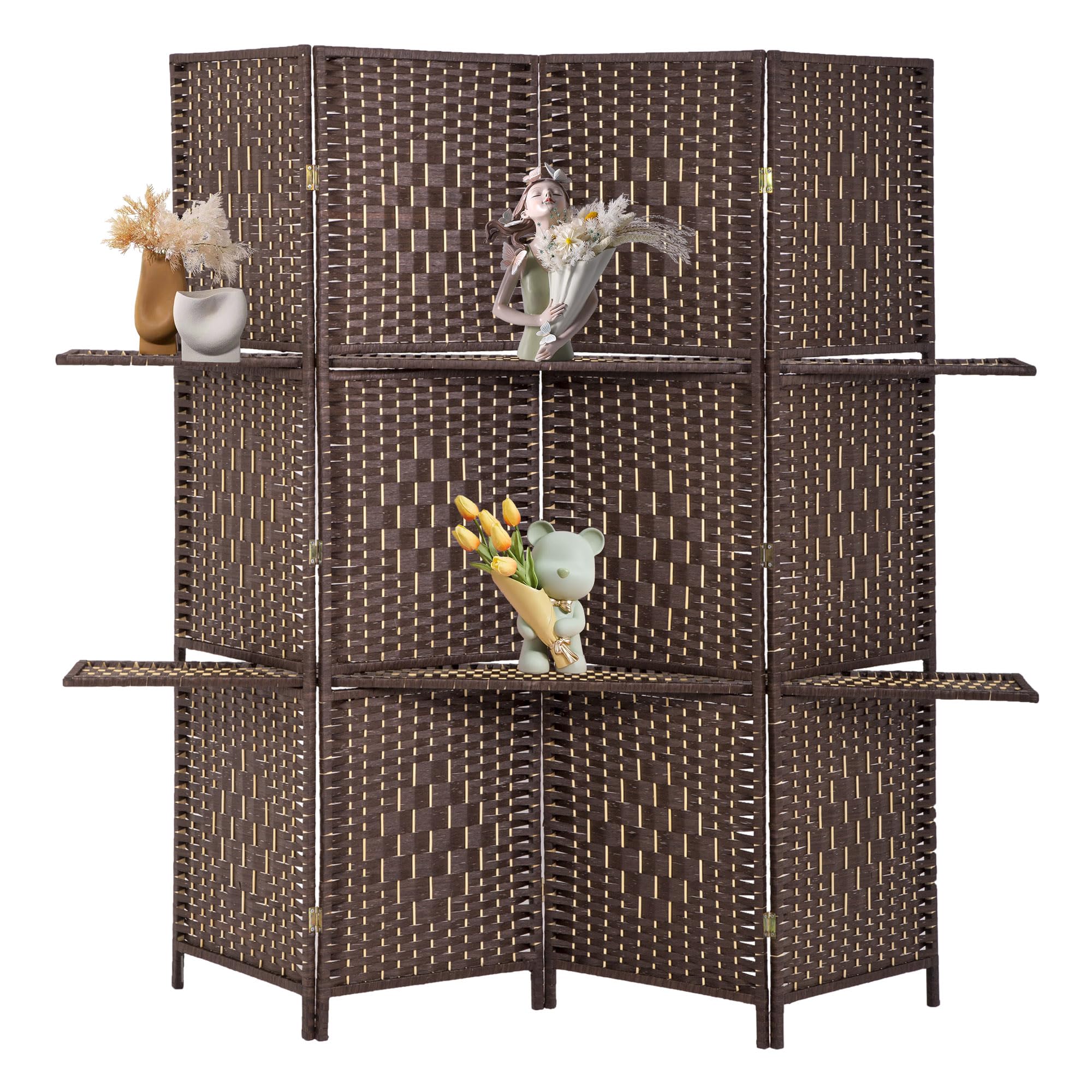
FDW 4-Panel Screen with Shelves

FDW 4-Panel Screen with Shelves

8.9/10 Excellent
  • Frame: Wood
  • Panels: 4
  • Shelves: Two sliding shelves
  • Panel Size: 17.3"W x 71"H
Check Price on Amazon

Pros

  • Two sliding shelves usable from both sides
  • No tools or wall fixing to set it up
  • Light enough to move with one hand

Cons

  • Flimsy when the panels are lined up straight

Two shelves slide through slots in the panels, and they are the reason to pick this screen over a plainer one. In a studio you run out of horizontal surfaces long before you run out of floor, and these give you somewhere for a lamp, a plant, and the four books that have been living on the kitchen counter. They work from both sides, so what you load from the living room is what you can reach from the bed side.

Setup is unfold and slide — no tools, no wall fixing, nothing to drill. Four panels at 17.3 inches wide and 71 inches tall, and the frame is light enough to reposition with one hand, which matters in a room where the desk has to become a dining table at seven. You can run it with just one shelf if you want more of the screen left open.

The finish is plain brown wood, nothing special, and there's no stated load limit for the shelves, so keep them for display rather than a row of hardbacks. Where it beats a plain screen is the arithmetic of a small apartment: you were going to need somewhere to put a lamp anyway, and this way the lamp comes with a wall.

Bottom Line: We recommend the FDW for a studio short on shelf space: the sliding shelves turn a divider into furniture you actually use.
#3

Best for Long Walls

Cocosica 6-Panel Woven Screen

Cocosica 6-Panel Woven Screen

8.6/10 Excellent
  • Frame: Solid wood
  • Height: 70.5 inches
  • Panels: 6
  • Extended Width: 94.5 inches
Check Price on Amazon

Pros

  • 94.5 inches of coverage when fully extended
  • Arrives assembled and folds flat in seconds
  • Solid wood frame with an arched top

Cons

  • Semi-sheer weave shows light and movement behind it

Ninety-four and a half inches fully extended is the number to start with. Six panels at 15.75 inches each, a solid wood frame, and a hand-woven diamond weave in light beige — that's close to eight feet of screen, enough to close off a sleeping alcove at one end of a long studio rather than just interrupting the view across it. Nothing else woven here covers as much.

The catch is geometric. That 94.5 inches is the flat measurement, and these panels only stand up in a zigzag — the listing says as much itself — so the width you actually get across a room is less. Measure the run you want to close, allow for the folds, and check before you order. What you get in return is the airiest way to divide a room: it splits the space without making either side feel like a corridor, because the light doesn't stop at it.

It arrives assembled, folds flat, and the arched top and diamond pattern are handsome enough that you won't want to hide it behind a plant. Six panels also give you more folding options than four — you can shape it around a sofa or a radiator instead of just across a corner, which is what a genuinely awkward floor plan needs.

Bottom Line: We recommend the Cocosica when the studio's problem is a long wall: six woven panels close a big span without blocking the light.
#4

Best for Full Privacy

VEVOR 4-Panel Fabric Divider

VEVOR 4-Panel Fabric Divider

8.8/10 Excellent
  • Panels: 4
  • Weight: 21.4 lb
  • Full Width: 136.4 inches
  • Panel Material: Oxford fabric, iron frame
Check Price on Amazon

Pros

  • Opaque fabric hides the space behind completely
  • 136.4 inches of coverage, the widest here
  • Wipe-clean fabric over a powder-coated iron frame

Cons

  • Two-person assembly with screws and tools

Twenty-one pounds of divider is a different proposition from a paper screen. This is four iron-framed panels wrapped in grey Oxford fabric, 34 inches wide by 72.4 inches tall each, and fully opened they stretch 136.4 inches — over eleven feet of opaque wall. That's the widest span in this guide, and it's the most wall-like of the folding screens here.

The fabric is why you buy it. It isn't see-through, so a bed behind it stays private in a way none of the woven screens manage, and it wipes clean with a damp cloth. It also stops daylight, and in a studio that's the cost: you're trading light for privacy rather than filtering it. If the space behind the divider is a bed or a storage zone, that's the right trade; if it's a desk you want to work at all afternoon, it isn't.

It folds for storage, but at this weight it's a screen you set up and leave — nobody is dragging it out for guests or folding it behind the sofa at the end of the evening. Measure the span you want before it arrives, because once it's standing you won't be re-rigging it every week.

Bottom Line: We recommend the VEVOR when privacy is the whole point: eleven feet of opaque fabric that hides a bed completely, daylight included.
#5

Best Floor-to-Ceiling Divider

Hoeflife Ceiling Track Curtain Set

Hoeflife Ceiling Track Curtain Set

8.5/10 Excellent
  • Mount: Ceiling track
  • Opacity: Blackout
  • Included: Curtain and flexible track
  • Curtain Size: 100"W x 84"L
Check Price on Amazon

Pros

  • Reaches the ceiling, so there's no gap to see through
  • Flexible track bends around corners and soffits
  • Blackout fabric that is machine washable

Cons

  • Ceiling brackets screw in, so check the lease

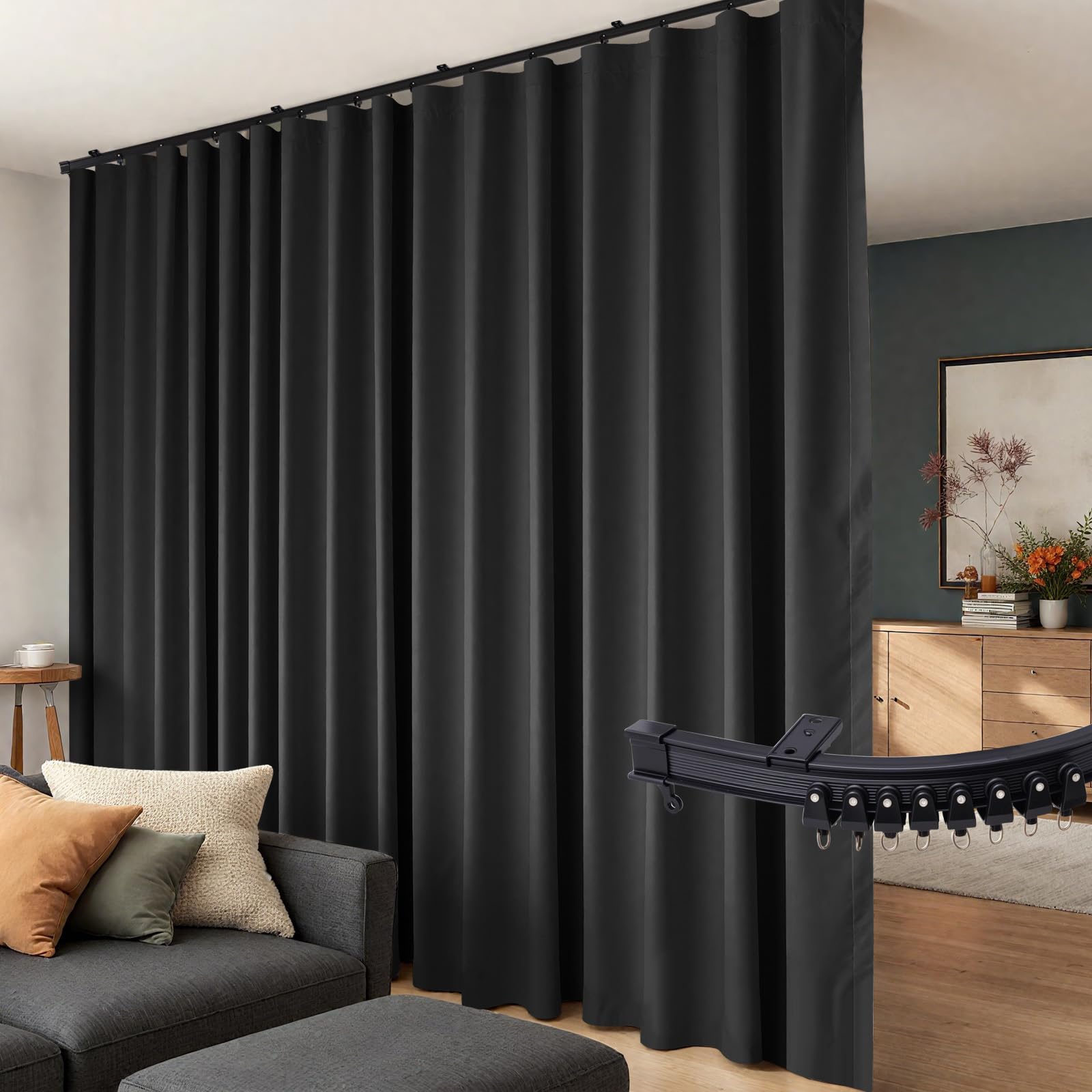
Nothing else here reaches the ceiling, and in a studio that changes what a divider can do. A blackout curtain on a ceiling track gives you no gap over the top to see through and no light leaking around the edges at night, and when you slide it open it disappears into a few inches against the ceiling instead of standing folded in the corner. If the goal is for the studio to genuinely become two rooms after dark, this is the shape of the answer.

The set is a 100-by-84-inch blackout polyester panel plus the track, hooks, pulleys, end caps and ceiling brackets. The track is flexible, which is the clever part: it can bend around a corner, follow a soffit, or stop short of a doorway, so the division follows the room instead of the other way round. It's machine washable, which matters more than it sounds for something hanging in the middle of a room.

Two practical notes. The track ships coiled, and getting it to lie straight takes patience — stretch it out flat on the floor for a night before you install, and the curtain will hang properly. And the fabric is genuinely blackout, so whatever you put behind it will be dark in the daytime too.

Bottom Line: We recommend the Hoeflife set when you need a real wall: floor-to-ceiling blackout coverage that slides away to almost nothing.
#6

Best Budget Folding Screen

RHF 4-Panel Woven Screen

RHF 4-Panel Woven Screen

8.9/10 Excellent
  • Height: 71 inches
  • Panels: 4
  • Weight: 8.9 lb
  • Open Width: 63 inches
Check Price on Amazon

Pros

  • Dark coffee finish reads as furniture
  • Two-way hinges fold in either direction
  • 8.9 pounds, assembled, folds flat

Cons

  • Thin weave shows shapes in strong light
  • Light enough to be knocked over

Not every studio needs a divider built like furniture. The RHF is four 16-inch panels of woven paper over a pine frame in a dark coffee finish, 63 inches across and 71 inches tall, and at 8.9 pounds you can lift it with one hand and put it somewhere else. It comes assembled and folds flat.

The dark finish does more work than the construction. Against a white rental wall it reads as a piece of furniture rather than a folding screen, and it does block the daylight coming through a doorway. The two-way hinges let the panels fold in either direction, so it can wrap around a corner or close off a nook that isn't square — a small thing that makes a big difference in an awkward floor plan.

What it isn't is a screen for a room that gets rearranged. Set it in a corner, put a plant in front of it, and leave it alone, and it does its job; if you'll be folding and unfolding it twice a day, one of the sturdier four-panel screens will serve you better. For a first apartment where the divider is there to make one room read as two, it earns its place.

Bottom Line: We recommend the RHF for a first apartment: a dark, furniture-like screen that folds flat and asks nothing of your walls.
#7

Small corner jobs

HOMCOM 3-Panel Woven Screen

HOMCOM 3-Panel Woven Screen

8.8/10 Excellent
  • Panels: 3
  • Weight: 8 lb
  • Folded Width: 17.7 inches
  • Open Dimensions: 53.1"W x 70.9"H
Check Price on Amazon

Pros

  • Folds to 17.7 inches for closet storage
  • Natural paper rope weave with an arched top
  • No assembly and only 8 pounds

Cons

  • Tips if it's knocked hard

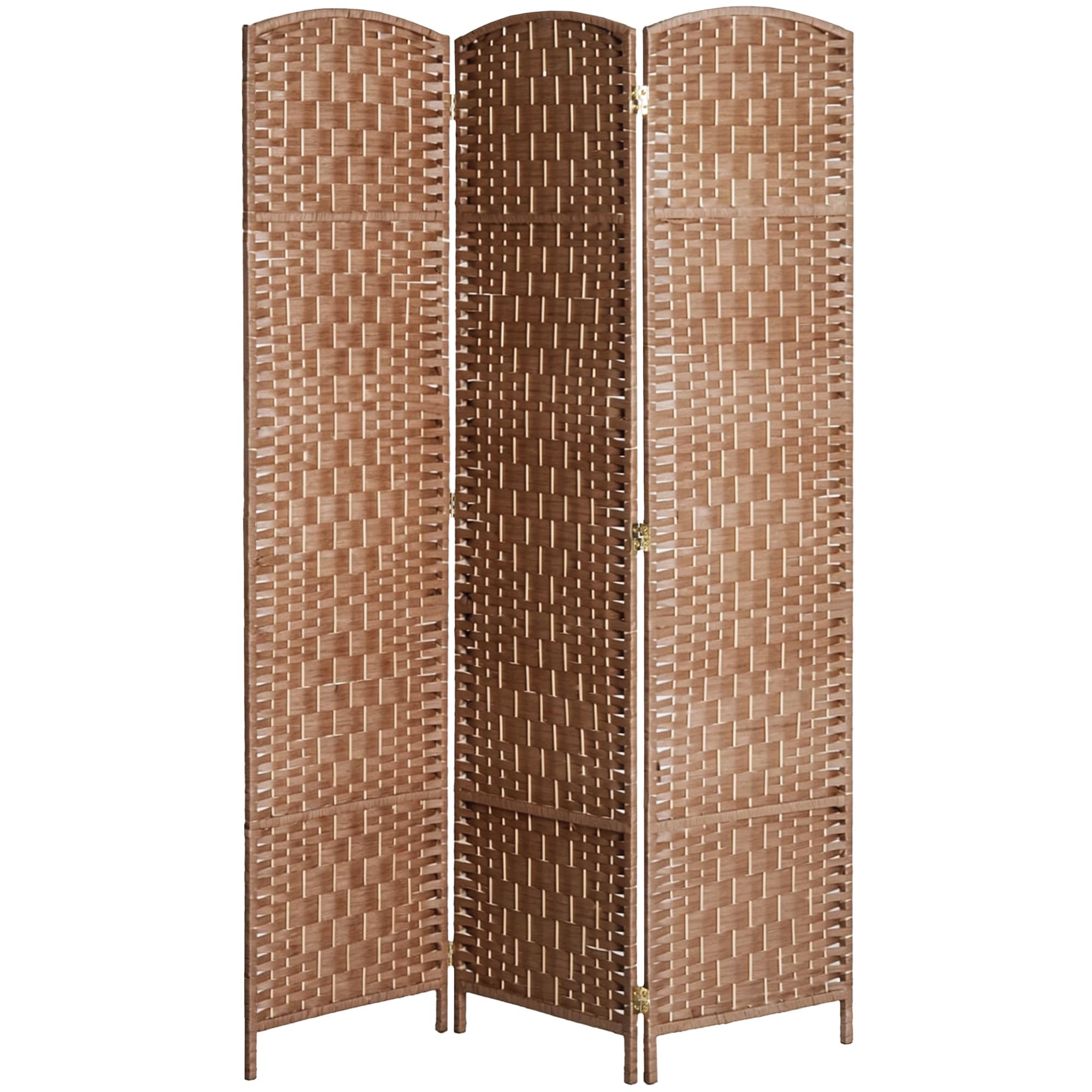
Three panels and eight pounds: this is the divider that lives in a closet and comes out when someone stays over. Folded, it's 17.7 inches wide by 2.4 inches deep, which is narrower than most doorways, so it stands upright against a wall or tucks behind a wardrobe without needing a storage plan.

Open, it's 53.1 inches across and 70.9 inches tall — small next to the four- and six-panel screens here, and that's the point. It's a corner tool: hiding a litter box, screening a desk from the sofa, closing the gap where a bed meets the kitchen.

The look is the best thing about it. Paper rope woven into a diamond pattern in a natural finish, an arched top, and 360-degree hinges so it folds into a Z or a W and stands without a base. It arrives assembled — out of the box, open it, done.

For a studio where the divider is a small fix rather than a second wall, this is the one that earns its spot: it does the job, then it gets out of the way, and it looks better than a screen this size has any right to. Its territory is the awkward gap — the litter box, the desk, the corner nobody knows what to do with.

Bottom Line: We recommend the HOMCOM for the small stuff: a three-panel screen that folds to under two feet and handles corners a bigger divider can't.
#8

Renters with curtains

SUNALLY Tension Room Divider Rod

SUNALLY Tension Room Divider Rod

8.8/10 Excellent
  • Mount: Tension, no drilling
  • Width Range: 28 to 114 inches
  • Height Range: 4 to 10 feet
  • Load Capacity: 45 lb
Check Price on Amazon

Pros

  • No drilling, no tools, no marks left behind
  • 4 to 10 feet high and 28 to 114 inches wide
  • 45-pound load holds a real blackout curtain

Cons

  • Curtain sold separately
  • Needs solid floor and ceiling at both ends

The cleverest thing about a tension divider is that it asks nothing of your walls. This one jams between floor and ceiling and tightens, so it works where you can't drill, can't reach a joist, and can't put a screw into a landlord's paintwork.

The range is what sells it: 4 to 10 feet of height and 28 to 114 inches of width, with a 45-pound load rating — enough for a proper blackout curtain with metal rings rather than a bedsheet on a wire. No tools, and it breaks down into shorter sections, so it stores in a cupboard rather than a garage. The curtain isn't part of it, though, and that's the part deciding how private the division actually feels.

Pick fabric that reaches the floor and has some weight to it; a light drape on a rod this long swings every time somebody walks past. Measure the height at both ends of the run before ordering, since the rod needs contact top and bottom across the whole span.

For a renter who already has a curtain, or who wants to choose one that matches the room, this is the least invasive way to build a full-height wall in a studio, and the only thing here that leaves nothing behind when you move out. It's a system rather than a screen, so treat the fabric as part of what you're buying.

Bottom Line: We recommend the SUNALLY system for renters who already own a curtain: a full-height divider that leaves no holes when you move out.

How We Chose and Tested Room Dividers

We started by pulling every divider we could find that ships flat and goes up without a drill, then narrowed by height (nothing under 5 feet), footprint, panel material, and price until we landed on 12 units. Each one spent six months in a 480-square-foot studio apartment, rotating between the sleeping area, the desk, and the entryway as the layout changed. In a space that size, a divider is never more than three feet from something it can bump into, which turned out to be the most useful part of the whole test.

Assembly came first, timed solo with only the hardware in the box. We noted whether the instructions held up without a second person, how many panels had to be coaxed into alignment, and whether the frame stood square on the first try or leaned until we loosened and re-tightened everything. Every hinge got opened and closed 30 times in a row — the quiet, even ones went on a shortlist, and the ones that squeaked or caught got written down. We also laid each panel flat against a wall to check for daylight under the edges, because a gap you can see across a room is a gap you'll see for years.

Then we lived with them. A hip check on the way past, a vacuum bump, a cat using the bottom corner as a scratching post — we logged what shifted and whether it stayed shifted. Privacy got checked after dark with a lamp on the far side, standing where a guest or a webcam would be, and we took calls from both sides to hear how much sound carried through. These sit in the middle of a room, so appearance was part of the testing too: how each read on camera, whether the finish showed fingerprints, whether the frame drew the eye before the rest of the room did. At the end we weighed what each one cost against what it actually did, and the cheapest weren't the bargains.

How to Choose the Right Room Divider for a Studio Apartment

Decide What the Divider Has to Hide

Start with the job, not the look. A paper or woven screen stops a sightline and lets daylight through; a fabric panel stops both. If the divider will sit between your window and the rest of the flat, choose the translucent kind — a blackout panel in that spot turns one small room into two dark ones. If the job is putting a wall between a bed and a kitchen at night, opacity earns its place and the daylight you lose is the price of not sleeping next to the dishes.

We lean toward light in a studio, because you can always add a lamp and you can't add a window.

Freestanding, Tension, or Track

There are three ways to divide a room without building anything. A folding screen needs nothing fixed and no tools, but it has to stand up on its own. A tension rod jams between floor and ceiling — no holes, and the one here carries up to 45 pounds of curtain, but both surfaces have to be solid and the height within its range. A ceiling track gives you full height and a soft wall, and asks for brackets screwed into the ceiling.

Check what your lease says before you fall for the look of the last one; it's the only route here that leaves holes behind.

Stability Is About How You Set It Up

A folding screen stands because it is folded, not because it is heavy. Opened into a straight line, most of these will tip; set in a zigzag or an L against a wall, they hold. That's why the three-panel screens suit corners and the four- and six-panel ones take the longer runs, where you can put a couple of folds in the middle of the span.

Keep the divider out of the route between your door and your kitchen. A screen you have to step around all day is a screen you'll stop folding.

Weight, Folding, and Where It Goes at Night

The number that decides whether you'll actually use a divider is its weight. Between 8 and 21 pounds separates the screens here, and the light ones get moved daily while the heavy ones get set up once and left. Think about the folded footprint too: a three-panel screen folds to 17.7 inches and lives behind a door, while a six-panel one folds into a stack that wants a wall of its own.

If you can't picture where it goes when it's closed, you'll leave it open, and an open divider is just furniture in the way.

Frequently Asked Questions

Final Verdict

Buy the Roundhill if you want one divider that does the everyday studio job. It hides the bed, keeps the daylight in a room that can't spare any, and folds away on your own without a second pair of hands.

If privacy matters more than light — a sleeping area that has to be genuinely dark — the VEVOR fabric screen is the better tool, and worth the two-person assembly. If the room needs a wall that reaches the ceiling, the Hoeflife track and curtain is the only thing here that gets you there.