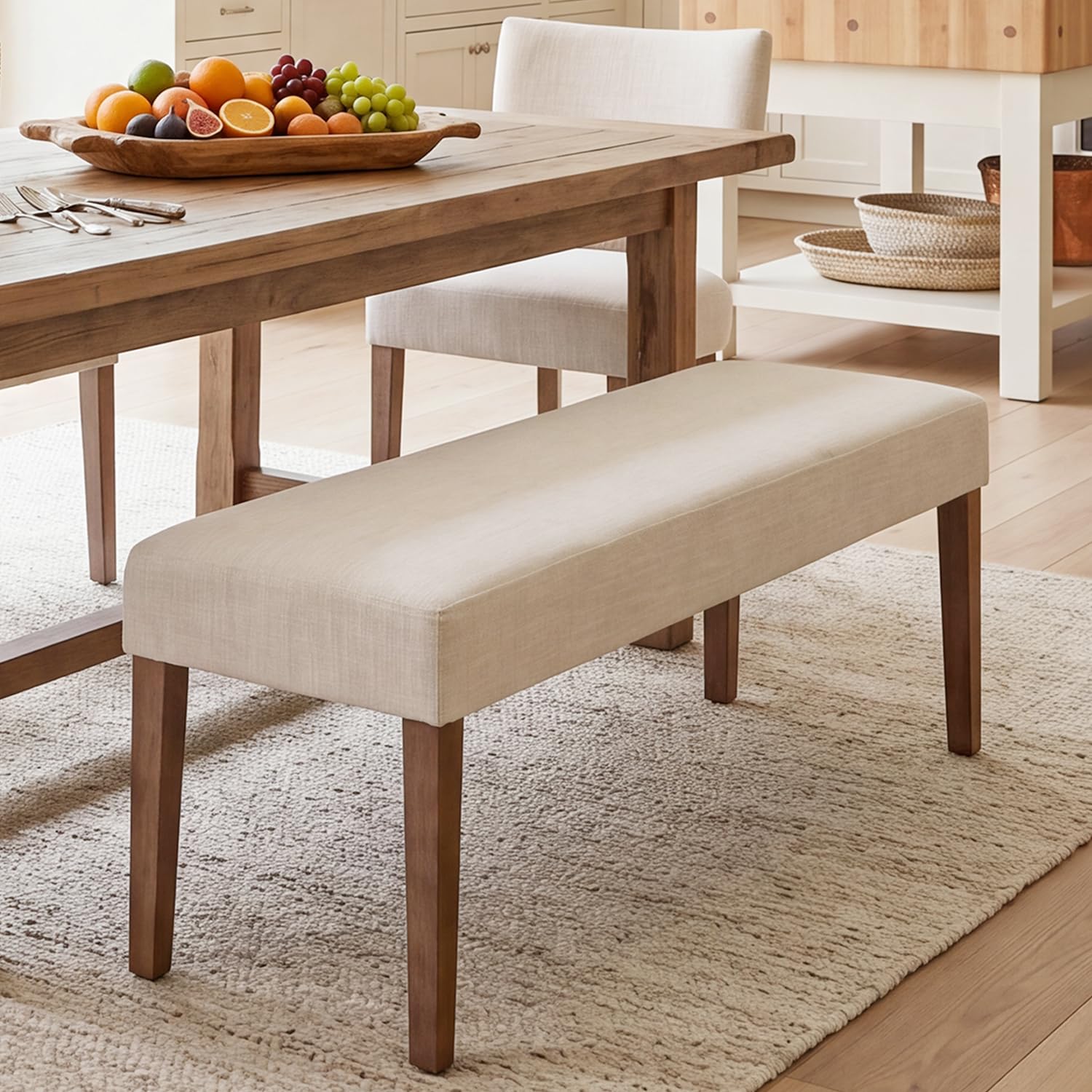
Dining Room

Best Dining Benches of 2026

A dining bench is the seating equivalent of a good host: it makes room for one more without making a fuss. But lean back on a flimsy one and the whole table feels it. A good bench adds flexible seating without the bulk of another set of chairs, provided the height is right—most sit about 10 to 12 inches below the tabletop—and the frame can handle a kid swinging their legs or an adult shifting their weight.

I spent eight months with a dozen dining benches in my dining room and at a friend’s farmhouse table, and the differences came down to joinery, finish, and how well they held up. Some assembled easily but wobbled by dessert; others felt rock-solid but were a pain to move. We lived with them through spaghetti nights, homework sessions, and holiday dinners, because a bench has to look good with a table full of people, not just empty in a showroom. The 12 that stayed made the table more useful without asking for extra room, and they were worth the money.

#1

Best Overall

Boraam Windsor Backless Bench

Boraam Windsor Backless Bench

9.4/10 Outstanding
  • Frame: Rubberwood
  • Dimensions: 14"D x 48"W x 18"H
  • Seat Height: 18.25 inches
  • Weight Capacity: 600 lb
Check Price on Amazon

Pros

  • Rubberwood frame rated to 600 pounds
  • 48-inch seat tucks under a standard table
  • Wipe-clean finish with no upholstery to stain
  • Turned legs and two-tone farmhouse finish

Cons

  • Split wood and cracked legs can develop

Six hundred pounds is the number that put this bench first. Backless seating lives a harder life than chairs do — someone always perches on it arm-first, children climb over it, and it gets dragged across the kitchen floor a dozen times a week — and a rubberwood frame rated that high is a different proposition from the steel-and-panel benches here that stop at 220. At 48 inches it seats two adults along a normal table, and the 18.25-inch seat height lines up with the dining chairs most households already own.

It is, however, a wooden board with legs, and the comfort is what you make of it. We see the hard seat as the price of a bench that wipes clean, takes a beating and still looks like furniture rather than upholstery that will meet its first spaghetti night eventually. A two-inch tie-on pad fixes the sitting end of that trade without hiding the best-looking thing about the bench, which is the two-tone equestrian green finish with turned legs — farmhouse, without tipping into theme park.

Depth is where the small decisions live. At 14 inches front to back, the Windsor is two or three inches shallower than the upholstered picks, and you feel that as a perch rather than a lounge: no leaning back into nothing, no propping your feet. In return it disappears under the table, which is what you want in a room that doubles as a homework station. Assembly is legs, bolts and the Allen key in the box, and one person can finish it before the kettle boils.

Bottom Line: Our default pick: a rubberwood frame rated to 600 pounds and a 48-inch seat that tucks under the table, at a price that leaves room for a cushion.
#2

Best Upholstered

Ashley Moriville Upholstered Bench

Ashley Moriville Upholstered Bench

9.2/10 Outstanding
  • Upholstery: Polyester
  • Seat Height: 19.63 inches
  • Frame Finish: Distressed nutmeg wood
  • Seating Capacity: 2
Check Price on Amazon

Pros

  • Cushioned seat built for long dinners
  • Nailhead trim and distressed finish lift the look
  • 19.63-inch seat height matches dining chairs
  • Quick assembly from the box

Cons

  • Center support can crack under sustained use

Every table has two kinds of seats: the ones people take because they are nearest the food, and the ones they take because they can sit there for two hours. This is the second kind. Polyester upholstery over a foam seat gives just enough to stop the fidgeting a hard wooden bench produces by dessert, and the backless shape means it slides away when the table has to become a workspace again.

The frame is where the money went. Distressed nutmeg wood, straight legs and a line of antiqued bronze nailhead trim along the seat edge — trim that is usually the first thing to disappear on a bench at this level, and the reason this one can sit beside a proper dining set without reading as the budget solution. We also paid attention to the 19.63-inch seat height: close enough to dining-chair height that mixing the two along one table does not leave anyone eating off their knees.

The fabric is beige — properly beige, warmer than the cooler gray a screen can suggest — so hold a swatch against your chairs rather than trusting a photo. Assembly is the easy part: seat, four legs, a handful of bolts, and a manual that assumes you have done this before. What is left is a bench that looks like it cost more than it did, which is not a sentence we get to write often about furniture in this price band.

Bottom Line: The bench we point to when the table is where everyone lingers: 48 inches of cushioned upholstery and a rustic frame, provided your room runs warm rather than gray.
#3

Best for Long Tables

Plank+Beam Classic 60-Inch Bench

Plank+Beam Classic 60-Inch Bench

8.9/10 Excellent
  • Material: Solid pine
  • Dimensions: 14"D x 60"W x 18"H
  • Weight Capacity: 300 lb
  • Seating Capacity: 3
Check Price on Amazon

Pros

  • 60 inches seats three at a long table
  • Solid pine rather than veneered board
  • Wirebrush black finish hides scuffs
  • Ships in one box with tools and hardware

Cons

  • Soft pine dents and scratches easily

Sixty inches is the whole point. The other wooden benches here stop at 48, which is two adults and an elbow negotiation; this one runs most of the length of a 72-inch table and puts three people along it without anyone sitting on a leg. If your table came with matching chairs and you want the bench to read as part of the set rather than an afterthought, length is what sells that.

It is solid pine, not veneer over a board, and we prefer that at this length. Pine takes a knock and dents rather than chipping through to a core, so a bench dragged across a kitchen floor for ten years still looks like wood at the end of it. The wirebrush finish earns its keep too: the texture breaks up glare, and in black it hides the scuffs that a smooth pale finish would advertise within a month. Angled legs and clean lines keep it from reading as a picnic table.

What you give up is depth. Fourteen inches is slim for a bench this long — fine for sitting upright at a meal, not much of a place to sprawl — and the payoff is clearance: this one tucks under the table with room left for knees and chair legs in a way the deeper upholstered benches do not. Assembly comes in one box with the tools included, and pine will want a coaster under a hot dish and a pad under anything heavy that slides across it.

Bottom Line: For a 72-inch table this is the bench we buy: 60 inches of solid pine that seats three, in a wirebrush black that hides what a family does to it.
#4

Best for Seating Three

Ashley Cabalynn Upholstered Bench

Ashley Cabalynn Upholstered Bench

8.9/10 Excellent
  • Dimensions: 63.5"W x 16.5"D x 19.75"H
  • Upholstery: Polyester over foam
  • Weight Capacity: 350 lb
  • Seating Capacity: 3
Check Price on Amazon

Pros

  • 63.5 inches seats three along a long table
  • 350-pound rating supports shared seating
  • Glazed finish and tapered legs look showroom-grade

Cons

  • Fabric reads gray, not the beige in the name
  • 47 pounds and a two-person assembly

About fifteen inches separate this bench from the Moriville, and that is the entire case for it. At 63.5 inches the Cabalynn puts three people along one side of a 72-inch table; at 48, the Moriville seats two comfortably and a third only if everyone is small and fond of each other. If your table is the one everyone gathers at, that difference is worth more than any finish detail on this page.

The build is why it holds three. Hardwood solids and MDF under the foam, tapered legs set wide, and a 350-pound weight rating — enough that two adults and a child on the same bench do not produce the creak that makes everyone stand up at once. It is a heavier piece in every sense, which is exactly what you want in a dining room where the bench stays put.

The seat is the comfortable part: foam under polyester at 19.75 inches, level with most dining chairs and a shade taller than the Windsor. The light brown glazed finish leans modern lodge rather than pure farmhouse, and the whole thing has the look of the piece a showroom puts at the head of the table to sell the rest of the set.

Our one real caution is color, and it is easier to fix before delivery than after. The fabric is a textured gray in person, whatever the beige in the name suggests, so it wants a room running gray or greige; against a warm cream table it reads as a mismatch and no amount of styling rescues it. Match it to a cool palette and this is the best three-seat bench here. Match it badly and you will wish you had bought the Moriville.

Bottom Line: The upholstered bench for a big table: 63.5 inches and a 350-pound rating that let three sit down together, as long as gray suits your room better than beige.
#5

Best Budget Pair

VASAGLE Dining Bench Set of 2

VASAGLE Dining Bench Set of 2

9.0/10 Outstanding
  • Pack: Set of 2
  • Materials: Engineered wood, steel
  • Weight Capacity: 220 lb
  • Dimensions (each): 12.8"D x 42.5"W x 19.7"H
Check Price on Amazon

Pros

  • Two benches for the money of one
  • Slides completely under the table
  • Crossbar-braced steel frame
  • Assembly takes minutes

Cons

  • 220-pound rating is the lowest in this set

The arithmetic is the recommendation. One bench per side of the table is what most families actually need, and this set delivers both for less than the upholstered single benches here cost — engineered wood tops with rounded corners on square matte-black steel legs, with a crossbar under each frame that stops the walking. If you are furnishing a first place and the table came secondhand, this is the set that makes the numbers work.

They are 42.5 inches long and 12.8 inches deep, which tells you what they are: two adults per bench, or three children, at a table where dinner is a means to an end. What we like is how completely they vanish — slide both under the table and the room reads as a room again — and how neutral the rustic top and black legs stay through a décor change. What we do not like is the ceiling: steel and a panel top are not a rubberwood frame, and a bench this light should be treated as seating rather than scaffolding. Assembly is minutes, not hours, with the hardware bagged by step.

Bottom Line: Two benches for less than most single benches here, and the right buy when you are seating a whole table on a first-apartment budget.
#6

Small dining nooks

HNY 45-Inch Upholstered Bench

HNY 45-Inch Upholstered Bench

9.1/10 Outstanding
  • Frame: Rubberwood
  • Dimensions: 45.5"W x 16"D x 19.25"H
  • Weight Capacity: 300 lb
  • Cushion Thickness: 5.5 inches
Check Price on Amazon

Pros

  • 5.5-inch cushion is the plushest here
  • 45.5 inches fits a kitchen nook
  • Rubberwood frame rated to 300 pounds

Cons

  • Dry-cloth care only, no damp wiping
  • Thick foam will flatten before the frame does

Five and a half inches of cushion is a lot for a dining bench, and it is the first thing you notice sitting down. Where the Ashley benches here are upholstered over a firm base, this one is built more like a window seat: soft enough that a coffee and a newspaper become a plan, firm enough that you do not sink to the rails halfway through dinner.

The size carries the other half of the argument. At 45.5 inches it fits a two-person kitchen table or the end of an island, and 16 inches of depth on splayed tapered legs keeps a walkway usable behind it. Rubberwood frame, a 300-pound rating, a linen-look polyester cover in a cream that suits warm rooms — the practical box is ticked, and the shape is tidy enough to leave out when the table is cleared.

Two things we want you to know before ordering. The care line says dry cloth, not damp, which means a spill gets blotted rather than wiped and a sticky-fingered afternoon needs more patience than an upholstered Ashley bench does. And generous foam is always the part that flattens first; the frame will outlast the cushion by years. For a small nook with a warm palette this is the one that fits — if you have 48 inches or more to fill, the Windsor costs less and will take more.

Bottom Line: The small-space upholstered pick: 45.5 inches, a 5.5-inch cushion and rubberwood legs that fit a kitchen nook where a 60-inch bench will not.
#7

Tight spaces

HOOBRO CE13 Upholstered Bench

HOOBRO CE13 Upholstered Bench

8.4/10 Very Good
  • Seat: PU leather over sponge
  • Frame: Bamboo
  • Dimensions: 39.4"W x 11.8"D x 19.3"H
  • Weight Capacity: 396 lb
Check Price on Amazon

Pros

  • Fits 39.4 inches of wall or table edge
  • PU leather wipes clean in one pass
  • Bamboo frame rated to 396 pounds

Cons

  • 11.8-inch seat depth is a perch, not a lounge

11.8 inches of seat depth is the number to start with, because it decides who this bench is for. Sitting on it is closer to perching than settling: fine for breakfast, a quick lunch or a child's dinner, less appealing when the meal runs to three courses and a conversation. Depth is the spec nobody advertises and everybody feels.

What the compromise buys is space. At 39.4 inches wide it slips into the gap where a 48-inch bench simply will not go, and the bamboo legs with EVA pads keep it quiet and kind to a wood floor when it gets moved twice a day. The PU leather over sponge wipes clean in one motion, which matters in a house with small children, and the 396-pound rating is unusually generous for a bench this size.

We think of it as the bench for the second seating area rather than the main event — the eat-in kitchen, the nook by the window, the end of a run of chairs where one more person needs a place. Buy it for that and the shallow seat stops mattering. Buy it expecting to host Thanksgiving and you will be shopping again by the entrée. Check the bolts after the first month; hardware on a light flat-pack frame is the thing that loosens first.

Bottom Line: A 39-inch upholstered bench for tight eat-in kitchens and hallway dining nooks, where the shallow seat is the compromise you accept.

How We Tested 12 Dining Benches

We started by pulling together benches from established furniture makers and smaller workshops, filtering out anything with vague weight limits, thin-looking joinery, or a finish that seemed likely to chip. We landed on 12 benches and lived with them for eight months at my dining table and at a friend’s long farmhouse table, using them for weeknight dinners, homework, game nights, and holiday meals.

Assembly came first: I timed how long each bench took to put together solo, noted whether the hardware was labeled clearly, and checked for wobble right after the last bolt was tightened. Then came the less polite testing—sitting down hard, shifting weight side to side, having kids climb up, and sliding the bench in and out from the table dozens of times. I inspected joints, legs, and hardware for movement, and watched how the finish held up to shoes, spilled water, and weekly wiping.

For appearance and value, I looked at each bench in daylight and at night, checking whether the finish was even and whether the piece looked as good with a table full of people as it did empty. I also compared what the construction actually delivered for the price—solid joinery, stable legs, a finish that didn’t feel fragile—rather than what the listing promised. Versatility mattered too: I paired each bench with chairs, tried tucking it under the table, and moved it to a hallway and a window nook to see if it worked beyond the dining room.

How to Choose Dining Benches

Start with seat height and apron clearance

The benches here put the seat between 18 and 19.75 inches off the floor, which is chair territory, so mixing a bench with your existing chairs along one table usually works. What matters more is what sits above the seat: a backless bench only disappears under the table if the apron — the rail under the top — hangs higher than the seat does.

Measure from the floor to the underside of the apron and compare it with the seat height before you order. A thick farmhouse apron or a low stretcher is the usual reason a bench that looked right in the photo sits proud of the table for the rest of its life. If the bench is going to live out in the open rather than tucked away, a slightly taller seat is easier to perch on and a lower one is easier for children to climb onto.

Length and depth decide how many actually fit

Forty-eight inches seats two adults comfortably. Sixty to 63 inches seats three. Something around 39 to 45 inches seats two slim adults and no more, whatever the listing's seating capacity says. If your table is 72 inches, a 60-inch bench looks intentional; put that same bench at a 48-inch table and it crowds the chairs at either end.

Depth is the spec shoppers skip. A 16-inch seat lets you sit back and settle in; a 12- to 14-inch bench is a perch, and that is exactly right when the bench has to vanish under the table between meals or squeeze into a galley kitchen. Decide which of those two pieces of furniture you actually want before you compare prices.

Upholstered or solid wood

This is a comfort-versus-upkeep decision. Upholstery buys you long dinners and costs you the ability to wipe a spill in one motion, and the care line matters more than the fabric name: some polyester covers are dry-clean only, while PU leather and finished wood take a damp cloth. Solid wood takes whatever a family throws at it and asks for a cushion in return.

Our rule of thumb: if people sit on the bench for twenty minutes at a time, buy wood; if it is where the grandparents land for an evening, buy foam. A two-inch tie-on pad turns a hard wooden bench into a reasonable hour-long seat and hides nothing, which is why we prefer it to a loose pillow that ends up on the floor.

Frame material and weight rating tell you how long it lasts

Stated capacity across these benches runs from 220 to 600 pounds, and the number tracks the frame: rubberwood and pine sit at the top, steel-and-panel and lighter bamboo builds at the bottom. Treat the rating as a ceiling for two people plus gravity, not a target to reach.

Whatever you buy, spend ten minutes with the hardware after the first week. Flat-pack bolts settle as the joints seat themselves, and a bench that feels solid on day one can develop a wobble by day twenty. Check the leg blocks and any center rail when the box arrives, before assembly, so a damaged joint is a return rather than a repair.

Match the finish to the room, not the photo

Color is the quiet risk with any bench, and it is almost always a temperature problem rather than a wrong item: beige that arrives gray, walnut that arrives orange, a distressed finish that varies from batch to batch. Styled room photos are lit to flatter, and screens run cool.

Compare the listing against your table in daylight, and if a swatch is offered, take it. When a name and a photo disagree — a bench called beige photographed in gray light — believe the written color and plan around it, or choose a pick whose finish you have seen in person.

Frequently Asked Questions

Final Verdict

The Boraam Windsor is the bench we put first because it solves the two things that break a dining bench: a rubberwood frame rated to 600 pounds, and a 48-inch backless seat that slides under the table without a fight.

If your table is 72 inches or longer, the Plank+Beam's extra foot of length matters more than the Windsor's rating. If you want a cushion under you at dinner, buy the Moriville — and hold its beige fabric against your chairs before you do.