Dining Room

Best Dining Tables of 2026

The trouble with buying a dining table online is that you can’t put your elbows on it first. A good one has to look right in your room, seat the people you feed, and survive spilled wine, homework sessions, and the occasional kid standing on a chair. I’ve eaten at tables that looked beautiful and wobbled the moment someone leaned on them, and at tables that felt solid but showed every scratch by the second dinner party. What a dining table fixes is simple: it gives the room a center of gravity and gives everyone a place to land.

Over the past nine months, my team and I assembled seven dining tables and lived with them through everyday meals, holiday hosting, and homework. We checked how each finish stood up to keys and serving dishes, measured how the size worked with real chairs and walkways, and noted whether the legs stayed tight after being bumped and dragged. The best ones felt steady, looked good in daylight, and earned their price; the tables below are the ones we’d keep.

#1

Best Overall

LITTLE TREE 63-Inch Rectangle

LITTLE TREE 63-Inch Rectangle

8.6/10 Excellent
  • Seats: 6
  • Weight: 77.6 lb
  • Dimensions: 31.1"D x 62.99"W x 29.53"H
  • Top Thickness: 1.18 inches
Check Price on Amazon

Pros

  • Rigid 77.6-pound frame that doesn't shift
  • 1.18-inch top feels solid, not hollow
  • Strongest looks in this group
  • Straightforward, well-labeled assembly

Cons

  • 31.1-inch depth crowds a full six at the ends
  • Engineered wood rather than solid timber

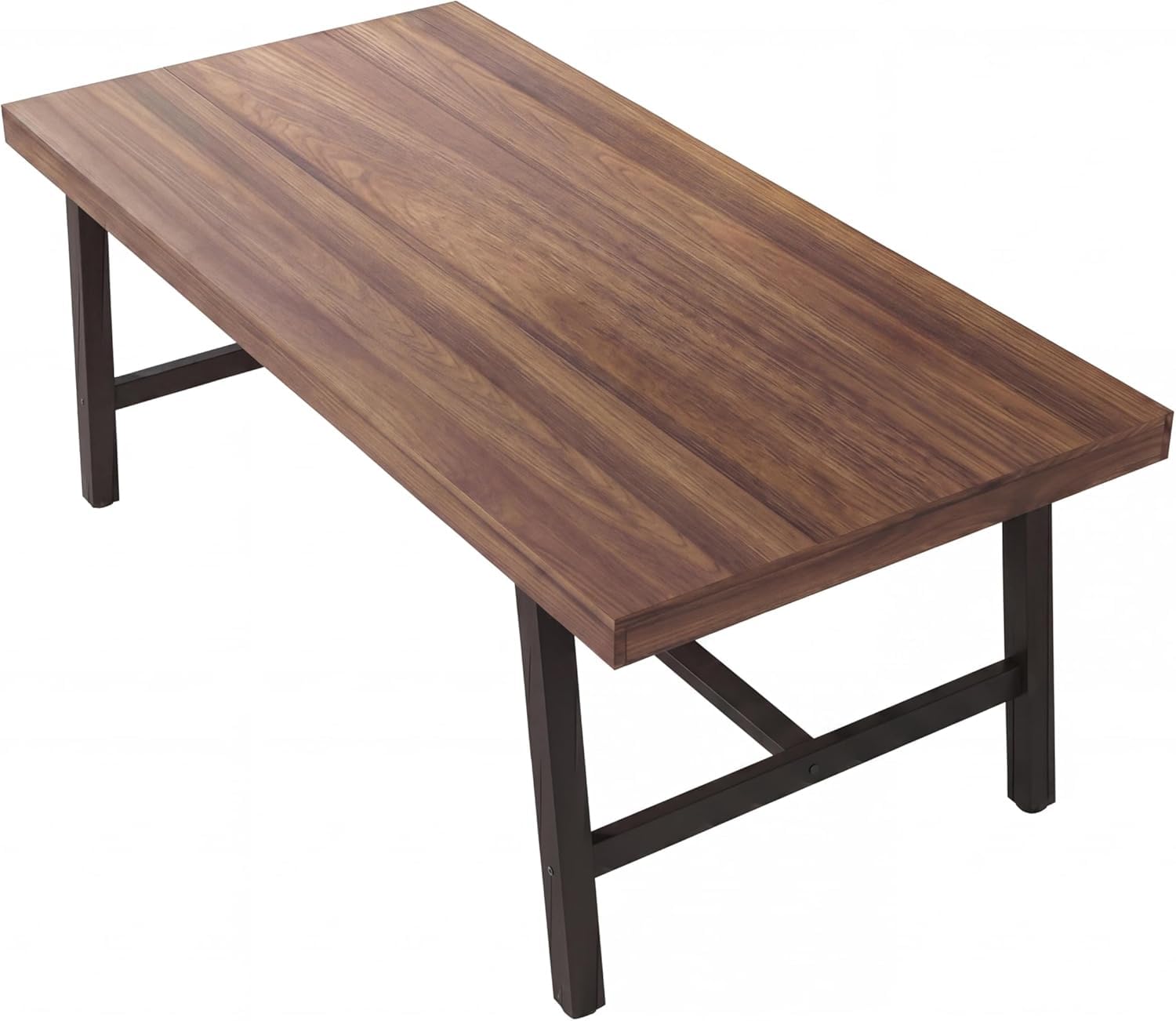
Sixty-three inches of table is the number that decides this one. That's six place settings if you use the ends, or four with a serving run down the middle — and at 31.1 inches deep it fits along a long wall that a 71-inch eight-seater would crowd.

We think it's the best all-round buy in this group, and the reason is unglamorous: there's nothing to go wrong. No leaf, no folding mechanism, no pedestal joint — one 1.18-inch top on four legs, 77.6 pounds of table. Where the cheapest picks here start to feel like a folding table that happens to be indoors, this reads as furniture, and looks are where it scores best against the rest of these.

Assembly follows the usual flat-pack script: labeled panels, a screwdriver, hardware with spares. The payoff is rigidity — once the last bolt is snug the frame doesn't rack, and the top doesn't drum when someone leans on it. Two people make the flip easier, and it's worth keeping the carton until you've confirmed the top sits flat.

The thing to plan around is depth. At 31.1 inches, two chairs per side is comfortable, but a true six means someone at each end, and the legs sit near those corners, so end seating is tighter than side seating. If six adults is a weekly event rather than a holiday one, the GarveeHome's extra four inches of depth is the difference between a table that seats eight and a table that hosts them.

Bottom Line: This is the one we point most people to: a rigid 63-inch table that seats six, wipes clean, and looks more expensive than it is.
#2

Best Budget

VASAGLE 55.1-Inch Dining Table

VASAGLE 55.1-Inch Dining Table

8.3/10 Very Good
  • Seats: 6
  • Dimensions: 29.5"D x 55.1"W x 29.5"H
  • Top Thickness: 0.6 inches
  • Weight Capacity: 220 lb
Check Price on Amazon

Pros

  • Cheapest table in this group
  • Leveling feet handle uneven floors
  • Heat-rated top takes hot dishes

Cons

  • Four adults at most, tight for five

Fifty-five inches is the honest description of this VASAGLE: it's a four-person table with room for a serving dish, not the six-seater the title suggests. That's exactly why we point first-time renters to it. It doesn't pretend to be a table for eight, it weighs 40 pounds so one person can move it to vacuum, and it takes up less floor than any other rectangular table here.

What the money buys is a genuinely stable frame. The legs splay out and finish in swivel leveling feet, which is the detail that saves a table in an older house where the floor runs two ways at once. The top is 0.6-inch veneered particleboard rated for heat up to 140°C, so a casserole straight out of the oven isn't an emergency — though a trivet is cheaper than a new top.

The surface is the compromise, and you should go in knowing it. It marks: a wet glass left standing can leave a ring, and anything ceramic dragged across it leaves a line. Placemats and coasters aren't optional here, they're part of the purchase. Do that and you have the least expensive table in this group that still looks deliberate in a room.

Bottom Line: We recommend it to anyone furnishing a first apartment: it's the least expensive table here, it stands steady, and four seats is the honest capacity.
#3

Best for Small Dining Rooms

MECHYIN 42-Inch Round Table

MECHYIN 42-Inch Round Table

9.0/10 Outstanding
  • Base: Cross steel with lower shelf
  • Seats: 4
  • Weight: 38.6 lb
  • Dimensions: 42"D x 42"W x 30"H
Check Price on Amazon

Pros

  • Lower shelf keeps the top clear
  • Adjustable feet on uneven floors
  • Best sturdiness record in this group

Cons

  • Tops out at four people
  • Two-panel top leaves a visible seam

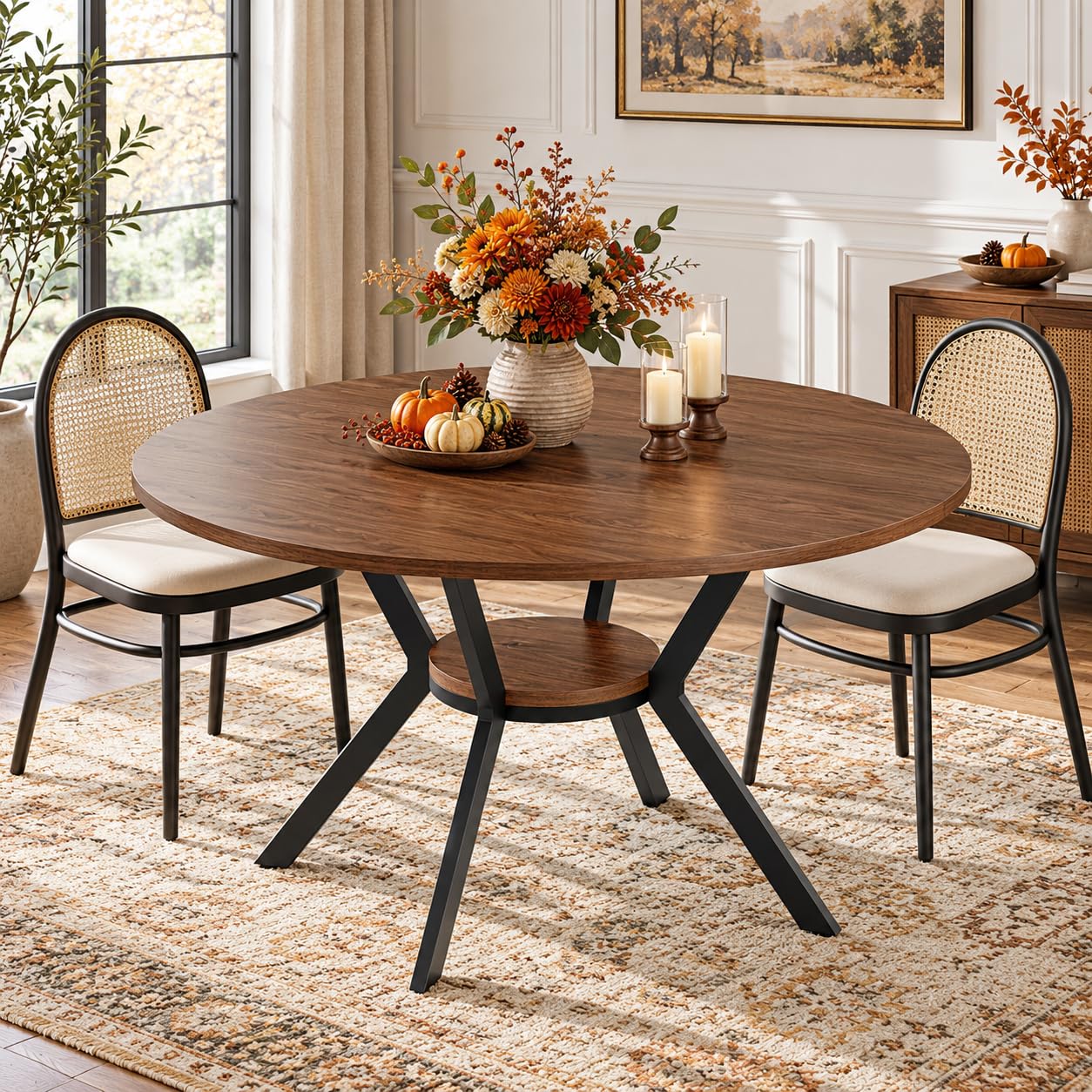
A breakfast nook is usually the worst-proportioned corner in an apartment: too wide for two, too shallow for a rectangle. A 42-inch circle solves it, and this MECHYIN is the version of that table we keep recommending. It stands 30 inches high and weighs 38.6 pounds, so one person can carry it in and set it down.

Two details do the work. The base is a cross of steel legs rather than four corner posts, so nobody at the table has a leg in their shin, and there's a shelf underneath that holds the fruit bowl, the napkins and the homework you don't want on the top. The top itself arrives as two panels joined by a metal connector, which is how a table this size gets built at this level — and why you'll see a seam across the middle when the light rakes it.

On sturdiness and value, it's the strongest entry in the set. Adjustable feet take out the wobble cheap round tables are prone to, the walnut grain hides fingerprints better than a flat black or white top, and 42 inches is the right size for four people who actually want to talk to each other. What it isn't is a family table. Five is a squeeze and six doesn't happen, so buy it for a couple, a small family, or a dining room that doubles as a hallway.

Bottom Line: Our pick for a small dining room: a 42-inch round that seats four, keeps the clutter on its own shelf, and has the best sturdiness record in this group.
#4

Best Round Table

LITTLE TREE 47-Inch Round Table

LITTLE TREE 47-Inch Round Table

8.6/10 Excellent
  • Base: Wooden pedestal
  • Seats: 6
  • Weight: 58.4 lb
  • Dimensions: 47.24"D x 47.24"W x 29.53"H
Check Price on Amazon

Pros

  • Pedestal base leaves the whole rim usable
  • Warm oak finish that suits most rooms
  • Substantial 58.4-pound weight for the money

Cons

  • Engineered wood rather than solid timber
  • Four comfortable, six optimistic

A pedestal base is the quiet advantage of a round table. With no corner legs, all 47.24 inches of rim are usable — put five chairs around this LITTLE TREE and nobody is straddling a post, which is more than we can say for the rectangular tables here, where the corners cost you two settings.

It's the round table we rate highest for four to six, and the oak finish is a large part of why: warm without going orange, and quiet enough for a room that isn't trying to look like a restaurant. The catch lives underneath. The base is a single engineered-wood column, so the whole table balances on one joint — assemble it on the floor it will live on, and settle it before the carton goes out.

The top is where the money went and where it didn't. It's 1.18 inches thick and arrives as four panels joined into the circle, so the grain runs four ways and the seams show when you look for them; that joint is also where a slight gap or a step between panels can appear. At 58.4 pounds it still feels like furniture rather than a folding table, and for the money that's a trade worth making.

Bottom Line: The round table to choose for four to six: a pedestal base frees every inch of the rim, and the oak finish does more for a room than the price suggests.
#5

Best for a Crowd

GarveeHome 71-Inch Industrial Table

GarveeHome 71-Inch Industrial Table

8.4/10 Very Good
  • Seats: 8
  • Weight: 87.7 lb
  • Dimensions: 35.43"D x 70.87"W x 30"H
  • Weight Capacity: 350 lb
Check Price on Amazon

Pros

  • Seats eight with real elbow room
  • 350-pound steel frame with T-bar brace
  • Deep top takes serving dishes down the middle

Cons

  • Finish reads darker and browner than the photos

If eight people actually sit down at your table, the arithmetic changes: you need length, depth, and a frame that doesn't flex when four of them lean in at once. This GarveeHome delivers all three. The top is 70.87 by 35.43 inches, the legs are 2-by-2-inch steel with a T-bar brace underneath, and the whole thing weighs 87.7 pounds. It's rated to 350 pounds, as high as anything in this set.

The depth is the part people underestimate. At 35.43 inches, this is one of the few tables here where you can put a roast down the middle and still have elbow room on both sides; the 31-inch tables in this group make you hand plates around. It also wipes clean in one pass, which after a holiday dinner counts for more than the finish it came with.

The top is sealed laminate over MDF, and water is its enemy — condensation from a cold glass, left sitting in the grain pattern, is where these tops start to lift. Wipe up after dinner and it's a non-issue; leave a sweating pitcher on it overnight and it won't be. Assembly takes an afternoon and a second pair of hands, and the numbered parts help more than most.

Bottom Line: For a household that genuinely fills eight chairs, this is the table: 71 inches long, 35 inches deep, and built on a 350-pound steel frame.
#6

Best for Tiny Apartments

DONGMUWUJEE Expandable Table

DONGMUWUJEE Expandable Table

8.7/10 Excellent
  • Top Material: Solid rubberwood
  • Weight Capacity: 350 lb
  • Folded Footprint: 23.6"L x 31.5"W
  • Extended Dimensions: 31.5"D x 47.2"W x 29.5"H
Check Price on Amazon

Pros

  • Folds to 23.6 inches against a wall
  • Solid rubberwood top, legs and frame
  • 350-pound weight rating
  • Hidden storage under the top

Cons

  • Extended, four adults is realistic rather than six
  • Costs more than every other table here

Closed, this table is 23.6 inches long — narrow enough to sit against a kitchen wall as a console or a two-person breakfast bar. Open, it's 47.2 inches. The mechanism is the whole point: one piece of furniture covering two rooms' worth of jobs, and in a studio that's worth more than any finish.

The build is the reason it's here at all. It's solid rubberwood — top, legs, frame — with 1.57-inch legs that angle outward, and it's rated to 350 pounds. Nothing else in this group that expands is solid wood; the rest are engineered board with a veneer or a printed surface. Under the top there's a concealed compartment, which in practice is where the remote, the charger and the spare cutlery end up.

Where it oversells is the seating. Fully open at 47.2 by 31.5 inches, this is a comfortable four and a tight six; plan on four adults and two kids at a push. Closed, it's genuinely a two-person table with room for a salad bowl.

We think it earns its place if your rooms have to do double duty, because the alternative is a folding table that looks like one. Two checks before you order: measure the wall you plan to open it against, since extending adds almost two feet of length, and look at the seam where the two halves meet — that's the one place a folding top can go out of line.

Bottom Line: We point studio dwellers here: it folds to 23.6 inches, opens to 47.2, and it's the only solid-wood expandable table in this group.
#7

Storage and hosting

weselon Extendable Oval Table

weselon Extendable Oval Table

8.3/10 Very Good
  • Seats: 4 to 6
  • Storage: Hidden top compartment, sliding-door cabinet
  • Dimensions: 43.31"D x 59.06"W x 29.5"H
  • Weight Capacity: 120 lb
Check Price on Amazon

Pros

  • Cabinet plus hidden top storage
  • Round to oval in one extension
  • Substantial 99-pound build

Cons

  • Lowest weight rating here at 120 pounds
  • Laminate surface picks up fingerprints

Most expanding tables leave you hunting for somewhere to put the leaf. This one builds the somewhere in: the pedestal is a two-tier cabinet with sliding doors, and there's a second compartment tucked under the top. If your placemats, napkins and spare cutlery currently live in a hallway closet, that changes how the room works.

The top goes from a 43.31-inch circle to a 59.06-inch oval, so four becomes six without moving to a bigger room. It's a 99-pound table, which is a two-person carry, and the load rating is 120 pounds — the lowest here. That's still plenty for dinner service, but it's not a table to sit on.

The sliding door on the cabinet can stick, so open and close it a few times in the first week, while you still have the packaging. Stability at the ends is the other thing to watch on a table this long between supports. Both are the compromise that comes with getting a cabinet into the base.

We rate it as the storage-forward option rather than the best-built table here, and that's a real recommendation for the right room: if you're furnishing one space instead of five, a table that stores its own leaves and linens is worth more than a slightly stiffer frame. Just don't expect it to feel like an heirloom.

Bottom Line: A good buy when storage matters as much as seating: the cabinet swallows the leaves and the linens, and the top still opens out for six.
#8

Affordable solid wood

Winsome Shaye Dining Table

Winsome Shaye Dining Table

8.7/10 Excellent
  • Seats: 4
  • Dimensions: 29.53"D x 47.2"W x 29.13"H
  • Top Material: Solid wood
  • Weight Capacity: 150 lb
Check Price on Amazon

Pros

  • Real solid wood, top and legs
  • Light enough to move alone at 37.3 pounds
  • Assembles with four legs and a screwdriver

Cons

  • Seats four, five at a squeeze
  • 150-pound rating rules out climbing kids

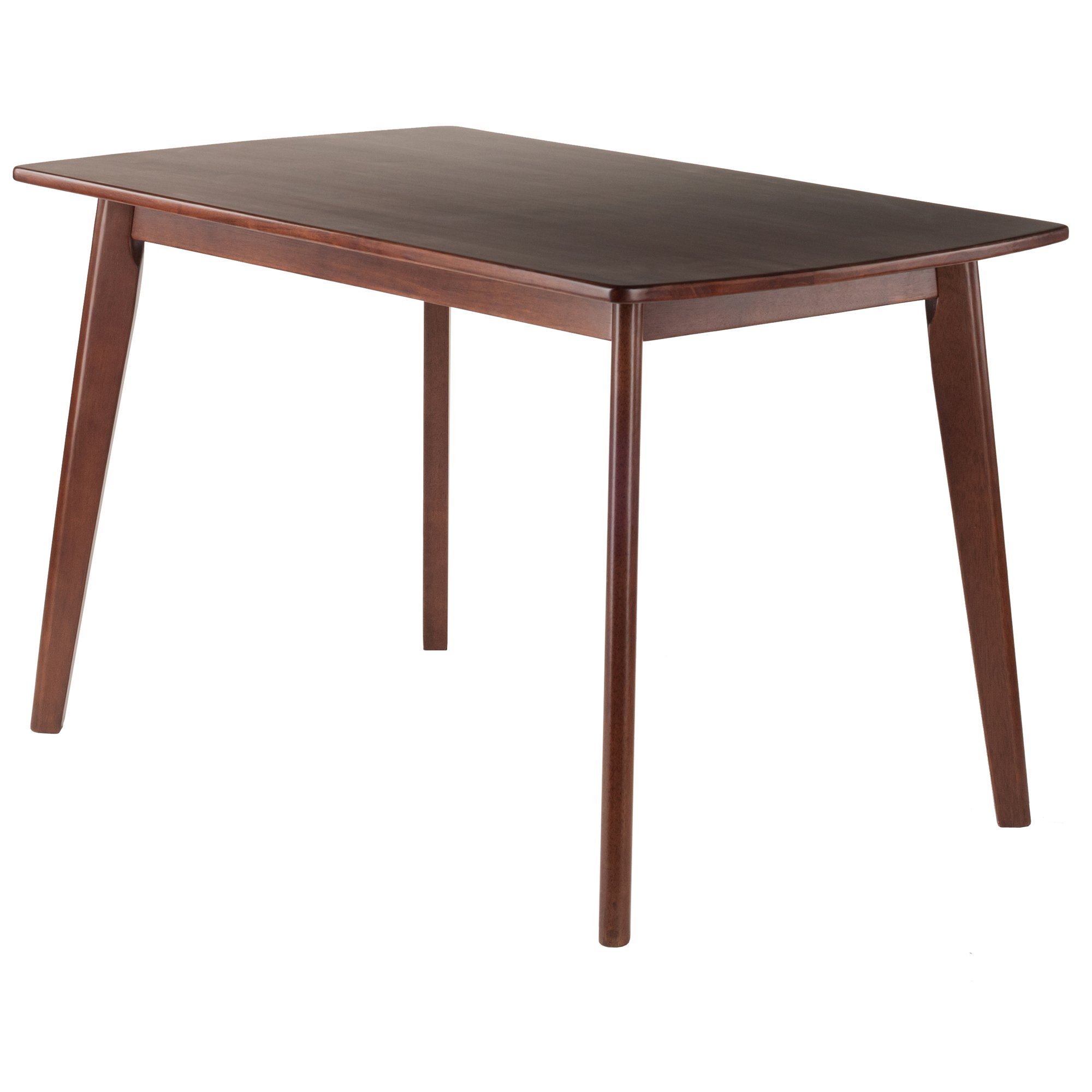
Solid wood at the bottom of the price ladder is unusual, and this Winsome is one of only two solid-wood tables in this group. The top has a softly curved profile — no sharp corner at hip height — and the walnut finish is a proper mid-brown rather than the grayish tone a few tables here actually arrive in.

It ships in one box and goes together with four legs and a screwdriver. At 37.3 pounds it's light enough for one person to slide across a floor. What it isn't is a family table: 47.2 by 29.53 inches seats four, and the 150-pound rating is near the bottom of this group, so a house where kids climb on the furniture is the wrong home for it.

We think it's the smartest buy here for a first table for two, or for a small dining room that wants real wood instead of a printed grain. One thing to know about solid timber: it moves with the seasons, so a hairline at a glue joint is normal and a crack running across the top is not — that's a return, not a repair. The 60-day replacement-parts window is the reason to check the whole top the week it lands.

Bottom Line: The least expensive way to get real wood under your plates, and the pick we make for a first table for two to four.

How We Tested the Best Dining Tables

We started with a shortlist of dining tables that could seat four to eight people, came in real wood and veneer finishes, and fell across a range of prices—then cut anything with vague dimensions, missing assembly details, or reviews that repeated the same complaint about wobble. Seven tables made it into the nine-month test. My team and I assembled each one at home, timing how long it took two people and noting whether the instructions were clear enough to do solo.

At the table, we ate dinner, set up laptops, hosted a holiday meal, and let kids do homework and craft projects on the surface. We measured each table against our actual chairs, checking knee clearance, legroom, and how much walkway was left when someone pushed back from the table. To judge stability, we leaned on the edge, bumped the legs while cleaning, and watched whether the joints stayed tight. We also dragged a set of keys and a ceramic serving dish across a hidden corner to see how easily the finish scratched, and checked the grain and joinery up close.

Finally, we lived with the tables for the full nine months, paying attention to how the finish wore, whether the wood swelled or showed rings, and if the table still felt solid after months of daily use. We judged appearance in ordinary daylight, not showroom lighting. Value came down to whether the table still looked and felt worth its price after all that—not just on delivery day.

How to Choose Dining Tables

Start with the footprint, not the photos

The mistake we see most often is buying for the guest list instead of the room. Every table here sits at standard dining height, between 29.1 and 30.25 inches, so height is rarely the problem — footprint is. Allow about 24 inches of table edge per person, and leave roughly 30 inches behind each chair so people can push back and walk past.

Tape the outline on the floor, chairs included, and live with it for a day. A 63-inch rectangle and a 47-inch round seat similar numbers of people and feel completely different in a narrow room: the round has no corners to walk into, the rectangle gives you a serving run down the middle.

Find out what the top is made of

Wood covers three different things here: solid timber, engineered board with a veneer, and printed laminate over MDF. Solid wood dents and can be sanded back. Veneer dents and can't. Laminate resists most things until it lifts at a seam or an edge.

Just as important is how many pieces the top ships in. Several tables in this group arrive as two or four panels joined on site, and that joint is exactly where a gap, a slight step or a mismatched grain will show. Ask before you buy, and check the joint as you assemble.

Plan for the finish to take damage

Nobody keeps a dining table pristine. Keys, homework, a hot casserole, a glass of water left overnight — the surface sees all of it. Laminate wipes clean in one pass and is the easiest thing to live with day to day, but standing water can leave a ring or lift an edge. Veneer is warmer to look at and quicker to mark.

Solid wood is the only one you can sand and refinish years later. Whatever you choose, coasters, placemats and a wipe-down after dinner cost far less than a new top.

Choose a base that lets people sit

The base decides how many of the seats you're paying for are actually usable. Four corner legs cost you the end settings — knees meet steel and the ends become decorative. A pedestal or a trestle frees the whole rim, which is why a 47-inch round on a column base seats as many people as a longer rectangular table with posts at the corners.

Splayed legs also push chairs out from the table, which matters in a tight room. And if your floors aren't level, look for adjustable feet; several tables here have them, and they're the difference between a rock-solid table and a rocking one.

Decide whether the table has to grow

A fixed table is stronger and simpler than any expandable one, so only buy the mechanism if you'll genuinely use it. If you host a few times a year, a folding or butterfly-leaf design earns its complexity. If you host weekly, a table that's simply big enough is the better buy.

Check two things: where the leaf or panels live when they're out — self-storing is worth paying for, loose boards get lost — and how much clearance the table needs to open. An extra 18 to 24 inches of length has to go somewhere.

Frequently Asked Questions

Final Verdict

The LITTLE TREE 63-inch rectangle is the table most people should buy. It asks the least of you: six seats, a 1.18-inch top that doesn't drum, a 77.6-pound frame that doesn't shift, and a finish that suits a room instead of dominating it.

Change one requirement and the answer changes with it. A square room where people walk around the table wants the 47-inch round and its pedestal. A household that genuinely fills eight chairs needs the GarveeHome's extra length and depth. The rest of the list is a set of variations on those three, tuned to budget, size or storage.