Many games promise family-friendly fun, but the board size or playtime makes them impractical for a coffee table. A sprawling board or an hour-long investment kills the spontaneous round you hoped for. The key is finding a game that fits both your physical table space and your group's attention span. Real-world experiences show that some games arrive with missing pieces or wear out after moderate use — details that don't appear on the box.
The best coffee table games strike a balance: compact enough to fit on a small surface, quick to learn in a single round, and flexible enough to accommodate different player counts without extra setup. They reward repeat plays without demanding a dedicated gaming table. Whether you prefer a quick dice game, a clever bluffing card game, or a strategy tile-layer, there's a coffee table-friendly option that respects your space and time.
That's why the recommendations here prioritize games with strong reputations for build quality and clear rules. Component durability and replay value matter when a game lives on your coffee table.

9.6/10 Exceptional
- Age: 8+
- Players: 2–8
- Game Type: Card game
- Playing Time: 30 min
Check Price on Amazon
Pros
- Engaging and addictive gameplay
- Extremely easy to learn and teach
- Fast 30-minute rounds keep the pace lively
Cons
- For players who prefer strategic depth, the luck-based scoring can feel too simple
- Does not support solo play
The game is engaging and addictive, with rounds that finish in roughly 30 minutes. Learning takes under a minute, making it easy to teach new players. The luck-based scoring keeps rounds unpredictable and lively – ideal for casual groups who want to chat and play without intense focus.
Families with kids aged 8 and up will appreciate the light math practice built into scoring. Group gatherings and parties benefit from the 2-8 player support and portable box. That said, this is almost purely a luck-driven game with a touch of strategy – players seeking deep tactical decisions may find it too simple.
Bottom Line: This is the card game to grab when you want everyone at the table included, laughing, and done in half an hour – no strategy homework required.
9.6/10 Exceptional
- Age: 14+
- Players: 4–8+
- Game Type: Word association
- Playing Time: 15 min
Check Price on Amazon
Pros
- Extremely easy to teach
- Rounds stay short (10–15 minutes), keeping energy high between turns.
- Encourages creative thinking and group discussion without complex rules.
Cons
- Requires a minimum of four players; couples or duos cannot play.
- Timed clue-giving may stress players who prefer relaxed, untimed turns.
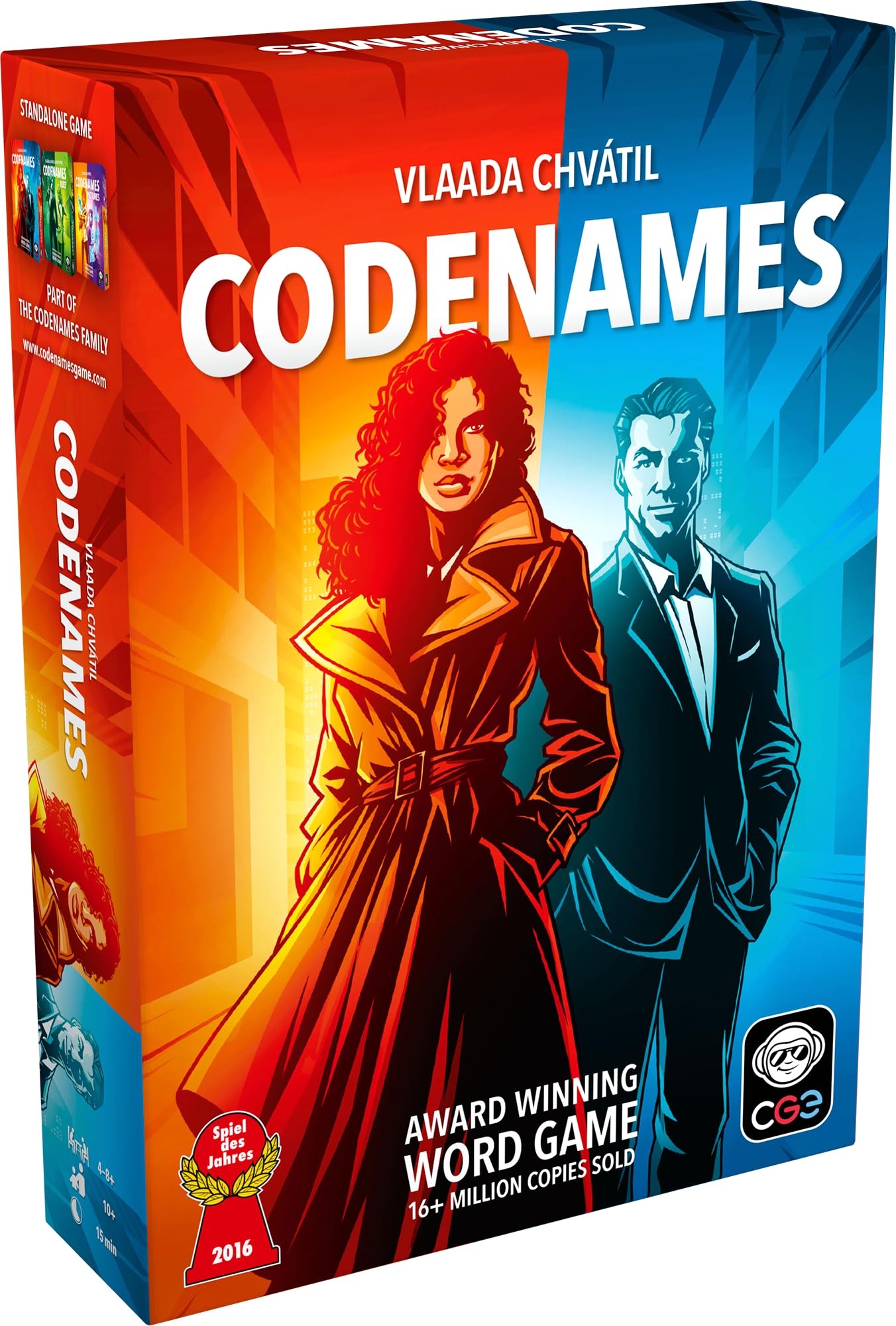
Codenames pulls a room together faster than almost any other party game — two minutes to learn, 15 minutes per round, and a 100% positive score on group enjoyment. Where the top pick (SKYJO) flexes from 2 to 8 players and ages 8+, Codenames is laser-focused on groups of four or more who want a mental workout, not just luck. The 400 codenames and clue-giver role reward creativity and wordplay, making it a hit with casual gamers and word lovers. It demands at least four players, so couples or solo players will need a different game — this one is built for party energy and larger tables.
💡 Tip: Use a small card stand or phone timer to keep clue-giving fair — the sand timer included is optional.
Bottom Line: If you regularly host groups of four or more and want a word game that sparks conversation, this is a round-to-round winner — just skip it if your typical game night is for two.

9.7/10 Exceptional
- Age: 10+
- Players: 2–4
- Game Type: Engine-building
- Playing Time: 30 min
Check Price on Amazon
Pros
- Simple rules that create deep strategic decisions
- Fast 30-minute rounds fit between dinner and a movie
- Component quality - thick gem tokens and sturdy cards - withstands regular handling
Cons
No notable drawbacks to flag.
Splendor's engine-building mechanism rewards careful planning without overwhelming new players. The simple rule set - collect gems, buy cards, attract nobles - unfolds into dozens of viable strategies per game, keeping each 30-minute round fresh. The box footprint fits comfortably on a standard coffee table, with no sprawling board.
This mid-range strategy game suits duos and small groups. For larger gatherings, the 2-4 player cap means you'll need a second game. The gem tokens and cards feel dense and durable, resisting spills and everyday wear on a coffee table surface. New players grasp the loop within two turns, making it a frequent choice for game night hosts easing friends into deeper hobby board games.
Bottom Line: For couples or small groups wanting a gateway to strategy games that doesn't require a huge table or time commitment, Splendor delivers a polished experience that justifies its mid-range price.
9.5/10 Exceptional
- Age: 10+
- Players: 2–4
- Game Type: Cooperative
- Playing Time: 30 min
Check Price on Amazon
Pros
- Forces genuine teamwork
- Teaches in minutes and fits into a lunch break
- Adjustable difficulty keeps it fresh after many plays
Cons
- The sinking island tension may be too intense for very young players
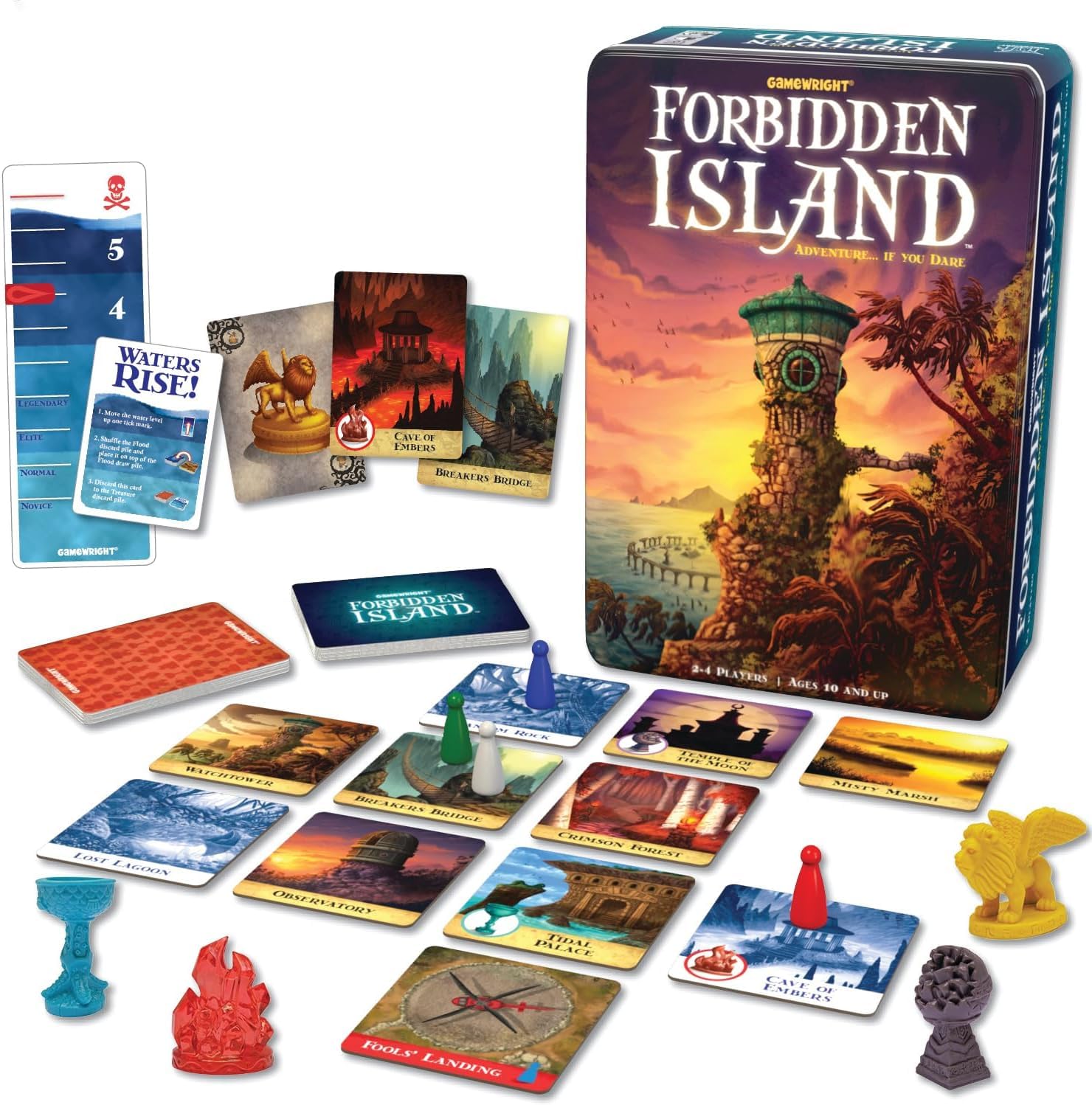
Forbidden Island flips the typical board game script by making every player work as a team, not opponents. The island tiles sink one by one as you race to collect four treasures and escape, creating shared tension and real communication. Rounds clock in at 30 minutes, and the rules click after a single explanation — no silent rulebook reading required.
This works best for families with kids aged 10 and up who enjoy solving problems together. The cooperative pressure is part of the appeal, but younger children may find the sinking island stressful rather than exciting. If your group prefers calm, independent turns, this is less ideal — the shared timer keeps everyone engaged and accountable.
💡 Tip: Lower the difficulty setting to slow the sinking pace if playing with kids on the younger side of the 10+ recommendation.
Bottom Line: If your group values shared goals over individual glory, Forbidden Island delivers focused cooperative fun at a mid-range price.

9.6/10 Exceptional
- Age: 8+
- Players: 2+
- Game Type: Dice game
- Playing Time: Variable
Check Price on Amazon
Pros
- Entertaining for all ages with simple, luck-driven rounds.
- Easy to learn
- Cost-effective at a budget price with decades of replay value.
Cons
- Dice cup feels small and flimsy; score sheet text is compact
Unlike card-based alternatives, Yahtzee’s plastic cup and five dice create a tactile, rolling experience that’s easy to teach in seconds. It’s ideal for families with kids ages eight and up, quick filler rounds on a coffee table, and anyone on a budget. The included cup is noticeably small and the score sheet printing is compact — a trade-off that matters more if you prefer a substantial shaker or large text, but perfectly functional for casual play.
💡 Tip: A standard shot glass or small bowl can replace the cup for a more satisfying dice toss.
Bottom Line: Yahtzee remains a time-tested, low-cost dice game for coffee table rounds — just keep a larger shaker nearby if the included one feels too small.

9.5/10 Exceptional
- Age: 8+
- Players: 3–8
- Game Type: Party / word
- Playing Time: 20–35 min
Check Price on Amazon
Pros
- Learned in 30 seconds
- Hilarious for all ages, from kids to grandparents.
- Non-competitive format keeps even shy players engaged.
Cons
- Groups seeking deeper strategy will find the mechanics too shallow for repeated play.
Blank Slate's 30-second learn time and non-competitive design make it the easy choice for gatherings where players range from kids to grandparents. The core loop — write a word that matches a cue, then see who thinks alike — generates laughs without anyone feeling put on the spot. That same simplicity means strategy-focused players will run out of interest after a few rounds, making this better suited for casual entertaining than game-night marathons.
Bottom Line: Best for party hosts who want a friction-free activity for 3–8 players across generations — not for groups seeking tactical depth.

9.5/10 Exceptional
- Age: 8+
- Players: 2–4
- Game Type: Tile-placement
- Playing Time: 30–45 min
Check Price on Amazon
Pros
- Stunning mosaic visuals and tactile resin tiles
- Quick 30–45 minute rounds with satisfying depth
Cons
- Rulebook clarity can be an issue
The 100 resin tiles and mosaic patterns make Azul a visual centerpiece on any coffee table. Rounds are quick at 30–45 minutes, and the 2-player duel is especially tight. The tradeoff: the rulebook is unclear — expect to look up a tutorial to grasp scoring and placement rules. This makes it best for couples or small groups who enjoy abstract strategy and don’t mind a short learning hurdle.
💡 Tip: Watch a YouTube tutorial before your first game — the rulebook is confusing.
Bottom Line: A gorgeous strategy game with a learning hump — ideal for small groups who prioritize tactile beauty and quick rounds.

9.6/10 Exceptional
- Age: 8+
- Players: 2–4
- Game Type: Tile game
- Playing Time: Variable
Check Price on Amazon
Pros
- Addictive and fun gameplay for family game nights
- Easy to learn with strategic depth for all ages
Cons
- Tile numbers can wear off after weeks of weekly play - best for occasional use
Pressman Rummikub delivers engaging brain exercise and cross-generational fun at a budget-friendly price. The tile-based rummy game is easy to teach yet offers enough strategy to keep minds sharp. However, the printed numbers on tiles can fade with frequent play, making this a better match for families who play a few times a month rather than weekly heavy users.
Bottom Line: Perfect for casual coffee table game sessions that prioritize brain activity over component longevity.
9.5/10 Exceptional
- Age: 7+
- Players: 2–5
- Game Type: Tile-laying
- Playing Time: 35 min
Check Price on Amazon
Pros
- Easy to learn and quick to play
- Great for families with kids age 7+
Cons
- Less visually striking than some tile games, which may matter if table presence is a priority
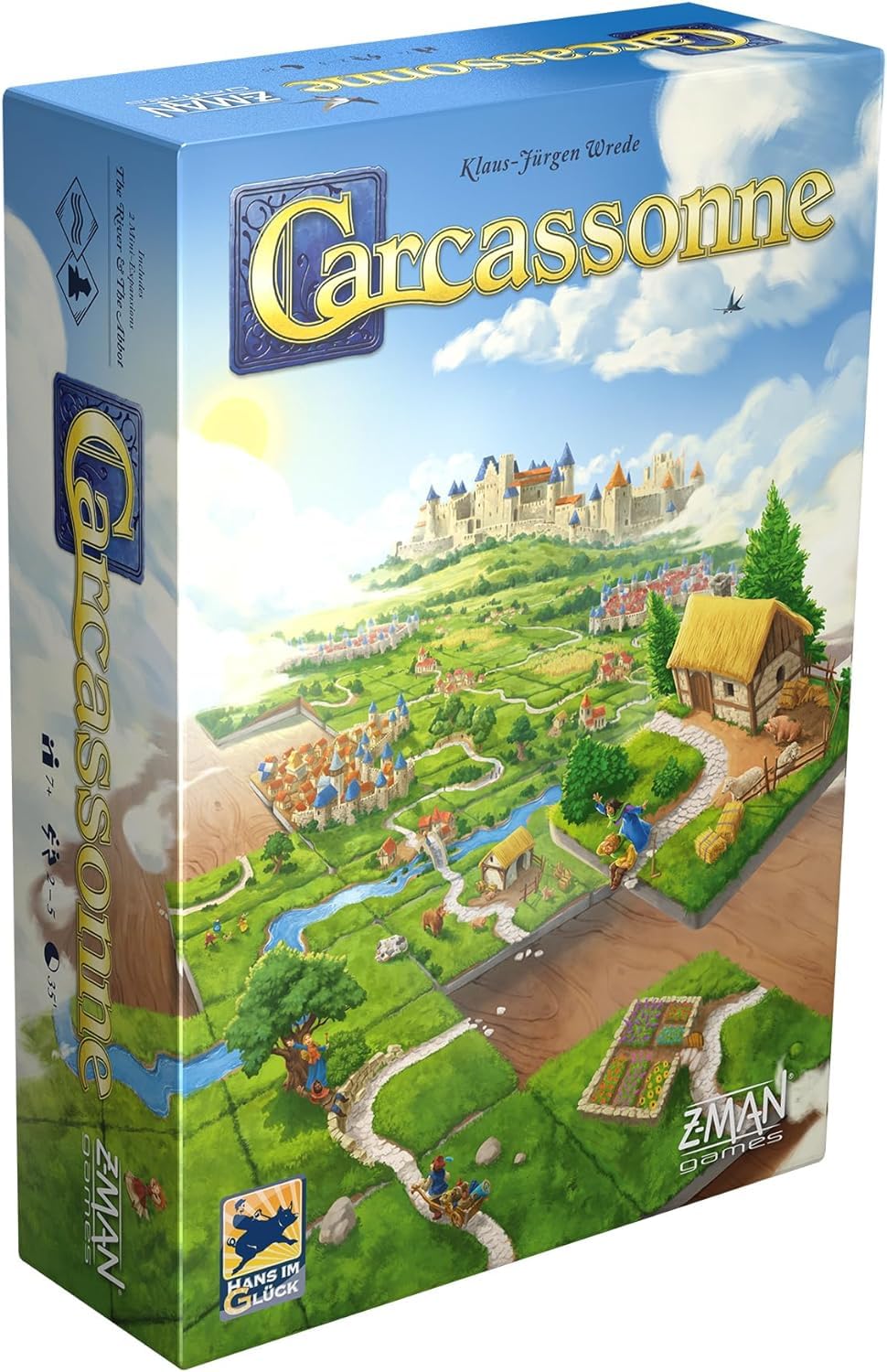
Carcassonne introduces strategy gently: draw a tile, place it, add a meeple. The included Abbot and River expansions add variety without extra cost, and the 35-minute playtime keeps rounds moving. It loses visual edge to Azul's resin tiles and lacks the deep engine-building of Splendor, but for families or new gamers wanting a quick, engaging tile layer on a small table, it delivers reliably.
Bottom Line: Best for families and new board gamers who want a quick, accessible strategy game that fits on a small table — the included expansions add lasting variety without extra expense.

9.5/10 Exceptional
- Age: 14+
- Players: 2–6
- Game Type: Social deduction
- Playing Time: 15 min
Check Price on Amazon
Pros
- Fast 15-minute rounds that are easy to teach new players.
- Bluffing mechanics create tense moments of deduction and accusation.
Cons
- Requires a group comfortable with direct confrontation
Coup packs high-stakes bluffing into a portable deck for small groups who enjoy calling each other's bluffs. Rounds are fast and tense, but the game demands comfort with direct accusation – it is not suited for players who prefer collaborative or low-conflict play.
Bottom Line: Best for small groups that thrive on bluffing and quick accusations; skip this if your group prefers cooperative or low-conflict fun.
9.5/10 Exceptional
- Age: 14+
- Players: 3–8
- Game Type: Social deduction
- Playing Time: 15 min
Check Price on Amazon
Pros
- Hilarious and engaging social deduction that keeps groups guessing.
- Easy to learn and quick to play with simple rules.
Cons
- Topic cards may feel limited after many plays; expansion packs are desired.
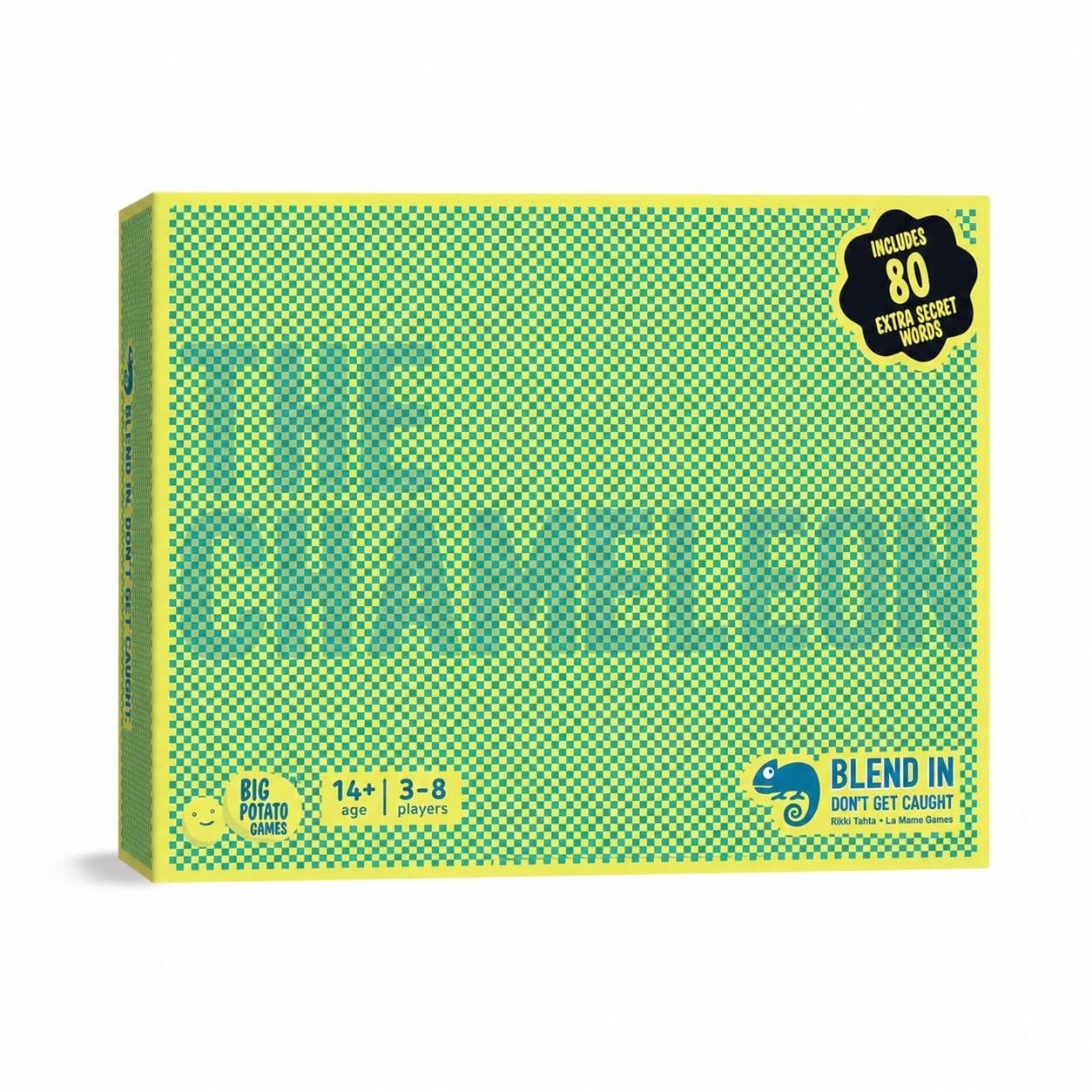
Big Potato's Chameleon offers hilarious bluffing for 3-8 players in 15-minute rounds. The minimal components work on any coffee table, and rules are easy to teach. Topic cards may feel limited after many plays; expansion packs are desired. Fewer cards and less replayability than Codenames out of the box.
Bottom Line: Best for groups that want a quick bluffing game on a coffee table, but consider Codenames if you plan to play regularly.

9.5/10 Exceptional
- Age: 14+
- Players: 1–5
- Game Type: Engine-building
- Playing Time: 70 min
Check Price on Amazon
Pros
- Beautiful artwork and bird facts
- Deep engine-building with multiple paths
Cons
- Steep learning curve; rules can be confusing for new players
Wingspan offers beautiful artwork, deep engine-building, and a solo mode for nature lovers. Its steep learning curve and 70-minute playtime, however, limit its appeal for casual coffee table gatherings where quick, easy games shine. The premium price further narrows its audience to dedicated gamers.
Bottom Line: Best for serious bird enthusiasts and solo board game fans who have a dedicated game table and can invest time in learning rules.

9.6/10 Exceptional
- Age: 10+
- Players: 3–4
- Game Type: Strategy
- Playing Time: 60–90 min
Check Price on Amazon
Pros
- Engaging resource management that hooks players for multiple sessions.
- Accessible rules suit families with teens and game night groups.
Cons
- Some units may arrive with missing roads or settlements; check contents immediately.
CATAN’s modular hex board and trading mechanics create engaging, repeatable sessions for strategy-minded groups. The table footprint and hour-plus playtime limit its coffee-table appeal, and some units arrive with missing roads or settlements — opening the box deserves a careful inventory check.
Bottom Line: Best for strategy-focused groups with a dedicated table and patience to verify components — less suited for quick or small-surface coffee table sessions.

9.5/10 Exceptional
- Age: 8+
- Players: 2–4
- Game Type: Word building
- Playing Time: —
Check Price on Amazon
Pros
- Rotating board and storage drawers simplify setup and cleanup.
- Recessed squares keep tiles from shifting during play.
Cons
- Tile lettering may be slightly off-center or inconsistent in rare cases.
High build quality and rotating board make setup easy and enjoyable. Recessed squares keep tiles securely in place. Built-in storage drawers streamline pack-up. However, the board's larger footprint is better suited for a dining table than a coffee table. Tile printing may be off-center in rare cases.
Bottom Line: Best for Scrabble fans who play often and want a durable, portable set — just ensure you have ample table space for the rotating board.
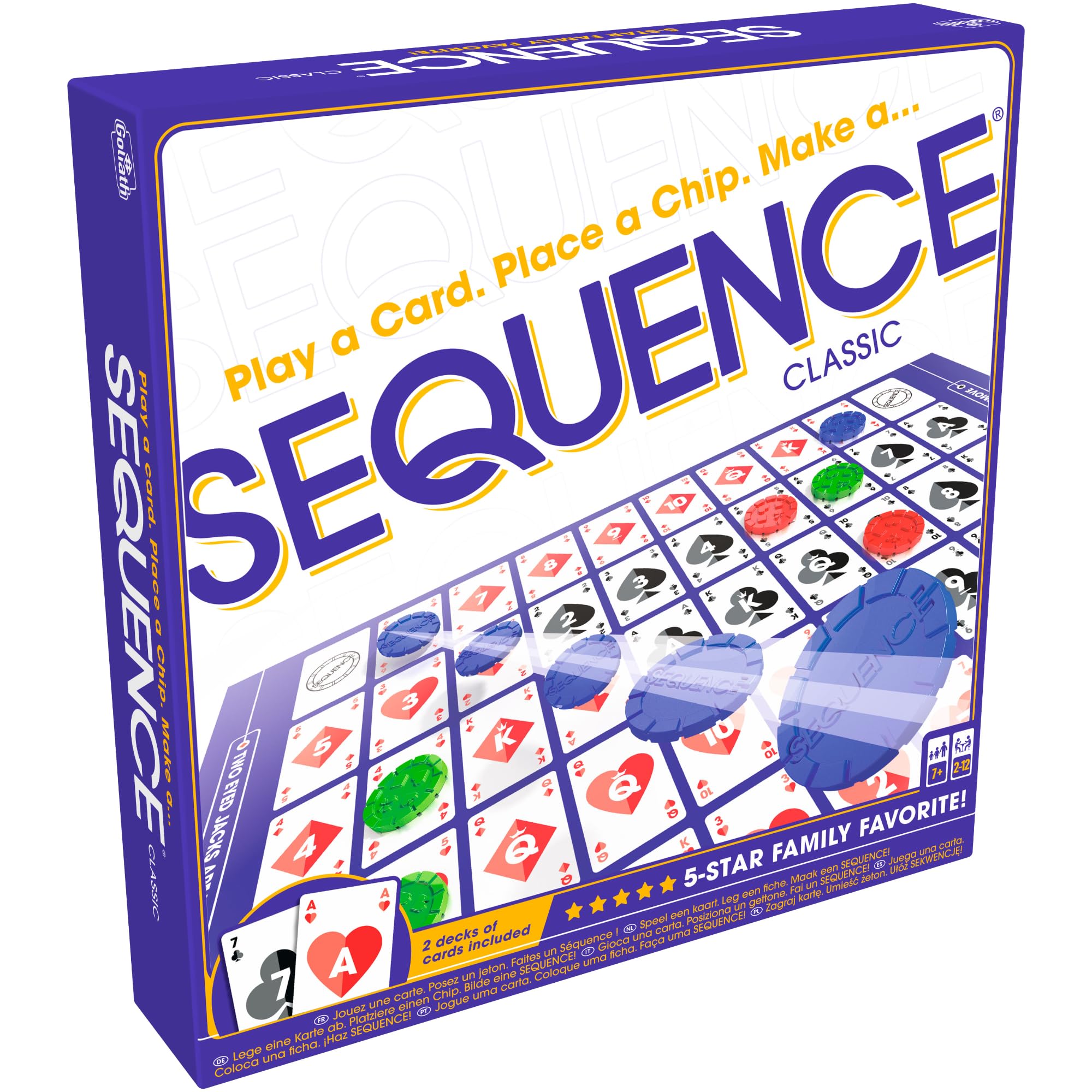
9.6/10 Exceptional
- Age: 7+
- Players: 2–12
- Game Type: Card & chip
- Playing Time: —
Check Price on Amazon
Pros
- Works for groups of 2 to 12 players on a standard tabletop.
- Folding board simplifies setup and storage after play.
Cons
- Without recent customer reviews, the current board and chip quality is hard to verify.
Jax Sequence handles large groups well, offering a simple card-and-chip strategy that fits on standard coffee tables. The folding board makes storage easy. However, the lack of recent customer reviews means current build quality is uncertain. Buyers who rely on verified feedback may want to look elsewhere.
Bottom Line: Best for large groups seeking a lightweight strategy game and willing to accept limited current quality data.