Kids & Nursery

Best Kids Cube Organizers of 2026

The playroom looks wonderful for about a week. Then the picture books migrate to the floor, the blocks end up under the couch, and every flat surface in the house becomes a home for a stuffed animal. A cube organizer fixes that — a wall of open cubbies at kid height your child can actually reach, so the room resets in five minutes instead of an hour. The trouble is that nearly identical units differ in ways the product photos never show: the shelf that bows under a row of hardcovers, the back panel that turns out to be folded cardboard, the frame that wobbles the first time a toddler pulls up on it.

Over the past eight months, my team and I have lived with 12 of these, from budget flat-packs to solid-wood splurges, and the ones worth buying share a few traits. Assembly is manageable solo, each cube holds real weight without sagging, the finish still looks presentable after a year of juice cups, and the whole thing is light enough to drag into another room yet stable enough that you stop thinking about it. One thing to know before you shop: most organizers don't include bins, and the openings are usually 11 or 13 inches, so measure before you buy fabric cubes.

#1

Best Overall

Neprock 16-Cube Organizer

Neprock 16-Cube Organizer

8.8/10 Excellent
  • Cube Size: 11.8 x 11.8 x 11.8 in
  • Number Of Cubes: 16
  • Overall Dimensions: 12"D x 48"W x 49"H
  • Weight Limit Per Cube: 22 lb
Check Price on Amazon

Pros

  • 22 pounds per cubby, double the other full-size units
  • 0.75-inch panels resist bowing under bins
  • Zip ties and hammer included for a rigid build
  • Lifetime warranty listed for the frame

Cons

  • Clasps can work loose if a loaded unit is dragged

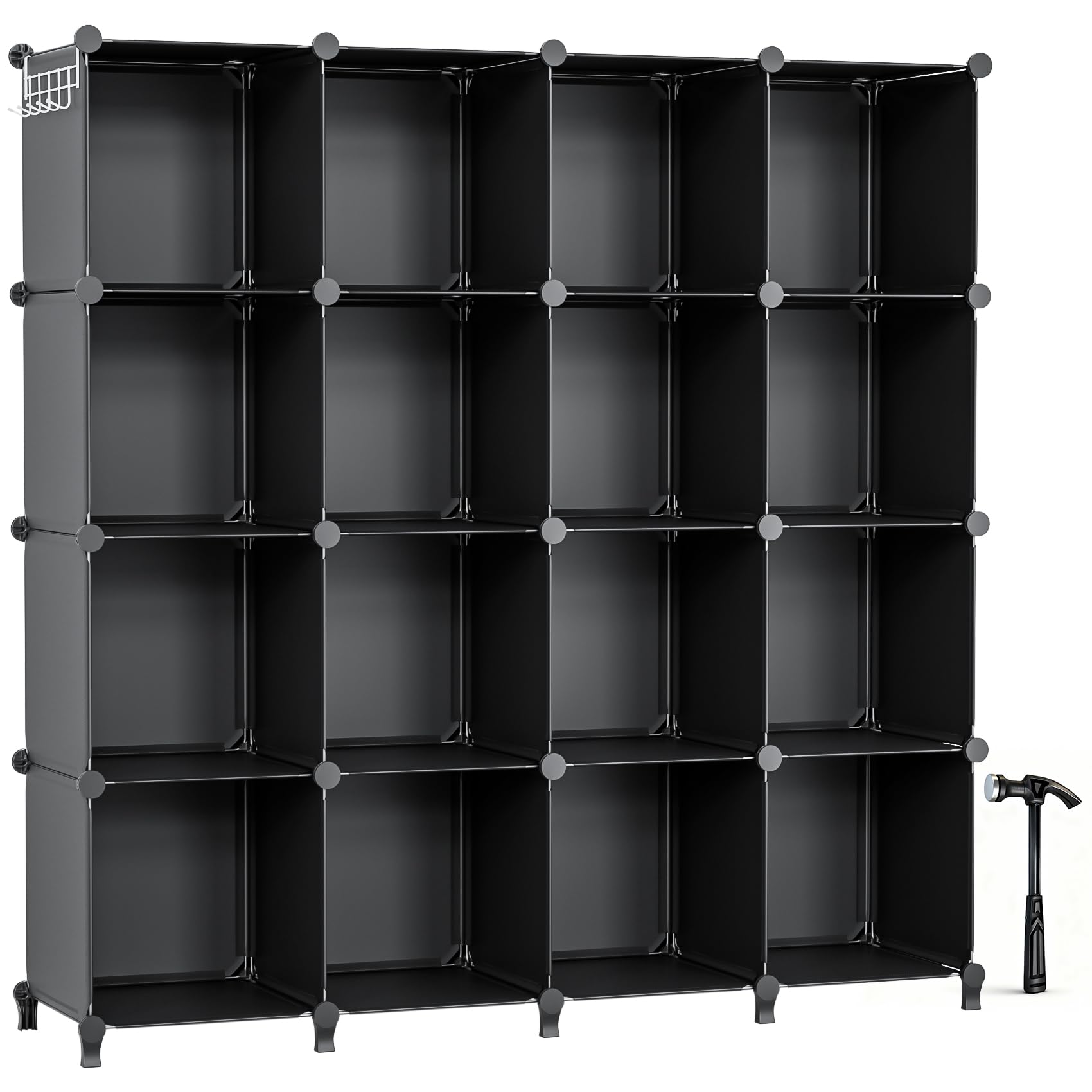
Twenty-two pounds per cubby is the number that decided this one for us. Every other full-size unit here is rated at 11, and the difference shows the first time a bin of wooden blocks or hardback picture books goes in: the panel doesn't bow, the cubby doesn't sag, and the grid stays square. The panels are three-quarters of an inch thick, joined by deep ABS connectors around a metal frame, so the whole thing feels less like a plastic flat-pack and more like shelving. That combination is why it's our pick for a child's room rather than just a room.

What comes in the box is the part we didn't expect to appreciate: a plastic hammer, spare feet and thirty zip ties. The ties matter more than they sound. These modular grids loosen at the back corners first, and tying the rear panels together takes the flex out of the frame before it starts. We also like that the unit is twelve inches deep, so it sits close to a wall without swallowing floor space, and the 11.8-inch cubes take standard eleven-inch fabric bins without a fight.

The honest caveat is movement. Loaded and dragged, the clasps can work loose, and a unit that has been shoved across a rug will need a corner pressed back together. Build it where it will stand, use the ties, and it holds. Ours has stayed square with toys in every cubby and nothing heavier than a stack of board books up top. It's also the only unit in this group with a lifetime warranty behind it, which is a quiet vote of confidence for something a toddler will climb.

Bottom Line: For a toy-heavy kid's room, this is the one we point parents to: 22-pound cubbies, a zip-tied frame, and a lifetime warranty behind it.
#2

Best Value

C&AHOME 16-Cube Organizer

C&AHOME 16-Cube Organizer

8.9/10 Excellent
  • Cube Size: 11.8 x 11.8 x 11.8 in
  • Number Of Cubes: 16
  • Overall Dimensions: 12.4"D x 48.4"W x 48.4"H
  • Weight Limit Per Cube: 11 lb
Check Price on Amazon

Pros

  • Sixteen cubbies for less than the other full-size units
  • Snap-together build with the mallet included
  • 12.4-inch depth suits a closet or narrow wall

Cons

  • 11-pound limit per cubby
  • Thin panels can crack under a packed bin

Sixteen cubbies for less money than either of the other full-size units here — that's the pitch, and it mostly holds up. The frame is the same modular idea: 11.8-inch plastic panels, a metal grid inside, ABS connectors at every corner, and a small wooden mallet in the box. Overall it runs 48.4 inches wide, 12.4 inches deep and a hair over four feet tall, so it's a wall of storage rather than a piece of furniture.

We think it's the right buy when the bins stay light. Each cubby is rated to 11 pounds, half the Neprock's ceiling, so soft toys, dress-up clothes, craft supplies and shoes are all fine, while a bin packed with hardbacks is not. The panels are thin enough that a heavy load can crack one over time, and that's the trade you make for the lower price. The build is where it earns back points: listen for the snap as each panel seats, because the panels that go in quietly are the ones that work loose later. A little muscle here pays off in a rigid grid.

Set against a wall and it behaves. Ours has held board books, a rotating set of toy bins and a stack of folded blankets without leaning, and the flat black finish wipes clean with a dry cloth, which counts in a room where snacks happen. For a playroom that needs volume more than showroom looks, that's a sensible trade: it costs less than the top pick and gives you the same sixteen cubbies.

Bottom Line: We think it's the best value of the full-size units, provided the bins stay light — heavy toy boxes belong in the sturdier pick.
#3

Best for Small Rooms

AWTATOS 6-Cube Organizer

AWTATOS 6-Cube Organizer

8.7/10 Excellent
  • Cube Size: 11.8 x 11.8 x 11.8 in
  • Number Of Cubes: 6
  • Overall Dimensions: 11.8"D x 35.5"W x 37.5"H
  • Weight Limit Per Cube: 11 lb
Check Price on Amazon

Pros

  • Six cubbies in a 35.5-inch width
  • No tools needed to assemble
  • Short enough for a child to reach the top row
  • Lowest price of the group

Cons

  • Joints separate when a loaded unit is moved
  • 11-pound ceiling per cubby

Three feet of wall is all this needs. The AWTATOS is six 11.8-inch cubbies in a frame 35.5 inches wide and 37.5 inches tall, short enough that a child can reach the top row without a stool — which changes how a small room works, because the whole unit becomes the child's storage instead of the parent's. In an alcove, at the end of a bed, or under a window, it fits where a sixteen-cube wall simply won't.

This is the one we suggest when the room is small or the budget is tight. Assembly is the easiest of the group: no tools, panels that push into their connectors by hand, and a layout you can rebuild as a two-by-three or a single column when the furniture moves. What you give up is load — 11 pounds per cubby, and joints that separate if you carry the unit while it's full, so empty it before you shift it. We also noticed the connectors sit slightly proud of the panels, which means a stiff bin can catch on the way in; push it straight rather than at an angle. For a first bedroom or a dorm, six reachable cubbies at the lowest price here is a good trade.

Bottom Line: We reach for this one in a small bedroom: six cubbies a child can actually reach, no tools, and the lowest price here.
#4

White decor

HOMIDEC 16-Cube Organizer

HOMIDEC 16-Cube Organizer

8.7/10 Excellent
  • Cube Size: 11.8 x 11.8 x 11.8 in
  • Unit Weight: 10 lb
  • Number Of Cubes: 16
  • Overall Dimensions: 11.81"D x 47.24"W x 47.24"H
Check Price on Amazon

Pros

  • Only white full-size unit here
  • Sixteen 11.8-inch cubbies take standard bins
  • Light enough for one person to position

Cons

  • No per-cube weight rating given
  • Joints loosen after the unit is moved

What earns this one a place is the finish: it's the only white full-size unit in this group, and white disappears against a pale wall in a way black never will. Set against the other sixteen-cube frames, though, we found it trails on joint hold. The panels are light, the connectors take a firm push to seat, and a unit that arrives square can end up leaning after a move.

Assembly is the fussy part. Deep connectors mean each panel has to go in fully, and if one seats slightly off, the wobble shows up three rows later. There's no per-cube weight rating published for this one, which is itself useful information — treat it like the 11-pound units here rather than the Neprock and keep books and heavy toys low. Panels that hold fine in place also tend to separate when the unit is lifted, so build it where it stands and empty it before you shift it.

What it does well is volume and looks: sixteen 11.8-inch cubbies across 47.24 inches, a clean face that takes standard fabric bins, and a white surface that keeps a small room from feeling dark. At ten pounds empty it's the easiest full-size unit here for one person to walk into position — and the easiest for a determined toddler to shove out of it. Against a wall, with the heavy bins low, it's a handsome unit that asks you not to move it.

Bottom Line: We choose it for the white finish and accept the joints as the compromise; build it once, in place, and leave it there.

How We Tested Kids Cube Organizers

We started by gathering every kids cube organizer we could find from the major furniture and big-box retailers, then narrowed the field on specs and price: cube count and opening size, material (MDF, particleboard, solid wood, plastic), stated shelf weight limits, and whether wall-anchoring hardware came in the box. Anything with no stated weight limit or a tool list longer than a screwdriver got cut. That left 12 units, which we built and used for eight months.

Assembly came first. I timed each build solo from box to finished unit using only the tools included, counted instruction steps, checked whether the hardware was labeled by number, and noted whether the pilot holes actually lined up and the cam locks seated flush. A rigid back panel earned a nod; a rolled-up sheet that had to be tacked on did not.

Once built, each organizer went into a real playroom and got loaded the way kids load them — board books, a bin of blocks, a stack of puzzles — and we weighed the heaviest shelf, then checked it a week later for bowing or sagging pins. I nudged each one side to side on carpet and hardwood, stacked weight on the top shelf to see if it rocked, and did a pull test with a 40-pound kid hanging off the front edge, before and after anchoring. Over the eight months we moved every unit at least once, wiped them down with a damp cloth, and watched the corners for chipping and the screws for backing out — a lightweight frame is easier to relocate, but it's usually the one that needs anchoring most.

How to Choose Kids Cube Organizers

What a Cubby Has to Hold

Most of the modular units in this group are rated at 11 pounds per cubby, and the Neprock doubles that. The difference isn't abstract: a bin of hardback picture books or wooden blocks gets heavy quickly, while plush toys and dress-up clothes barely register. If books, board games and collections are heading into the unit, pay for the higher rating. If it's soft toys, costumes and craft supplies, an 11-pound cubby is plenty — just keep the heaviest row at the bottom, where the frame carries it best.

Count Cubes, Then Measure the Wall

A sixteen-cube unit isn't a shelf; it's a piece of furniture roughly four feet wide and four feet tall, and it will dominate a small bedroom. The six-cube units run about three feet wide and thirty-seven inches tall, which suits an alcove or the end of a bed. Measure the wall, the door swing and the walkway past it before you decide. Height matters for a child too: on the taller units the top row sits near four feet, out of reach for a preschooler, which turns it into display space rather than storage.

Where It Stands Decides How Safe It Is

These frames are light — most weigh under twenty pounds empty — and they're tall. That combination deserves planning. Stand the unit flat against a wall, fasten it with a wall strap if a climber shares the room, and never leave the bottom row empty where a child can use a cubby as a step to reach the next one. Heavy bins low, light bins high: a bottom-heavy unit is harder to tip and easier to keep square.

Joints Are the Whole Ballgame

Every pick here is a grid of plastic panels pushed into connectors around a metal frame, so the joint is what gives first — usually not a collapse, but a corner that pops and leaves the unit leaning. When you assemble it, push each panel until it seats fully; the panels need a firm hand, and a half-seated panel is the start of a wobbly grid. Build it in the room where it will stand, because these units don't like being carried while loaded, and use the zip ties along the back where they're supplied.

Frequently Asked Questions

Final Verdict

For most kids' rooms, the Neprock is the one to buy. Doubling the per-cubby weight rating isn't a spec-sheet nicety — it's the difference between a unit that stays square under a bin of wooden blocks and one that starts to lean. The included zip ties and the lifetime warranty make it the least fussy full-size option here.

If the wall is small, change the plan: the AWTATOS fits six cubbies into three feet and assembles without tools, and that's the better buy for a narrow bedroom. For a large playroom on a tight budget, the C&AHOME works as long as the bins stay light.