Kids & Nursery

Best Low Bunk Beds of 2026

A low bunk bed trades headroom for peace of mind. It keeps the top bunk close enough to reach, which matters in rooms with low ceilings, ceiling fans, or younger kids who aren't ready for a full-height climb. What a good one fixes is simple: two kids share a room without turning it into a climbing gym, and you're not refereeing midnight descents. The catch is that every inch of frame has to earn its keep.

Over the past nine months, my team and I assembled six low bunk beds and lived with them in real bedrooms. We watched for the things you notice after the novelty wears off: whether the frame stays quiet when a kid climbs up, how the finish handles sticky hands, whether the footprint leaves room for a dresser, and if the instructions are clear enough to build without a second adult. We also weighed what each bed cost against how solid it felt after months of use. The picks below are the ones that got out of the way.

#1

Best Overall

GIANTEX Twin Low Bunk Bed

GIANTEX Twin Low Bunk Bed

8.4/10 Very Good
  • Ladder: Wide integrated ladder
  • Overall Height: 51 inches
  • Weight Capacity: 350 lb
  • Guardrail Height: 12 inches
Check Price on Amazon

Pros

  • Wide integrated ladder is easier for kids
  • 12-inch full-length guardrails
  • 350-pound capacity with 14-plus-7 slats
  • Low 51-inch top rail

Cons

  • Requires wall anchoring for stability

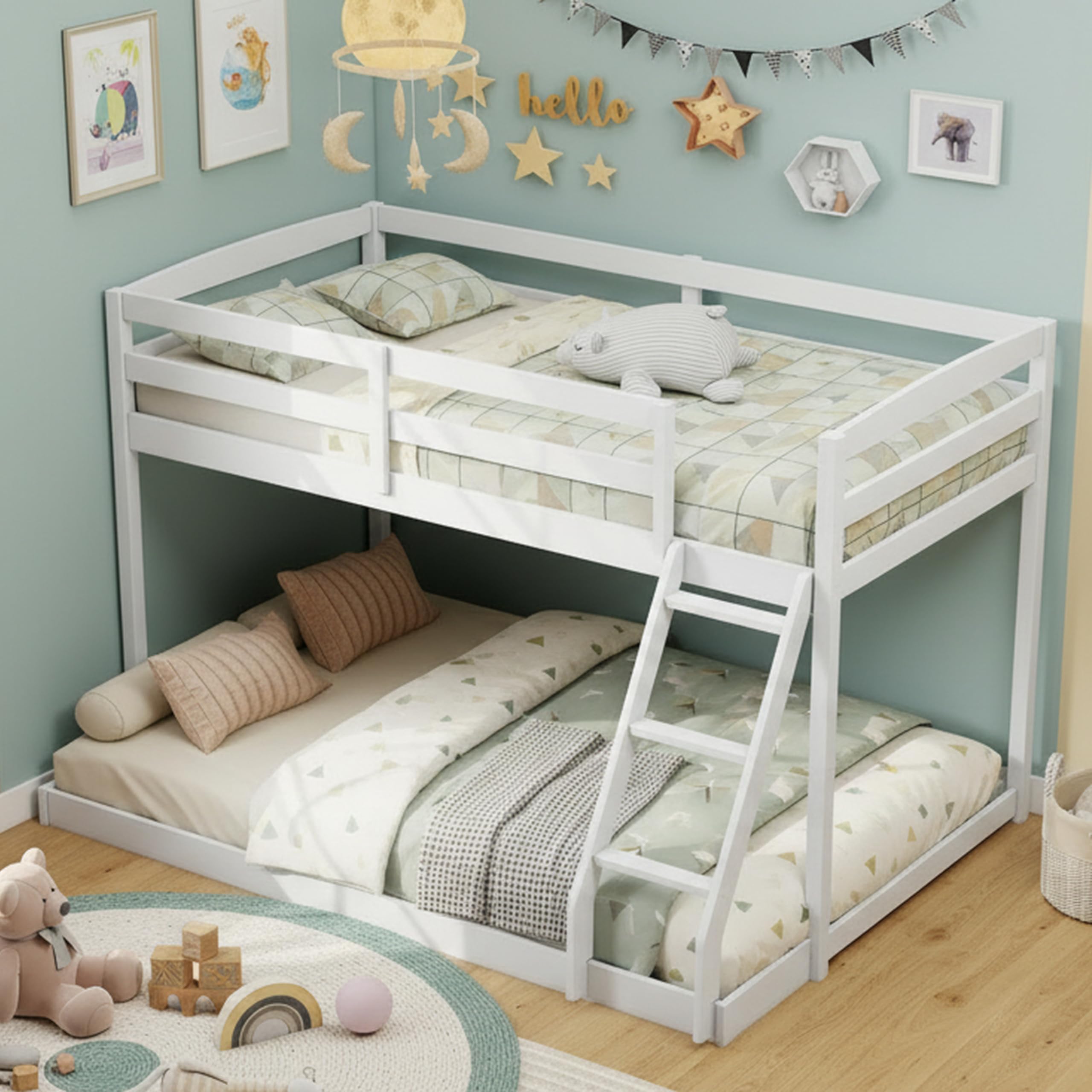
The GIANTEX gets our top recommendation because it balances the two things a low bunk has to do: keep the top bunk within reach and still feel like a real bed. The top rail sits at 51 inches, low enough for a young child to climb to and for an adult to reach across, while the 12-inch full-length guardrail and wide integrated ladder make the route up feel deliberate. With a 350-pound capacity and 14-plus-7 wooden slats, it also has more margin for growing kids than the smallest frame here.

The integrated ladder is the detail we kept coming back to. It is wider than the bolt-on ladders on several picks, and because it is part of the frame, there is no side-swapping or re-bolting to get it where you want it. That matters in a small room, where the ladder often ends up on the side dictated by the door or dresser. The pine-and-plywood frame is also the version we trust for a shared kids' room, with a stated capacity that leaves room for a growing child and an occasional guest.

It is not the shortest low bunk in this group; the TOLEAD sits about four and a half inches lower. For most rooms, 51 inches is the better compromise, with more breathing room for the upper sleeper and easier access for an adult changing sheets. If your ceiling is genuinely tight or a ceiling fan hangs low, that difference is worth taking seriously. Otherwise, this is the low bunk we reach for first.
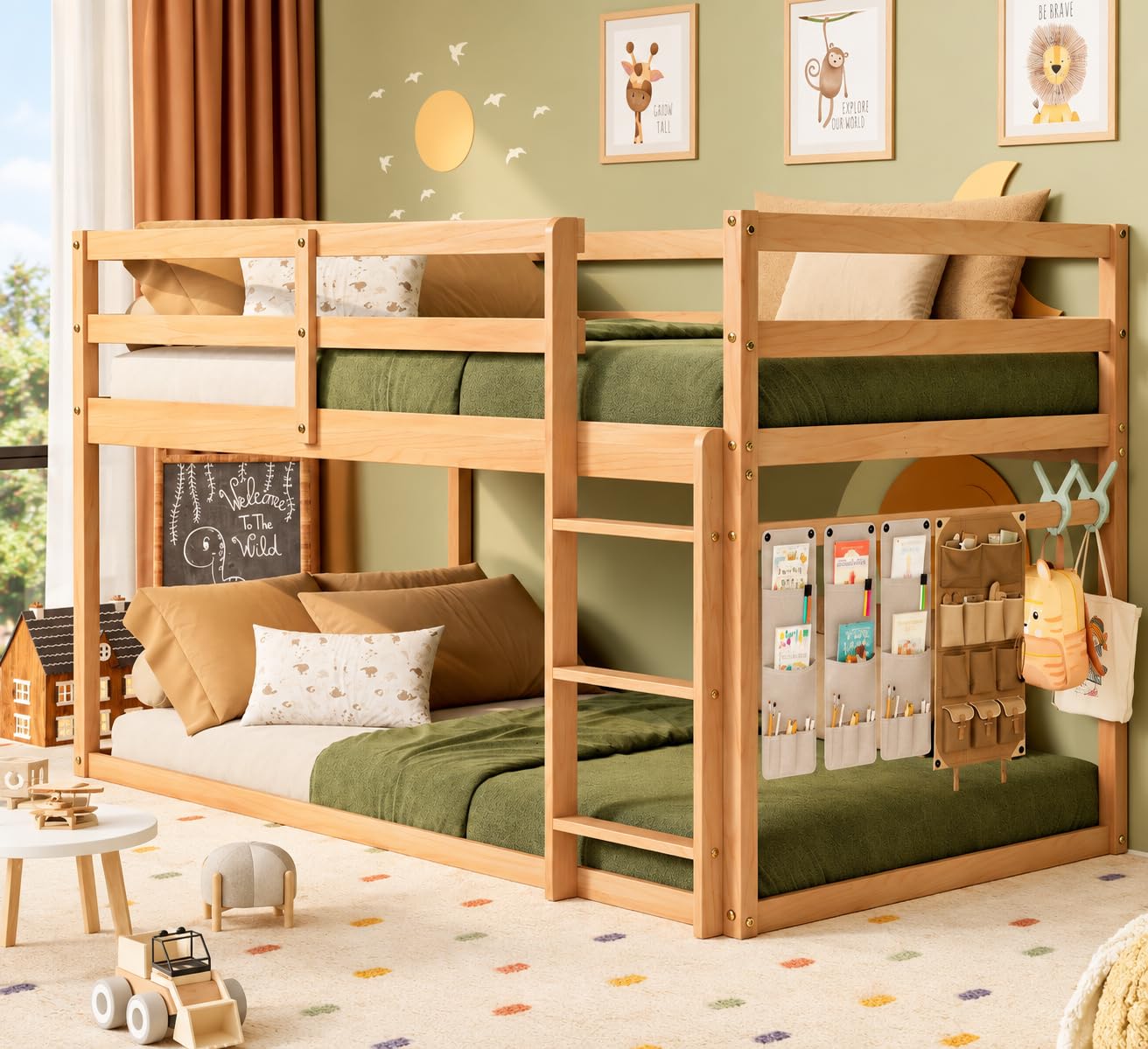
Bottom Line: We recommend the GIANTEX for most young families: a 51-inch frame, 12-inch guardrails, a wide integrated ladder, and a 350-pound capacity.
#2

Best Classic Wood Bunk

JOYMOR Solid Wood Low Bunk

JOYMOR Solid Wood Low Bunk

8.8/10 Excellent
  • Ladder: Reversible ladder
  • Overall Height: 47.64 inches
  • Weight Capacity: 264.5 lb
  • Guardrail Height: 11 inches
Check Price on Amazon

Pros

  • Reversible ladder fits either side
  • Solid pine frame and hardwood slats
  • Low 47.64-inch top rail

Cons

  • Hardware needs periodic tightening

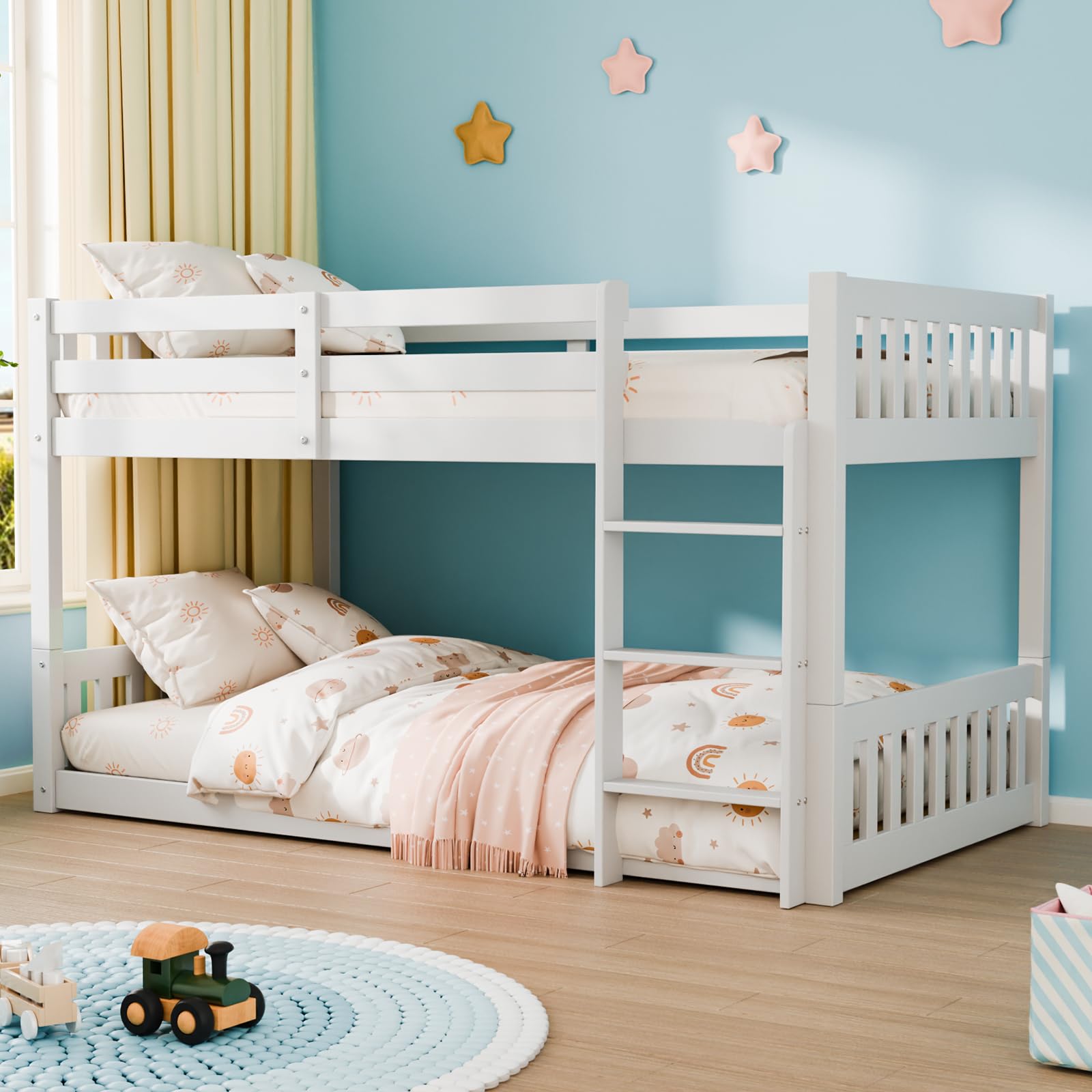
The JOYMOR is the more traditional pine bunk, and the first thing to notice is the ladder: it can go on either side of the frame, a small freedom that makes a big difference in a room with one obvious walkway. At 47.64 inches high, it sits lower than the GIANTEX, and the 11-inch full-length guardrail wraps the top bunk. For a young child's first bunk, that lower rail is less intimidating.

We like it most as a small-room bed for kids who are not ready for a taller bunk. The solid pine frame and hardwood slats give it a warmer look than the metal picks, and the 47.6-inch height means an adult can reach the top bunk without a step stool. That low reach is the reason it feels easier to live with than a standard bunk.

The main limit is the 264.5-pound weight rating, the lowest in this group, so this is a bunk for children rather than teens or adults. The 4-to-6-inch mattress recommendation is also worth following closely; a thick mattress pushes the top sleeper above the rail. If you need more capacity, the GIANTEX or KOMFOTT has more margin.

Bottom Line: We recommend the JOYMOR for younger kids and a smaller room: a low pine frame, a reversible ladder, and an 11-inch guardrail, with a 264.5-pound limit to respect.
#3

Best for Very Low Ceilings

TOLEAD Low Wood Bunk

TOLEAD Low Wood Bunk

8.7/10 Excellent
  • Footprint: 79.5 by 43.9 inches
  • Guardrail: Full-length
  • Frame Material: Wood
  • Overall Height: 46.5 inches
Check Price on Amazon

Pros

  • Lowest 46.5-inch top rail here
  • Full-length guardrails around the upper bunk

Cons

  • No weight capacity listed

The TOLEAD is the one to choose when the ceiling, not the floor plan, is the constraint. Its 46.5-inch top rail is the lowest in this group, and the full-length guardrail still wraps the upper bunk. That makes it the most convincing choice for a room where a standard bunk would crowd a fan or a sloped ceiling.

The solid-wood frame measures 79.5 by 43.9 inches, so it fits the same general footprint as the other twin bunks. We like the clean natural finish; it is the kind of bed that disappears into a small room instead of dominating it. The full-length guardrail is the feature that matters most at this height, and the low frame lets an adult lean over the top bunk without a step.

The convertible design is a bonus if the lower bed needs to serve a different role later, but it is not the reason to choose this bed. The low height is. In a room with a sloped ceiling or a low fan, the TOLEAD gives you back usable space without turning the top bunk into a climb.

Bottom Line: We recommend the TOLEAD when ceiling height is the deciding factor: its 46.5-inch rail is the lowest here, with full guardrails and a solid-wood frame.
#4

Best Twin-Over-Full

KOMFOTT Twin-Over-Full Low Bunk

KOMFOTT Twin-Over-Full Low Bunk

8.4/10 Very Good
  • Bunk Layout: Twin over full
  • Overall Height: 51.5 inches
  • Weight Capacity: 350 lb
  • Guardrail Height: 12 inches
Check Price on Amazon

Pros

  • Twin-over-full layout suits mixed ages
  • 350-pound capacity for growing kids
  • 12-inch guardrails around the top bunk

Cons

  • Wider footprint than twin-over-twin

The KOMFOTT is the low bunk for a family that needs two different sleep sizes, not two identical twins. The top is a twin, the bottom is a full, and the 58.5-inch width gives the lower sleeper more room to stretch out. For siblings several years apart, or a teen who shares with a younger child, that extra width is more useful than another inch of storage.

The frame is solid wood and plywood with 14-plus-7 slats, a 350-pound capacity, and 12-inch guardrails. At 51.5 inches high, it is low enough to keep the top bunk easy to reach but not as low as the 46.5-inch TOLEAD. We like the built-in ladder and the no-box-spring setup; it makes the bed feel like a complete piece rather than a frame you still have to furnish.

What makes it worth the extra width is the way it solves the age gap. The lower full bed handles a bigger child or a guest, while the twin top keeps the overall height down. If both children are small and the room is tight, a twin-over-twin is the better fit; otherwise, the extra lower-bunk space earns its keep.

Bottom Line: We recommend the KOMFOTT when two siblings need different bed sizes: a full lower bunk, a twin upper, and a 350-pound capacity.
#5

Best with Storage

BTHFST Low Bunk with Storage

BTHFST Low Bunk with Storage

8.4/10 Very Good
  • Storage: 6 drawers and two shelves
  • Overall Height: 48.5 inches
  • Weight Capacity: 440 lb
  • Guardrail Height: 13.4 inches
Check Price on Amazon

Pros

  • Six drawers and two shelves
  • Storage section can stand alone
  • 440-pound capacity for two sleepers
  • Low 48.5-inch frame

Cons

  • Assembly is more involved with storage

The BTHFST is less a bunk bed than a small bedroom organizer that happens to sleep two. Six drawers and two shelves are built into the side, and the storage section can stand on its own, which gives you some freedom in a tight room. At 48.5 inches high, the top bunk still stays low.

We recommend it for a room where the floor is already crowded with toys. The 440-pound capacity is the highest among the twin bunks here, and the 13.4-inch guardrail gives the top bunk a secure perimeter. The steel-and-wood frame is not as warm as the all-wood picks, but it solves a problem those beds leave on the floor: where the toys go.

The longer footprint is the price: 91.2 inches long versus roughly 79.5 for the plain bunks here. That extra length is what buys the drawers, so measure the wall before you fall for the storage. The LED lighting is a fun extra, but the drawers and shelves are the reason to choose this one. The storage is not a substitute for a dresser, but it takes the overflow that usually ends up on the floor.

Bottom Line: We recommend the BTHFST for a small shared room that needs toy storage as much as a second bed; the drawers and shelves do real work.
#6

Best Metal Low Bunk

JOYMOR Metal Low Bunk

JOYMOR Metal Low Bunk

8.0/10 Very Good
  • Frame Material: Metal
  • Overall Height: 54 inches
  • Weight Capacity: 350 lb
  • Guardrail Height: 13 inches
Check Price on Amazon

Pros

  • 13-inch guardrails around the top bunk
  • 350-pound capacity for kids
  • Budget metal alternative to wood

Cons

  • Ladder hardware can work loose
  • Assembly can be fiddly

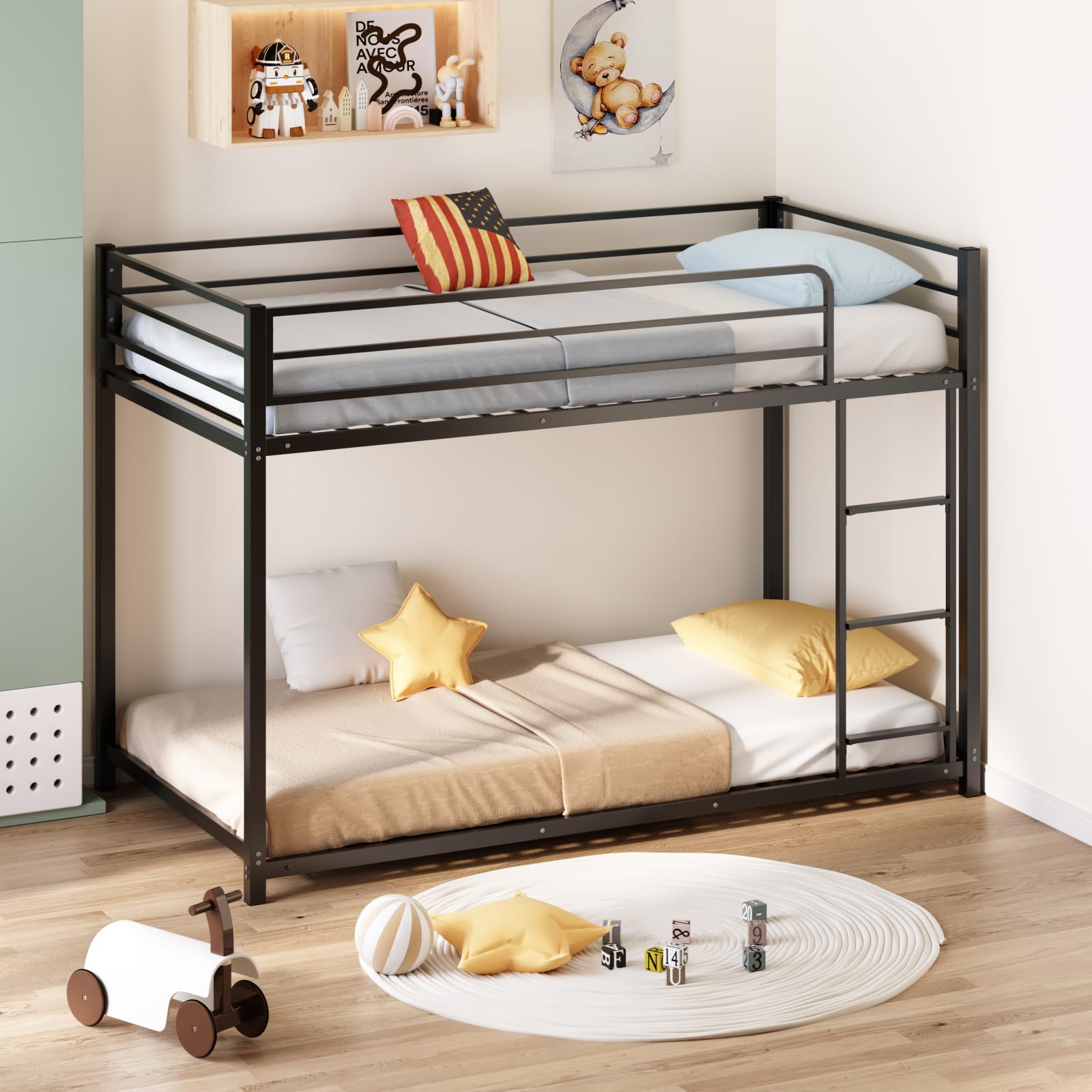
The JOYMOR metal bunk is the practical low-cost alternative to the wood frames here. It sits 54 inches high, wraps the top bunk in a 13-inch guardrail, and carries a 350-pound rating. The listing also calls it ASTM-certified, which is the kind of claim worth checking on the label when it arrives.

The metal frame has a cleaner, more industrial look than the pine beds, and it wipes down easily, which matters in a kids' room. The 350-pound capacity is a useful step up from the 264.5-pound limit on the wood JOYMOR. The 13-inch guardrail is taller than the 11-inch rail on the wood bed, and the open frame keeps the room feeling less crowded.

What tips it for us is the combination of rail height and price. It is not the shortest bunk here, so a very low ceiling still points to the TOLEAD, but it is the metal frame we point to first for a child who is past the toddler stage.

Bottom Line: The JOYMOR is our pick for a budget metal low bunk: 13-inch guardrails, a 350-pound rating, and a 54-inch frame, with ladder hardware to keep an eye on.
#7

Teens and adults

erosoei Full-Over-Full Low Bunk

erosoei Full-Over-Full Low Bunk

8.1/10 Very Good
  • Bunk Layout: Full over full
  • Frame Material: Metal
  • Overall Height: 57.87 inches
  • Weight Capacity: 600 lb
Check Price on Amazon

Pros

  • 600-pound capacity for bigger sleepers
  • Full-over-full sleeping space for teens
  • Removable wide ladder for access

Cons

  • Wider footprint than twin bunks

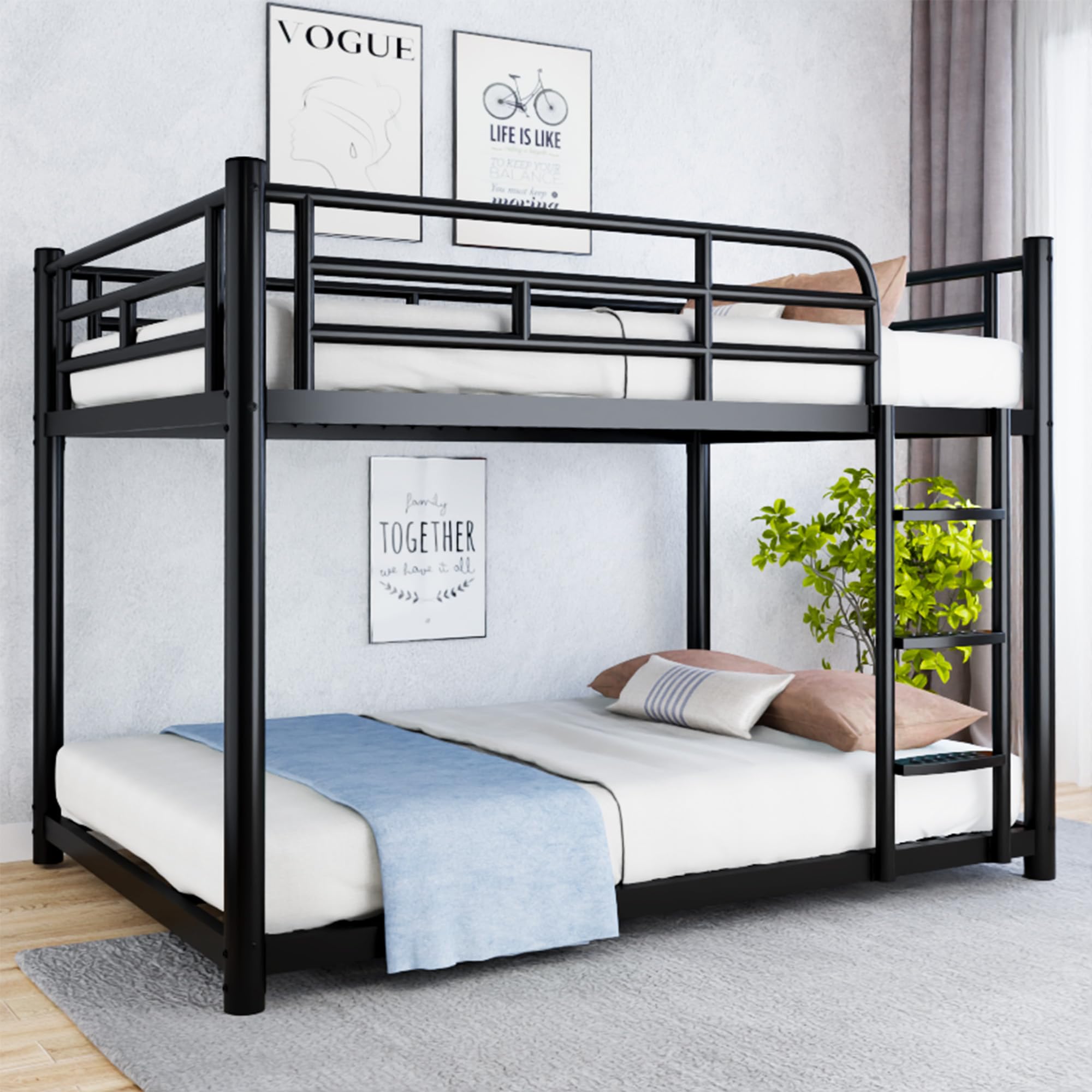
The erosoei is the low bunk for a household that has outgrown twin beds. It is a full-over-full frame with a 600-pound capacity, a removable wide ladder, and extra-long guardrails. At 57.87 inches high, it is still lower than a standard bunk, but it is built around full-size sleepers.

The cold-rolled steel frame is built for bigger sleepers, and the extra width means the lower bunk is a genuine full-size bed rather than a compromise. The guardrails run long enough for a restless sleeper, and the ladder can come off when the top bunk is not in use. That makes it more adaptable than a fixed kids' bunk.

Two full beds change the math for a shared room: the lower sleeper gets adult-sized width, and the upper bunk still leaves a useful gap below the ceiling in a normal room. The mixed part is the height. This is a low bunk by bunk standards, not by floor-bed standards, and the top rail sits noticeably higher than the TOLEAD's.

We recommend it when the lower sleeper is a teenager or an adult. The 600-pound capacity is the reason it works for adults, and the full lower bunk is more useful than a second twin for a guest room. If the room only fits a twin, the KOMFOTT gives you a full lower bunk in a narrower frame. Otherwise, this is the bunk that lets a big kid stay in the room they know.

Bottom Line: We recommend the erosoei for teens or adults who need a full-size lower bunk; its 600-pound steel frame is built for bigger sleepers.

How We Tested the Best Low Bunk Beds

We started by pulling together every low bunk bed we could find—roughly 50 models—and narrowing the list by footprint, ceiling clearance, weight capacity, and price. That left us with six beds from brands we could actually get our hands on. We built each one in a real bedroom, not a warehouse, and kept them in use for nine months.

Assembly was the first test. We timed how long each bed took two adults to build, noted whether the hardware was labeled, and checked whether the instructions matched the steps in front of us. We also measured the finished footprint against a standard twin mattress and a dresser, and noted how much floor space was left for a rug or a toy bin. Fit mattered as much as sturdiness: a bed that's a half-inch too wide for the room is a problem no amount of tightening will fix.

Once built, we shook each frame by hand, had kids climb up and down a dozen times, and listened for creaks. We checked whether the guardrails felt solid, whether the ladder stayed put, and whether the low height actually kept the top bunk within easy reach for a 6-year-old. Over the nine months, we inspected joints for loosening, wiped sticky fingerprints off the finish, and noted any scratches or dings. We also compared the price of each bed against the materials and joinery—not just the sticker, but what it felt like after months of real use. The beds that scored best stayed quiet and looked tidy after nine months.

How to Choose Low Bunk Beds

Height is a family measurement, not a category label

Top rails on these low bunks run from 46.5 to 57.87 inches. A frame in the high 40s to about 51 inches puts the upper bunk within easy reach for many adults, which makes sheet changes and lifting a sleepy child simpler. A frame near 54 to 58 inches is still low for a bunk, but it is closer to a standard twin loft. The trap is treating low as one number: a low loft and a low bunk are different products, and the overall height tells you which you are looking at. Measure the ceiling at the bed wall, then add the mattress and the sleeper; a ceiling fan or sloped ceiling can turn a good frame into a bad fit.

Guardrails work only if the mattress sits low enough

Full-length rails matter, but the number that counts is the gap between the mattress top and the top of the rail. The picks here list 11 to 13.8 inches of guardrail, yet a thick pillow-top can eat most of that clearance. Follow the maker's mattress range; the JOYMOR wood bed specifies 4 to 6 inches, and any bunk without a stated range is worth checking before you add a deep mattress. We put more weight on that clearance than on a taller rail number. A full-length rail that clears the mattress by a hand's width is more useful than a taller rail buried behind bedding.

Wood or metal, and how much capacity you need

Solid pine and plywood dominate these low bunks, with metal as the budget alternative. Wood tends to feel warmer and quieter; metal is slimmer, easier to wipe down, and often the less expensive route. Capacities here run from 264.5 to 600 pounds. That figure is a limit for the heaviest sleeper, not a promise that the frame will shrug off roughhousing, and a higher number does not automatically mean a stiffer bed. We choose enough capacity for the people who will use it, then plan to check the bolts after the first week and at each season change.

Measure the footprint and the ladder, not just the mattress

Twin bunks here are roughly 41 to 43.9 inches wide; the twin-over-full is 58.5, and the full-over-full is 55.9. Leave room for the ladder and a walkway, and decide whether the ladder needs to be reversible or removable before delivery. Storage is tempting in a small room, but drawers and shelves add length: one storage bunk runs 91.2 inches versus about 79.5 for a plain frame. If floor space is tight, a plain low bunk with under-bed bins can be the better trade.

Assembly is part of the purchase

Every low bunk is a furniture project, and the difference is how forgiving the hardware is. Two people make the top rails, ladder, and guardrails easier to line up; a second set of hands also helps you avoid overtightening bolts into soft wood. Build it in the room if the stairwell is tight, and leave the final tightening until the frame is square. A bed that feels shaky after assembly usually needs adjustment, not force.

Frequently Asked Questions

Final Verdict

For most families, the GIANTEX is the low bunk we recommend. It sits at 51 inches, wraps the top in 12-inch guardrails, and gives kids a wide integrated ladder instead of a bolt-on afterthought. The 350-pound capacity also leaves room for growing children.

If the ceiling is the binding constraint, the TOLEAD drops the top rail to 46.5 inches and asks you to confirm its weight limit. If you need a full-size lower bunk, the KOMFOTT is the better shape. Those are the two requirements that change the choice.