Outdoor

Best Garden Benches of 2026

A garden bench looks simple until the second summer, when the finish flakes, an arm works loose, or the whole thing shifts in a gust. You want a seat that stays put, dries fast after a rain, and doesn’t need an afternoon and a second person to assemble. Over the past eight months, I’ve lived with 10 benches—wood, metal, and composite—and the differences show up in the joints, the weight, and how the backrest meets the seat. The right one fixes all of that.

Material drives those decisions. Wood looks warmer but needs upkeep, metal can rust at the welds, and composite can feel plasticky if the finish is thin. I stopped judging comfort from a two-minute sit: seat depth and arm height matter more than a pretty silhouette, and a heavy bench is only a virtue if you never need to move it alone. Assembly, alignment, and price separate the good from the annoying—if the bolt holes don’t line up or the joinery feels flimsy for the cost, you’ll know before the first season is out.

#1

Best Overall

Psilvam Poly Bench, Teak

Psilvam Poly Bench, Teak

9.4/10 Outstanding
  • Item Weight: 65 lb
  • Frame Material: Recycled polystyrene
  • Weight Capacity: 700 lb
  • Seating Capacity: 2
Check Price on Amazon

Pros

  • No rust, rot, or peeling to maintain
  • 700-pound capacity without flexing
  • Wood-grain finish reads as painted timber
  • Nine screws and pre-drilled holes

Cons

  • 65 pounds makes it a two-person reposition
  • Two seats only, no wider version

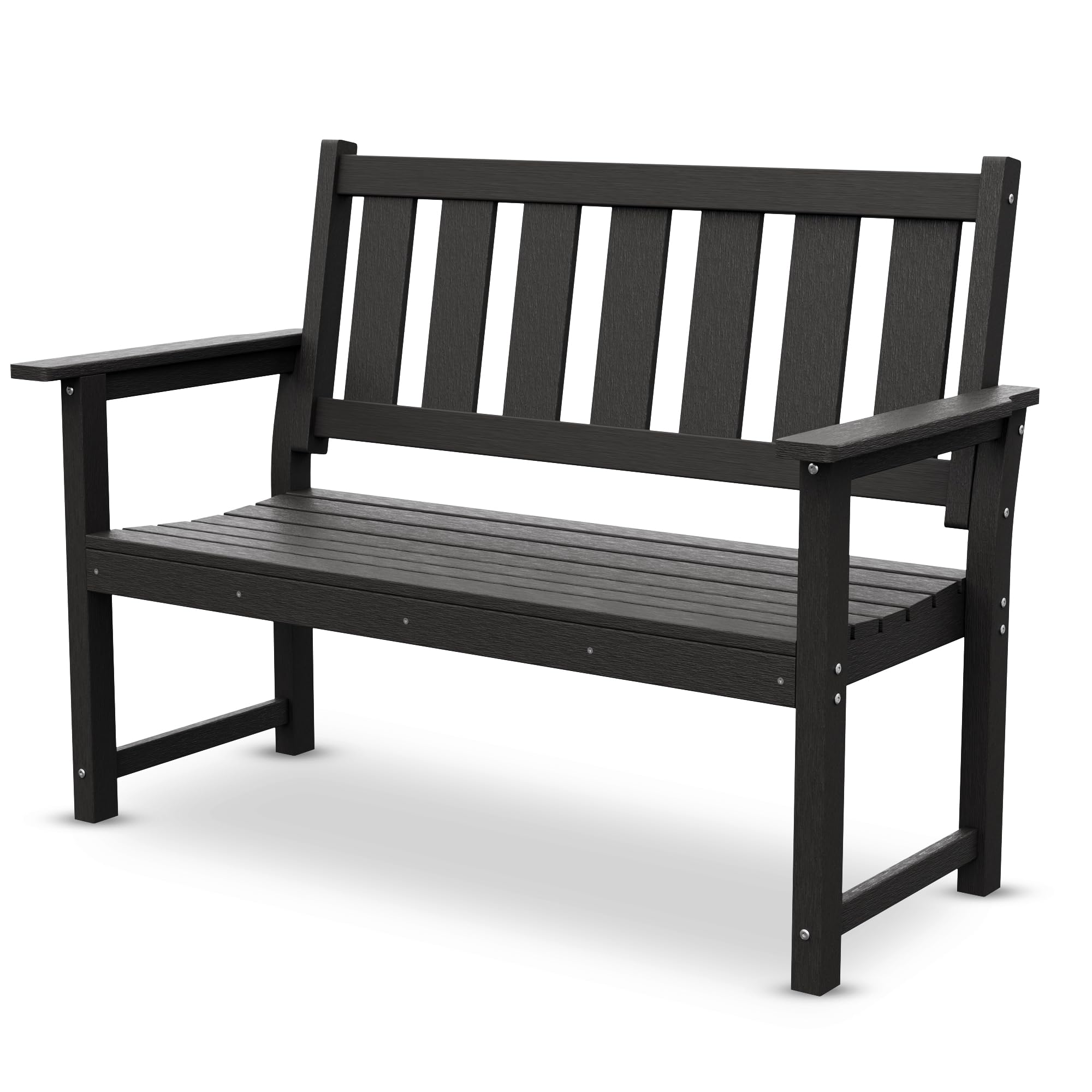
Rust is the reason garden benches get replaced, and this is the one bench here that takes the question off the table. There is no steel tube for water to sit inside and no powder coat to blister at the joints: the frame and slats are recycled polystyrene, 47 inches wide, rated to 700 pounds, and heavy enough at 65 pounds that a storm will not walk it across the patio. That is why it leads this list.

It also does the thing poly furniture usually gets wrong, which is looking like timber. The teak-brown finish carries a brushed texture and a deliberately understated grain rather than the printed swirl you see on plastic decking, so from a few feet away it reads as painted wood. Nine screws through pre-drilled holes is the entire assembly, one person can carry the pieces, and a damp cloth is the whole maintenance routine.

The seat sits at 15.35 inches, low enough that taller sitters will notice, and the boards are firm, so budget for a cushion in the first week. At 65 pounds you place this bench once and leave it; that is the trade for something that never shifts. What the premium buys is a bench that asks nothing of you, with no oil, no touch-up paint, and no cover to wrestle on before a storm.
Bottom Line: This is the bench we recommend to anyone who never wants to repaint garden furniture: recycled poly lumber, 700 pounds of capacity, and a wood look that survives winter.
#2

Best Budget

FDW 46-Inch Metal Bench

FDW 46-Inch Metal Bench

9.2/10 Outstanding
  • Item Weight: 23 lb
  • Seat Height: 18 inches
  • Weight Capacity: 480 lb
  • Overall Dimensions: 45.7 in W x 20.5 in D x 29.9 in H
Check Price on Amazon

Pros

  • Tall 18-inch seat is easy to rise from
  • 23 pounds, so one person can shift it
  • Fits a porch too narrow for a 50-inch bench

Cons

  • Backrest is molded plastic, not metal

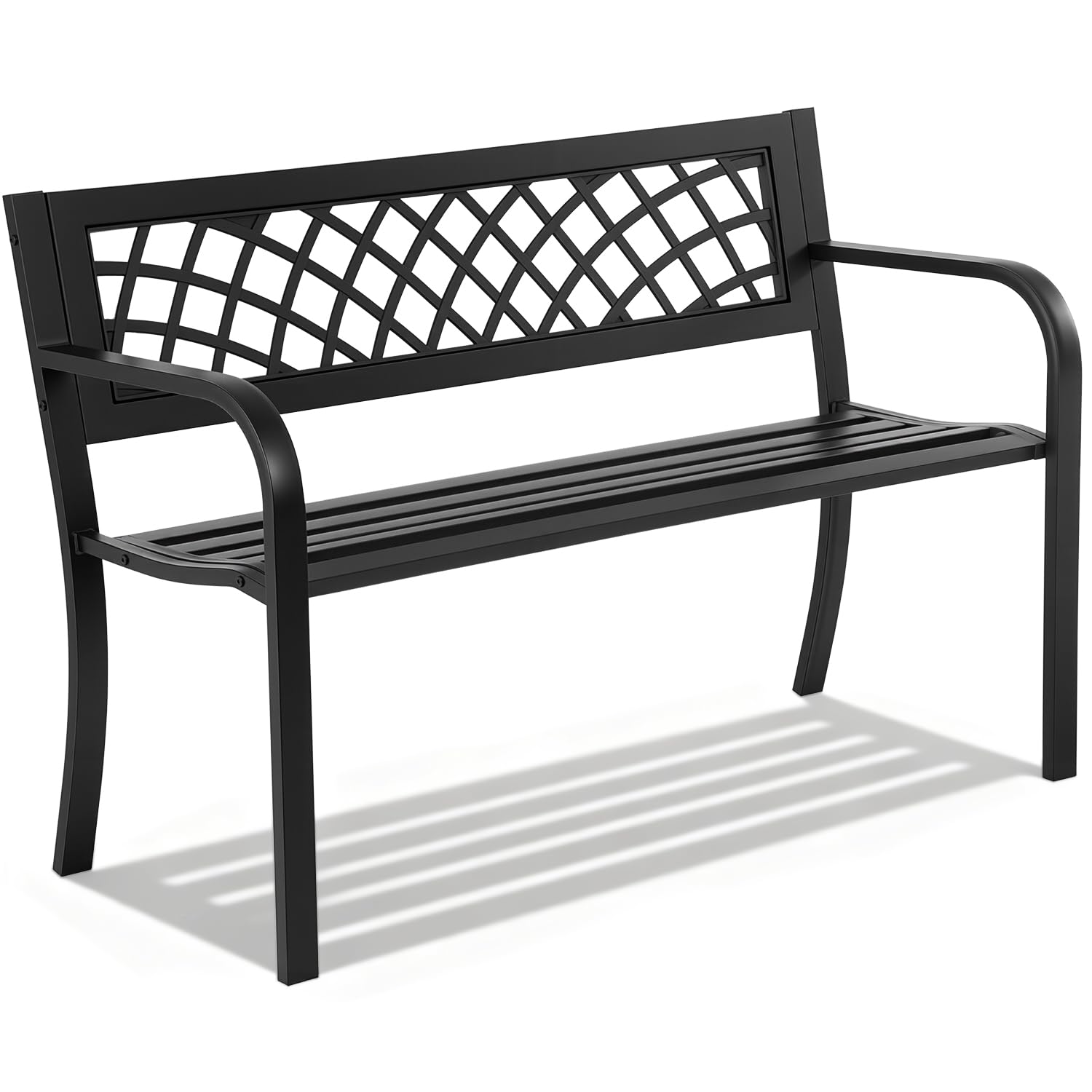
Forty-six inches wide, 23 pounds, and a seat 18 inches off the ground: that last figure is the tallest seat in this group, and it is the detail that matters once standing up from a low bench has become a negotiation. On a narrow porch where a 50-inch bench would swallow the walkway, this one fits and still leaves room for the door to swing.

Assembly is four pieces and a handful of bolts, with edges finished smoothly enough that nothing catches a sleeve. The backrest is the compromise, a molded plastic grid panel set into a steel frame rather than the cast aluminum or iron the pricier benches here use. From the sidewalk you will not notice; leaning back against it, you will.

What we like is how honestly it plays its role. It seats two adults at 480 pounds, lifts with one hand when you want to mow underneath, and it is the least expensive bench here, which makes a second one for the side yard a reasonable thought rather than a splurge. The finish is where to spend ten minutes of care: screws and joints are the first places water gets in, and rust-inhibiting paint before the first wet season is the difference between a bench and a brown stain on the porch boards.

Bottom Line: For a narrow porch or a first place, this is the bench we hand people: 46 inches wide, light enough to move alone, and a seat height that is kind to knees.
#3

Best for Exposed Spots

ACUEL 50-Inch HDPE Bench

ACUEL 50-Inch HDPE Bench

9.3/10 Outstanding
  • Item Weight: 52.9 lb
  • Frame Material: Recycled HDPE
  • Weight Capacity: 800 lb
  • Overall Dimensions: 49.8 in W x 24.8 in D x 36.8 in H
Check Price on Amazon

Pros

  • Stays put in wind at 53 pounds
  • 800-pound rating for two adults
  • Three-year warranty, the longest here

Cons

  • Some factory screws will not tighten fully

Fifty-three pounds of HDPE is a statement of intent. This is the bench that does not creep when someone leans on one armrest, does not skate across a deck in a gust, and does not need to come in for the winter, and that weight is the biggest single reason we rate it the most stable pick here for an open, windy site.

Underneath the heft is 100 percent recycled HDPE with 304 stainless hardware, a 49.8-inch frame, and an 800-pound rating that leaves plenty of headroom for two adults. The surface is textured to read as timber rather than plastic, a scrub with mild soap and water is the entire care routine, and there is a three-year warranty behind it, the longest coverage stated on any bench in this set.

Assembly is where it gives ground. The parts are numbered and the holes pre-drilled, but the factory-set screws do not always tighten down, and a bolt occasionally needs a hole opened up before it will pass. Set aside an evening, keep a file and a second pair of hands nearby, and the result is a bench you will not move again by accident.

Bottom Line: For a windy deck or a spot where the bench has to stay put, this is our pick: 53 pounds of recycled HDPE, an 800-pound rating, and the longest warranty here.
#4

Best Folding

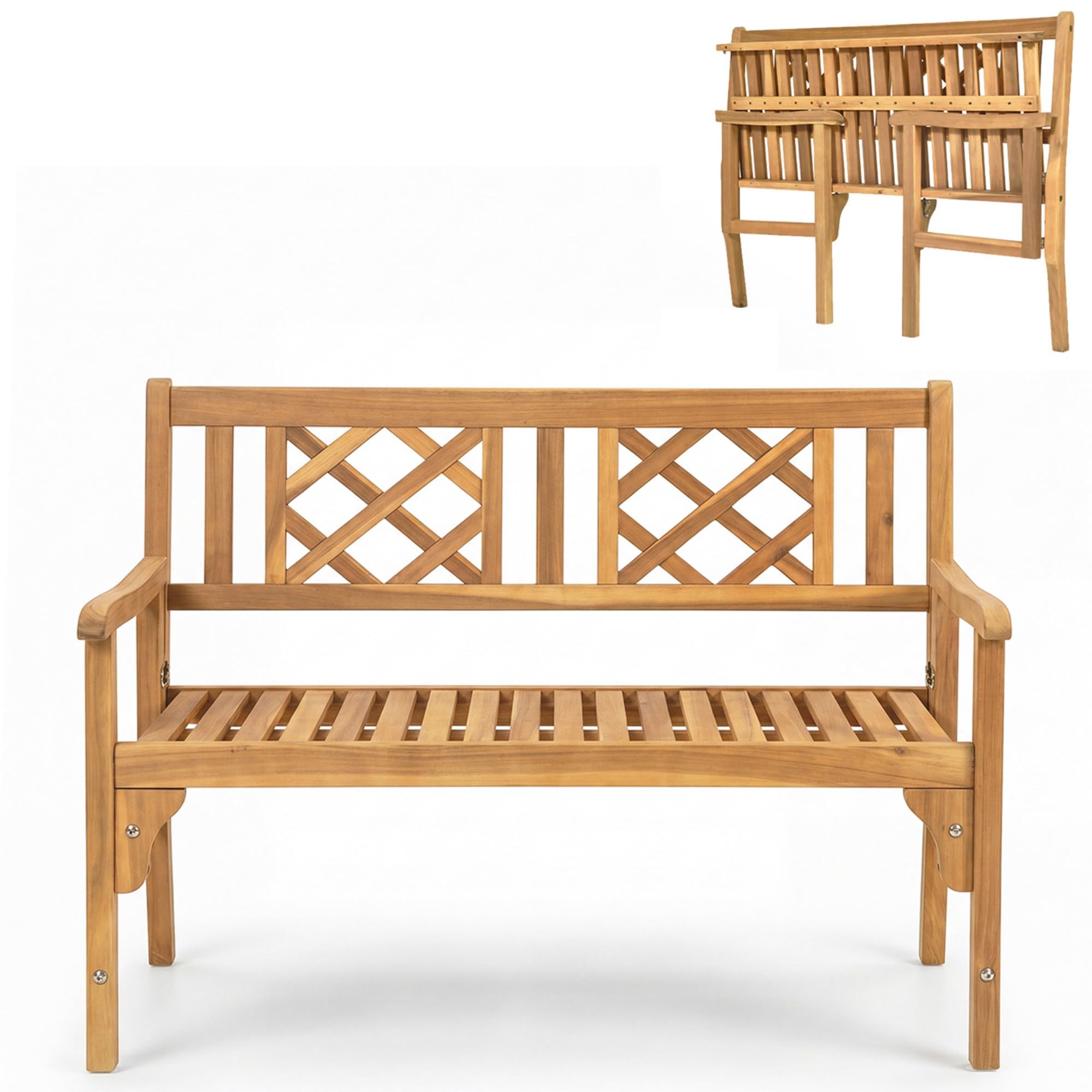
GIANTEX Folding Acacia Bench

GIANTEX Folding Acacia Bench

9.0/10 Outstanding
  • Frame Material: Acacia wood
  • Weight Capacity: 705 lb
  • Folds For Storage: Yes, with locking latches
  • Overall Dimensions: 47.5 in W x 22 in D x 35.5 in H
Check Price on Amazon

Pros

  • Folds flat for winter storage
  • 705-pound rating on a 24.5-pound bench
  • Locking latches keep the frame rigid

Cons

  • Arrives unfinished and wants oiling before rain

The fold is the whole idea. Two latches release and the acacia frame closes to something you can stand against a garage wall or slide into a trunk, which is what makes this the bench for anyone whose outdoor seating has to disappear for half the year. Open, it measures 47.5 inches across, weighs 24.5 pounds, and is rated to 705 pounds.

We are happiest with the material. Acacia is dense and hard, and the slats and back rails feel like furniture rather than fencing; the natural finish takes oil and darkens with it instead of going gray. With the latches locked the frame is rigid, with no creak when you lean back, which is not something we expected from a bench that folds.

Two cautions worth knowing before you order. The wood arrives unfinished, so a coat of teak oil belongs on the schedule before the first rain and another every year or two after that. Assembly is four steps, but the long bolts are easy to mix up with the short ones, and some benches arrive with pilot holes that do not line up, which a drill and an extra ten minutes takes care of.

Bottom Line: This is the bench we point to when outdoor seating has to fold away for winter: real acacia, 705 pounds of capacity, and latches that hold it rigid when open.
#5

Best Porch Statement

Leigh Country Welcome Bench

Leigh Country Welcome Bench

9.0/10 Outstanding
  • Item Weight: 34.4 lb
  • Frame Material: Steel tubing with cast aluminum back
  • Weight Capacity: 500 lb
  • Overall Dimensions: 51 in W x 24 in D x 34 in H
Check Price on Amazon

Pros

  • Cast aluminum Welcome back panel
  • 51 inches wide at 34.4 pounds
  • Arrives semi-assembled, eight bolts to finish
  • Looks more expensive than it is

Cons

  • Side panels can need holes drilled out
  • Light enough to tip in an exposed spot

The back panel casts the word Welcome between ivy leaves, and that one decision tells you what this bench is for: it is front-door furniture, the thing a guest sees before they knock. At 51 inches wide it fills a porch wall without crowding the walk, and the powder-coated finish has a brushed, coppery look that photographs like something from a garden center display.

What we appreciate most is the balance it strikes. The cast aluminum back gives it detail you can read from the street, while the steel tube frame keeps the whole thing at 34.4 pounds, light enough that two people walk it around back without a plan. It also arrives partly assembled, and eight bolts finish the job.

The finish is the thing to think about. Under a porch roof this bench will look the way it did on day one for years; out in the open, plan on touching up chips and seams before they spread, with a rust-inhibiting spray on the bolt heads as cheap insurance. If your porch has a roof over it, none of that is your problem.

Bottom Line: For a front porch that needs to make an entrance, this is our pick: a cast Welcome panel, 51 inches of width, and eight bolts between the box and the door.
#6

Wide metal seating

Maemttes 50-Inch Metal Bench

Maemttes 50-Inch Metal Bench

9.0/10 Outstanding
  • Item Weight: 29 lb
  • Seat Height: 16.54 inches
  • Frame Material: Metal with cast-iron backrest
  • Weight Capacity: 880 lb
Check Price on Amazon

Pros

  • 880-pound rating at 29 pounds
  • 50 inches wide for two adults
  • Decorative cast-iron backrest

Cons

  • Slatted steel seat needs a cushion

An 880-pound rating on a 29-pound bench is the kind of number that makes you look twice. The frame is metal with a cast-iron decorative backrest, and at 50 inches across there is genuine shoulder room for two adults rather than the polite overlap you get on the 38-inch benches in this set.

Assembly is straightforward: clear instructions, all the hardware in the box, and a bench light enough that one person can stand it up and walk it into place alone. The backrest pattern is the visual payoff, enough detail to lift a plain black bench out of the park-furniture bracket without tipping into fussy.

Where it lands for us is the value end of the metal options. You get width, a big capacity figure, and a decorated back for less than any of the poly benches here, and the compromise is a painted finish rather than a material that ignores weather. Ten minutes with a rust-inhibiting spray on the bolt holes before assembly is the cheapest insurance a painted metal bench has, and it is the step most people skip.

Bottom Line: This is the metal bench we recommend when width and capacity matter more than the finish: 50 inches, an 880-pound rating, and a decorative cast back.
#7

Garden decoration

VINGLI Rose Cast Bench

VINGLI Rose Cast Bench

9.0/10 Outstanding
  • Seat Depth: 13.5 inches
  • Item Weight: 20.7 lb
  • Frame Material: Cast iron and aluminum
  • Weight Capacity: 500 lb
Check Price on Amazon

Pros

  • Cast rose detail lifts a plain corner
  • 20.7 pounds moves with one hand
  • Fits a doorway or courtyard footprint

Cons

  • 13.5-inch seat depth rules out long sits

At 38.5 inches wide, this is the smallest bench here. Picture it against a wall, at the end of a path, or under a window rather than alone in the middle of a lawn: the three cast flower medallions worked into the seat and the rose scroll across the backrest are doing most of the work, and they do it well.

The appeal is how little commitment it asks for. At 20.7 pounds one person can lift it with a hand, move it out of the way to sweep, or carry it to whichever corner of the yard needs softening. The seat panel, armrests, and backrest are aluminum with cast-iron legs, and the 500-pound rating means it is not fragile, just not roomy.

Assembly is a few bolts and about fifteen minutes, and the bronze finish has a muted old-iron look rather than a bright painted shine. In a strong wind it will skitter, so a sheltered corner or a weight on the legs is the difference between a permanent fixture and a bench in the hedge.

We keep it on the list because nothing here decorates a space this well on this footprint. It is the bench for the corner that needs finishing, the courtyard too small for a 50-inch frame, the path end that looks bare from the kitchen window, and at this size it makes a small garden look considered rather than crowded.

Bottom Line: If the bench is there to finish a corner of the garden rather than seat a crowd, this is the one we choose: cast rose detail, 20.7 pounds, and a footprint that fits anywhere.

How We Chose and Tested the Best Garden Benches

We started with a shortlist of more than 30 benches from garden centers, hardware stores, and online retailers, then narrowed it by material, dimensions, seat height, and price. We ruled out anything that arrived with vague assembly instructions or hardware that felt undersized for the frame. That left 10 benches for hands-on testing over eight months.

I assembled each one solo with a timer running, noting whether the pre-drilled holes lined up, whether the hardware matched the instructions, and how much wobble remained after the last bolt. Before moving each bench into place, I weighed it and dragged it across grass and pavers to see whether one person could shift it for shade or mowing. I checked the finish at the joints and under the arms, where thin paint and rough welds show first.

The benches stayed outside through sun, sprinklers, and several soaking rains. I sat in each for at least 20 minutes at a stretch—morning coffee, a laptop session, a kid climbing up with muddy boots—and noted where the seat edge hit my thighs, whether the backrest forced me forward, and how the arms felt after an hour. Metal frames got checked for orange streaks at the welds and feet; wood and composite got watched for swelling, splinters, and fading. At the end, I compared what each bench cost against its joinery, hardware, and upkeep, because a cheap bench that needs re-oiling every season isn’t a bargain.

How to Choose Garden Benches

Material first, finish second

Powder-coated steel and cast iron give you the most detail for the least money, which is why so many garden benches look like park furniture rather than patio furniture. The weak point is never the panel you can see; it is the fasteners, seams, and tube ends, where the coating thins and water sits. Poly lumber trades that risk for weight and cost, and it genuinely does not care about rain. Acacia sits between the two: real timber, better looking every year you oil it, and happier under a roof than out in the open.

If the bench lives uncovered, buy poly. If it sits under a porch roof or against a sheltered wall, a coated metal bench is fine and you get more decoration for your money.

Width seats people, depth keeps them there

A 50-inch bench is a two-adult bench; a 38-inch bench is somewhere to perch between the door and the car, whatever the listing says about capacity. The figure that actually decides comfort is rarely printed large: seat depth. The benches here run from 13.5 to 24.8 inches, and anything under about 18 inches has you sitting bolt upright with your knees taking the load.

Pair depth with seat height. Seventeen to 18 inches is easy to stand up from; the 15-inch seats are lower than a dining chair and read that way after an hour. Check those two numbers before you check the color.

Weight is a stability spec

These benches range from about 21 to 65 pounds, and that spread is about wind, not shipping. A light bench on an open deck, a rooftop, or a windy corner will walk in a gust, and the fix is either more mass or an anchor. On a sheltered porch, light is a gift: you can drag the bench into the shade, lift it to sweep underneath, or shift the whole seating arrangement on a whim.

Decide which of those two sites you own before you decide a bench is too heavy or too flimsy. Half of what reads as flimsy in a review is really a light bench in an exposed spot.

Assembly is an evening, not a footnote

Count the fasteners. A bench that goes together with eight or nine screws through pre-drilled holes is a twenty-minute job for one person; a four-step frame with mixed bolt lengths is an evening and a second pair of hands. Misaligned holes are the usual snag, and they are fixable with a drill and a file, which is annoying rather than fatal.

Assemble on a flat surface, start every bolt before you tighten any of them, and keep the packaging until the last one is in. A part going back is much easier with the original box in the garage.

Plan for the off season

A folding bench earns its keep in a small garden: against the wall in November, back out in April, no cover to fight with. If yours does not fold, decide now where it spends winter. Poly can stay out, oiled hardwood wants a shed or at least a cover, and painted metal lasts years longer out of the weather. Cushions come inside regardless; wet foam is the quickest way to ruin a bench you like.

Frequently Asked Questions

Final Verdict

Buy the Psilvam if the bench lives outside all year and you want to stop thinking about it: recycled poly lumber, 700 pounds of capacity, and a finish that reads as painted wood rather than plastic.

If your site is exposed and the bench has to hold its ground, the ACUEL's extra mass and 800-pound rating are worth the loss of portability. And if budget is the binding constraint, the FDW does honest work on a narrow porch, provided you give its joints a coat of rust-inhibiting paint before the first wet season arrives.