Entryway

Best Non-Slip Doormats of 2026

A doormat's one job is to stay put while everything around it moves — wet shoes, muddy paws, a gust of wind — and plenty of them fail at exactly that. The corners curl, the backing skids across tile, and within a month you're straightening the thing every time you walk in. A good one fixes more than you'd expect: less grit tracked onto the kitchen floor, fewer near-slips on wet tile, an entryway that looks deliberate instead of like an afterthought. My team tested 14 mats over six months, and the pattern was clear.

First-time buyers almost always undersize it: if the mat is narrower than your door frame, half your foot traffic lands on bare floor and skips the mat entirely. The other surprise is softness — the plush ones that feel best underfoot are often the ones that creep. We weighed all of it, from how much dirt each mat held onto, to whether it stayed put through a week of rain, to how it looked after repeated washes. The picks below earned their spot at the door.

#1

Best Overall

Muddy Mat Chenille Doormat

Muddy Mat Chenille Doormat

9.4/10 Outstanding
  • Care: Machine wash
  • Size: 19" x 30"
  • Backing: Thermoplastic elastomer (TPE)
  • Thickness: 1 inch
Check Price on Amazon

Pros

  • Soaks up more water than the thin mats here
  • Softest pile in this group underfoot
  • Textured TPE backing grips tile and hardwood
  • Machine washable when it gets filthy

Cons

  • Backing can separate after repeated machine washing

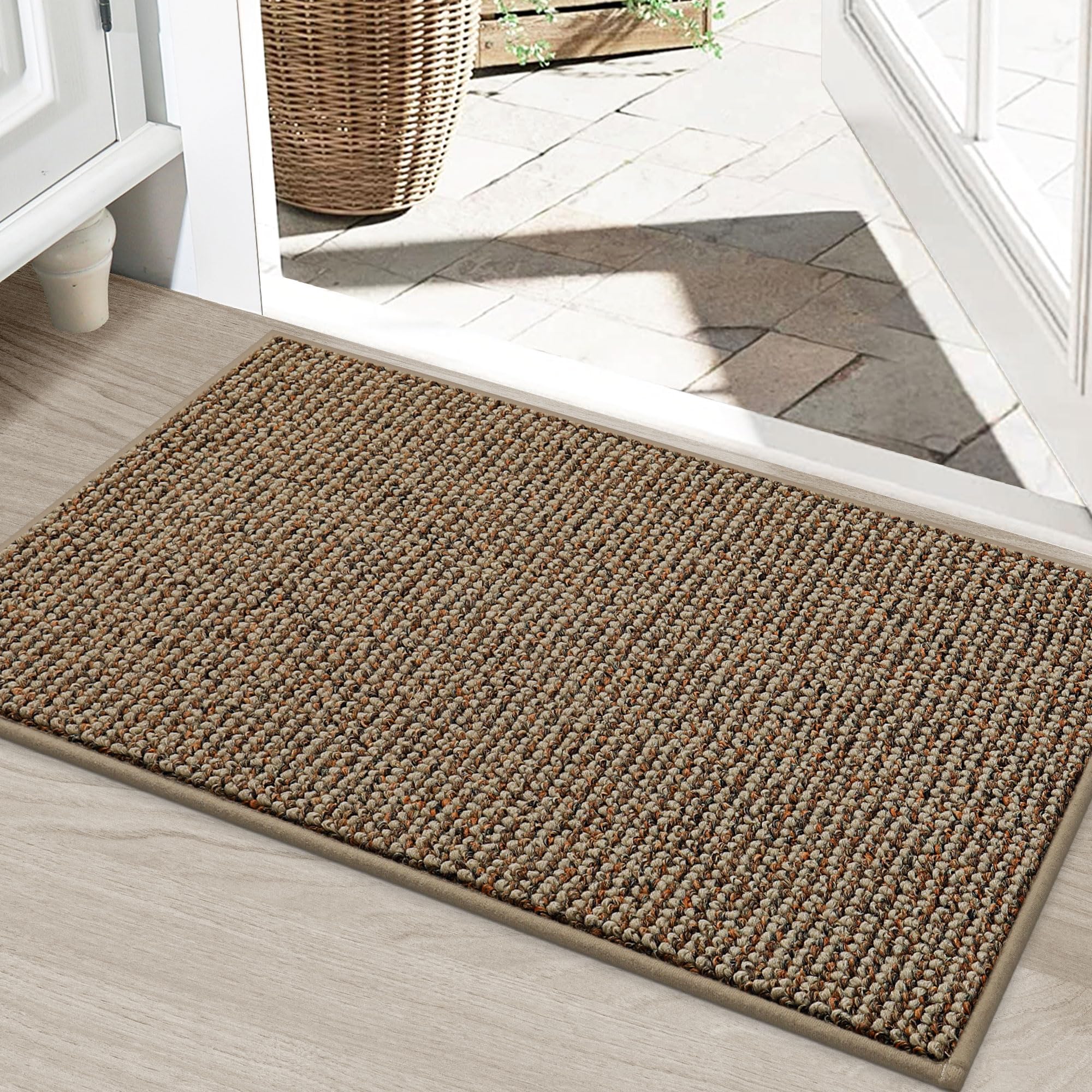
One inch of chenille is a lot of mat. Most of the doormats in this guide sit between 0.3 and 0.4 inch thick, which is enough to wipe a boot but not much of a sponge. The Muddy Mat is built the other way round: a deep tufted chenille pile over a textured TPE backing, sold as a mat that soaks rather than smears.

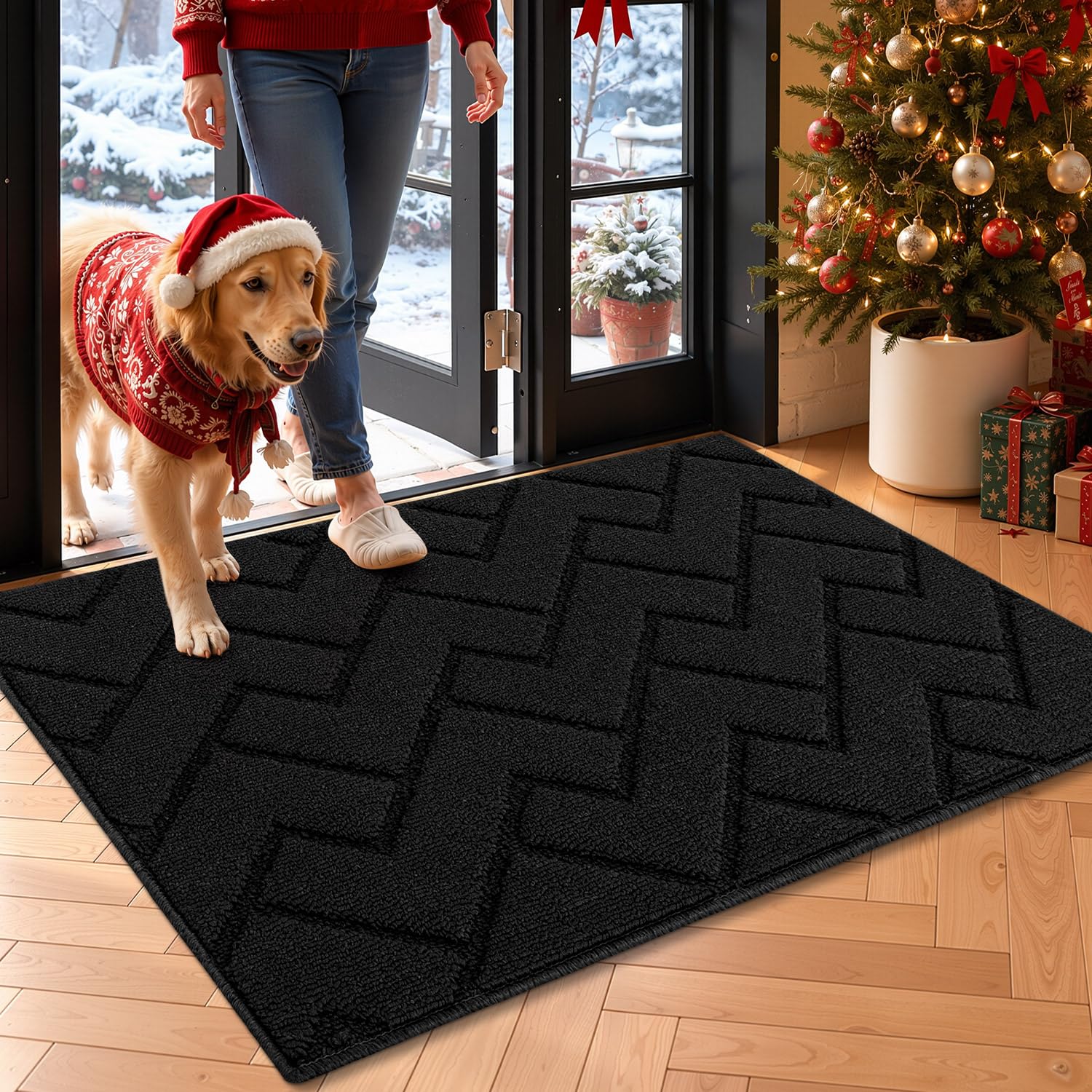
That depth is why it is our top pick for the door everyone actually walks through. Water off shoes and paws disappears into the pile instead of beading across the floor, and the softness is real — a barefoot trip to the kitchen stops being a punishment. The TPE back is the textured, grippy kind that holds on tile and hardwood rather than skating, and the whole thing goes in the washing machine when it gets grim.

The backing is the part to watch. Repeated machine washing is where chenille mats of this type come apart: the pile survives, the bond between pile and backing does not. Wash cold, skip the dryer, and expect the mat to outlast its backing rather than the other way round.

Clearance is the other thing to settle before you order. One inch is roughly triple the thickness of the low-profile mats here, and a door with a tight sweep will drag it. Measure the gap with a thin mat in place; if it barely clears, the PURRUGS is the safer buy. And keep it indoors — this is an absorbent mat, not a water-resistant one, so a soaked pile on an open step is not the job it was made for.
Bottom Line: We recommend the Muddy Mat for any indoor door that sees wet shoes and muddy paws: the deepest pile here traps water where a thin mat just smears it around.
#2

Best for Low-Clearance Doors

PURRUGS Dirt Trapping Mat

PURRUGS Dirt Trapping Mat

9.1/10 Outstanding
  • Care: Machine wash cold
  • Size: 20" x 31.5"
  • Backing: TPR
  • Thickness: 0.4 inch
Check Price on Amazon

Pros

  • Bound edges resist corner curl
  • Low 0.4-inch profile clears tight doors
  • Stays put on slick vinyl and tile
  • Washes and dries without fuss

Cons

  • Priciest of the indoor mats here

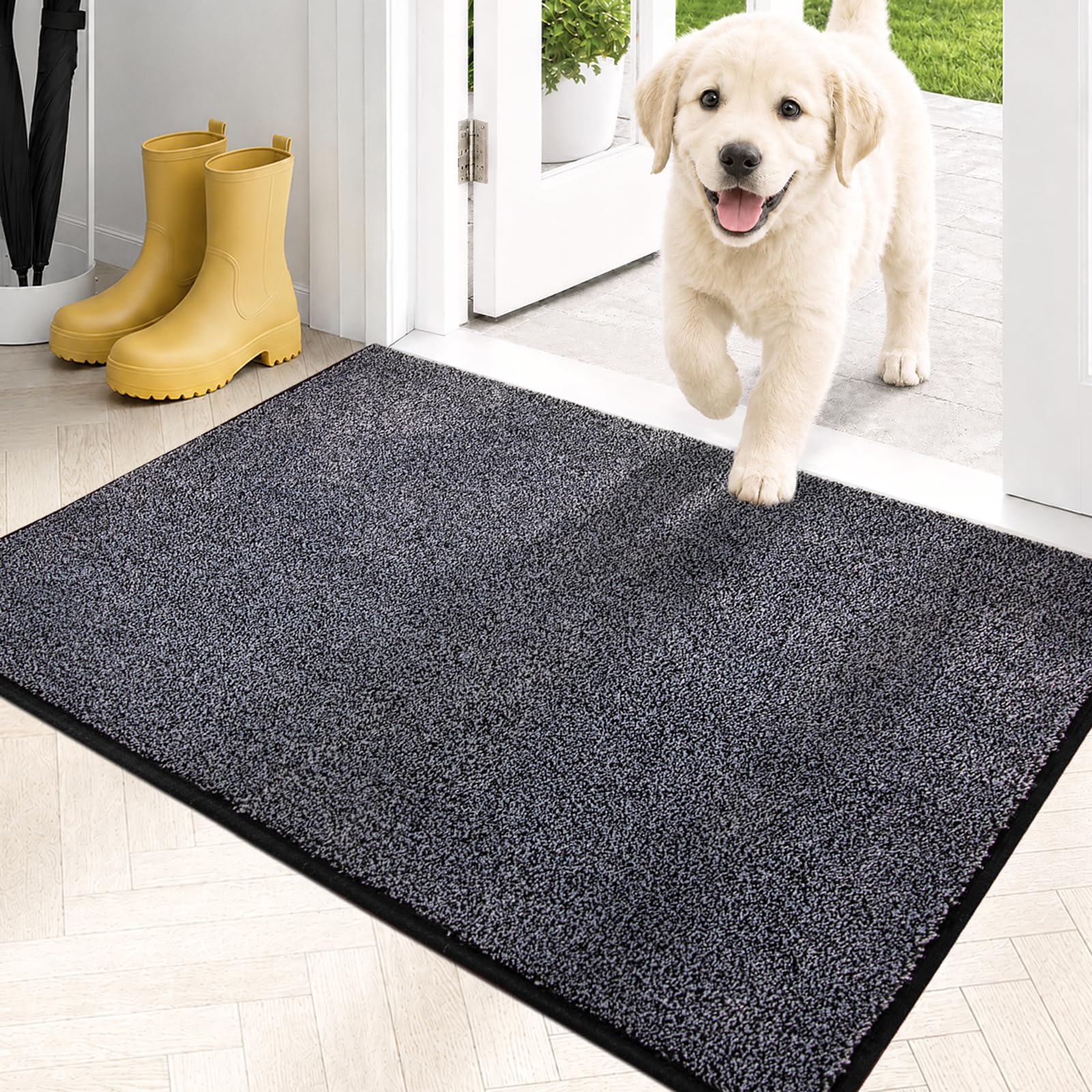
A door that sweeps close to the floor rules out half this group, and the PURRUGS is the answer. It is 0.4 inch thick — a fraction of the Muddy Mat's pile — with bound edges running right around the mat and a TPR back, so the door closes over it and the mat stays where you put it.

The bound edge is the detail we appreciate most. Mats that ship folded tend to curl at the corners for a week, and a stitched, bound edge holds its shape far better than a cut one. The cut-pile polyester is short enough to vacuum without the beater bar snagging it, soft enough to stand on in socks, and it comes out of a cold wash looking much as it did before. On a slick vinyl floor, with a dog coming in at speed, this is the mat in the group we trust not to slide.

It arrives tightly folded, and the creases need a few days flat in a warm room, or a cold wash, before they drop out — judge it after that, not on day one. Wash it on its own; the TPR back is the part you are protecting.

Bottom Line: A door with a tight sweep needs a thin mat, and the PURRUGS is the one here we trust to fit under it, stay flat and still grip.
#3

Best for Exposed Outdoor Steps

Gorilla Grip WeatherMAX

Gorilla Grip WeatherMAX

8.8/10 Excellent
  • Care: Spot clean only
  • Size: 29" x 17"
  • Backing: Natural rubber
  • Thickness: 0.3 inch
Check Price on Amazon

Pros

  • Stiff woven top scrapes mud off boots
  • Natural rubber back adds weight and grip
  • Weather, stain and fade resistant
  • 0.3-inch profile clears the door

Cons

  • Spot clean only, no machine washing
  • Slides once grit builds up underneath

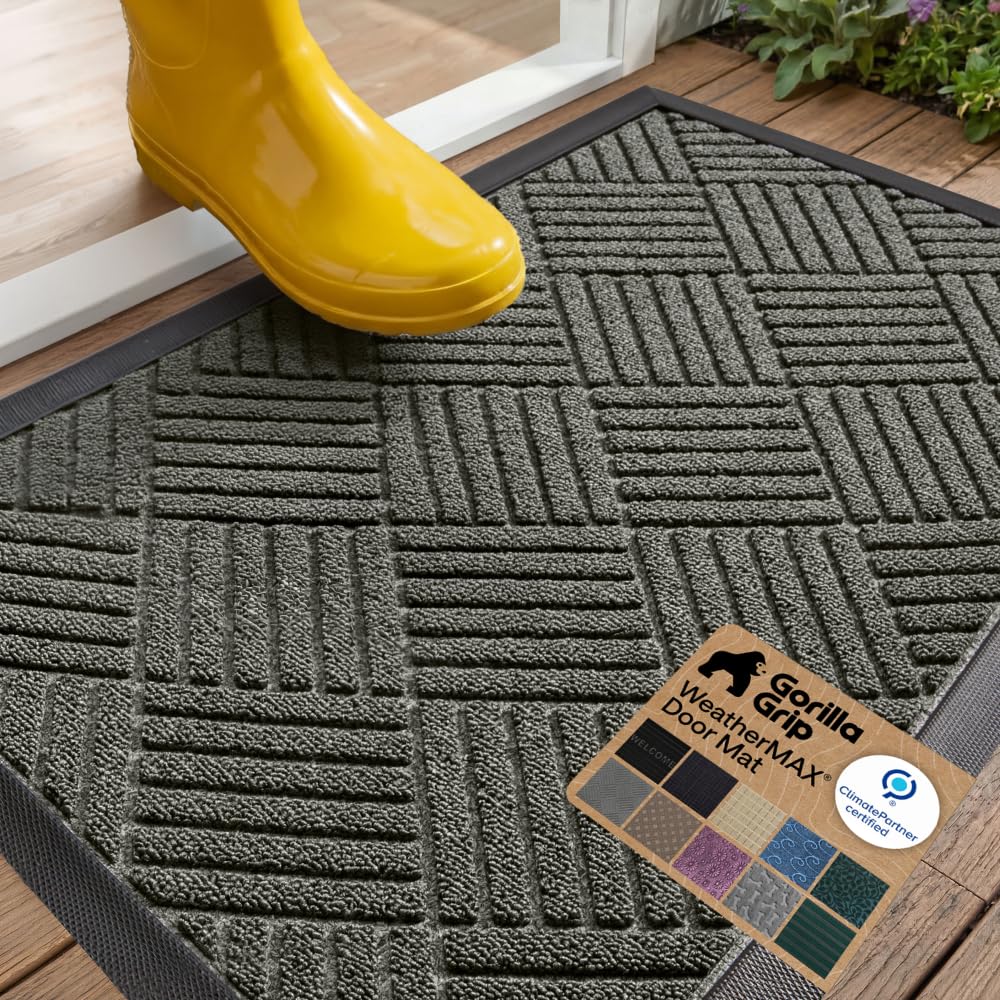
A woven polypropylene mat and a chenille mat are doing different jobs. The WeatherMAX is a scraper: deep grooves in a stiff woven top, a beveled edge so a toe does not catch, and a natural rubber back that gives it some weight. It belongs where the weather actually lands — an exposed step, a porch, a garage entry.

Outdoors it earns its keep. The top is stain, weather and fade resistant, at 0.3 inch it clears most doors, and the rubber backing has enough heft that wind is less of a problem than it is with the light mats here. What it does not do is drink. Water sits on the woven surface until it drains or evaporates, which is fine on a porch and wrong just inside a wet mudroom.

Our reservation is care. It is spot clean only — no machine cycle, no hose-and-hang — so a muddy spring means scrubbing it where it lies. It also creeps once grit builds up underneath, so sweep the step now and then before you blame the mat. As an outdoor scraper in a wet climate we think it is the strongest here; as the only mat at a door, it is not.

Bottom Line: Our pick for an exposed step is the WeatherMAX: a stiff woven scraper that shrugs off weather, provided you accept spot cleaning instead of a wash cycle.
#4

Best Budget Pick

OLANLY Chenille Mud Mat

OLANLY Chenille Mud Mat

9.2/10 Outstanding
  • Care: Machine wash
  • Size: 30" x 20"
  • Backing: Textured TPR
  • Thickness: 1 inch
Check Price on Amazon

Pros

  • Absorbent chenille at the lowest price here
  • Textured TPR back holds on hard floors
  • Goes in the washing machine

Cons

  • Backing can peel with repeated washing

This is the lowest price in the group, and it is a real doormat rather than a token one: 30 by 20 inches, a dense 1-inch chenille pile, a textured TPR back, machine washable. If the absorbent chenille feel is what you want at the door and cost is what settles it, this is the one we point to.

What you give up is working life. The pile is soft and genuinely absorbent, which is why it feels like a pricier mat for the first few months, but the backing is the part that goes. With repeated washing it can peel away from the pile, and once it does the mat stops gripping and starts bunching under the door. Treat it as a mat you replace rather than one you keep for a decade, and the arithmetic works: a rental, a back door, a house with a puppy chewing everything in sight. Measure the doorway rather than eyeballing it, because 30 by 20 is a modest mat with little margin at the edges.

Bottom Line: If budget decides this purchase, the OLANLY delivers the same absorbent chenille feel as the pricier mats here, with a shorter working life built in.
#5

Best Looking

AMARU Coir Welcome Mat

AMARU Coir Welcome Mat

9.3/10 Outstanding
  • Care: Shake clean, keep dry
  • Size: 17" x 29"
  • Backing: PVC
  • Thickness: 0.6 inch
Check Price on Amazon

Pros

  • Best-looking mat in this group
  • Stiff coir bristles scrub mud off boots
  • PVC backing keeps it planted
  • Substantial 0.6-inch body lies flat

Cons

  • Must stay dry or it can stain the surface below

Coir is what people picture when they think of a welcome mat, and this is the best-looking mat in the group by a distance: dense natural fiber, a printed bird design, and a PVC backing that keeps it from walking off the porch. It is also the mat that takes mud off a boot with a couple of scuffs rather than a wipe.

At 17 by 29 inches it is a standard front-door size, and 0.6 inch of thickness puts it near the top of this group for heft — it lies down flat and stays there. The bristles are stiff enough to pull grass and grit out of a tread, which makes it a scraper first and a decoration second, and that is the right order.

The catch is water. Coir soaks and holds it, and the care instructions ask for a shaded, dry spot because a damp mat can stain the surface underneath. On a covered porch it is a pleasure. On an exposed step in a rainy climate it is the wrong material, and the WeatherMAX is the substitute.

Bottom Line: For a covered porch where the mat is part of the welcome, we choose the AMARU: coir that scrubs boots and a design worth looking at.
#6

Best for Wide Entryways

BEQHAUSE Dirt Trapper 24x36

BEQHAUSE Dirt Trapper 24x36

9.1/10 Outstanding
  • Care: Machine wash cold
  • Size: 24" x 36"
  • Backing: TPR
  • Thickness: 0.4 inch
Check Price on Amazon

Pros

  • Covers wide and double doorways
  • Low 0.4-inch pile clears the door
  • Dense fiber holds water and grit
  • Beige hides road dirt

Cons

  • Grip depends on a dry floor

Twenty-four by thirty-six inches is a big mat — roughly twice the area of the 17-by-29 mats most of this group uses. Across a double French door or the mouth of a mudroom, it is the difference between a mat you aim for and one you cannot miss.

The face is dense polypropylene in a low 0.4-inch pile, and it handles water the way a woven mat does: catches it, holds it in the fiber, dries in place. The TPR back is the grippy type, and the beige is a sensible choice for a mat that will spend its life collecting road grit.

Two practical notes. It ships folded and the creases need a few days of foot traffic to flatten — walking on it is the fix, not washing. And the grip depends on the floor being dry: TPR on wet tile is not the same as TPR on dry tile, which matters in exactly the room where the floor is the thing that gets wet.

For a wide opening this is the mat we point to, and it costs about the same as the standard-size mats here while covering a lot more floor. If your door is a standard single, though, 24 inches of depth will eat the hallway — the PURRUGS or the Muddy Mat is the better fit.

Bottom Line: Wide openings are where the BEQHAUSE makes sense: plenty of mat where it counts, low enough for the door, and grippy as long as the floor stays dry.
#7

Messy side entries

HIYARD Front Door Mat

HIYARD Front Door Mat

9.1/10 Outstanding
  • Care: Machine wash
  • Size: 29" x 17"
  • Backing: Rubber
  • Thickness: 0.3 inch
Check Price on Amazon

Pros

  • Rinses clean with a garden hose
  • 0.3-inch profile clears any door
  • Rubber backing grips smooth floors

Cons

No notable drawbacks to flag.

Hose it down, leave it to drain, done. That is the appeal of a polyester face over a rubber back — no machine cycle, no waiting for a chenille pile to dry through. If your entry gets genuinely filthy rather than merely damp, this is the kind of mat that suits the job.

It is 29 by 17 inches and 0.3 inch thick, the low end of this group: doors clear it easily and it lies flat without a break-in period. The patterned surface traps grass, grit and sand that a smooth mat would let slide, and it is waterproof, so a wet mat does not bleed through onto the step under it.

Size is where our enthusiasm cools. Seventeen inches of depth is shallow — fine for a single door and a step, tight if people need to stand on it while they dig for keys. As a second mat for a side door or a garage entry it is the best value in this group; as the only mat at the front door, go bigger.

Bottom Line: We keep the HIYARD for back doors and messy side entries: cheap to own, easy to hose off, and flat enough that no door will catch on it.
#8

Busy hallways

hicorfe Dirt Trapper Mat

hicorfe Dirt Trapper Mat

9.0/10 Outstanding
  • Care: Machine wash
  • Size: 35" x 24"
  • Material: Polypropylene
  • Thickness: 0.4 inch
Check Price on Amazon

Pros

  • Ribbed face scrapes grit off shoes
  • Vacuum-friendly without getting sucked up
  • Large 35 by 24-inch footprint
  • Dark pattern hides dirt

Cons

  • Backing can wear smooth and start to slide

It arrives folded in quarters, and the two creases across the middle are visible for the first few days. Set it flat, walk on it, and give it the two to three days the care note asks for; they do drop out. Worth knowing before you open the box and conclude you have been sent a damaged mat.

Past that, it is a 24 by 35-inch indoor mat with a 0.4-inch ribbed polypropylene face. The ribs are the useful part: they take grit off a sole, and they vacuum clean without the nozzle trying to swallow the mat.

The black geometric pattern hides dirt better than the beige and grey mats here, and at this size it covers a standard single door with room to spare. The backing is what ages — over time it can wear smooth and the mat starts to creep, which is the point to replace it rather than fight it.

For a hallway where a pale mat would look tired by spring, this is the sensible buy: big, dark, vacuumed in seconds, and inexpensive enough that replacing it every couple of years does not sting.

Bottom Line: The hicorfe is what we point to for a busy hallway: a ribbed surface that scrapes grit off shoes and a dark pattern that hides what it catches.

How We Tested Non-Slip Doormats at Real Doors

We started by pulling together roughly 40 mats sold at major retailers and narrowing them by backing material, available sizes, care instructions, and price. Anything without a non-slip backing, anything offered in only one size, and anything labeled spot-clean-only got cut. That left 14 mats, which we put at real doors for six months — front entries, back doors, a garage step, and one apartment hallway where the tile gets slick in the rain.

Each mat was measured against a 36-inch door frame, then laid on tile, hardwood, and a concrete porch. We counted how far a mat moved after 20 crossings in wet and dry shoes, and noted whether it crept when the door swung over it. For dirt containment, we weighed each mat on a kitchen scale before and after a muddy week with a dog tracking through, then shook it out and checked how much grit was still sitting in the pile. We walked on each one barefoot to judge softness, and we kept an eye on appearance — fading, matted pile, edges that started to look shabby.

Every mat was washed or hosed down according to its care label, then checked over the following weeks for curled corners, frayed edges, and color loss. We weighed price against how each one held up, so a cheaper mat that survived six washes could beat a pricier one that shed fibers onto the porch. The mats that came apart got cut; the ones below are the ones still sitting at our doors.

How to Choose Non-Slip Doormats

Grip Starts With the Floor, Not the Backing

Every mat here has a rubberized back of some kind — TPR, TPE, PVC or natural rubber — and none of them will hold on a floor that is wet, dusty or freshly waxed. The backing is only half the system. Sweep the floor under the mat and let it dry before you blame the mat for sliding, because grit turns a grippy back into a skate.

Then test it the way a guest will: stand on the mat and twist your foot. If it turns under you, it will turn under them. Textured backs hold better on tile and vinyl than smooth ones, and a heavier mat resists wind and door sweeps better than a light one.

Absorber or Scraper: Pick by Weather, Not by Looks

Chenille and microfiber mats drink. They pull water off a sole and hold it in the pile. Woven polypropylene and coir scrape: they take mud, grit and grass off a tread and let the water run off or evaporate.

Which one you need depends on the door. An indoor entry in a wet climate wants an absorber, and an exposed step wants a scraper. The trap is putting an absorbent mat outside, where a soaked chenille pile never dries properly and a wet coir mat can stain the surface beneath it. Two mats, one in and one out, is the arrangement that keeps floors cleanest.

Clearance: The Measurement Almost Nobody Takes

Thickness here runs from 0.3 inch to a full inch, and that range decides where a mat can go. A 1-inch pile adds a step at the door: it can hold the door off its weather seal, drag on the sweep, or catch a toe on the way through.

Slide a thin mat down and measure the gap, or put a coin under the door and see whether it drags. If the gap is tight, buy the low-profile mat at 0.3 or 0.4 inch and put the deep pile somewhere with room, like a mudroom or an interior hallway.

Size It Against the Doorway and the Step

Standard doormats land around 17 by 29 inches, which is narrower than most front doors and leaves a lane of bare floor at each edge for dirt to walk past. Measure the door width, then measure the depth of the landing, because a mat deeper than the landing hangs off the edge and curls.

For a 36-inch door or a double opening, a 24-by-36 mat covers the threshold properly. Check the listed dimensions against your door rather than the photograph; a mat shot on a wide porch can look half again bigger than it is.

Care: What Each Mat Will Survive

Machine washable does not mean machine-proof. Chenille washes well on cold, but heat is what separates a pile from its backing, so skip the dryer. Woven polypropylene with a TPR back usually takes a cold wash too. Coir does not — it is shake-and-keep-dry, full stop. Some outdoor mats are spot clean only, which is fine on a porch and irritating in a mudroom.

Whatever you buy, vacuum or shake it weekly. Grit that works down into the pile is what wears a mat out from the inside, and it is also what makes a good backing start to slip.

Frequently Asked Questions

Final Verdict

For the door everyone uses, we buy the Muddy Mat. The 1-inch pile is the deepest here, and that is the whole reason it works: water goes into the mat instead of across the floor, and the textured TPE back keeps it where you put it. Wash it cold, skip the dryer, and it earns its keep.

If your door barely clears a thin mat, take the PURRUGS instead — 0.4 inch, bound edges, no compromise on grip. And if the mat lives outside in real weather, the Gorilla Grip WeatherMAX is the scraper we reach for.