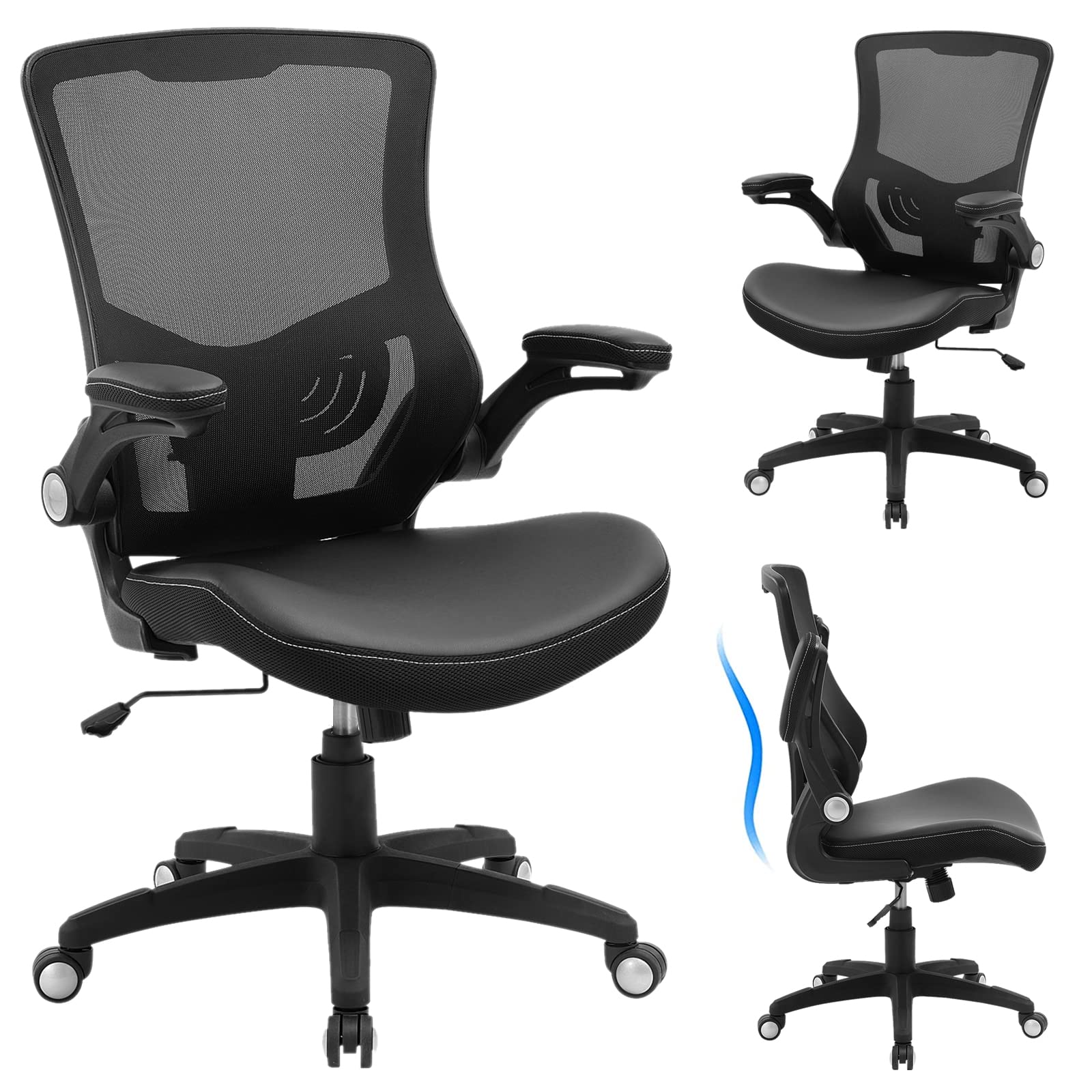
Home Office

Best Ergonomic Office Chairs of 2026

The chair that feels like a cloud in the first ten minutes is often the one you're cursing by Thursday. Foam that's too soft bottoms out, a backrest that misses the curve of your spine leaves you perching, and next thing you know you're sitting on a folded blanket with a throw pillow jammed behind you. A good chair fixes that without asking for attention: it holds your lower back, adjusts to your height rather than the reverse, and gets you to the end of the day without the shoulder roll.

Appearance counts for more than anyone admits now that the office is a corner of the bedroom and half our meetings happen on camera. My team and I spent the past eight months working full days in 12 ergonomic chairs, and the lesson is that the upholstery is the easy part—seat depth is the spec almost nobody checks and the one that decides whether a chair actually fits you. The picks below are the ones that got that right.

#1

Best Overall

ELABEST X100

ELABEST X100

9.0/10 Outstanding
  • Recline: 3-stage with 18 in footrest
  • Armrests: 5D flip-up
  • Weight Capacity: 300 lb
  • Lumbar Adjustment: 3D: depth, height, 15° rotation
Check Price on Amazon

Pros

  • Lumbar pad adjusts in depth, height and angle
  • Arms adjust in three directions and flip up
  • Footrest and three-stage recline for breaks
  • Tool-free assembly in about 15 minutes

Cons

  • Headrest can drift when fully reclined
  • Highest price in this group

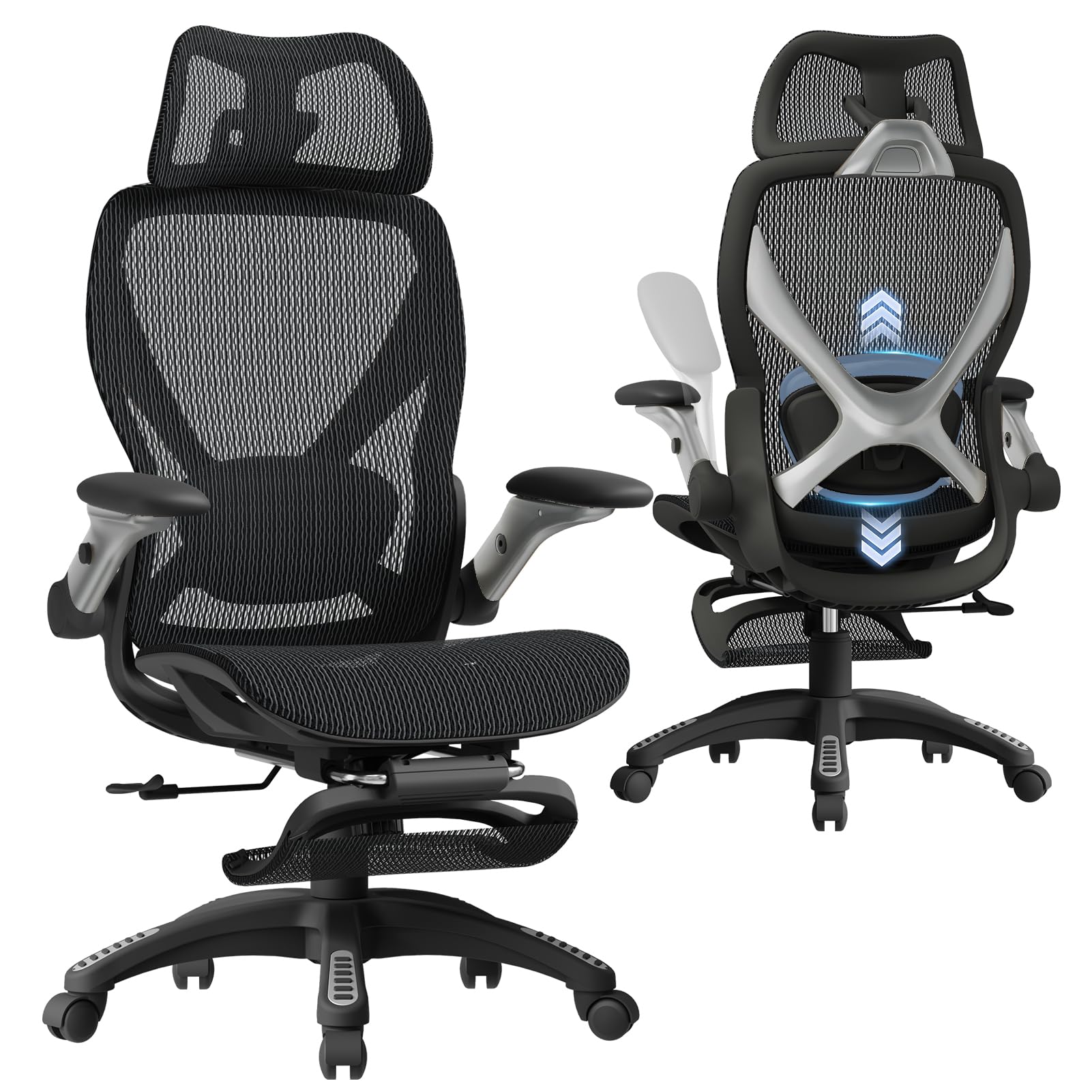
Most lumbar pads are a lump of foam fixed where the manufacturer guessed your spine would be. The X100's pad sits on a spring-loaded arm that travels about an inch and a half toward your back, slides two inches up and down, and rotates 15 degrees, so you can push support into the small of your back instead of arching around whatever shape the chair came with. The arms work the same way: height, width and forward reach, and then they fold up when you want the chair gone from underfoot.

The rest of the chair follows the same logic. There is a wide headrest that tilts, a three-stage recline, and an 18-inch footrest that pulls out for the last hour of the afternoon. The mesh back and seat keep air moving, the rating is 300 pounds, and it goes together without tools in about 15 minutes, which is genuinely useful if the chair arrives on a Friday and you need to work on Monday.

The one thing to check is width. A back panel of roughly 20 inches and an 18-inch seat depth are generous for most sitters and snug on anyone broad through the shoulders, so if you are built like a lineman, sit in one first or buy somewhere with easy returns. For everyone else the fit is settled before you finish adjusting it.

What decides it for us is range. Every dimension that turns an eight-hour day from fidgety into fine, the lumbar depth, the arm position, the seat height, has somewhere to go, and the parts you touch feel a step above the cheaper chairs here. For full-time desk work, this is the chair we point to first.

Bottom Line: The most adjustable chair in this group, and our default for full-time desk work: the lumbar pad moves in and out, so it can be fitted to your back rather than the reverse.
#2

Best Value

HOLLUDLE V Chair

HOLLUDLE V Chair

8.5/10 Excellent
  • Armrests: 3D adjustable
  • Certification: BIFMA and EN1335
  • Weight Capacity: 350 lb
  • Lumbar Adjustment: 3D: up/down, in/out, rotate
Check Price on Amazon

Pros

  • 3D lumbar, 3D arms, tilting headrest
  • 350-pound rating, the highest here
  • BIFMA and EN1335 certified, five-year warranty

Cons

  • Lumbar pad sits high and firm
  • Assembly takes 20 to 30 minutes

The V Chair covers almost every adjustment the top pick does, for a midrange price that keeps it inside a normal home-office budget: lumbar support that moves up, down, in and out and rotates, armrests on three axes, and a headrest that tilts and slides. That combination is why it is the chair we hand to anyone who wants a proper fit without spending the most here.

It also carries the highest weight rating in this group at 350 pounds, and it is the only chair listing both BIFMA and EN1335 certification, a 35 mm steel mechanism and a five-year warranty. The silver V-back is a nicer thing to look at than the black mesh boxes that dominate this end of the market, and the mesh keeps your back cool through a warm afternoon.

The lumbar pad is the part to think about before you commit. It is a firm, fairly high shape, and if your lower back curves below where it sits you will feel it pushing rather than supporting. Build time is also 20 to 30 minutes rather than the quarter hour some of these take, so plan it for an evening rather than a lunch break.

Bottom Line: We recommend it as the value pick: nearly all of the top chair's adjustment, the highest weight rating here, and certification behind it, for a midrange price.
#3

Best for Bigger Frames

SIHOO M18

SIHOO M18

8.6/10 Excellent
  • Armrests: 2D adjustable
  • Headrest: Adjustable
  • Back Width: 20.47 in
  • Weight Capacity: 330 lb
Check Price on Amazon

Pros

  • Wide 20.47-inch back and roomy seat
  • 330-pound rating with a dense memory-foam seat
  • Headrest adjusts to neck height

Cons

  • Armrests adjust in height only
  • Seat has almost no give

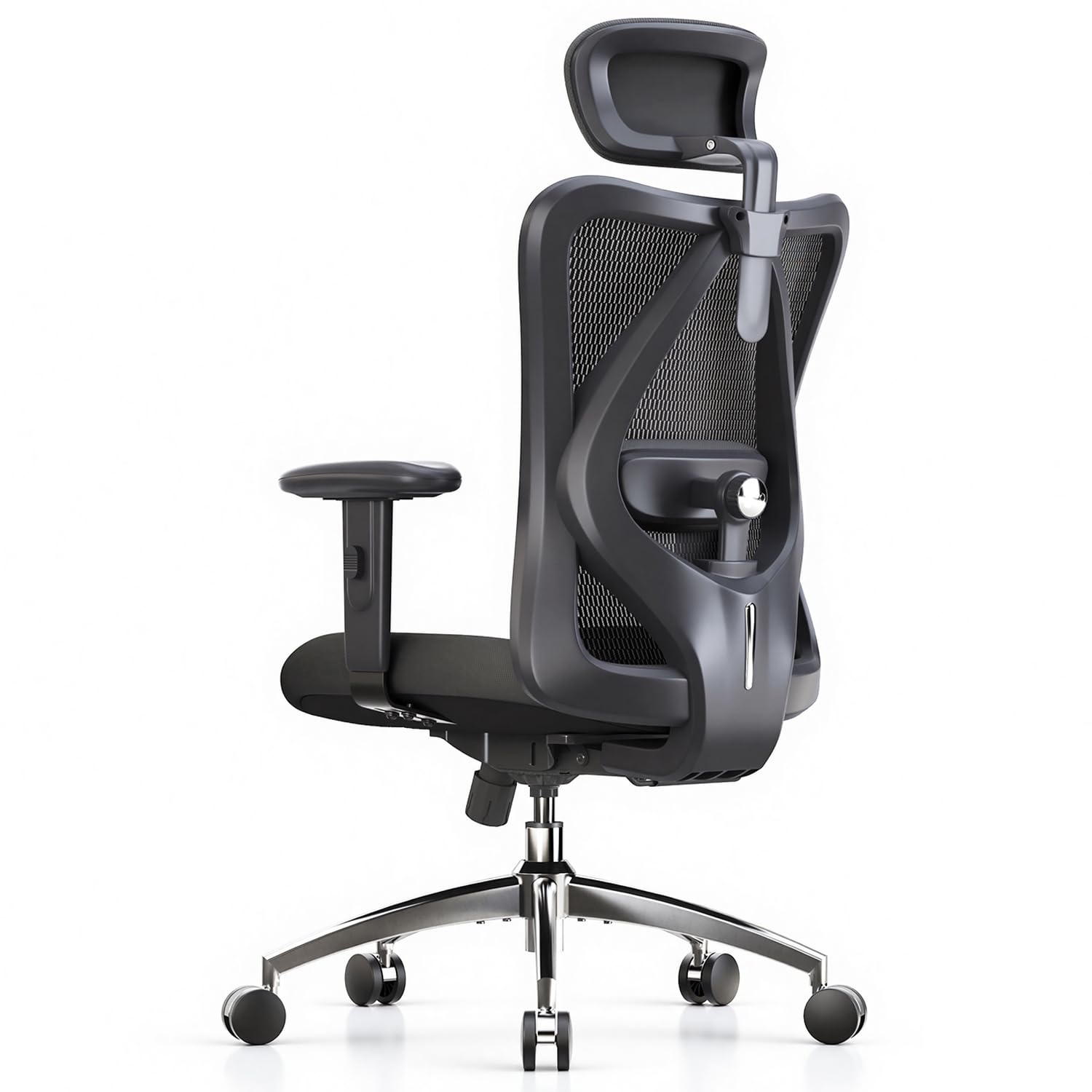
Sit down in the M18 and the seat tells you what kind of chair it is: dense memory foam over a steel frame, with almost no sink. That is not a compromise, it is the design, because foam that gives easily is foam that collapses by lunchtime, and it is why the chair still feels structured at the end of a long day.

The proportions are the other reason it earns a place. The back is 20.47 inches across and the seat is 20 inches wide, both roomier than most of this group, and the 330-pound rating sits near the top. The headrest adjusts so it lands at your neck rather than the top of your skull, which is more than several chairs here manage.

Our reservation is the arms. They adjust in height, but the cups are fixed in width and angle, so if you like your elbows tucked while you type you will spend the day working around them rather than with them. Everything else about the fit is sorted, and for a heavier or broader sitter this is the chair that stops feeling cramped.

Bottom Line: A firm, wide, well-built chair for heavier and broader sitters, with a genuinely adjustable headrest; just accept that the armrests only move up and down.
#4

Best Padded Seat

X XISHE 929

X XISHE 929

8.9/10 Excellent
  • Armrests: Flip-up
  • Seat Depth: 19.29 in
  • Weight Capacity: 300 lb
  • Lumbar Adjustment: Up and down
Check Price on Amazon

Pros

  • Dense padded seat under a mesh back
  • Lumbar pad adjusts up and down
  • Arms flip up to tuck under a desk

Cons

  • Leather seat runs warmer than mesh

Most ergonomic chairs at this end of the market are mesh from the seat up. The 929 keeps the breathable mesh back but puts a thick PU leather seat underneath you, and that one change is why it is on this list: it suits people who find mesh seats cold, scratchy, or simply uninviting after a couple of hours.

We think it is the best budget seat here for a long working day. The padding is dense rather than squishy, so it does not bottom out by mid-afternoon, the lumbar pad slides up and down to find your waist, and the arms flip up so the chair rolls clean under a desk when you are done. Comfort and sturdiness are the two things this chair does consistently well, and the stitching and finish look better than the price suggests.

The frame is tested to BIFMA standards, the cylinder is a three-stage SGS unit, and the 300-pound rating covers most sitters. Assembly is a 15 to 20 minute job with the tools in the box, and the casters are quiet enough for a shared room.

Bottom Line: Our pick if you want a padded seat rather than mesh: dense foam, an adjustable lumbar pad and flip-up arms, at a price that leaves room for the rest of the office.
#5

Best Budget Pick

TRALT Ergonomic Chair

TRALT Ergonomic Chair

8.5/10 Excellent
  • Seat: Molded high-resilience foam
  • Gas Lift: Class 3 BIFMA
  • Weight Capacity: 330 lb
  • Lumbar Adjustment: Depth
Check Price on Amazon

Pros

  • Depth-adjustable lumbar at a budget price
  • 330-pound rating and Class 3 gas lift
  • Molded foam seat that resists flattening

Cons

  • Two-position recline only

This is the least expensive chair we are recommending, and it still gets the one feature that separates a real ergonomic chair from a chair with a bump in the back: a lumbar pad that adjusts in and out as well as up and down. At this end of the market that is unusual, and it is the reason the TRALT earns a place rather than a mention.

The money goes into structure elsewhere. There is a BIFMA-certified Class 3 gas lift, a nylon base with a metal core, and a 330-pound rating that trails only the HOLLUDLE here. The seat is molded high-resilience foam rather than cheap sponge, the back is mesh, and the white option is a welcome change from a room full of black chairs.

Where it gives ground is the seat pan. The seat angle tips forward slightly for some sitters, pushing you toward the front edge instead of letting you settle back, and the recline has fewer positions than the chairs above it. As an upright work chair for focused desk hours it is excellent value; as a lounger it is not trying to be.

Bottom Line: The budget pick: depth-adjustable lumbar, a 330-pound rating and a certified gas lift at the lowest price in this group, as long as you mostly sit upright.
#6

Small spaces

MUXX.STIL Desk Chair

MUXX.STIL Desk Chair

8.6/10 Excellent
  • Armrests: Flip-up 90°
  • Warranty: 15 years
  • Weight Capacity: 264 lb
  • Lumbar Adjustment: Adjustable cushion
Check Price on Amazon

Pros

  • Large adjustable lumbar cushion
  • Rubber wheels roll quietly on wood
  • 15-year warranty, the longest here

Cons

  • 264-pound weight limit is the lowest here
  • Armrest height is fixed

Start with the number: 264 pounds is the lowest weight rating in this group by a wide margin, so if you are near or over it, this chair is not for you and the SIHOO is the better starting point. Under that, the rest of the chair is a sensible buy for a small room.

The lumbar cushion is large and adjusts to sit where your waist is, the arms fold up through 90 degrees so the chair slides under a desk, and the waterfall-shaped seat is cut away at the front so the edge does not dig into the back of your thighs. The khaki fabric looks less like office equipment than black mesh, which counts for something in a room you also live in.

What we appreciated beyond the basics is the quiet. The wheels are rubber, so they roll over wood without the clatter of hard casters, and the warranty is the longest promise in this group at 15 years. The armrests are the compromise: they fold away, but their height is fixed, so shorter sitters can end up with elbows floating above the desk.

Bottom Line: A well-mannered small-space chair with adjustable lumbar, quiet wheels and the longest warranty here, provided your weight sits comfortably under its 264-pound limit.
#7

Style-first offices

YFO Leather Desk Chair

YFO Leather Desk Chair

9.0/10 Outstanding
  • Armrests: Removable
  • Seat Width: 22 in
  • Upholstery: Leather
  • Weight Capacity: 300 lb
Check Price on Amazon

Pros

  • Leather finish that suits a living space
  • Wide 22-inch seat with soft padding
  • Rubber casters glide over rugs and wood

Cons

  • Lumbar support is fixed, not adjustable
  • Narrow 15.8-inch back panel

Brown leather, diamond stitching, a wide 22-inch seat: this is the one chair here you leave out on purpose when guests come over. In a study, or a living room that doubles as an office, it does more for the room than any black mesh task chair, and the stitching and finish look a class above the price bracket.

We like it as a second chair or a short-session pick rather than a full-time workstation. The casters are the skate-wheel kind, rubber rather than hard nylon, so they glide over rugs and wood without marking either. The arms can be left off entirely if you like to sit cross-legged, and the padding is soft and wide enough to be genuinely comfortable for an hour or two.

It does not pretend to be an eight-hour ergonomic chair, and anyone who needs real lumbar adjustment should look at the top three picks instead. What it offers is a good-looking, comfortable seat for the kind of desk work that arrives in bursts, in a room where the furniture is part of the point.

Bottom Line: For a home office where the chair is always on show, this leather seat looks and feels lovely; for eight-hour lumbar support, it is not the answer.

How We Tested (and Lived With) 12 Ergonomic Office Chairs

We started with the chairs that come up again and again in office furniture coverage and ergonomics guidance, then cut anything with fewer than a few meaningful adjustments or no published seat dimensions. That left 12 chairs, which my team and I lived with for eight months at real desks—through deadline weeks, back-to-back video calls, and the slow slide into afternoon slouching.

Each one arrived in a box, and I assembled every chair alone with a timer running, noting missing hardware, instructions written for two people, and armrests that refused to line up. Testers ranged from 5-foot-2 to 6-foot-4, and each sat in every chair for at least one full workday, running the seat height and depth, the armrests, and the lumbar dial through their full range to see how much adjustment was actually usable—and whether the settings held after a week of use.

We paid more attention to hour six than hour one: whether the cushion still felt supportive or had gone flat, whether the lumbar support pressed into the right part of the back or dug into the ribs, and how often we caught ourselves shifting around. Durability got judged by living—leaning back hard, rolling across a rug, and watching for wobble in the armrests and gas lift after months of daily use. And since these chairs end up in living rooms and on camera, we looked at each one from across the room as well as from behind the desk, then weighed all of it against what it asked us to spend.

How to Choose Ergonomic Office Chairs

Lumbar support you can actually move

Nearly every chair here claims lumbar support; the difference is whether the pad can be moved to where your back curves. A pad that only slides up and down relocates a fixed lump. One that also moves in and out, as on the ELABEST and HOLLUDLE, lets you dial how much pressure you feel. A fixed cushion, as on the YFO, is a guess that either lands or does not.

Find the pad with your hand and check it sits in the small of your back, not on your tailbone and not floating above your waist. If it cannot be moved there, the chair is the wrong shape for you, whatever else it offers.

Arms, and what fits under your desk

Armrests do two jobs: they carry your forearms while you type, and they get out of the way when you do not need them. Height adjustment is the minimum, and it matters more than it sounds, because arms set too high make you hunch and arms set too low make you lean. Three-axis arms, as on the top two picks here, let you pull the pads in to meet your shoulders.

Flip-up arms are the practical feature for a small room, but check the underside of your desk first. A drawer pedestal or a shallow apron can stop the chair sliding in even with the arms folded flat.

Seat height, seat depth and your build

Seat height gets your feet flat and your thighs level; seat depth decides whether the front edge presses behind your knee. Aim for about two fingers of clearance between the seat edge and the back of your leg, and a seat that lets your back reach the lumbar pad without a gap.

Deeper and wider sounds more comfortable and often is not: a 20-inch seat pushes shorter sitters forward onto the edge, and a very wide back leaves broad shoulders unsupported. Check the weight rating as well. It runs from 264 to 350 pounds across these picks, and it is a structural limit rather than a suggestion.

Firm or soft, mesh or foam

Give a chair five minutes and the soft one wins. Give it five hours and the firm one usually does, because foam that compresses easily bottoms out and leaves you sitting on the frame. Mesh seats stay cooler and hold their shape; padded leather and foam feel plusher and run warmer.

If you sit for a living, lean firm and add a cushion later if you need one. If the chair is for an hour of email in the evening, comfort on contact counts for more than long-haul support.

Recline, footrests and the parts that wear

A reclining back is for the breaks, not the work. A mechanism that locks where you set it is worth more than one with a long travel, and a footrest costs you floor space: the chair needs room behind the desk to extend into, so measure before you fall for one.

Then look at what fails first. A certified Class 3 or Class 4 gas lift is the best single clue to how the base will hold up, and rubber or polyurethane wheels are gentler on wood floors than hard nylon.

Frequently Asked Questions

Final Verdict

Buy the ELABEST X100 if you sit at a desk for a living. Its lumbar pad adjusts through the widest range here, in depth, height and rotation, and the arms move in three directions, so the chair can be fitted to you instead of the other way around.

If that is more chair than you need, the HOLLUDLE V Chair gets you depth-adjustable lumbar, three-axis arms and the highest weight rating in this group for a midrange price. Broader or heavier sitters should start with the SIHOO M18 and its 20.47-inch back.