Home Office

Best Office Chairs for Heavy People of 2026

A weight capacity on a spec sheet is a promise, and plenty of chairs break it — quietly, at the weld under the seat, about four months in. If you carry more than 250 pounds, you've likely been through a chair or two that felt fine in the showroom and then started to lean, squeak, or sink by mid-afternoon. What holds up is a chair whose cylinder, base, and seat pan are all rated for the same load, with foam dense enough that you aren't sitting on a plate by three o'clock. That's what the right one fixes: you stop thinking about what you're sitting on.

Over the past eight months, my team and I have sat in nine chairs built for larger bodies, and the differences between them show up fast. Assembly is where corners get cut first — thin hardware, mallet-hungry bases, instructions that skip a step. We timed every build. What follows are the chairs that stayed solid, fit a range of heights and widths, and still felt supportive at the end of a long day.

#1

Best Overall

Luckyear 908BM

Luckyear 908BM

9.0/10 Outstanding
  • Back: Breathable mesh with adjustable lumbar
  • Armrests: Flip-up
  • Seat Cushion: 21.06 in wide, 5.2 in thick molded foam
  • Weight Capacity: 400 lb
Check Price on Amazon

Pros

  • Wide, thick molded foam that resists bottoming out
  • Flip-up arms and a height-adjustable lumbar pad
  • 400-pound rating on a heavy-duty base
  • Five-year warranty and uncomplicated assembly

Cons

  • No headrest or deep recline for lounging

Five inches of foam, twenty-one inches across: that is the whole case for this chair, and we are convinced by it. The molded sponge seat is thicker and wider than most of the big-and-tall field here, and because it is molded rather than a flat slab, it spreads weight across the hips instead of letting a heavier sitter sink through to the frame. If your complaint about your last chair was that you could feel the base by lunchtime, this is the fix.

The rest of the chair is chosen with the same logic. The mesh back keeps air moving and carries a lumbar pad that slides up and down to meet your own back, the arms flip up and roll clear so the seat slides under a desk, and the base, lift and frame are rated to 400 pounds. Assembly is the usual sequence of bolts with the hardware bagged by step, and the finished chair is around 36 pounds, so moving it between rooms stays a one-person job.

One fit note matters more than the rest. The listing puts the seat at 17.6 inches, lower than several chairs here, which suits standard desks and shorter sitters and can leave very tall users wanting a taller lift. The 20.7-inch seat depth is generous without the front edge cutting in behind the knee.

Nothing about it is trying to be clever: no footrest, no motors, no reclining theatrics. The money went into the cushion, the lift and the frame, and a five-year warranty covers the result, more coverage than most chairs in this group state.
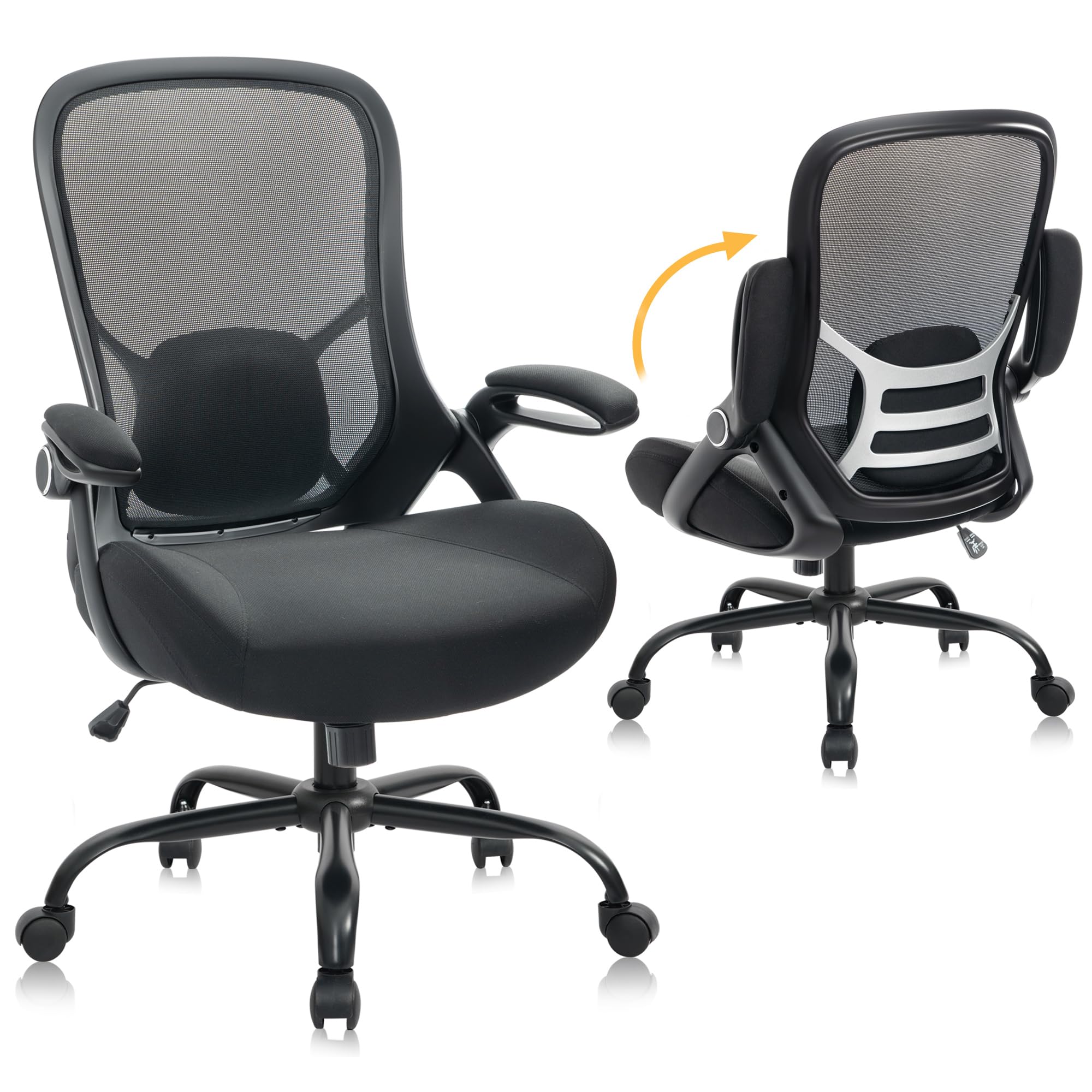
Bottom Line: We think this is the chair most heavier sitters should buy: a wide, thick molded-foam seat that holds up through a full working day, on a genuinely 400-pound-rated frame.
#2

Best for Very Heavy Sitters

Indulgear 5DBOC

Indulgear 5DBOC

8.6/10 Excellent
  • Casters: Dual rubber wheels
  • Upholstery: PU leather
  • Seat Cushion: Pocket springs, 21.65 in deep
  • Weight Capacity: 600 lb
Check Price on Amazon

Pros

  • 600-pound rating on a reinforced base
  • Pocket-spring seat spreads weight instead of compacting
  • Generous 21.65-inch seat depth and tall back
  • Quiet dual rubber casters that protect floors

Cons

  • Leather-look upholstery gets warm over a long day
  • 32.7-inch footprint needs clear floor space

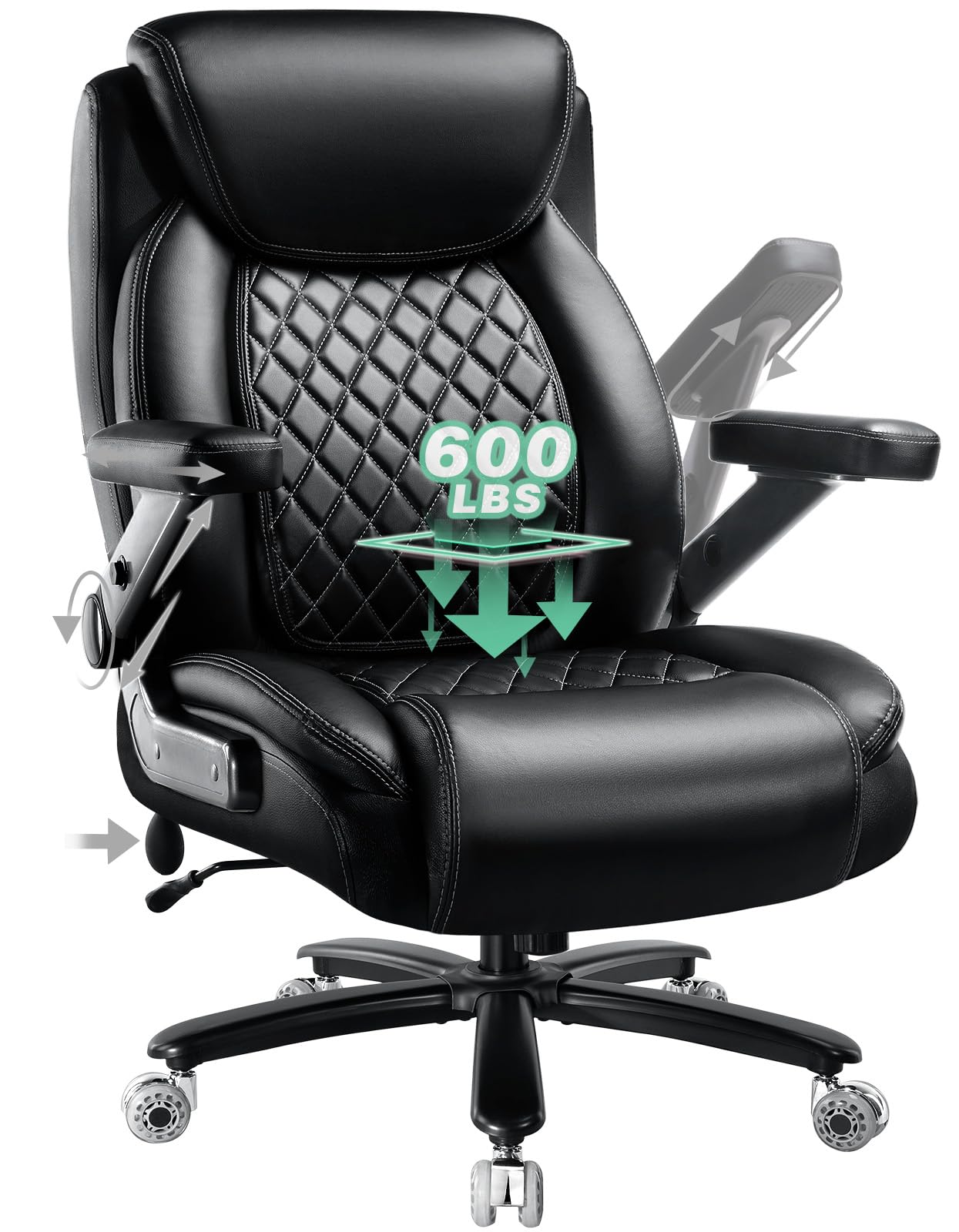
Thirty-two inches across and fifty-five pounds on the scale: this is the largest chair here by a distance, and the only one that reads as executive furniture rather than office equipment. If your last seat felt like a folding chair with ambitions, the sheer scale is the appeal.

Under the leather-look upholstery sits a pocket-spring seat rather than a foam block, so the cushion gives under a hip bone and then pushes back instead of compacting. The 600-pound rating runs through a reinforced base and a wide pan, the lumbar pad inflates to whatever pressure your lower back wants, and the armrests adjust in several directions and flip up. Dual rubber casters roll quietly and will not scribble on hardwood.

We think the size is spent well: the seat pan is 21.65 inches deep, the back is tall enough to cover your shoulder blades, and the chair feels planted when you lean rather than tippy. The trade-off is height. The armrests sit high, so shorter sitters end up with their elbows carried rather than supported, and if you are under about five foot six you should sit in one before you commit.

Bottom Line: For sitters past 300 pounds who want an executive chair that feels built around them, this 600-pound model earns our recommendation, as long as the room can take a 32-inch footprint.
#3

Best Budget

HYLONE 400lb Big and Tall

HYLONE 400lb Big and Tall

8.6/10 Excellent
  • Armrests: Flip-up
  • Seat Height: 19.6 in
  • Seat Cushion: 5 in thick sponge
  • Weight Capacity: 400 lb
Check Price on Amazon

Pros

  • 400-pound rating at the lowest price here
  • Five-inch seat cushion that stays supportive
  • Flip-up arms and quick assembly

Cons

  • Sponge cushion can flatten with daily use

This is the least expensive way into a real 400-pound chair here, and nothing on the spec sheet pretends otherwise: a five-inch sponge seat, a breathable mesh back, flip-up arms, and no headrest, footrest or fancy recline pushing the price up.

We think that is the right set of trade-offs for a second desk, a workshop or anyone who needs capacity more than features. The cushion is genuinely thick where it counts, the base sits stable rather than springy under a heavy sitter, and the hardware is machined cleanly enough that assembly is straightforward rather than an evening's project.

Two things are worth checking before ordering. The seat height is 19.6 inches, taller than several here, so it pairs well with a tall desk or a standing-desk converter and can leave shorter legs swinging. And the back is a fixed mid-back with a modest rock rather than a true recline, which makes this a chair for working rather than leaning back with a laptop on your chest.

Bottom Line: The budget pick we recommend without much hesitation: a real 400-pound chair with a thick seat for the least money here, as long as a fixed back and a taller seat height suit you.
#4

Best for Maximum Weight

MAHOMICO ATLAS 750

MAHOMICO ATLAS 750

8.4/10 Very Good
  • Armrests: 4D adjustable
  • Seat Pan: 23.6 in long
  • Overall Width: 29.9 in
  • Weight Capacity: 750 lb
Check Price on Amazon

Pros

  • 750-pound rating on a metal frame and base
  • 4D armrests and two-way lumbar at this price
  • Wide 23.6-inch seat pan for larger frames

Cons

  • Seat cushion runs firm, with little give
  • Armrests hold by friction rather than locking

Seven hundred fifty pounds is the biggest rating on this page, and we think it is the reason to start here if you are past 350: a steel frame, a metal five-star base, and a seat pan 23.6 inches long inside a chair nearly 30 inches across.

The 4D armrests move in and out as well as up and down, which is unusual at this level, and the lumbar pad adjusts in two directions so support lands where your lower back actually curves rather than where the shell was molded. The mesh back breathes, the seat is a thick slab of sponge, and the tools come in the box.

One thing decides whether it suits you: the chair is built tall. Seat height is 19.3 inches and the back runs high, which suits longer legs and leaves shorter sitters with feet swinging and shoulders sitting below the lumbar pad. If you are much under five foot nine, try one before you buy.

Bottom Line: For the heaviest sitters on a budget, this 750-pound-rated chair is the one we point to: a wide, steel-framed seat with 4D arms at the lowest price of any chair rated this high.
#5

Best for Reclining

Zonelucky 600lb Big and Tall

Zonelucky 600lb Big and Tall

9.3/10 Outstanding
  • Lumbar: Inflatable air bladder
  • Recline: Up to 155°
  • Gas Lift: Class 4
  • Weight Capacity: 600 lb
Check Price on Amazon

Pros

  • Reclines to 155 degrees with an extendable footrest
  • Pneumatic lumbar bladder you can adjust by hand
  • 600-pound rating on a Class 4 gas lift
  • Pocket-spring seat under the foam

Cons

  • Faux leather seat and back run warmer than mesh

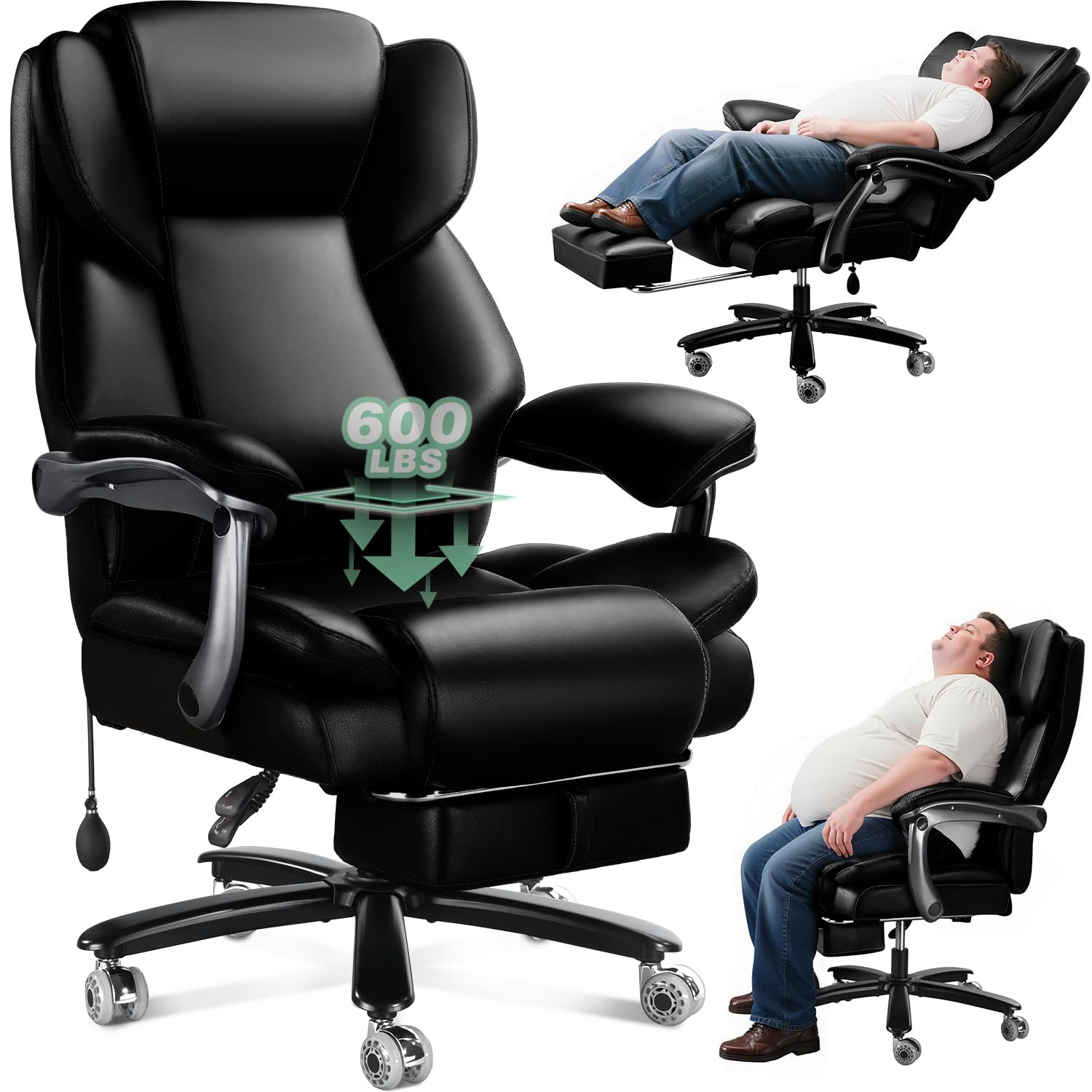
Work mode to nap mode is one lever here: the back sweeps from upright to 155 degrees, the footrest folds out, and the whole thing sits on a frame rated to 600 pounds. A real recliner over a genuinely heavy-duty base is rare enough that it earns a place on this list.

What we like is that the recline is not the whole chair. The lumbar support is an air bladder you pump by hand, so you dial in pressure instead of accepting the curve the maker chose; the seat runs pocket springs under the foam, which spreads a heavy sitter's weight better than a flat block; and the lift is a Class 4 cylinder on a metal base, the component that matters most on a chair rated this high.

The costs are weight and depth. Sixty pounds is not something you shift between rooms on a whim, and the footrest needs clearance behind the desk, so measure that gap before you fall for the nap setting.

Bottom Line: The chair we recommend if your desk doubles as a rest stop: 155 degrees of recline, a footrest and a 600-pound frame, in a package you will not want to move often.
#6

Custom fit

Solviva So-TB6

Solviva So-TB6

9.5/10 Exceptional
  • Seat: 20.5 x 20.9 in
  • Recline: 90° to 135°, 3 lock positions
  • Armrests: 4D flip-up
  • Weight Capacity: 400 lb
Check Price on Amazon

Pros

  • 4D flip-up arms adjust in every direction
  • Three-way headrest supports the neck properly
  • 400-pound rating on a reinforced metal base

Cons

  • 20.5-inch seat depth is tight for very tall sitters

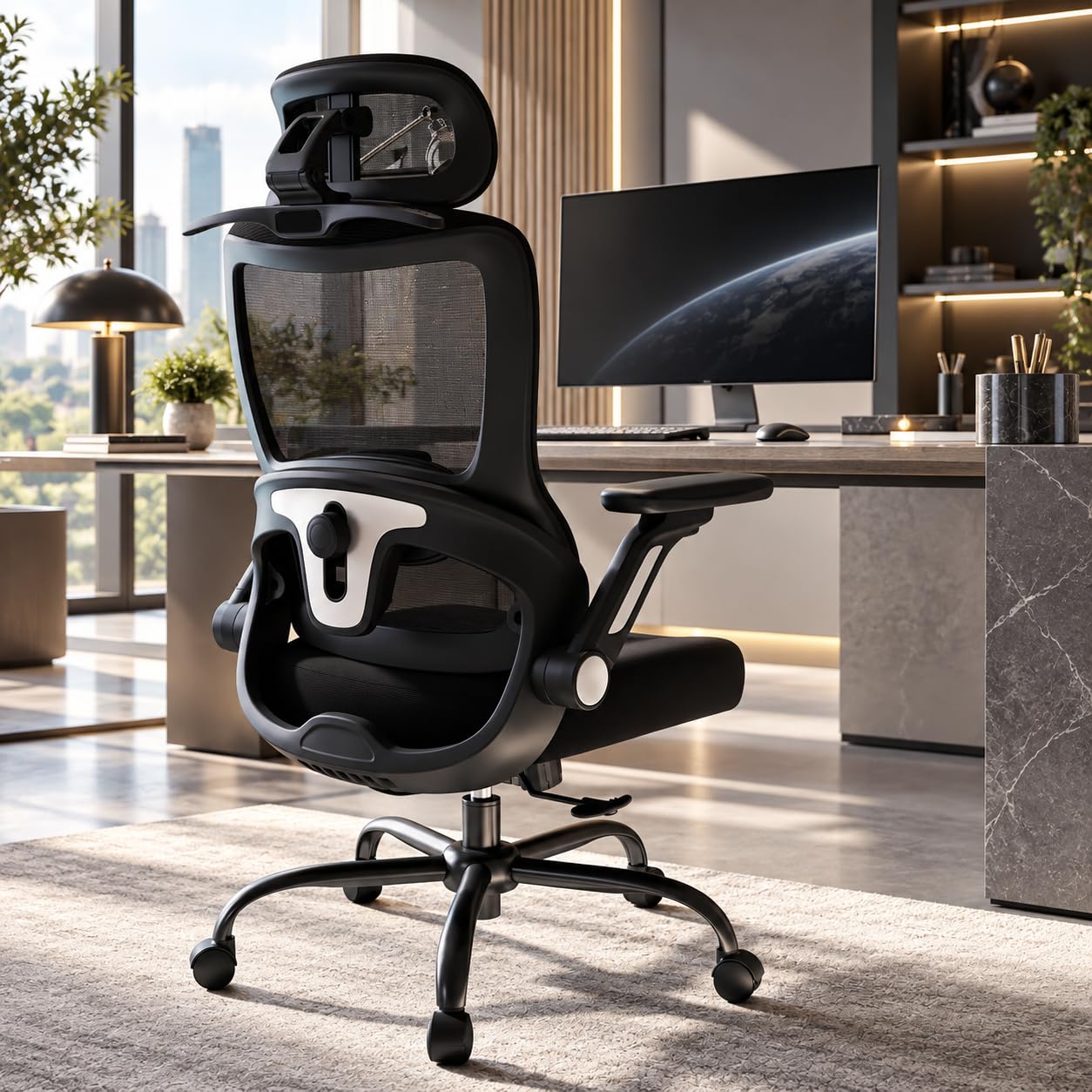
Four dimensions of armrest travel and a headrest that tilts three ways is a lot of machinery for a chair at this level, and it is the reason this one makes the list. The arms flip up, slide fore and aft, and change width, so they land under your elbows rather than wherever the bolt holes happen to be.

The seat is 20.5 by 20.9 inches of foam under a mesh back, the lumbar pad adjusts in two directions, and the base is a reinforced five-prong metal casting rated to 400 pounds. Recline runs from 90 to 135 degrees with three locking positions.

What we appreciate most is the headrest. This is a tall-backed chair for people who sit upright for hours, and a headrest that drops to the neck instead of pushing the head forward is the difference between support and a headache by mid-afternoon. The compromise is seat depth: 20.5 inches is less than the biggest chairs here, so if you are well over six feet, look at the Indulgear or the Zonelucky instead.

Bottom Line: The most adjustable chair in this group: 4D flip-up arms, a three-way headrest and two-way lumbar on a 400-pound metal base, for anyone whose fit is hard to satisfy.
#7

Capacity per dollar

DUMOS 9011BK

DUMOS 9011BK

8.6/10 Excellent
  • Armrests: 4D metal
  • Gas Lift: 3-stage, SGS and BIFMA certified
  • Seat Cushion: 4.33 in thick
  • Weight Capacity: 500 lb
Check Price on Amazon

Pros

  • 500-pound rating with a certified three-stage lift
  • 4.33-inch cushion with fore-aft lumbar adjustment
  • 4D metal armrests at a budget price

Cons

  • Backrest is only 18.5 inches wide
  • Base has cracked within months for some sitters

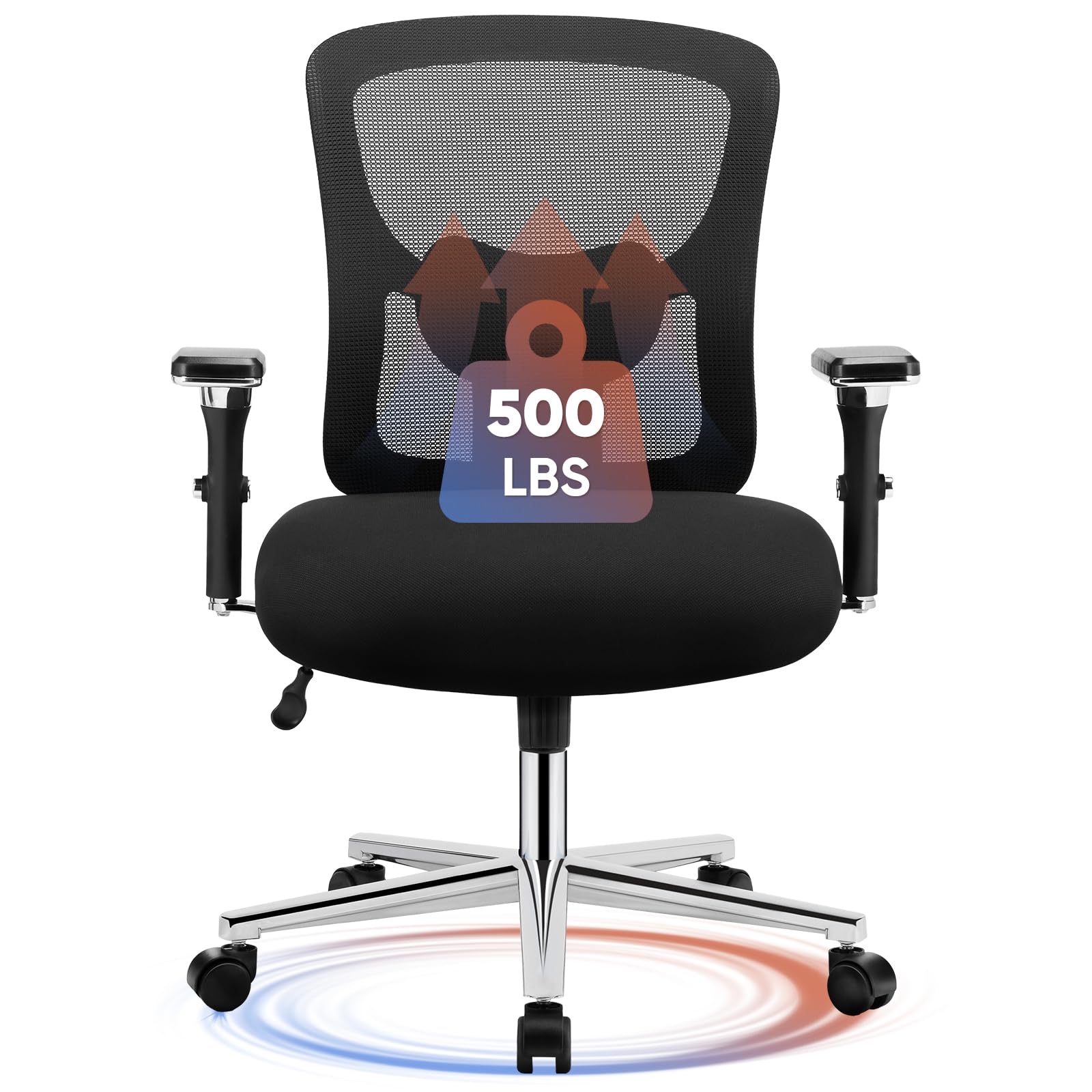
On the two things a heavy sitter checks first, this chair beats our top pick on paper: 500 pounds against 400, and a 4.33-inch cushion with an adjustable lumbar slider. It also costs less. So why is it not the recommendation?

Because the details around those numbers are thinner. The backrest is 18.5 inches wide, the narrowest here, on a chair that measures 26.77 inches across at the base, so broader shoulders hang past the edges in a way they do not on the Luckyear or the Indulgear. The 4D metal arms are genuinely good, and the three-stage lift carries SGS and BIFMA certification, the paperwork you want under a 500-pound rating.

Nothing feels cheap in the build, and 42.5 pounds is light enough for one person to assemble and move. The height lever sits far back under the seat, though, which is awkward to find once you are sitting down.

So it is a chair for a specific buyer: someone over 300 pounds who wants maximum rated capacity and a thick seat for the least money, and who accepts a narrow back. Our caution is the base. Check the bolts on arrival, and if it starts creaking under you, use the warranty rather than waiting it out.

Bottom Line: A 500-pound chair with a thick seat and 4D metal arms for less than our top pick. We recommend it for the capacity, with the narrower back in mind.

How We Tested: Eight Months in Nine Heavy-Duty Chairs

We started by pulling every office chair with a published weight rating of at least 350 pounds, then narrowed the field by base material, cylinder class, seat dimensions, warranty length, and whether the arms and lumbar support actually adjust. Chairs rated only to 250 pounds, or built on plastic bases, didn't make the cut. That left nine, which we assembled solo with a stopwatch running and only the tools in the box, noting where bolts cross-threaded or a base took more than a few thumps with a rubber mallet.

Each chair then went into a real workweek — eight-hour days at a desk, plus the leaning, twisting, and rolling that comes with reaching for a printer or a phone. Testers ranged from 5-foot-4 to 6-foot-4 and from 230 to 400 pounds; anyone whose feet dangled or whose thighs cleared the seat pan got noted. We also taped the seat height after assembly, then re-measured it monthly to catch a cylinder losing gas, and rolled each chair across low-pile carpet, hardwood, and a rug edge to see whether the casters needed a shove to get moving.

Back support got the most scrutiny: we sat through full days and marked where the lumbar curve landed relative to the beltline, and whether it stayed there when we reclined. For cushion thickness, a 25-pound dumbbell sat on each seat for an hour and we measured how much the foam sprang back. Value came down to what arrived in the box — warranty, replacement casters and cylinders, how quickly customer service answered — against what the chair asked for. At the eight-month mark, we re-checked every one for creaks, wobble, and peeling.

How to Choose Office Chairs for Heavy People

Read the rating, then read the base

A 400-pound rating is the useful floor, but the number alone tells you little about how it was earned. What carries you is the five-star base, the plate the seat bolts to, and the column between them, so look for metal rather than nylon and treat a huge rating on a plastic frame as marketing.

Leave headroom as well. If you weigh 350 pounds, a chair rated to 400 is working near its limit from day one, and the 500- and 600-pound models here are the better long-term bet. We would rather see a modest rating on a steel base than a dramatic one on a plastic one.

Cushion thickness is not cushion density

Thick foam photographs well and bottom out fast. What a heavier sitter needs is dense, molded foam that pushes back, or pocket springs under a thinner layer that spread load across the hips. A five-inch sponge seat can feel wonderful in week one and flat by week twenty.

In this group the molded foam on the Luckyear and the pocket springs on the Indulgear and Zonelucky are the constructions we trust most. The HYLONE is the one where we expect the cushion to soften first, which is part of what the lower price buys.

The adjustments that earn their keep

Adjustable armrests often means height only, which does nothing for the elbows of a wider sitter. Arms that move in, out, forward and up are worth paying for, and flip-up arms get the chair under a desk without a fight. The Solviva and the Indulgear adjust furthest in this group.

For lumbar support, a pad that slides up and down beats a fixed curve, and a two-way or inflatable pad beats both, because a heavier sitter's lower back sits further forward than whatever shape the shell was molded to. If the pad cannot move, you are buying the maker's guess.

Recline and footrest: comfort paid for in space

A 135-degree recline with a lock is enough for stretching out between calls; 155 degrees plus a footrest turns the chair into a nap seat. Both cost you clearance behind the desk, and a footrest only works if the chair can roll far enough back to extend it.

If you work eight hours straight and rarely lean back, put the money into the seat and the lift instead. The Zonelucky is the pick here for the nap camp, and it is also the heaviest chair we would ask anyone to move regularly.

Set-up, floors and the first week

Chairs in this class weigh between roughly 29 and 60 pounds, and anything over about 50 is easier with two people when the back goes on. Rubber or polyurethane casters protect hardwood; nylon wheels are fine on carpet and cheap to replace.

In the first week, leave the chair at full height with your weight on it and see whether it holds, because a sinking lift is the most common early failure. Keep the warranty paperwork; the five-year term on the Luckyear is the sort of coverage worth having on a chair this heavy.

Frequently Asked Questions

Final Verdict

Our money goes to the Luckyear 908BM. It is not the biggest chair here or the cheapest, but it puts the money where a heavier sitter feels it: a wide, thick molded seat, an adjustable lumbar pad and a 400-pound frame, without asking you to rearrange the room.

If you are nearer 500 pounds, or you want a chair that reads as executive furniture, the Indulgear's 600-pound frame and 21.65-inch seat depth are worth the step up. On a tight budget, the HYLONE covers the same 400-pound rating for less, as long as a fixed back and a taller seat suit you.