Home Office

Best Office Chairs of 2026

A bad office chair waits until hour six, when your lower back starts negotiating with the seat cushion. I've done the dining-chair-at-a-desk thing, and I don't recommend it. A proper chair supports your back before it aches and keeps you from standing up stiff at 5 p.m. We spent eight months with a dozen chairs, from compact task models to high-back options, through full workdays and video calls.

The trap is assuming more adjustments mean more comfort; what matters is whether the lumbar curve lands in the right spot for your torso and the seat cushion stays supportive past the first hour. We assembled every one, rolled them across hardwood and carpet, and flipped up the arms to see whether they cleared a compact desk. Value isn't a long feature list—it's how little you think about the chair after a month. Some felt plush on day one and punishing by Thursday; the keepers still felt neutral after a long week.

#1

Best Overall

X XISHE Ergonomic Chair

X XISHE Ergonomic Chair

8.9/10 Excellent
  • Armrests: Flip-up
  • Seat Depth: 19.29 inches
  • Lumbar Support: Adjustable up and down
  • Weight Capacity: 300 lb
Check Price on Amazon

Pros

  • Adjustable lumbar pad moves up and down
  • Flip-up arms clear space under the desk
  • Breathable mesh back with padded seat
  • 300-pound weight capacity

Cons

  • PU seat runs warmer than full mesh
  • No headrest for reclined breaks

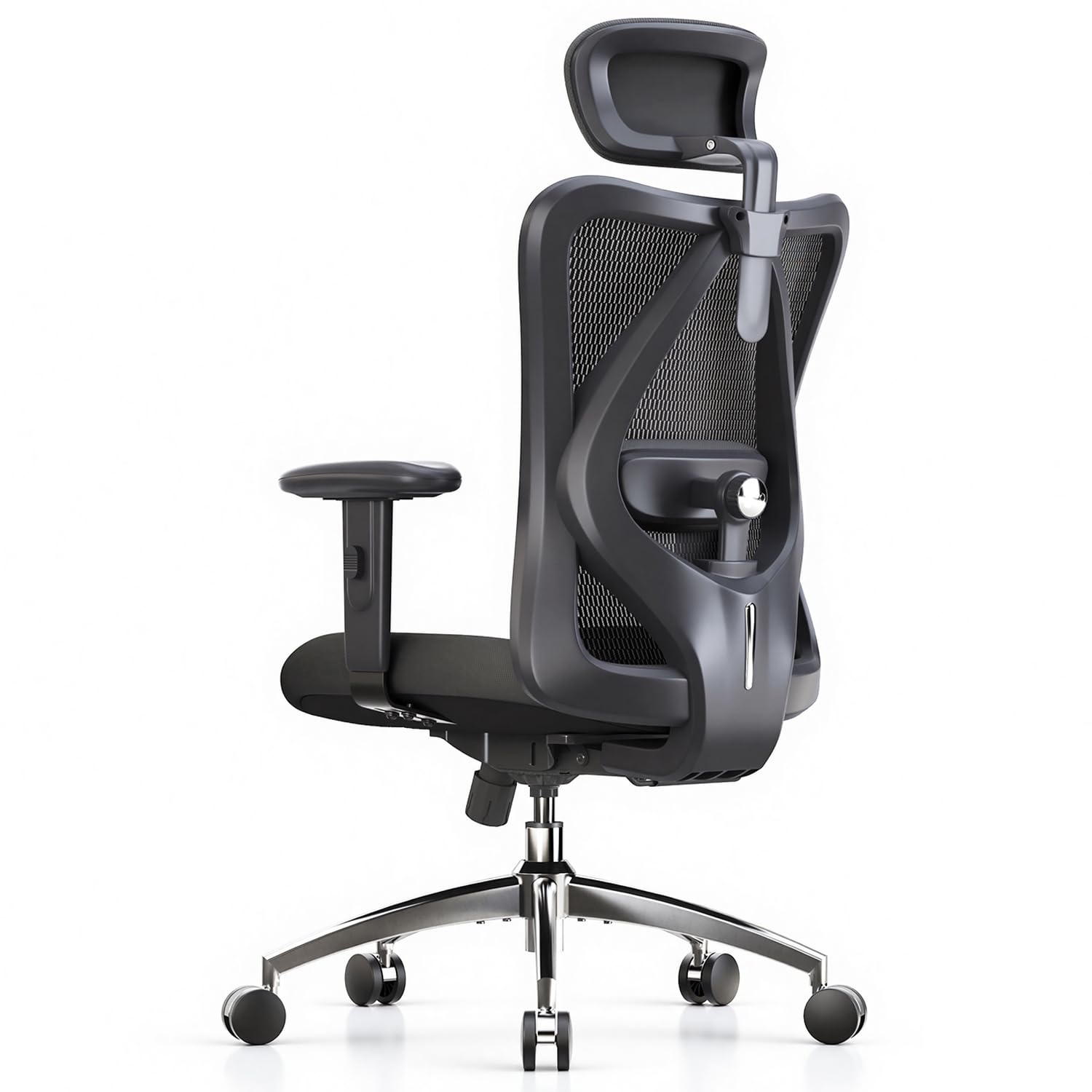
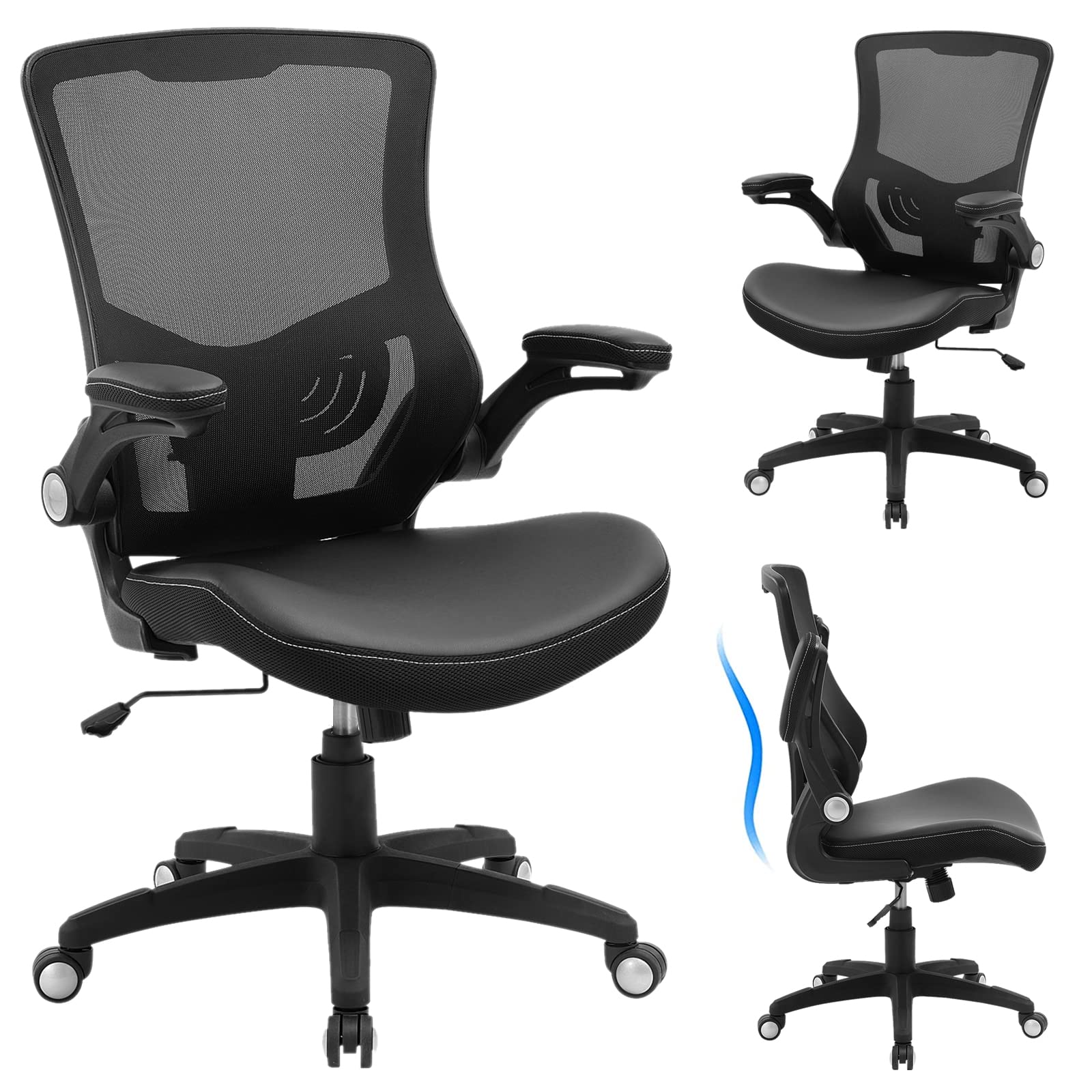
Adjustable lumbar support, flip-up arms, and a breathable mesh back are the three things we want in a do-everything office chair, and the X XISHE delivers all three without a steep learning curve. The lumbar pad moves up and down, the arms flip out of the way when you roll it under a desk, and the mesh back keeps air moving through the afternoon. For most home-office setups, that combination covers the basics better than a longer feature list.

We paid attention to the seat because that is where budget chairs usually give themselves away. The cushion is thick enough for a morning of concentrated work, and the PU cover wipes clean after lunch. The 19.29-inch seat depth gives taller users useful thigh support; shorter users should check that the front edge does not press behind the knee. The lumbar pad changes height rather than depth, so it alters where support lands, not how hard it presses.

The flip-up arms are the detail we use most: they clear the desk edge for keyboard work and let the chair tuck away in a small room. Assembly is straightforward, and the 300-pound rating covers a wide range of users. What it does is give most people the adjustments that matter without asking them to learn a control panel.
Bottom Line: For most desk workers, the X XISHE is the chair we point to first: adjustable lumbar support, flip-up arms, and a breathable back without a steep learning curve.
#2

Best for Long Workdays

ELABEST X100

ELABEST X100

9.0/10 Outstanding
  • Recline: 3-position with footrest
  • Armrests: 5D flip-up
  • Lumbar Support: 3D adjustable
  • Weight Capacity: 300 lb
Check Price on Amazon

Pros

  • 5D flip-up arms adjust in several directions
  • 3D lumbar support moves in three ways
  • Footrest and three-position recline
  • Full mesh seat and back

Cons

  • Seat depth is fixed at 18 inches

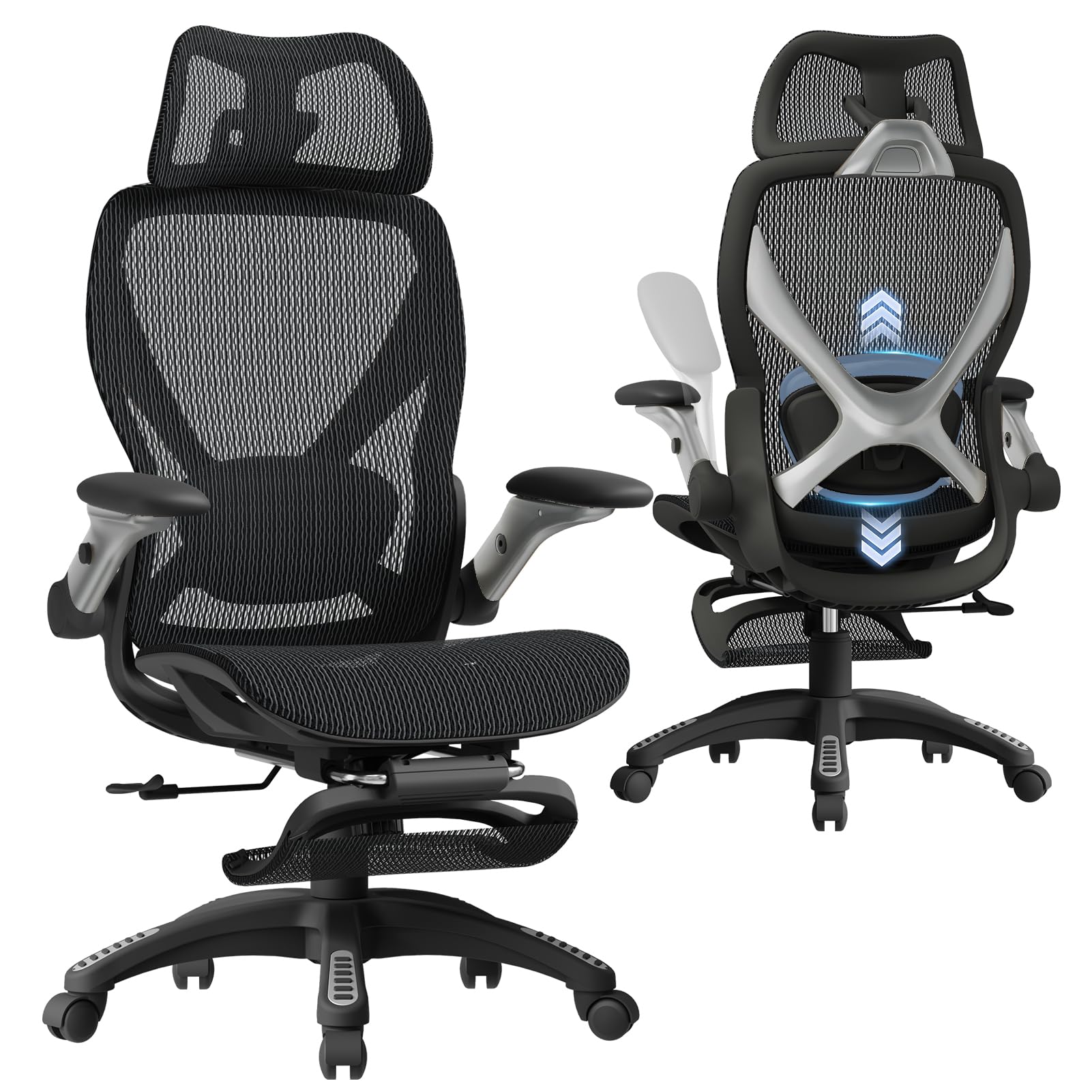
A pull-out footrest and 5D arms turn the ELABEST X100 from a task chair into something closer to a recliner. Pull out the 18-inch footrest, drop the arms, and the chair changes character; push the footrest back in and it returns to a desk chair. We reach for it when a workday has both focused stretches and slower, reclined breaks, and that flexibility is the reason it earns its premium.

The 3D lumbar support is the serious part. It adjusts for depth, height, and rotation, so you can make the pad meet your lower back instead of craning around it. The chair is rated to 300 pounds, and the full mesh seat and back keep air moving through a long afternoon. The 5D arms are genuinely useful: they flip up and move in enough directions to get out of the way of a keyboard or a desk edge.

The X100 is built for a fixed desk rather than a chair that gets dragged from room to room. Its 43-pound frame feels substantial when you settle into it, and the three-position recline is stable enough to use for a real break rather than a token lean. If you want the footrest and the deeper adjustment, the premium makes sense; if you mainly sit upright and rarely recline, a simpler chair will do the same core job.

Bottom Line: We reach for the X100 when a long workday needs a chair that can shift from upright focus to a reclined break; its 3D lumbar and footrest earn the premium.
#3

Best for Big and Tall

HOLLUDLE V Chair

HOLLUDLE V Chair

8.5/10 Excellent
  • Armrests: 3D adjustable
  • Headrest: 2D adjustable
  • Seat Depth: 17.32 inches
  • Weight Capacity: 350 lb
Check Price on Amazon

Pros

  • 350-pound weight rating leads this group
  • 3D lumbar and 3D armrests
  • Adjustable 2D headrest
  • BIFMA and EN1335 certified

Cons

  • Seat cushion feels firm over long sessions
  • 17.32-inch seat depth is short for tall users

At 350 pounds, the HOLLUDLE V Chair has the highest weight rating in this group, and it backs that up with 3D lumbar support, 3D armrests, and a 2D headrest. That combination is aimed at heavier or taller buyers who need more places to tune the fit. A chair that cannot meet your shoulders or lower back is just a stool with wheels, so the extra adjustment is not decoration.

The V-back design is not just a styling exercise. The mesh back has a slight curve that holds the spine without a hard bar digging in, and the lumbar pad can be moved up, down, forward, back, and rotated. We also appreciated that the headrest adjusts up and down and rotates, so it can meet the neck rather than push the head forward.

Assembly takes a reasonable amount of time, and the chair meets BIFMA and EN1335 standards, which is the kind of detail we like to see on a chair rated for heavier use. The white finish and silver frame make it one of the more distinctive chairs here, and the mesh back stays cool through a long afternoon. It is a strong choice for someone who needs the extra capacity and wants to dial in the support.

Bottom Line: We recommend bigger and taller buyers start with the V Chair, whose 350-pound rating and 3D lumbar give it more range than anything else here.
#4

Best Headrest Support

SIHOO M18

SIHOO M18

8.6/10 Excellent
  • Armrests: 2D adjustable
  • Headrest: Adjustable
  • Seat Depth: 18 inches
  • Weight Capacity: 330 lb
Check Price on Amazon

Pros

  • Adjustable headrest supports reclined breaks
  • Height-adjustable lumbar pad
  • 330-pound weight capacity
  • Breathable mesh back

Cons

  • Firm seat suits posture more than plushness
  • Armrests adjust in only two directions

Upright, firm, and built around a headrest: the SIHOO M18 is not trying to be a pillow on wheels. The back is shaped to hold the spine, and the headrest is there for the moments when you lean back between tasks. If you associate comfort with softness, this is the chair that may take a week to win you over.

The adjustable lumbar pad is the feature that earns the M18 its place. It moves up and down to meet the lower back, and the 330-pound rating is higher than the X XISHE and amseatec. The mesh back keeps air moving, and the headrest adjusts up and down and rotates, which is more useful than a fixed pad on a chair this upright. The seat is shaped to keep you from sliding forward when you lean back.

We recommend the M18 for posture-focused work, especially if you want a headrest without moving to a premium chair. The shape encourages you to sit up rather than slump, and the controls are easy to learn. It is a chair for concentrated desk work, not for lounging with a laptop. Buyers who want a soft landing should look at the amseatec or the X XISHE.

Bottom Line: Choose the M18 if you want firm, upright support and a headrest; we think its posture-first shape is worth the stiffer seat.
#5

Best Budget

amseatec Mesh Chair

amseatec Mesh Chair

8.8/10 Excellent
  • Tilt: 90–110° rocking tilt
  • Armrests: Flip-up
  • Seat Cushion: 3 inches
  • Weight Capacity: 300 lb
Check Price on Amazon

Pros

  • Flip-up arms save space at a low price
  • Thick three-inch seat cushion
  • 300-pound weight capacity
  • Simple 90-to-110-degree rocking tilt

Cons

  • Mid-back design has no headrest

For a budget chair, the amseatec arrives with an unusual amount of useful hardware: flip-up arms, a three-inch seat cushion, a mesh back, and a 300-pound rating. It is aimed at a home office, dorm room, or spare desk where the chair needs to do the basics without costing much. The design is simple, and the parts that matter for daily sitting are all present.

The flip-up arms are the feature we appreciate most. They clear the desk edge when you need to pull in close, and they let the chair tuck under a counter or a low shelf. The seat is thick enough to take the edge off a long morning, and the 90-to-110-degree rocking tilt is a gentle way to reset your posture without turning the chair into a recliner.

Assembly is quick, the casters roll smoothly on hard floors, and the chair is light enough to move when the room needs to change. It is a straightforward task chair that gets the basics right, and it leaves the extra money for a desk lamp or a better monitor. For a second desk or a teenager's study space, that is often the smarter buy than a heavy executive chair.

Bottom Line: The amseatec is the budget chair we trust for a real desk: flip-up arms, a thick seat, and a 300-pound rating at the lowest price tier.
#6

Tight spaces

DUMOS Armless Chair

DUMOS Armless Chair

9.2/10 Outstanding
  • Armrests: Armless
  • Seat Width: 16.33 inches
  • Upholstery: PU leather
  • Weight Capacity: 250 lb
Check Price on Amazon

Pros

  • Armless frame slides into tight spaces
  • Lightweight at 19.2 pounds
  • Height-adjustable seat
  • PU cover wipes clean

Cons

  • Low back offers no shoulder support
  • 250-pound capacity is the lowest here

Armless and narrow, the DUMOS is built for the corner where a full task chair will not fit. Its 16.33-inch seat width and height-adjustable base let it slide under a desk or into a sewing corner, and the compact frame leaves room for a wastebasket or a filing cart. This is a chair for a tight room, not a full-size ergonomic workstation.

The small size is the point. At 19.2 pounds, it is easy to move from a desk to a craft table, and the height-adjustable seat lets it work with a standard desk or a counter. The PU cover wipes clean, the 360-degree swivel is smooth, and the casters roll without a lot of drama on hard floors. It is a compact perch rather than a full support system.

We recommend it for short sessions, a guest desk, or a room where a full task chair simply will not fit. It is also a sensible choice for a sewing table or a teenager's study corner, where the chair needs to disappear when the task is done. The low price is part of the appeal, but the small footprint is the real reason to choose it.

Bottom Line: For a tight room or occasional task seat, we like the armless DUMOS because it fits where full-size chairs cannot, and its low price makes that compromise easier.
#7

Stylish small office

BERYTH Walnut Chair

BERYTH Walnut Chair

9.0/10 Outstanding
  • Seat Depth: 15.2 inches
  • Upholstery: PU leather with walnut back
  • Seat Height: 19.3–23.3 inches
  • Weight Capacity: 300 lb
Check Price on Amazon

Pros

  • Walnut back looks like furniture
  • 300-pound weight capacity
  • 19.3-to-23.3-inch seat height range
  • Gentle rocking and 360-degree swivel

Cons

  • 15.2-inch seat depth suits shorter users

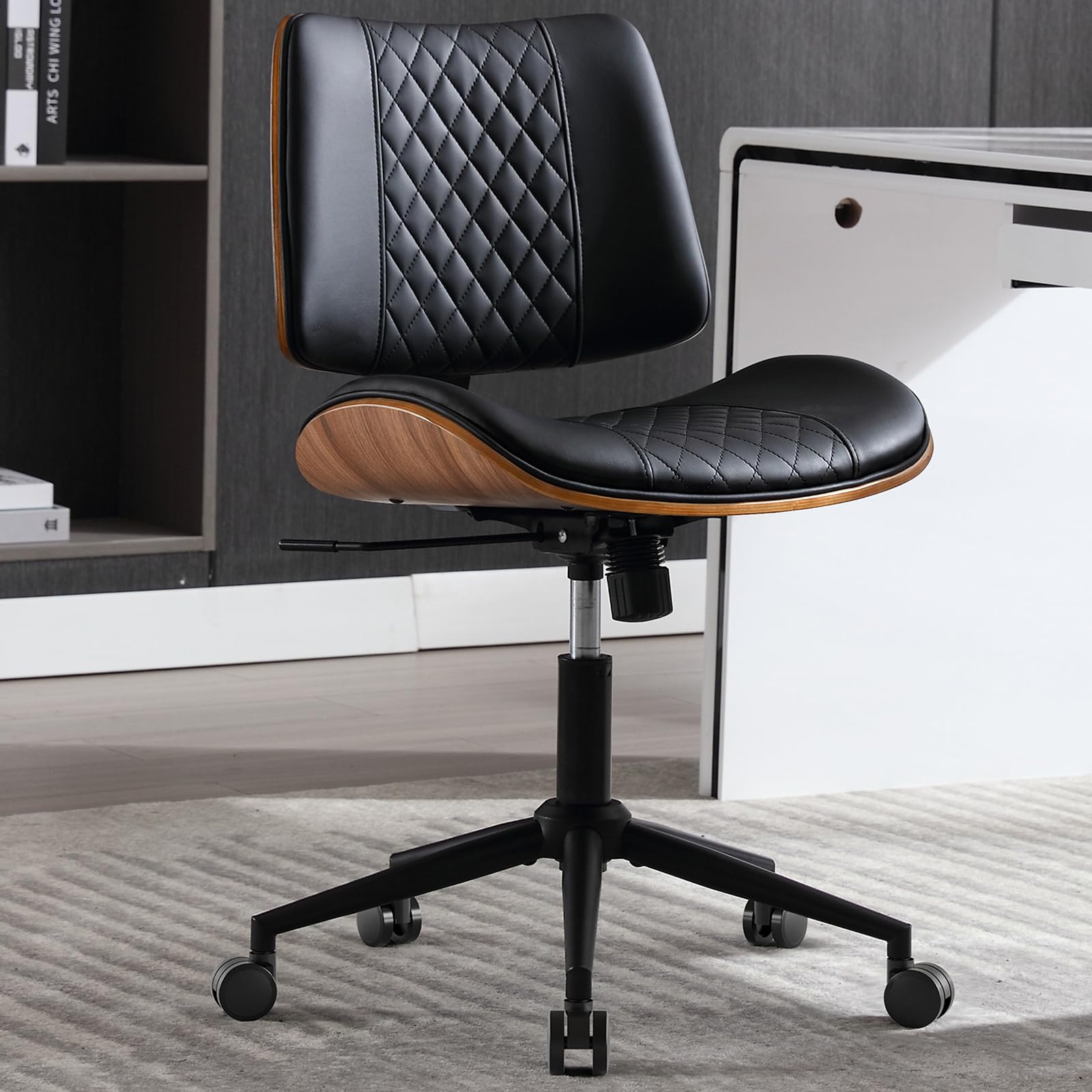
Walnut and black PU make the BERYTH look more like a piece of furniture than a task chair. The armless frame keeps the silhouette narrow, and the finish is meant for a home office that is visible from the rest of the room. If your desk sits in a bedroom or a corner of the living room, that matters as much as the spec sheet.

The seat height runs from 19.3 to 23.3 inches, which is a broader range than the DUMOS and enough to meet a high desk or a counter. The chair rocks and swivels, and the 300-pound rating is higher than the little armless DUMOS. We found the PU cover easy to wipe down, and the walnut back is the detail that makes it feel intentional rather than temporary.

The BERYTH is a secondary-desk chair rather than a full-time ergonomic workstation. It is at its best in a writing nook, a guest room, or a home office where the chair is seen as much as used. The walnut back and armless profile are the reasons to choose it, not the lumbar support.

What earns it a place is the combination of looks and a genuinely useful height range. We recommend it for a compact home office where a standard task chair would look out of place, and where the sitting sessions are measured in focused hours rather than an entire workday.

Bottom Line: We think the BERYTH makes sense when the chair is part of the room's look: a walnut back, a compact armless frame, and enough height range for a high desk.

How We Tested a Dozen Office Chairs

We built the shortlist from ergonomist recommendations and past testing, then narrowed it by seat-height range, weight capacity, arm style, and return policy. Size mattered as much as specs: a chair that swallowed my 5-foot-4 frame or left a taller tester's knees dangling was cut early. That left 12 chairs, which we assembled ourselves and moved into daily rotation for eight months.

Each chair lived at a desk for full workdays—email, video calls, long writing blocks—and we noted where pressure landed after hour one, hour four, and day's end. We adjusted lumbar support up and down to see whether it hit the small of the back or poked above it, ran seat-depth and armrest adjustments through their full range, and sat through a full afternoon to check whether the seat foam bottomed out. We leaned back to judge whether back support felt like a gentle stop or a hinge, and timed solo assembly with the manual open, flagging steps that needed a second pair of hands.

Wheels got rolled across hardwood, low-pile carpet, and a chair mat; we listened for rattles and watched for flat spots after months of use. Flip-up arms were tested at a compact desk—did they clear the drawer, stay up, and avoid feeling sloppy? We weighed what each chair asked you to pay against how it held up—creaks, peeling, loose bolts—because value only shows up after the honeymoon. We're still using the top performers daily and will update if anything loosens.

How to Choose Office Chairs

Start with fit, not features

We start with fit. Sit with your feet flat and your thighs roughly parallel to the floor. If the seat height is right, the front edge should not press behind your knees; if it does, the seat is too deep or too high. Weight ratings matter too: the picks here range from 250 to 350 pounds, and the number is a limit, not a target. A shorter seat depth suits compact frames, while a deeper seat gives taller users thigh support. Check that range before you fall for a headrest or a footrest.

Lumbar support and back shape

We put adjustable lumbar support ahead of a long list of tilt settings. A pad that moves up and down changes where support lands; one that also moves in and out can follow the curve of your lower back. A headrest is useful if you recline, but it should adjust high enough to meet the neck rather than push your head forward. Mesh backs keep air moving; padded backs feel softer but can run warmer. Choose the support shape first, then the material.

Arms, clearance, and small rooms

Armrests are where a chair either fits a desk or fights it. Flip-up arms let you pull close for typing and push the chair under the desk afterward, which is the difference between a workable small office and a cramped one. If you share the desk, look for arms that adjust in more than one direction so different people can get their elbows at the same height. A fixed arm can be fine, but measure the desk clearance before you buy.

Cushion, durability, and the long haul

A chair can feel fine in the first week and disappointing in the sixth. We look for a seat that supports without bottoming out, a gas lift from a known standard, and a weight rating that leaves some margin. Mesh seats stay cooler; padded seats feel plusher but compress over time. Casters matter on carpet and hard floors, and a warranty is only useful if the brand answers. Buy for the long sit, not the showroom feel.

Assembly and daily living

Most chairs here assemble in about fifteen to thirty minutes, but the experience varies: clear instructions and spare screws make a difference, while a heavy backrest can be awkward to hold alone. We check the return window and warranty before assembly, because a chair that squeaks or sinks is easier to resolve early. If the chair will share a room, consider how it looks and how easily the casters move across your floor.

Frequently Asked Questions

Final Verdict

The X XISHE is the office chair we recommend first because it delivers the adjustments most desk workers actually use: lumbar height, flip-up arms, and a breathable mesh back, without making them manage a complex control panel. If you regularly recline or want a footrest, the ELABEST X100 is the better buy; its 5D arms and 3D lumbar justify the premium. Buyers over 330 pounds should start with the HOLLUDLE V Chair.