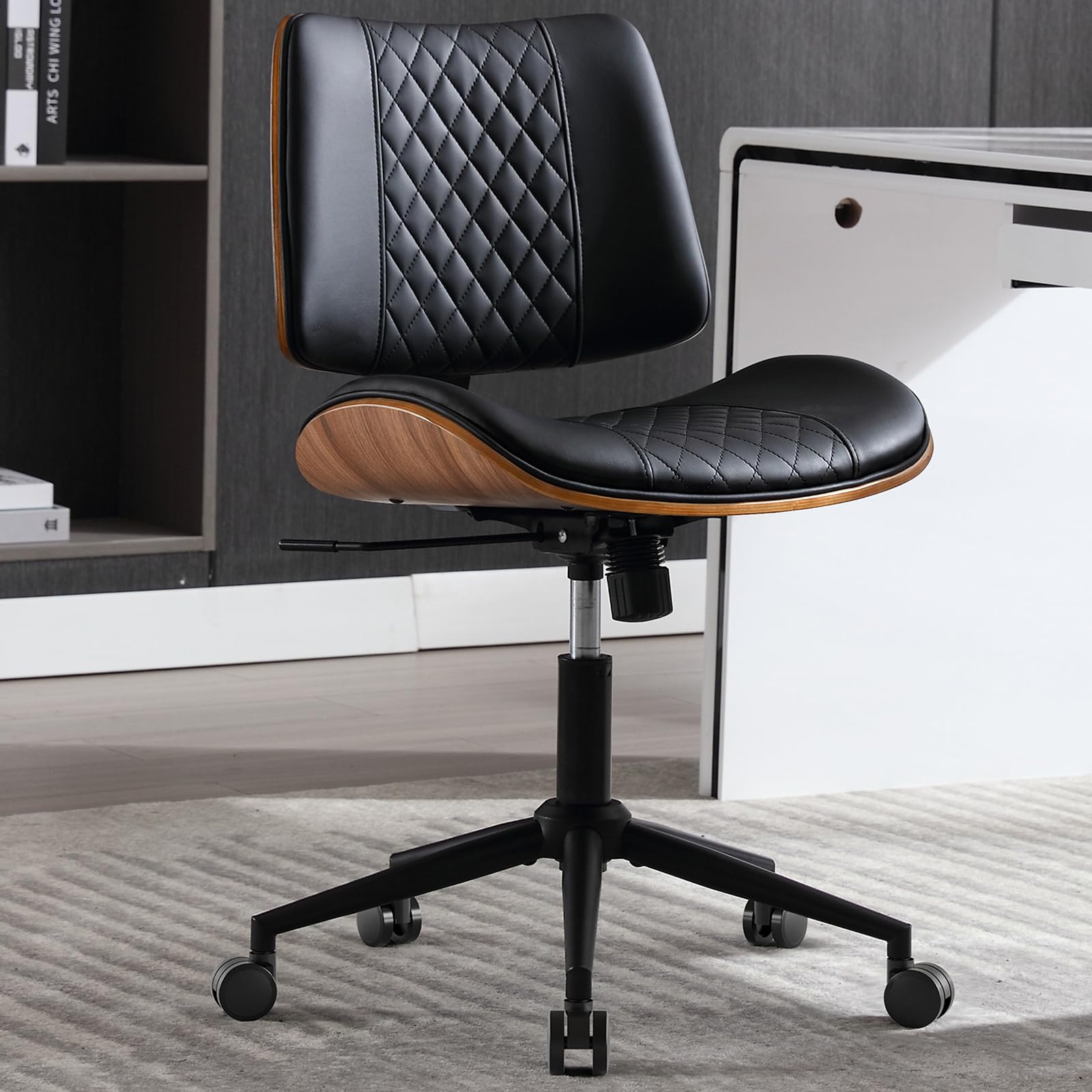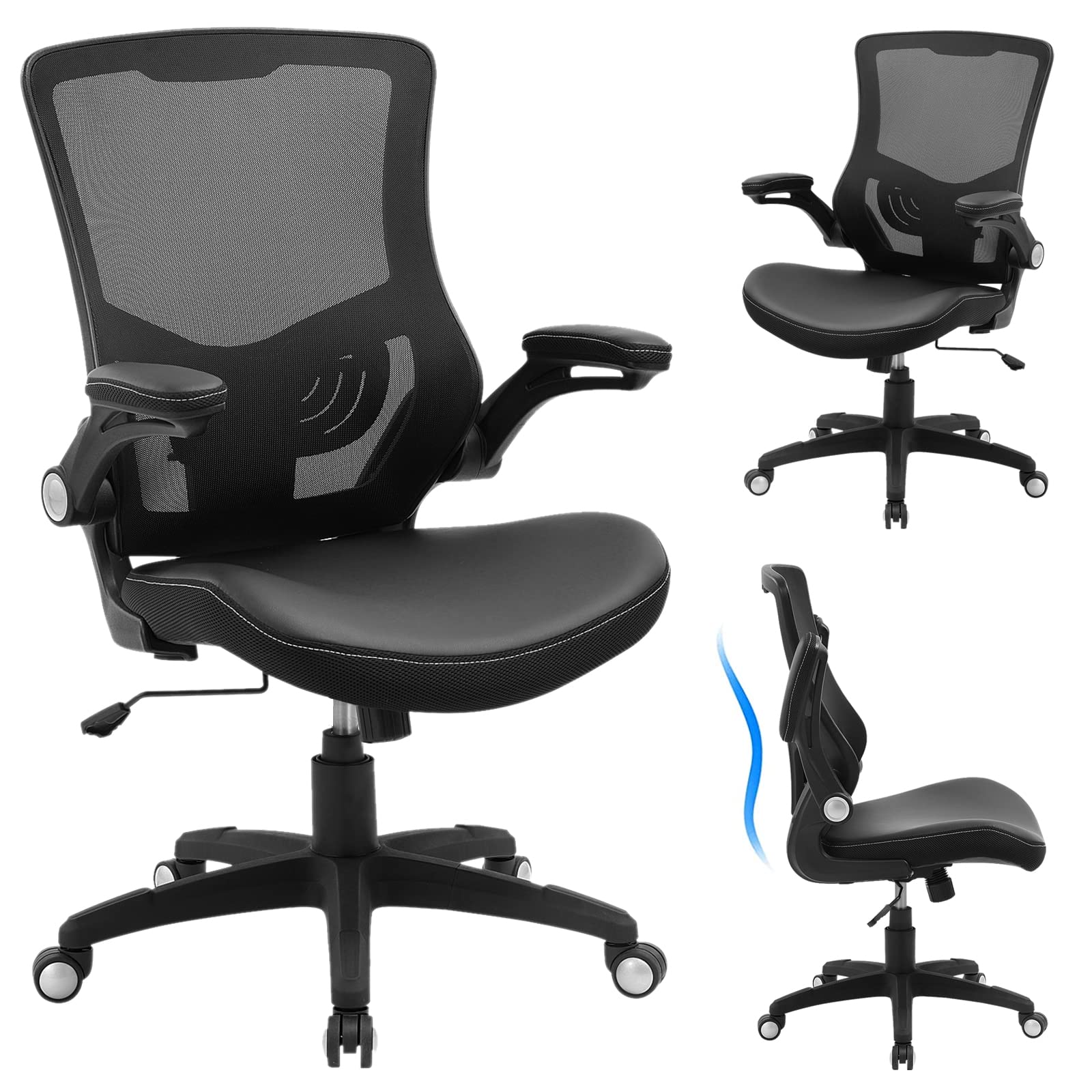
Home Office

Best Home Office Chairs of 2026

A home office chair has one job: to keep you comfortable through a full workday, not just the first hour. The wrong one makes itself known around 3 p.m. — a dull ache in your lower back, a seat that feels like a park bench, armrests that force your shoulders up around your ears. The right chair disappears under you, adjusting to how you actually sit: leaning in to type, rocking back on a call, sliding under the desk when you're done. That's the difference between a chair you tolerate and one you forget about, and it's what turns a desk setup from a daily grind into something you can sink into for hours.

We've spent the past eight months living with 12 home office chairs, from budget-friendly finds to plusher models, and the standouts got the basics right: solid construction, straightforward assembly, and genuine lumbar support that doesn't feel like a log against your spine. We also paid attention to the less glamorous stuff — seat size for different frames, flip-up arms for tight spaces, and whether the firmness held up after weeks of daily use. Appearance matters too; nobody wants a chair that clashes with the room. Below are the ones that earned their spot.

#1

Best Overall

X XISHE Ergonomic Desk Chair

X XISHE Ergonomic Desk Chair

8.9/10 Excellent
  • Armrests: Flip-up
  • Seat Depth: 19.3 in
  • Seat Height: 20.5 in
  • Weight Capacity: 300 lb
Check Price on Amazon

Pros

  • Lumbar panel adjusts to your back
  • Flip-up arms clear a shallow desk
  • 300 lb rating with SGS and BIFMA parts
  • Mesh back with a padded seat

Cons

  • Deep 19.3-inch seat crowds shorter sitters
  • PU leather seat runs warm in summer

The lumbar panel on this XISHE slides up and down a track instead of being molded into the backrest, and that one detail is why it is our top pick. A fixed bump punishes both postures: sit tall and it digs in, slump and it disappears. This one moves by hand behind your back and stays put. The upholstery is split too — thick sponge under PU leather on the seat, mesh across the back — so the part bearing your weight is padded and the part you lean against breathes.

The arms flip up and out of the way, which matters more at home than in an office. On a shallow desk, or one with a drawer apron, arms that only rise and fall still hold the chair a couple of inches out from the keyboard. Folding them lets you push the seat right underneath. We kept them down for typing and folded them for paperwork, and the chair stopped being in the way of the room.

Underneath, it is rated to 300 pounds with SGS and BIFMA-tested components and a three-stage cylinder, and at 29 pounds it is light enough to drag between rooms when the desk moves. Assembly is the usual 15 to 20 minutes with the tools in the box.

The panel slides up and down but does not press in or out, so if you want firm pressure at one specific spot on your lower back, the ELABEST does that job better. Everything else — the cushion, the mesh, the folding arms — is what we want a chair at this level to be.
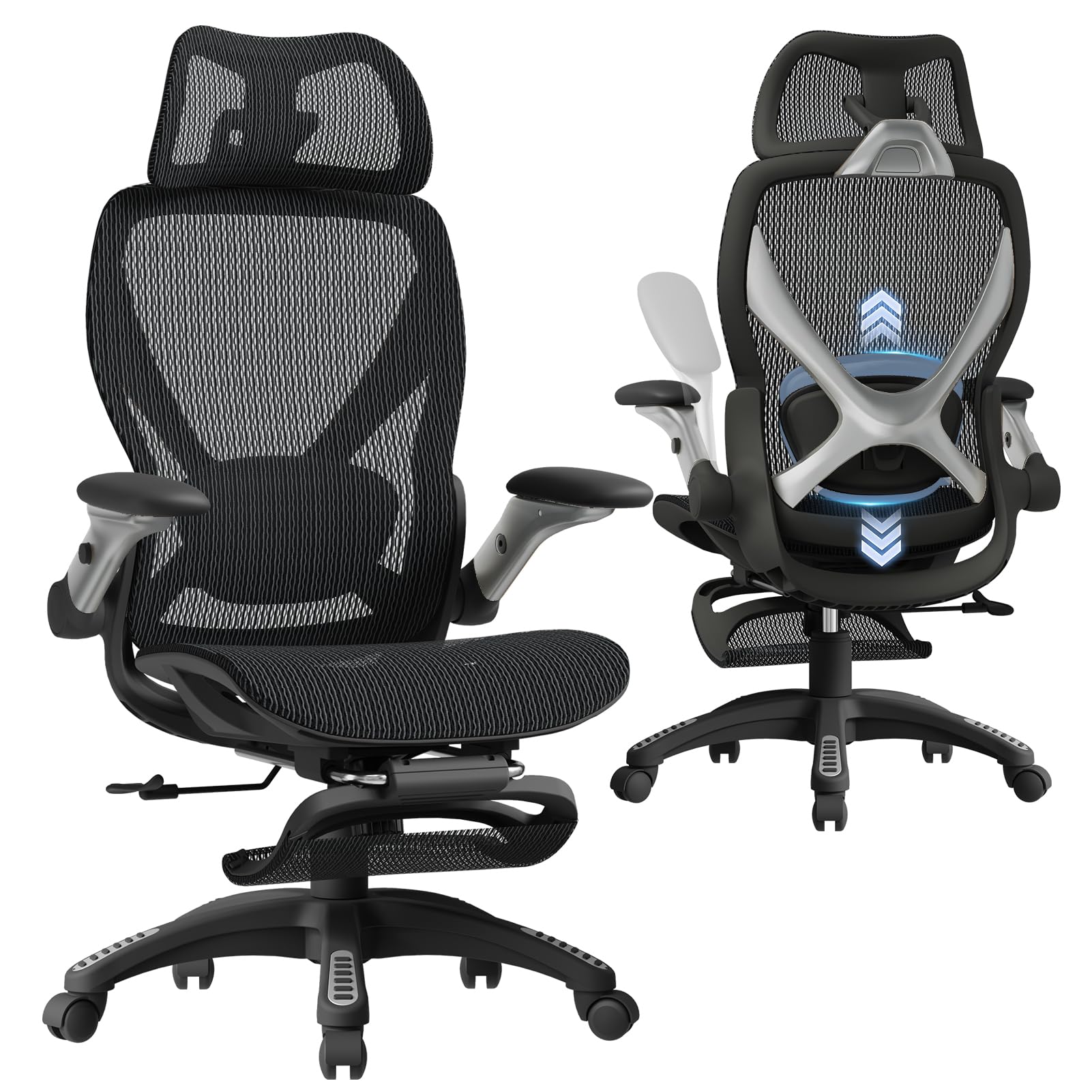
Bottom Line: Our default for the home office: the lumbar panel moves to where your back wants it, the arms fold under a shallow desk, and the frame is rated to 300 pounds.
#2

Best for All-Day Adjustability

ELABEST X100 Ergonomic Chair

ELABEST X100 Ergonomic Chair

9.0/10 Outstanding
  • Seat Depth: 18 in
  • Seat Height: 18.3 in
  • Weight Capacity: 300 lb
  • Lumbar Adjustment: 3D, ±1.6 in depth
Check Price on Amazon

Pros

  • Lumbar adjusts in height, depth and angle
  • Five-way armrests that also flip up
  • Extendable footrest for breaks
  • Three-stage recline that locks

Cons

  • Headrest can drift out of position when reclined
  • Heaviest chair here at 43 pounds

The ELABEST X100 costs more than anything else in this guide, and it is also the only chair here that adjusts in nearly every direction you can name. The armrests move up, sideways and forward, then flip up. The lumbar panel slides vertically, rotates 15 degrees and springs in and out about an inch and a half. The backrest locks at three angles.

Whether that is worth paying for depends on hours, not taste. If the chair is where you spend a working day, the depth adjustment is the piece that matters: it is the difference between a curve that touches your back and one that floats behind it. We found the range of arm positions more useful than expected, mostly for switching between a keyboard and a tablet without dragging the chair around.

The footrest extends 18 inches and locks at two angles, which turns a bedroom office into somewhere you can lean back for a call. In an apartment with no sofa within reach of the desk, it earned its keep in a way a plain tilt mechanism does not.

Two things to know before you order. The seat is 18 inches deep, which is a touch shallow for very tall sitters, and the headrest can drift out of position once you recline a long way back. At 43 pounds it is also the heaviest chair here, so it stays where you put it.

Bottom Line: Worth the money for a full-time desk: lumbar adjustment in depth as well as height, arms that go five ways, and a footrest for the afternoon.
#3

Best with a Headrest

SIHOO M18 Ergonomic Chair

SIHOO M18 Ergonomic Chair

8.6/10 Excellent
  • Headrest: Adjustable
  • Back Width: 20.5 in
  • Seat Height: 20 in
  • Weight Capacity: 330 lb
Check Price on Amazon

Pros

  • Adjustable headrest and lumbar panel
  • Steel frame rated to 330 pounds
  • Wide 20.5-inch mesh back

Cons

  • Armrests adjust up and down only
  • Firm seat will not suit every back

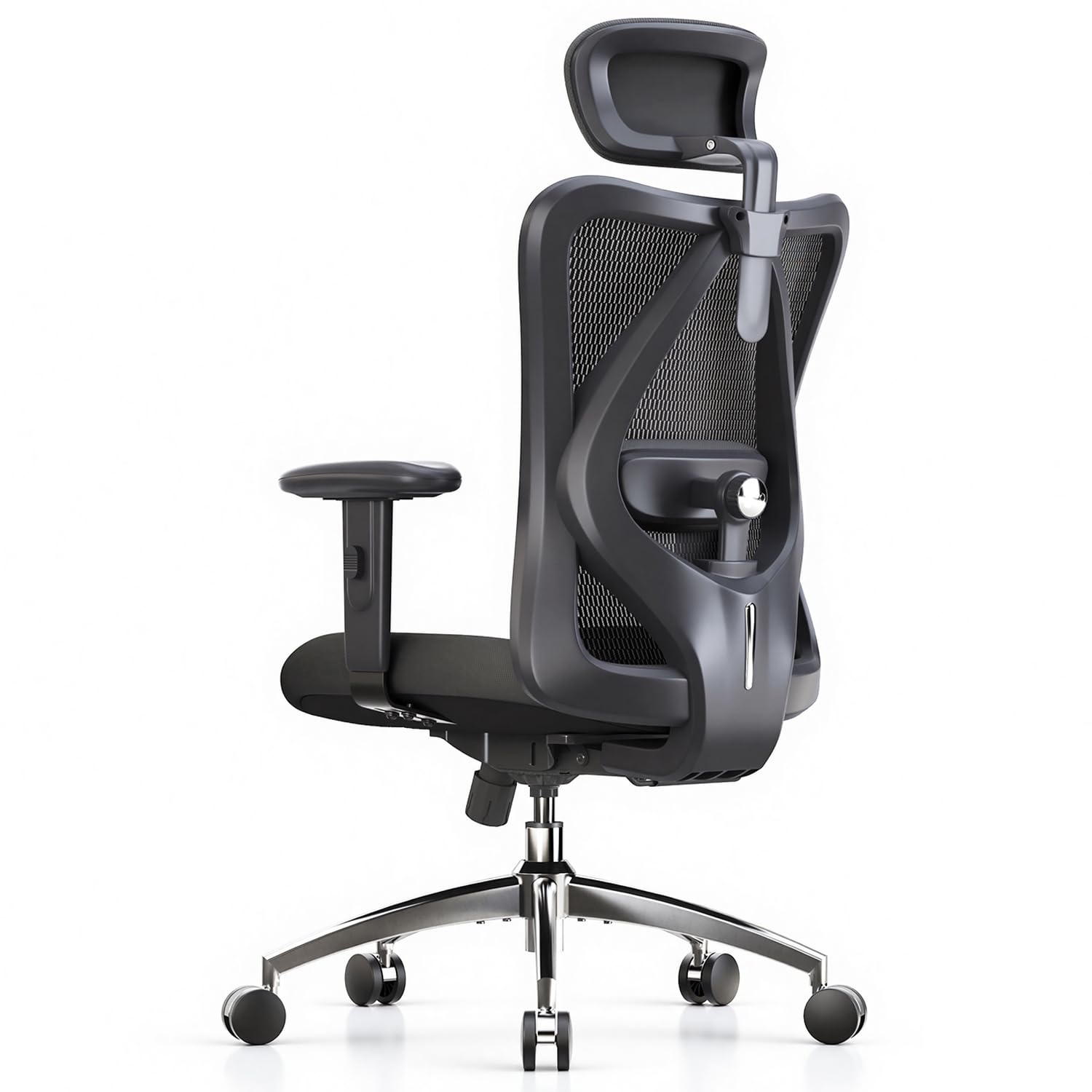
The M18's seat is firm, and firm enough that you notice it in the second hour. For some backs that is exactly right: a dense seat keeps your hips level and stops you sinking into a slouch. For others it is the reason the chair goes back, and no amount of lumbar adjustment fixes a cushion you do not want to sit on.

Above the seat it is well sorted. The headrest adjusts, the back is 20.5 inches wide with a lumbar panel that moves, and the frame is steel rather than nylon, rated to 330 pounds — the highest here, alongside the TRALT. The mesh back does what mesh should in a small warm room, and the three-position tilt locks where you leave it.

Buy it if you want a headrest without a premium price and you like a hard seat. The armrests only go up and down, so if you need them to swing inward, the ELABEST is the one. Everyone else should look at the X XISHE, which is softer in the same price band and easier to live with.

Bottom Line: For a taller sitter who wants a headrest and a firm, upright seat, the M18 delivers, as long as arms that only move up and down are enough.
#4

Best for a Light-Colored Home Office

TRALT Ergonomic Mesh Chair

TRALT Ergonomic Mesh Chair

8.5/10 Excellent
  • Seat Depth: 17.3 in
  • Back Height: 13.4 in
  • Seat Height: 21.7 in
  • Weight Capacity: 330 lb
Check Price on Amazon

Pros

  • White finish suits a bedroom office
  • Lumbar adjusts in depth, not just height
  • 330 lb rating with a Class 3 gas lift

Cons

  • Short 13.4-inch backrest, no shoulder support
  • Two-position recline only

The TRALT is white, and that is not a small thing in a room where the desk is also the bedside table. Against a pale wall it reads as furniture rather than equipment, and the mesh back keeps the silhouette light. Three chairs here are black and look like office chairs in a bedroom; this one does not.

Under the finish it is a properly sorted mid-back. The lumbar panel adjusts in and out, not just up and down, which is rarer than it should be at this level. The seat is molded high-resilience foam rather than a cut slab. And the parts that usually fail on a cheaper chair are the ones specified here: a BIFMA-rated Class 3 gas lift in a metal-cored base, rated to 330 pounds.

The catch is above your shoulders. The backrest is 13.4 inches of interior height, so it stops below the shoulder blades and gives you nowhere to rest your head. The recline is two positions and shallow, and the seat can arrive sitting tipped forward, which is worth checking in the first week while returns are still easy.

Bottom Line: The chair we point to for a pale, small room: white mesh, a lumbar panel that adjusts in depth, and a 330-pound rating.
#5

Best Budget

amseatec Mesh Office Chair

amseatec Mesh Office Chair

8.8/10 Excellent
  • Armrests: Flip-up
  • Seat Height: 21.9 in
  • Weight Capacity: 300 lb
  • Cushion Thickness: 3 in
Check Price on Amazon

Pros

  • 300 lb rating at a budget price
  • Flip-up arms clear a shallow desk
  • Three-inch high-density foam cushion

Cons

  • Fixed lumbar panel with no adjustment
  • Castors drag on deep carpet

The amseatec sits near the bottom of this group on price and nowhere near it on build. The frame is rated to 300 pounds, the cushion is three inches of high-density foam, and the arms flip up. Those are the three things buyers usually surrender at the cheap end of the market, and all three survive here.

For a second desk, a teenager's room or a first apartment, that combination is hard to argue with. The mesh back is fixed, so there is no lumbar tuning; the curve sits roughly where a lumbar panel does on the adjustable chairs, which suits an average frame and does nothing for anyone who needs support higher or lower.

Set the tilt tension before you judge it. The chair arrives free-rocking over a 90 to 110 degree arc, and a loose rock feels like instability until you tighten the knob under the seat. The casters are the other compromise: fine on hard floor, dragging on deep pile.

Bottom Line: Our budget recommendation: a 300-pound frame, flip-up arms and a three-inch cushion, which is more chair than this money usually buys.
#6

Best for Tight Spaces

DUMOS Small Armless Chair

DUMOS Small Armless Chair

9.2/10 Outstanding
  • Seat Depth: 16.3 in
  • Upholstery: PU leather
  • Seat Height: 21.5 in
  • Weight Capacity: 250 lb
Check Price on Amazon

Pros

  • Fits under a narrow desk
  • Under 20 pounds, easy to move
  • Lowest price in this group

Cons

  • 250 lb capacity, the lowest here
  • No arms and no recline

Sixteen inches of seat depth and no arms make the DUMOS the easiest chair here to live with in a small room. It slides fully under a narrow desk, which means the floor comes back the moment you stand up, and at under 20 pounds it can be carried out of the room when guests arrive.

The build is honest for the category: PU leather over foam, a metal base, an SGS-rated cylinder, and a seat that swivels and adjusts through a useful height range. It wipes clean, which matters more than it sounds for a chair that doubles as craft seating.

What you give up is everything above the seat. There are no arms, the back stops at mid-back, there is no recline, and the rating is 250 pounds — the lowest here. For an hour of admin in the evening that is fine. For a full working day it is not.

That is the whole trade: the best chair in this group for a genuinely small space, and the least supportive of them for long sittings. If the desk is where you spend eight hours, spend more and take the X XISHE.

Bottom Line: The compact chair we reach for in a tight room: light, armless and cheap, provided the sitting is measured in an hour at a time.
#7

Leather executive look

YFO Leather Desk Chair

YFO Leather Desk Chair

9.0/10 Outstanding
  • Casters: Rubber
  • Seat Width: 22 in
  • Seat Height: 20.5 in
  • Weight Capacity: 300 lb
Check Price on Amazon

Pros

  • Rubber casters roll quietly on wood
  • Wide 22-inch seat
  • Arms can be left off for cross-legged sitting

Cons

  • No adjustable lumbar support
  • Armrests fixed once installed

The casters on the YFO are rubber rather than the hard nylon most chairs ship with, and they roll like rollerblade wheels — quiet on wood, no clatter when you push back from the desk at seven in the morning. In a flat where the office shares a wall with a bedroom, that detail matters more than the recline.

The rest is a leather chair in the old sense: a 22-inch seat, a spring-packed cushion, and a back that is padded rather than shaped. It is rated to 300 pounds and weighs 44, so it plants itself where you put it rather than skittering across the floor.

Because the back is padding and not a lumbar mechanism, this is the one chair here you cannot tune. The arms bolt on or stay off entirely, which is genuinely useful if you sit cross-legged, but once they are on they do not move.

So buy it for the look and the quiet rather than for ergonomic adjustment. In a study where the chair is visible from the living room, brown leather earns its place in a way another black mesh back does not, and it holds up its end over a long evening.

Bottom Line: We rate it for the look and the quiet: a wide leather seat, removable arms and rubber casters that do not clatter on hardwood.
#8

Styled small desks

BERYTH Walnut Armless Chair

BERYTH Walnut Armless Chair

9.0/10 Outstanding
  • Back Panel: Walnut-style
  • Seat Depth: 15.2 in
  • Seat Height: 19.3–23.3 in
  • Weight Capacity: 300 lb
Check Price on Amazon

Pros

  • Walnut-style back reads as furniture
  • Height span of 19.3 to 23.3 inches
  • Rocking function for a break

Cons

  • Shallow 15.2-inch seat depth
  • Castors drag on carpet

Most of the chairs in this group are mesh and look like it. The BERYTH has a walnut-style back panel over PU leather, and in a room where the desk is a real piece of furniture, it is the one that does not announce itself as office equipment.

It is also more adjustable than it looks. Seat height runs from 19.3 to 23.3 inches, a span that covers a tall writing desk and a standard one, and the lever under the seat releases a gentle rock for a break. It is armless, rated to 300 pounds, and light enough to move one-handed.

The seat is only 15.2 inches deep, though, which suits a smaller frame and crowds a taller one, and the standard casters are the weakest part of the package on carpet. Take it as a handsome chair for a compact desk and shorter sittings; for eight-hour days the X XISHE is the better chair.

Bottom Line: We point to it where the room is small and the look matters: a walnut-backed armless seat with the widest height range here.

How We Tested 12 Home Office Chairs Over Eight Months

We started by researching the category — reading spec sheets, customer reviews, and return policies — then narrowed the field to 12 chairs that represented a range of prices, sizes, and adjustability options. Each chair was assembled from scratch, timed, and set up in a home office where it was used for full workdays over eight months.

Testing happened where the chairs actually live: a desk in a spare bedroom, a corner of a living room, and a shared home office. We sat in each chair for at least a week of normal work — video calls, deep-focus writing, and the occasional lean-back break — rotating them so every tester tried every model. Assembly was judged on clarity of instructions, whether holes lined up, and how long it took one person to finish.

Throughout the eight months, we noted how the seat felt after an hour versus six, whether lumbar support hit the right spot or pushed too hard, and if the firmness softened or stayed put. We checked adjustability by changing seat height, armrest position, and tilt mid-task, and measured seat size against different body types. Flip-up arms were tested for how easily they cleared a desk. Durability showed up in loose casters, fraying upholstery, and gas lifts that started to sag. We also weighed what each chair cost against how it held up and how it looked in a real room — because value and appearance are part of the package.

How to Choose Home Office Chairs

Start with the desk, then the chair

Most desks put the work surface about 29 to 30 inches off the floor, and the correct seat height lets your forearms rest level on it with your feet flat. The chairs here start anywhere from 18.3 inches to 21.9, a wider spread than it sounds: a high minimum leaves shorter sitters with dangling feet, while a low maximum puts taller ones with their knees above their hips.

Then check seat depth against the back of your knee, because a 19-inch seat that fits a tall sitter will crowd a short one. And look hard at the arms: anything that only rises leaves the chair a few inches out from a desk with a drawer apron, which is why flip-up arms turn up on so many of these.

Decide how much adjustment you'll actually use

Ergonomic describes a shape, not a standard. The minimum worth paying for is a seat that goes up and down and a lumbar panel that moves with you; the step up buys a panel that presses in and out, arms that swing sideways, and a tilt that locks where you leave it.

The X XISHE's panel slides vertically, while the ELABEST's also rotates and springs in and out. At four hours a day the simpler mechanism is enough. If the chair is your office, those extra axes are what keep you out of a slouch by mid-afternoon.

Mesh, foam and upholstery in a small room

A mesh back lets heat out, which matters in a bedroom office with the door shut, while a padded seat is more forgiving over a long day than mesh under the thighs. PU leather wipes clean and looks tidy, but it sits warm, so a split like the X XISHE's mesh back with an upholstered seat suits a room that gets afternoon sun.

If the chair is on show more than it is sat in, that calculation changes: the YFO's leather and the BERYTH's walnut panel are doing a different job, and both give up ergonomic tuning to do it.

The parts that wear out first

Failures on this kind of chair cluster in the same places: the gas lift loses height, the seat foam packs down, the armrest covers split, the casters clog. A higher weight rating usually means a sturdier cylinder and base underneath, and the range here runs from 250 to 330 pounds, so a heavier sitter should buy near the top of it.

A named cylinder class is worth more than a long feature list, and warranty length is the other tell: the amseatec carries five years, which on a budget chair is the manufacturer telling you where it expects the wear to land.

Frequently Asked Questions

Final Verdict

If you want one chair and no further reading, the X XISHE is it: the lumbar panel moves to where your back actually needs it, the arms fold away under a shallow desk, and the frame is rated to 300 pounds. It is the safest default in this group.

Spend more only if the chair is your full working day, which is the ELABEST, with depth-adjustable lumbar, five-way arms and a footrest. And if this is a second desk or a first apartment, the amseatec covers the basics for the least money of any chair here that is built for a full day.