Home Office

Best Writing Desks of 2026

A writing desk should be the easiest piece of furniture in your home, but sit at a wobbly one for an afternoon and you'll start drafting standing up. The real trouble usually isn't the look — it's whether the frame stays solid when you lean on it, whether the drawers still line up after a few months, and whether you can get it assembled without losing a weekend. A good desk fixes all of that, giving you a stable, quiet place to think.

I've written on everything from a kitchen table to a folding tray, so I know the difference between a desk that looks the part and one you can live with. Over the past eight months, my team and I tested 12 writing desks — from slim console styles to full-size workstations — and the ones that earned a spot here survived real deadlines, late-night journaling, and at least one move. The lesson: put your money into the frame and hardware, not the finish. Below are the desks that held up.

#1

Best Overall

Linon Melissa

Linon Melissa

8.8/10 Excellent
  • Storage: 1 center drawer
  • Material: Solid wood and veneer
  • Dimensions: 19"D x 42"W x 30"H
  • Weight Capacity: 100 lb
Check Price on Amazon

Pros

  • Solid wood and veneer build
  • Warm walnut furniture finish
  • 42-inch top with one drawer
  • Top arrives mostly assembled

Cons

  • Only one center drawer
  • 100-pound weight limit

The Melissa is the writing desk we choose when the desk has to hold its own in a bedroom or study, not just disappear under a laptop. The walnut finish and solid wood-and-veneer construction give it a warmth and visual weight that the metal-and-laminate desks here cannot match, and the mid-century lines are restrained enough to live with for years. That combination is why it earns our top spot.

The 42-inch top is the sweet spot for us: wide enough for a notebook, laptop, lamp, and a mug, but 19 inches deep and 30 inches high, so it does not swallow a small room. The single center drawer is the right amount of storage for pens, a checkbook, or a tablet; it keeps the surface clear without turning the desk into a filing cabinet.

Assembly is mostly a matter of attaching the legs and crosspieces because the top arrives put together. We still recommend a second pair of hands for the flip, and the solid wood is the upgrade you feel every day. The desk feels sturdy in ordinary writing use, with none of the side-to-side shimmy that makes a cheap desk feel temporary.

For a dedicated writing setup, that trade is easy to make: fewer drawers than the storage desks, but a better surface to sit down at. If you want the desk to look finished when the laptop closes, this is the one.
Bottom Line: We recommend the Linon Melissa as the best writing desk here for anyone who wants a proper furniture piece: solid wood, a warm walnut finish, and a 42-inch top that feels generous without taking over a room.
#2

Best Budget

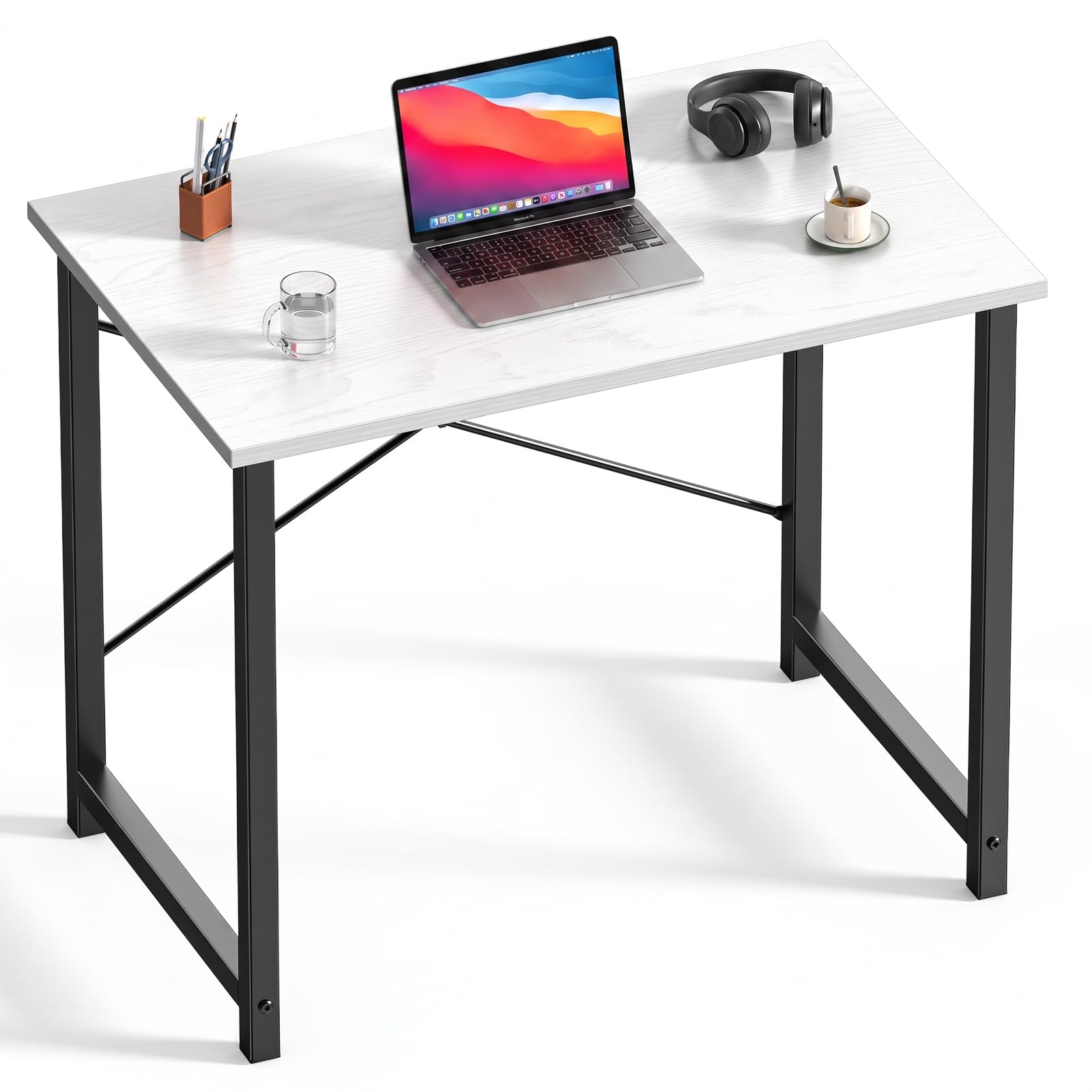
DUMOS 32

DUMOS 32

9.1/10 Outstanding
  • Height: 29.7 in
  • Top Width: 32 in
  • Desk Weight: 17.4 lb
  • Weight Capacity: 265 lb
Check Price on Amazon

Pros

  • 265-pound capacity in a light desk
  • Sturdy X-brace steel frame
  • Compact 32-inch footprint
  • Simple assembly

Cons

  • No drawer or shelf
  • Finish scratches easily

The DUMOS 32 is built for the room where every inch has to justify itself. The top is 32 inches wide, the frame is steel with an X-brace, and the listed capacity is 265 pounds, yet the whole desk weighs just 17.4 pounds. On paper, it reads like a much more expensive small desk.

In use, that is exactly what it feels like: stable under a laptop and a notebook, easy to shift when you need to clean behind it, and simple enough to assemble without a second person. It is the budget desk we choose for a bedroom or a first apartment because the X-brace stops the side-to-side wobble that makes writing feel unstable.

The trade-off is surface area: 32 inches holds a laptop, a notebook, and a mug, but not a full spread of papers. There is no drawer, so a small rolling cart or a wall shelf does the work a drawer would on a larger desk. The finish is the part to treat gently, and a desk pad is cheap insurance against scratches.

Bottom Line: The DUMOS 32 is our budget pick for a tiny bedroom or first apartment: a stable small desk with a serious frame and no wasted footprint.
#3

Best Deep Desktop

PRAISUN 47

PRAISUN 47

8.8/10 Excellent
  • Frame: Steel
  • Dimensions: 23.6"D x 48"W x 29.7"H
  • Desk Weight: 25.8 lb
  • Tabletop Thickness: 1.5 in
Check Price on Amazon

Pros

  • Deep 23.6-inch desktop
  • Thick 1.5-inch tabletop
  • Open legroom
  • Steel frame and support bars

Cons

  • No drawers or shelves
  • Wide 48-inch footprint

The PRAISUN’s 23.6-inch depth is the first thing we notice in a category where 19 inches is common. That extra front-to-back room changes how a writing desk feels: a full-size notebook, a laptop, a lamp, and a reference book can sit on the surface without stacking. The 1.5-inch top also gives it a more substantial look than the thin laminated desks here.

The steel frame and support bars keep the wide top steady on carpet and hardwood, and the open bottom leaves room to stretch your legs or tuck a small file cart underneath. Assembly is a solo job by the stated instructions, and the adjustable feet are the detail that saves a wobbly floor from becoming a wobbly desk.

This is the desk we choose when writing means spreading out: lesson plans, legal pads, sketches, or a monitor plus reference material. It is a pure surface, and that is the point. If you want drawers and a compact silhouette, look at the storage desks; if you want room to work, this is the most generous top in our group.

Bottom Line: For papers, textbooks, and a monitor spread out at once, the PRAISUN 47 is the writing desk we choose; its deep top gives you room the compact picks cannot.
#4

Best Wide Desk

Huuger 55

Huuger 55

8.9/10 Excellent
  • Frame: Particleboard and steel
  • Storage: 1 drawer
  • Dimensions: 19.7"D x 54"W x 29.5"H
  • Tabletop Thickness: 0.75 in
Check Price on Amazon

Pros

  • 54-inch-wide writing surface
  • Low-cost large desk
  • Single drawer for small items
  • Reinforced steel frame

Cons

  • Shallow 19.7-inch depth
  • Laminate can chip at edges

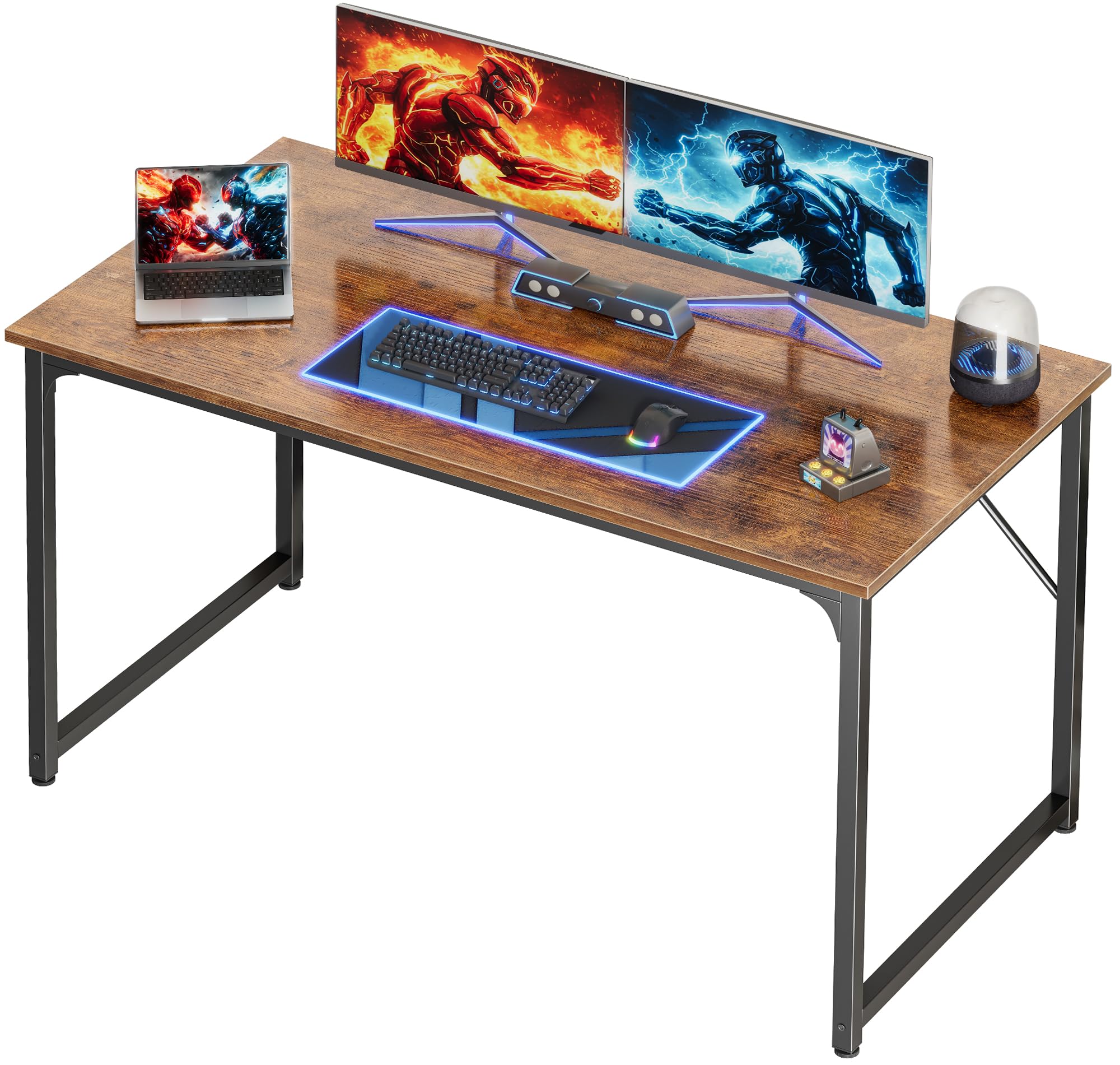
At 54 inches wide, the Huuger is the desk we pick when the wall is long but the budget is not. It gives you a broad writing surface for a shared office, a row of notebooks, or a printer at one end, and the rustic brown finish looks more considered than the price suggests.

The steel-and-particleboard frame has reinforcement struts underneath, and ours felt steady once the legs were squared. The single drawer is useful for pens and cables, though it is not a file drawer.

Assembly is a two-person job in our experience, mainly because the top is long and awkward to flip alone; one step involving the support beam can need a mallet to seat properly. Measure the depth before you commit. The 19.7-inch top is fine for a laptop and a mug, but a monitor and a spread of papers will feel stacked.

If you write with a laptop and a notebook, the width is a luxury. If you need to push a keyboard and monitor far back, the shallower top will feel tight. For a long, budget-friendly writing surface, it is hard to beat in this group.

Bottom Line: The Huuger 55 is our wide-and-affordable pick: a long writing surface for a shared office or a wall of papers, provided you do not need much depth.
#5

Best Farmhouse Style

ChooChoo 39

ChooChoo 39

8.8/10 Excellent
  • Storage: 2 drawers
  • Material: Engineered wood
  • Dimensions: 18.9"D x 39.4"W x 29.5"H
  • Weight Capacity: 49 lb
Check Price on Amazon

Pros

  • Farmhouse X-frame style
  • Two drawers for small items
  • Sturdy for light writing
  • Compact 39.4-inch top

Cons

  • 49-pound weight limit
  • Finish chips and scratches

The ChooChoo is the desk that makes a room look pulled together before you have even put the laptop down. The white finish, X-frame sides, and simple drawer fronts give it a farmhouse feel that is warmer than the black metal desks here, and the 39.4-inch top is small enough for a guest room or a teenager’s bedroom.

That style is the reason we recommend it, but it comes with a real limit: the stated weight capacity is 49 pounds. That is fine for writing, a lamp, and a laptop, but not for a heavy monitor setup or a stack of books. The two drawers are a better fit for stationery and makeup than for files.

Assembly takes longer than the simplest desks here, and the white finish needs a little care. Set against that, the desk feels sturdy in ordinary use, and the drawers keep a small writing space tidy. If you want the look and can keep the load light, it is a lovely choice.

Bottom Line: Choose the ChooChoo if the desk has to look like furniture first and a workspace second; its farmhouse frame is charming, but keep the load light.
#6

Best Compact with Storage

DLisiting 32

DLisiting 32

8.9/10 Excellent
  • Frame: Metal
  • Storage: 2 fabric drawers
  • Dimensions: 17.7"D x 31.5"W x 31.1"H
  • Desk Weight: 16.3 lb
Check Price on Amazon

Pros

  • Two fabric drawers plus hooks
  • Compact 31.5-inch footprint
  • Steel frame with extra brackets
  • Straightforward assembly

Cons

  • Fabric drawers suit light items
  • Taller 31.1-inch height

The DLisiting 32 is one of the few small desks here that gives you storage without asking for a bigger footprint. Two fabric drawers slide under the top, and two side hooks give headphones or a bag a place to land. The black finish is plain in the best way: it disappears into a bedroom and lets the desk do its job.

The steel frame and extra brackets make it more stable than the lightweight price suggests, and the adjustable leg pads are useful on old floors. At 31.5 inches wide and 17.7 inches deep, it holds a laptop, a notebook, and a pen cup, but not much more. That is the point: it is a writing perch, not a project table.

Our verdict is that this is the compact desk to choose when you need drawers, not just a surface. The 31.1-inch height is taller than the 30-inch standard, so shorter users should check the chair height before committing, and the fabric drawers are for light office supplies rather than files. If you want a small desk that still feels organized, it is an easy recommendation.

Bottom Line: The DLisiting 32 is our pick for a tiny room that still needs drawers: it packs two fabric drawers and hooks into a 31.5-inch footprint without feeling flimsy.
#7

Heavy-duty surface

Tribesigns 47

Tribesigns 47

8.8/10 Excellent
  • Dimensions: 23.6"D x 47.24"W x 29.13"H
  • Desk Weight: 52.9 lb
  • Weight Capacity: 900 lb
  • Tabletop Thickness: 0.98 in
Check Price on Amazon

Pros

  • Huge 900-pound rating
  • Wide 47-inch top
  • Thick 0.98-inch surface
  • Adjustable leg pads

Cons

  • Heavy 52.9-pound assembly
  • Can sag under concentrated load

The Tribesigns 47 leads with a 900-pound weight rating, which is an extraordinary number for a desk you assemble at home. The 0.98-inch laminated top and heavy steel legs are built for a printer, monitors, or a workshop setup, and the 47.2-inch width gives you room to spread out. At 52.9 pounds, it is also the desk here that most rewards a second person at assembly.

The adjustable leg pads are a sensible touch for uneven floors, and the open frame leaves good legroom. The top is engineered wood rather than solid timber, so the edges are the vulnerable part; a desk pad and careful lifting will do more for its long-term appearance than any polish.

Stability is the caveat. The desk is rated for serious weight, but the surface can sag in the middle under a heavy concentrated load, and the frame can creak if it is not squared carefully during assembly. That does not make it a bad desk; it makes it one to set up deliberately and load evenly.

We see it as a heavy-duty surface for a studio or a workshop, not our first choice for a quiet writing corner. If you need a big, inexpensive table that can take equipment and do not mind the weight, it earns its place; if you want a desk that feels light and furniture-like, the Linon is the better fit.

Bottom Line: The Tribesigns 47 is for the buyer who wants a big, heavy-rated surface more than a delicate writing table; ours stays a workshop pick, not the default.
#8

Student organization

DLisiting Hutch 47

DLisiting Hutch 47

8.8/10 Excellent
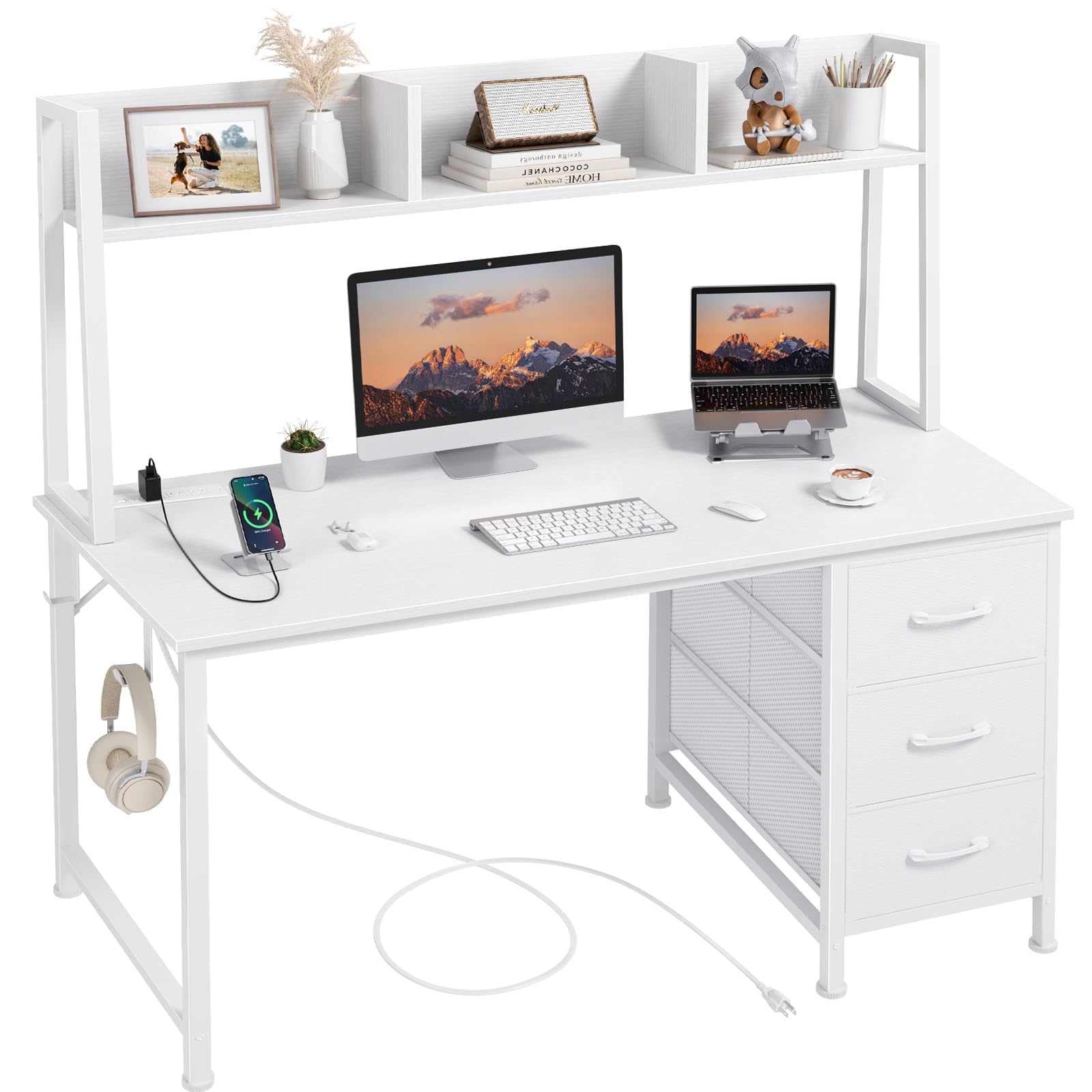
  • Power: 3 AC outlets, 2 USB ports
  • Storage: 3 fabric drawers + hutch
  • Dimensions: 18.9"D x 47.2"W x 56.1"H
  • Desk Weight: 40 lb
Check Price on Amazon

Pros

  • Built-in outlets and USB ports
  • Hutch plus three drawers
  • Sturdy everyday build
  • 47-inch wide top

Cons

  • Tall 56.1-inch overall height
  • Fabric drawers suit light items

The DLisiting hutch desk is the one we choose when the writing desk also has to be the charging station, the bookshelf, and the place where the headphones live. Three AC outlets and two USB ports sit in the hutch, and three fabric drawers plus a shelf handle the small stuff. That combination is genuinely useful in a student room or a shared office.

The writing surface is 47.2 inches wide and 18.9 inches deep, which is enough for a laptop and a notebook but not a deep monitor setup. The hutch adds vertical storage without taking more floor space, and the overall height is 56.1 inches. That height is the detail to check: it can crowd a low window or make a small room feel taller than you want.

The fabric drawers are the familiar compromise on desks at this level: fine for pens, chargers, and paper, less so for heavy files. The desk feels sturdy in ordinary use, and the outlets are the kind of convenience you notice every day. Assembly is manageable, though the instructions are the weak point; sorting the hardware before you start saves time.

We recommend it for a student or a busy household desk where organization matters more than a pure writing surface. If you only need a flat place for a notebook, the hutch is extra furniture; if you need one desk to do several jobs, it earns the space.

Bottom Line: The DLisiting hutch desk is our pick for a student or busy organizer who wants outlets and shelves in one footprint; just measure the 56-inch height first.

How We Tested 12 Writing Desks Over Eight Months

We started by pulling together more than 60 desks from furniture brands, office suppliers, and direct-to-consumer shops, then narrowed the list by size, price, material, and the features people actually use — cable cutouts, drawers, keyboard clearance. We ruled out desks with vague weight capacities or no assembly details, and we prioritized models that came in more than one width so we could judge suitability for small apartments and dedicated offices alike. That left us with 12 desks, which we built, lived with, and wrote on for eight months.

Assembly came first. We timed how long each desk took one person to build, counted every step that required a second set of hands, and noted whether the instructions matched the hardware bag. Then we put each desk through a week of normal use — typing, writing longhand, leaning on the front edge, and rolling a chair in and out — and checked for wobble on both carpet and hard floors. We also loaded the drawers, filled the shelves, and nudged the legs to see whether the frame stayed square.

Over the following months, we watched for the quieter problems: finishes that chipped at the corners, drawers that started to stick, and legs that loosened after a move from one room to another. We tested functionality by clearing cables, sliding a keyboard in and out, and seeing whether the desktop felt cramped once a laptop, notebook, and mug were on it. At the end, we weighed each desk's price against its build and hardware — not just how it looked in photos — and kept the ones we would happily write at every day.

How to Choose Writing Desks

Start With the Surface, Not the Label

A writing desk needs enough flat space for the way you actually work. A 32-inch top like the DUMOS handles a laptop, a notebook, and a mug; a 40- to 48-inch top gives you room for papers, a lamp, and a second screen. Depth matters just as much: 19 inches is a practical minimum, while the PRAISUN’s 23.6-inch depth lets you spread out a textbook and a monitor without stacking. If you write by hand, lean deeper; if you mostly type, a shallower desk saves floor.

Check Height and Knee Clearance

Most writing desks sit around 29 to 30 inches high, which works with a standard adjustable chair. The DLisiting 32 is taller at 31.1 inches, so shorter users should check the chair height before committing. Sit with your forearms roughly level on the desk and your feet flat. Drawers and hutch supports can eat into knee room, so look at the open space under the surface, not just the top dimensions. A desk that fits your body is easier to use than one that merely fits the wall.

Choose Storage That Earns Its Footprint

Storage is where budget desks make their biggest compromises. Fabric drawers are common and work for pens, chargers, and paper, but they are not file drawers and they will not feel like wood. A single center drawer, as on the Linon, keeps a writing surface clear without eating much knee room. A hutch adds vertical storage and outlets on the DLisiting Hutch 47, but it also raises the visual height and can crowd a small room. Decide whether you need a surface with a little storage or a storage piece with a writing top.

Stability Is a Frame Question

A thick top looks reassuring, but the frame and joints decide whether the desk stays steady. Steel legs and support bars generally resist side-to-side wobble better than thin engineered-wood legs, and adjustable feet matter on old or uneven floors. Check the stated weight capacity against what you plan to put on the desk, not just the laptop you use today. A high rating does not guarantee a perfectly flat surface under a concentrated load, so set the desk up squarely and spread heavy items out.

Plan Assembly and the Walk to the Room

Flat-pack assembly is easier when the top arrives in one piece, as it does on the Linon, but even simple desks can be awkward to flip alone. Check the delivery weight before you choose: the Tribesigns 47 is 52.9 pounds, and a second person makes the job safer. Measure the doorway and the spot where you plan to build it. A desk that fits the room but not the stairwell is still the wrong desk.

Frequently Asked Questions

Final Verdict

For most people, the Linon Melissa is the writing desk we recommend: solid wood, a warm walnut finish, and a 42-inch top that feels generous without dominating a bedroom or study. It is the one we choose when the desk is part of the room, not just a place for a laptop.

If you need a deeper surface for papers and a monitor, the PRAISUN 47 is the better fit; if space is tight, the DUMOS 32.