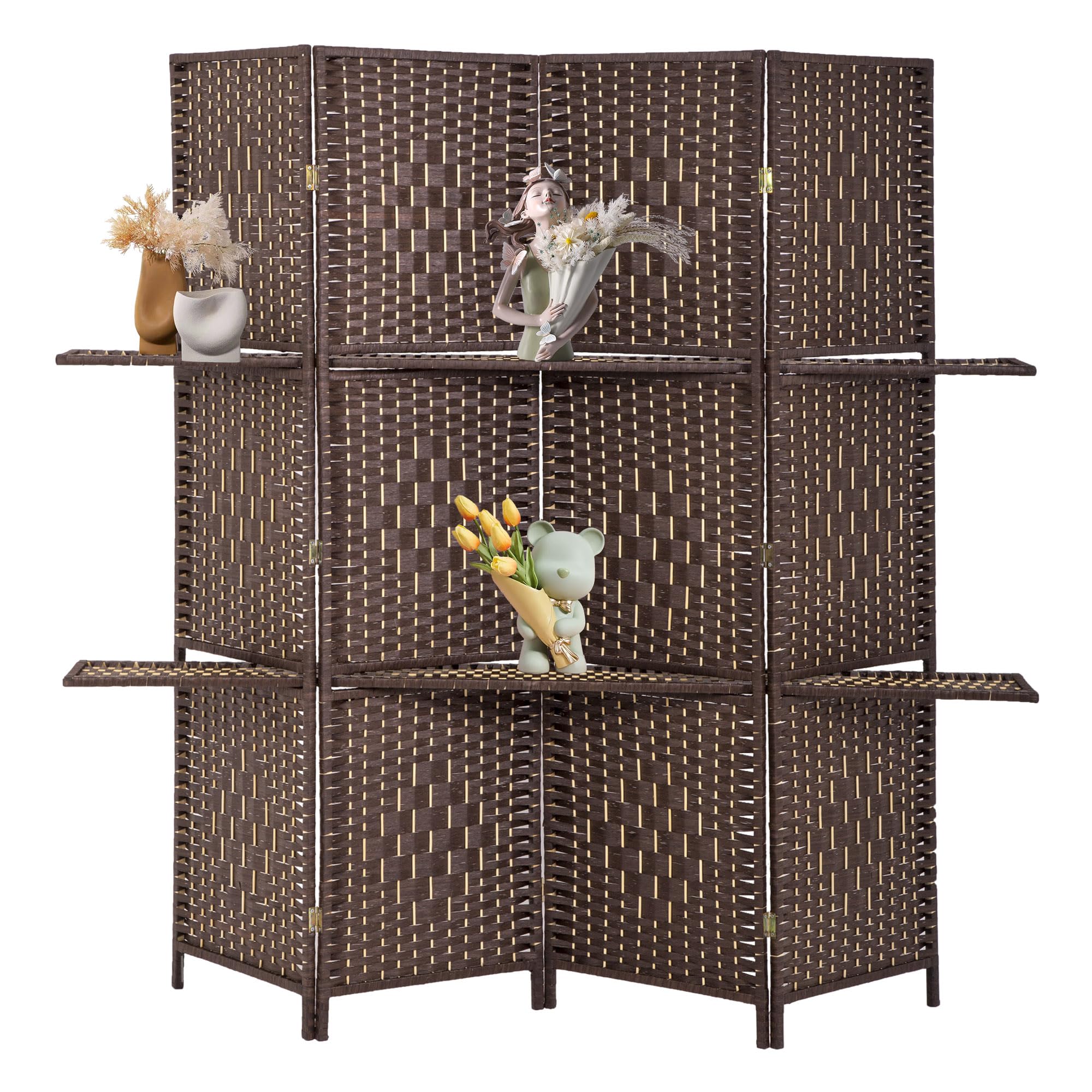
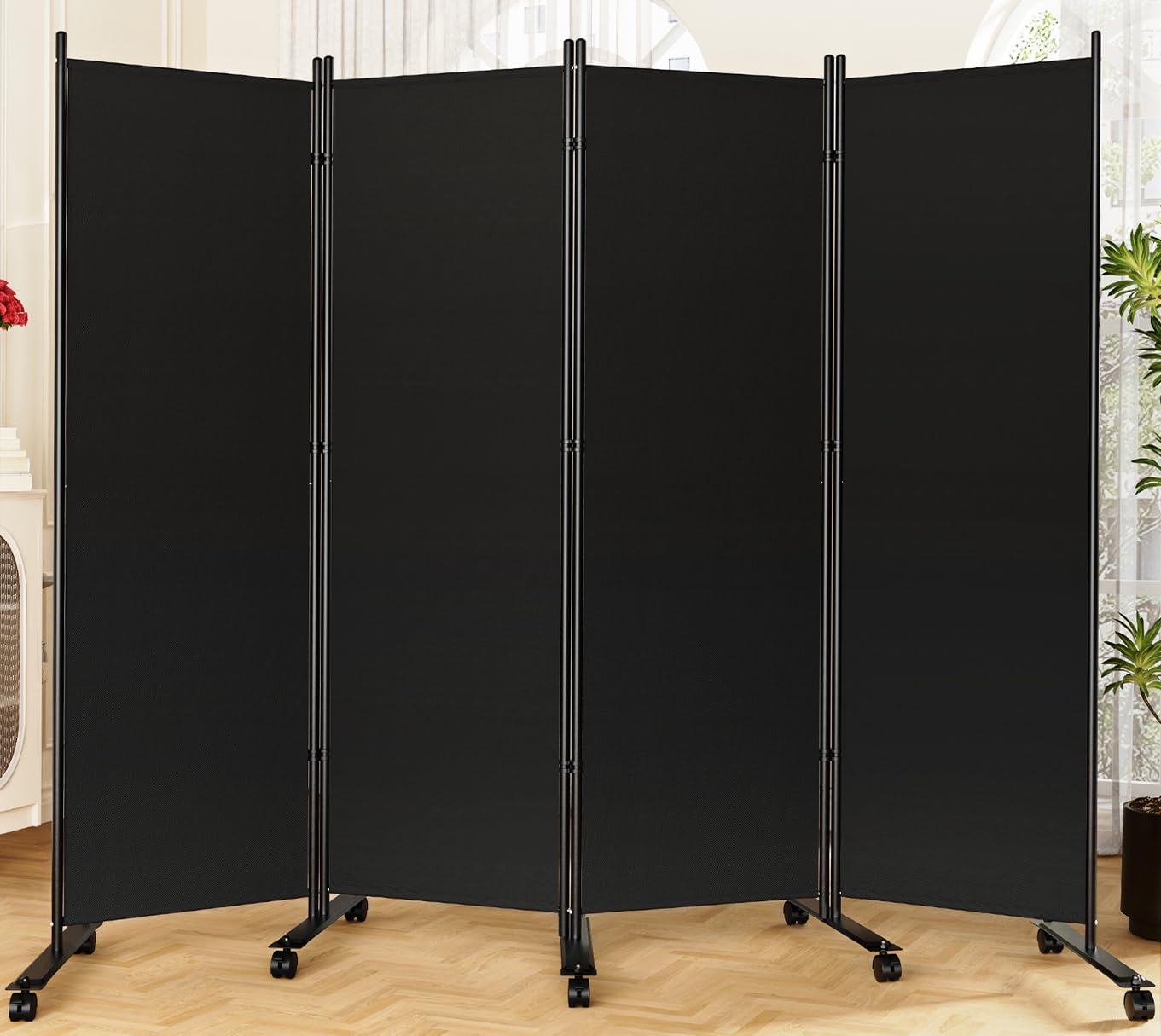
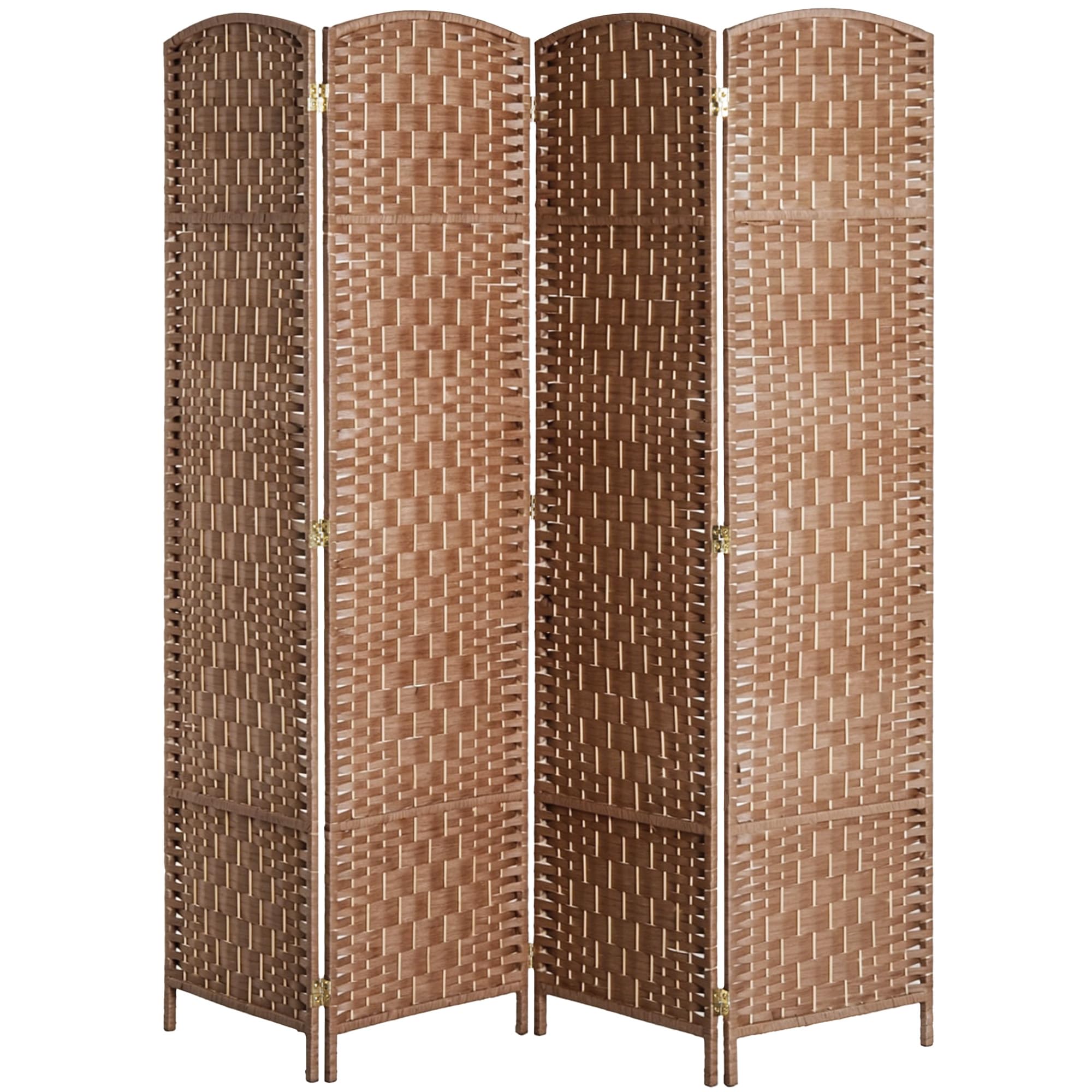
Best Overall

Roundhill Shoji 4-Panel
- Material Type: Wood, rice paper
- Privacy Level: Light-diffusing, semi-private
- Assembly Requirement: None, fully assembled
- Panels & Total Width: 4 panels, 68"W
Pros
- Beautiful shoji look that adds warmth and texture to any room.
- Solidly built wood frame with fiberglass-reinforced rice paper that resists tearing.
- Diffuses light evenly while blocking clear outlines for true privacy.
- Arrives fully assembled, folds flat, and stores effortlessly.
Cons
- Can feel unstable if not fully extended into a zigzag or placed on thick carpet.
The four panels are crafted with a light wood frame and a translucent, fiberglass-reinforced rice paper that softens sunlight or overhead glare without darkening the room. Unlike woven dividers, the opaque surface stops passersby from reading silhouettes clearly, so you get real separation. The frame arrives fully assembled and folds flat in seconds; you can pull it out of the box, extend the zigzag, and stand it up immediately.
Stability depends on how you set the screen. When the panels are spread into a wide zigzag, the footprint anchors well on hard floors. On thick carpet or slightly uneven surfaces, the lighter 15-pound frame can wobble if bumped, particularly at the hinge points. For a static backdrop in a low-traffic room, this is a non-issue. Users who reposition it daily will appreciate how effortlessly it folds and tucks beside a desk or into a closet.
This screen fits buyers who want a calming, Japanese-inspired partition in a small apartment, home office, or meditation corner where it won’t face rough contact. It provides visual privacy while keeping the area airy, so it works well behind a video call setup or as a subtle room break. Households with large dogs or rambunctious kids that might knock over a delicate freestanding divider should consider a heavier alternative.
💡 Fully extend the panels into a zigzag for the most stable footprint; on carpet, small rubber grip pads under the outer feet reduce sliding.