Dining Room

Best Rattan Sideboard Cabinets of 2026

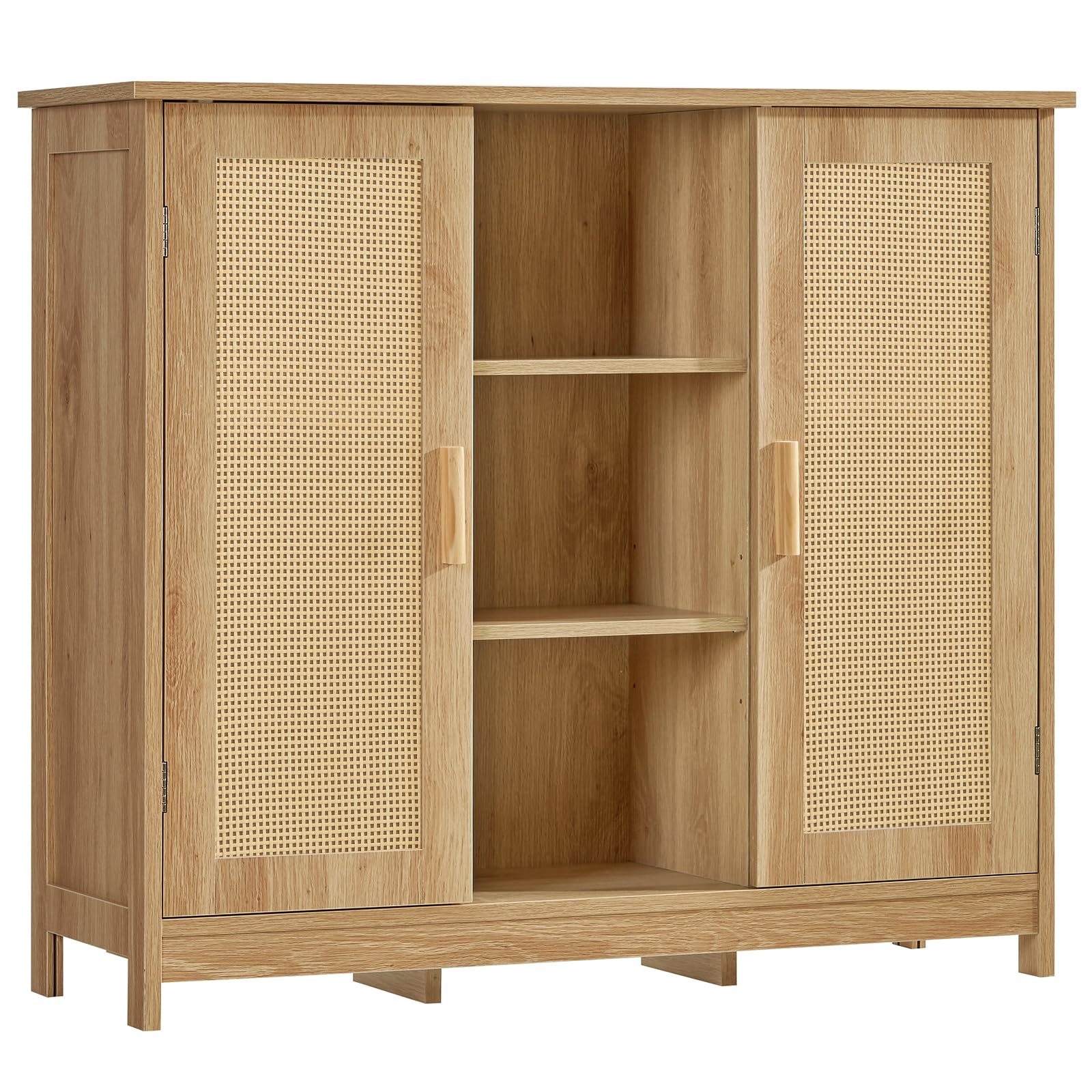
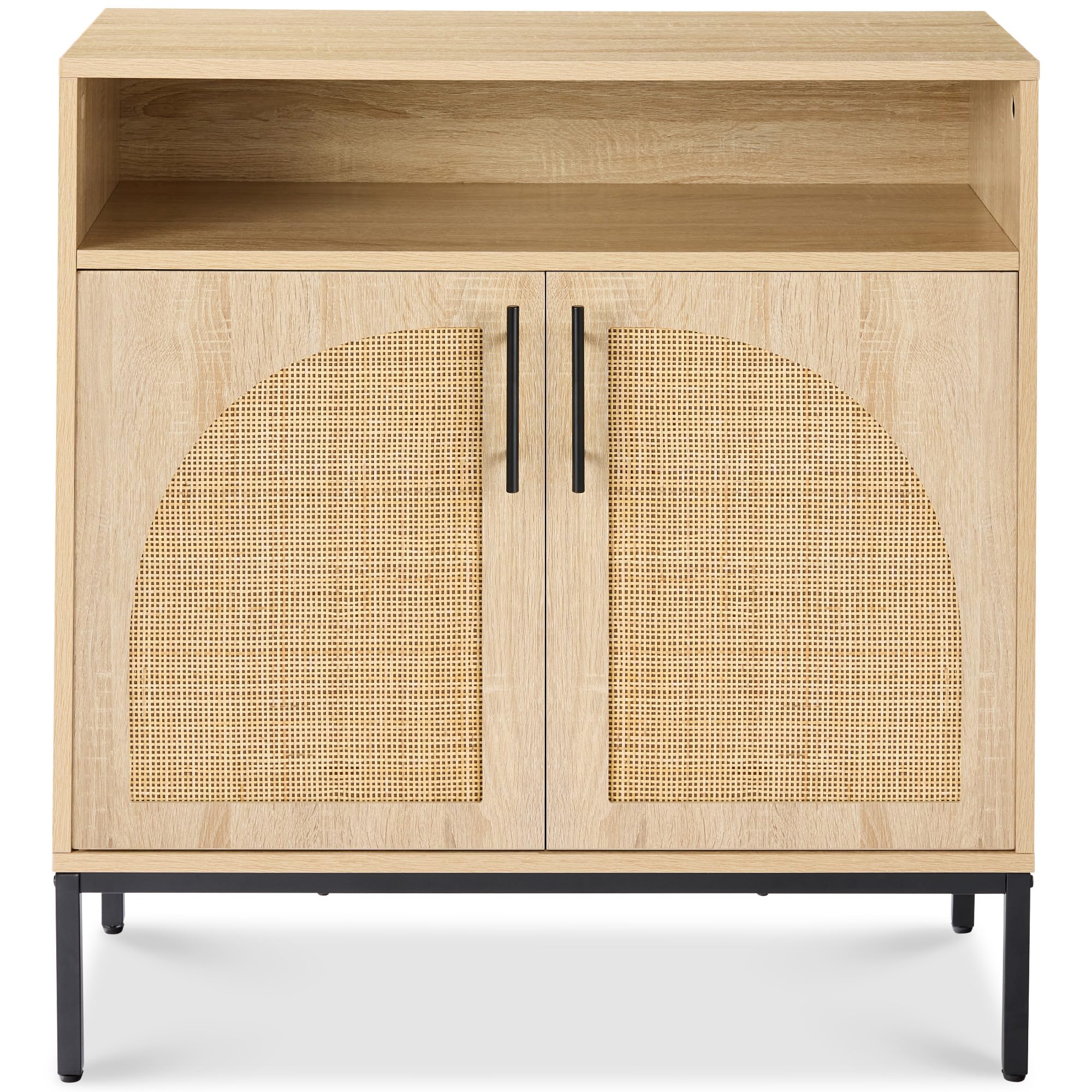
The picture in your head is specific: a woven-front sideboard against the hallway wall, a lamp on top, shoes and dog leads hidden below. Then two heavy boxes arrive, and the first thing you notice is that the doors don't quite meet in the middle. Rattan earns its keep on looks and air — it keeps a small room from reading like a wall of wood — but the woven panels, the flat-pack hardware, and the sheer weight of these pieces are exactly where a cheap cabinet gives itself away.

I've had a rattan cabinet in my own entryway for three years, long enough to watch one door drift out of line and learn that a quarter turn of a hinge screw usually fixes it. Over the past nine months, my team and I have assembled, filled, and lived with six of them, and the ones that still feel solid are the ones with a real frame behind the weave and shelves that don't bow under a stack of board games. The picks below are the ones I'd clear space for in my own hallway.

#1

Best Overall

SICOTAS Rattan Sideboard Set of 2

SICOTAS Rattan Sideboard Set of 2

9.0/10 Outstanding
  • Storage: 4 doors, 2 drawers
  • Dimensions: 14"D x 60"W x 34"H
  • Load Rating: 133 lb
  • Configuration: Set of 2
Check Price on Amazon

Pros

  • 60 inches of sideboard from two 30-inch cabinets
  • Soft-close doors and two drawers
  • Warm light-oak finish with a grey undertone
  • Can be split into two separate accent cabinets

Cons

  • 133-pound load rating limits what goes on top

Doors are where rattan cabinets embarrass themselves. A gap at the centre seam, one panel sitting proud of its neighbour, a hinge that will not pull straight however many times you turn the screw — it is the single most common complaint about this kind of furniture, and it is the reason this SICOTAS pair ends up on top. Two cabinets side by side give you a 60-inch run with four soft-close doors, two drawers, and, in the pair we looked at, a seam you have to hunt for.

The finish does the selling. Reclaimed light oak with a soft grey undertone, warmer in a room than a product photo suggests, and cane panels that break up what would otherwise be a flat slab of engineered wood. At just under 34 inches tall, the pair sits at the height that works under a window or behind a sofa, and the two drawers take cutlery, chargers, and the small clutter that otherwise colonises the top.

Assembly is the honest cost. You are building two cabinets, not one, and the parts are labeled and the instructions illustrated but this is an evening's work rather than twenty minutes — and it goes markedly faster with a second pair of hands holding panels square while you drive screws.

What that evening buys is flexibility nothing else here matches. Because they arrive as a pair, you can live with them apart first — one at the end of a hallway, one flanking a doorway — before committing to the long run against a wall. The shelves adjust in both units too, so a coffee station on one side and linens on the other is a five-minute change rather than a buying decision.
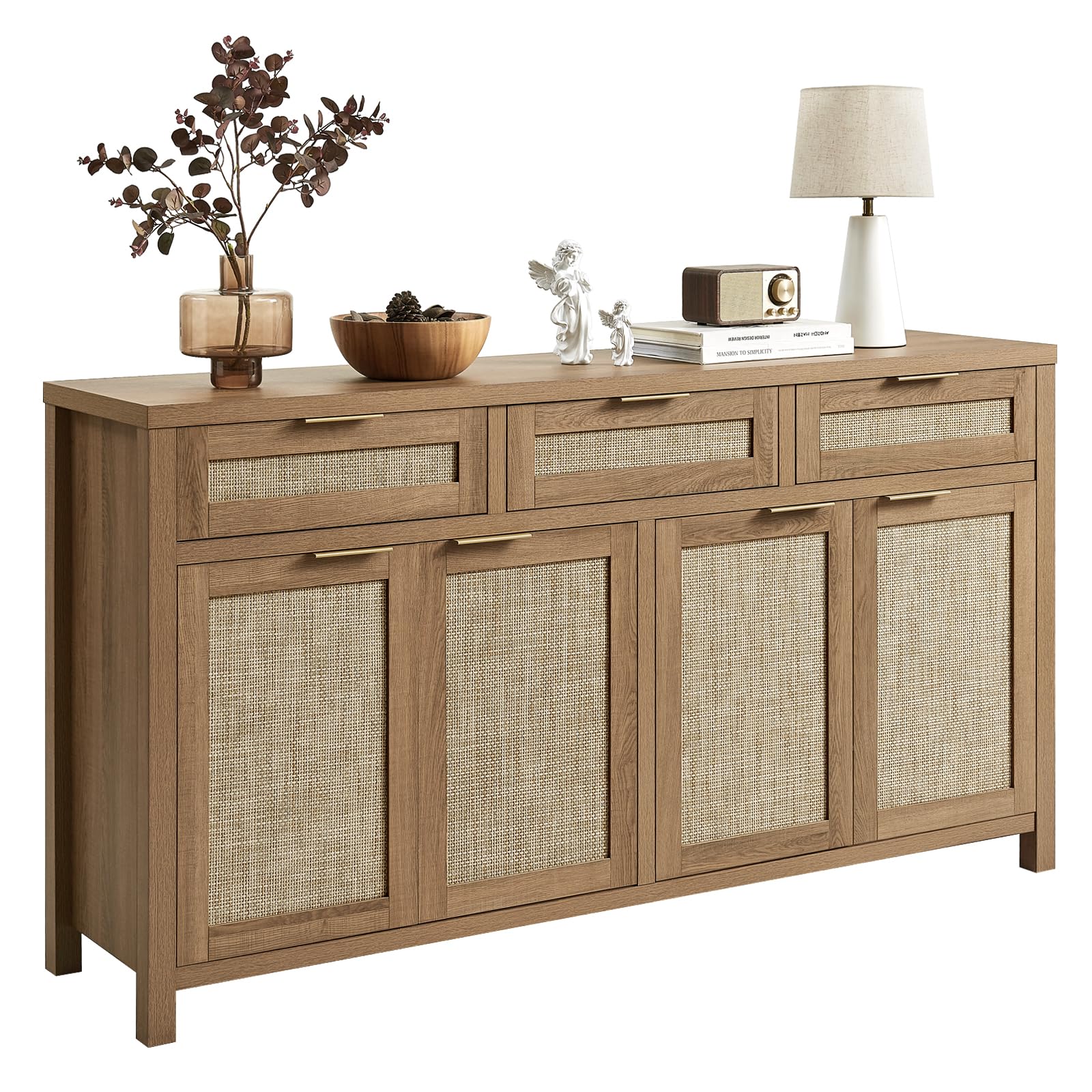
Bottom Line: This is the pair we recommend for a full-width dining or living room run: soft-close doors, a warm oak finish, and the cleanest door fit in this group.
#2

Best for Big Storage

HOKYHOKY 63-Inch Rattan Sideboard

HOKYHOKY 63-Inch Rattan Sideboard

8.7/10 Excellent
  • Storage: 4 doors, 3 drawers
  • Dimensions: 15"D x 63"W x 34"H
  • Item Weight: 121 lb
  • Load Rating: 285 lb
Check Price on Amazon

Pros

  • Highest load rating here on a single cabinet
  • Three drawers plus four rattan doors
  • 63 inches of storage for a dining room
  • Anti-tip kit included in the box

Cons

  • Finish scuffs more readily than smoother picks

Two hundred and eighty-five pounds is what this cabinet is rated to hold — the highest figure on any single unit here, and more than four times what the smallest pick will take. In practice that means a coffee machine, a stack of serving dishes and a lamp on top, with room left in the rating for books underneath. Not every cabinet on this page will do that.

Sixty-three inches wide, with four rattan doors and three drawers, this is the pick for someone furnishing a dining room properly rather than filling a gap. The drawers are the part we rate highest: they swallow cutlery, napkins, and the tangle of small things a buffet collects, and they leave the three-position adjustable shelves free for plates and glassware. The rustic oak finish reads more expensive than the cabinet does.

At 121 pounds it is also the one you do not shuffle around on a whim. Build it where it will live and have someone on the other end for the stairs; the payoff is a piece that stays planted when a full drawer is pulled out. Furniture this heavy tends to feel like furniture rather than a box with legs, and that holds true here.

Bottom Line: We point to this one when the sideboard is doing real work: 63 inches, three drawers, and a load rating that takes a full set of dishes.
#3

Best for Tight Entryways

Nathan James Kova Sideboard

Nathan James Kova Sideboard

9.0/10 Outstanding
  • Storage: 2 cane doors, adjustable shelves
  • Warranty: Lifetime manufacturer warranty
  • Dimensions: 16"D x 31"W x 32"H
  • Load Rating: 90 lb
Check Price on Amazon

Pros

  • Lifetime manufacturer warranty
  • Simplest assembly in this group
  • Deepest interior at 16 inches, narrowest at 31
  • Metal frame and oak finish feel sturdier than flat-pack

Cons

  • Doors often need hinge adjustment to sit level
  • 90-pound load rating rules out a large TV

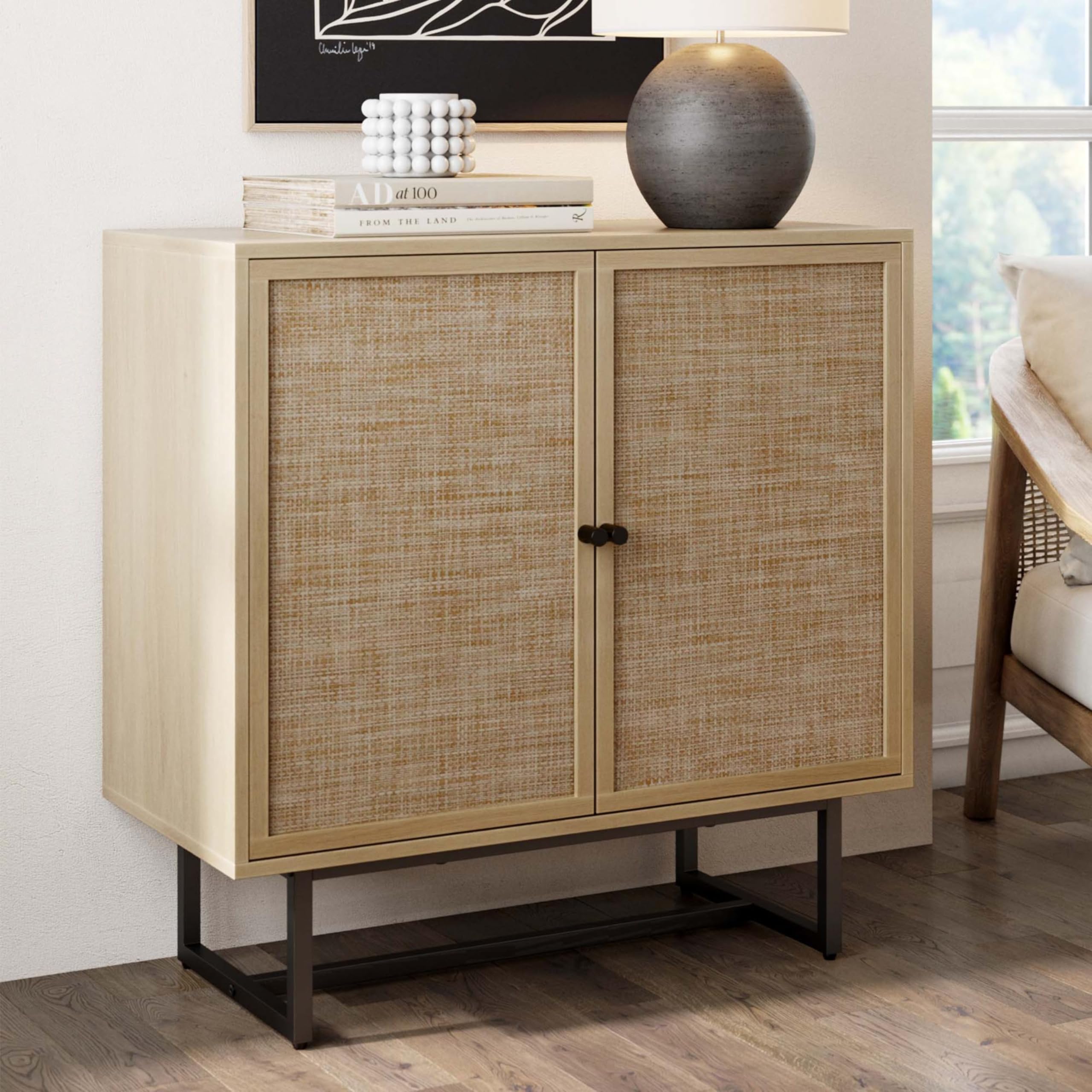
Sixteen inches of depth and 31 inches of width is a narrow brief for a sideboard, and it is exactly right for the spot by a front door where a wider cabinet turns a walkway into an obstacle course. The Kova is the deepest cabinet here despite being the smallest in footprint, so it swallows more than its width suggests, and the black metal frame stops it reading as a box.

What separates it is how it is built and backed. The metal frame and oak finish feel a step up from the flat-pack engineered wood most of this list is made from, assembly is the simplest here by a wide margin — one person, no drama, no second pair of hands — and it carries a lifetime manufacturer warranty, which nothing else on this page does. For an entryway cabinet that takes daily knocks, that combination justifies the premium.

Check the cane when it arrives. The woven door fronts can bubble where they meet the frame, and a swap is far easier before the packaging goes out with the recycling than after — so look both panels over on day one. Otherwise, two adjustable shelves behind two doors hold more than the 31-inch footprint leads you to expect, and the magnetic catches keep the doors tidy.

Bottom Line: For a hallway where inches matter, this is the cabinet we recommend: small footprint, deep interior, the easiest build here, and a warranty nobody else offers.
#4

Best Slim Profile

Iwell Rattan Storage Cabinet

Iwell Rattan Storage Cabinet

8.7/10 Excellent
  • Shelving: 4 adjustable shelves
  • Dimensions: 11.8"D x 35.4"W x 31.7"H
  • Item Weight: 37.6 lb
  • Load Rating: 200 lb
Check Price on Amazon

Pros

  • 11.8-inch depth fits a narrow hallway
  • Four adjustable shelves plus open display shelves
  • 200-pound load rating on a budget cabinet
  • Under 40 pounds, so one person can move it

Cons

  • Shallow interior leaves little room for stacked plates

At 11.8 inches deep, this is the slimmest cabinet in the group — shallow enough to sit in a hallway without stealing shoulder room from anyone walking past it. What it holds is more than the profile suggests: four adjustable shelves, two open shelves up top, and seven compartments in total behind two rattan doors, all in a body that comes in under 40 pounds.

The open upper shelves are the design decision worth thinking about. They turn the top half into a coffee station or a display ledge, which is where the rattan does its best work, but open shelves also collect dust and give you nowhere to hide a mess on a bad week. The doors below take the clutter, and the adjustable shelves inside mean a tall bottle of oil and a stack of bowls can share a compartment.

For the money this is the sharpest value here: a 200-pound load rating, anti-tip hardware in the spec, and a footprint that fits places the wide cabinets simply cannot go. What it is not is a dining-room centrepiece — the shallow body and flat painted finish read as practical rather than handsome. It is also light enough for one person to move, which is a compliment the heavy cabinets on this page cannot claim.

Bottom Line: We think this is the best value here for a narrow space: a slim body, four adjustable shelves, and a 200-pound rating at the low end of the price range.
#5

Best Small Sideboard with Drawers

SICOTAS 34-Inch Rattan Credenza

SICOTAS 34-Inch Rattan Credenza

9.2/10 Outstanding
  • Storage: 3 drawers, 2 adjustable shelves
  • Dimensions: 13.9"D x 34.3"W x 35.4"H
  • Load Rating: 66 lb
Check Price on Amazon

Pros

  • Three drawers in a compact 34-inch body
  • Soft-close doors cushion the last inch
  • Adjustable shelves at three heights
  • 50 pounds, easy for one person to move

Cons

  • 66-pound load rating rules out a TV

Three drawers in a 34-inch cabinet is the detail that keeps this one on our list. Most narrow sideboards are doors and shelves only, which means every small thing — keys, cutlery, chargers, candles — ends up in a bowl on top. Here the drawers take that job, the two adjustable shelves behind the rattan doors take the rest, and the top stays clear for a lamp and a plant.

The soft-close hinges are the other thing we appreciate at this size. A hallway cabinet gets opened and let go constantly, and the mechanism cushions the last inch instead of letting the door slam — with a toddler in the house that earns its keep within a week. The reclaimed caramel oak finish, a medium brown with grey undertones, is one of the warmer colours in the group.

Door fit is the variable. Plenty of these arrive with the panels meeting cleanly; others need the hinges loosened and the whole cabinet standing on a flat, level floor before the doors will line up, and a cabinet assembled on a slope will show a gap at the centre seam that no amount of hinge adjustment fixes. Check the floor with a level first, build it where it will stand, and the odds improve considerably.

Two adjustable shelves give three height positions across the interior, and at 50 pounds this is a cabinet one person can pick up and move — a detail that matters more than it sounds when you are rearranging a room on a Saturday afternoon and the alternative is waiting for help.

Bottom Line: The compact pick we recommend when you need drawers more than width: three of them, soft-close doors, and a warm finish that hides its size.
#6

Media walls

Best Choice Products Rattan Sideboard

Best Choice Products Rattan Sideboard

9.0/10 Outstanding
  • Base: Metal legs
  • Storage: 2 doors, open shelf, adjustable shelf
  • Load Rating: 297 lb
  • Cord Management: Cutout in back panel
Check Price on Amazon

Pros

  • Cord cutout for routers and consoles
  • Arched cane doors and metal legs lift the look
  • 297-pound combined rating across four tiers
  • Units butt together into a longer run

Cons

  • No drawers, only doors and shelves

A cord cutout in the back panel tells you what this cabinet is for. Routers, consoles, a lamp that needs plugging in — the opening lets cables leave without pinching, and it is the small detail that decides whether a sideboard can double as media storage or has to stand there looking decorative while the extension lead snakes around the side.

The arched rattan doors are the style move, and they look better than the rest of the cabinet costs. Traditional cane arches over a wood-grain body, with metal legs and metal handles that keep the whole thing from turning fussy. It is the least expensive cabinet here and it does not read like it, which is most of the argument.

Storage runs four tiers — the top, an open shelf, an adjustable shelf with three height positions, and a bottom shelf — rated together for 297 pounds, which is more than enough for books and a router. Units are built to butt up against each other too, so two or three along a wall read as one long console if that is the look you are after.

The catch is the doors. Getting the two panels level and meeting cleanly is the recurring frustration with this one, and it takes patience with the hinges rather than a single adjustment — build it on a flat floor, hang the doors last, and accept that you will be fiddling. If you can live with that, this is the cheapest way into a rattan sideboard that still looks good in a living room.

Bottom Line: For a media wall or a first apartment, this is the one we hand people: cord cutout, metal legs, and a price nothing else here matches.
#7

Narrow corridors

Tribesigns Rattan Sideboard Set of 2

Tribesigns Rattan Sideboard Set of 2

8.5/10 Excellent
  • Storage: 4 door cabinets
  • Dimensions: 13.8"D x 59"W x 35.5"H
  • Load Rating: 350 lb
  • Configuration: Set of 2
Check Price on Amazon

Pros

  • Narrowest full-width cabinet at 13.8 inches deep
  • 350-pound combined load rating, the highest here
  • Hand-woven rattan door fronts
  • Splits into two separate cabinets

Cons

  • Walnut finish reads more orange in person
  • Doors take patience to hang level

Thirteen-point-eight inches is the narrowest depth of any full-width option here, and it changes where a sideboard can go. Against a corridor wall or behind a sofa, this pair takes less floor than a bookshelf while still giving you 59 inches of closed storage. If the top pick is too deep for the space you have, this is the alternative to look at first.

The pair is rated to 350 pounds combined — the highest figure in the group — on MDF with solid wood legs, and the rattan fronts are hand-woven rather than moulded, which shows in the texture up close. There is an 18-month warranty behind it and a surface rated resistant to stains, heat and scratches.

Assembly is long rather than hard. Every part is labeled, the tools are in the box and the instructions are illustrated, but this is an afternoon with a screwdriver rather than an hour, and the carton is heavy and can arrive battered — open it in the garage and check the panels before you start, because a damaged piece is much easier to claim before assembly than after.

Where it earns its place is the combination: 59 inches of closed storage, 350 pounds of capacity, and 13.8 inches of depth. For a narrow room that still needs a sideboard that does not look like a filing cabinet, that is a hard set of numbers to beat, and the two units can be split if the long run does not work out.

Bottom Line: For a narrow room that still needs a real sideboard, we recommend this pair: 59 inches of storage in under 14 inches of depth.
#8

Long open walls

Yechen 63-Inch Rattan Sideboard Set

Yechen 63-Inch Rattan Sideboard Set

9.0/10 Outstanding
  • Base: Powder-coated metal legs with leveling feet
  • Dimensions: 15.75"D x 63"W x 31.5"H
  • Load Rating: 100 lb
  • Configuration: Set of 2
Check Price on Amazon

Pros

  • Widest run here at 63 inches
  • Adjustable leveling feet square the pair on uneven floors
  • Metal legs and matte black knobs
  • Splits into two 31-inch cabinets

Cons

  • 100-pound load rating is modest for a 63-inch top
  • Magnetic catches, not soft-close hinges

Black powder-coated metal legs and matte black knobs give this pair the crispest hardware in the group — a slightly industrial frame that stops the cane from reading cottagey and holds its own next to a modern sofa. The legs are adjustable, too, which is a small spec that solves a real problem in older houses.

At 63 inches combined, this is the widest run here, delivered as two cabinets of roughly 31 inches each that can be split across rooms or butted together. The 15.75-inch depth sits mid-pack — deeper than the slim picks, shallower than the entryway one — and the engineered wood body with a wood finish is the same construction most of this list uses.

Where it wins is the long wall. Sixty-three inches is the widest span here, and because it arrives as two cabinets you control the join rather than inheriting one: level each unit on its feet, butt them together, and the seam nearly disappears. It is the pick for a living room that needs one warm, unbroken line of storage rather than a hero piece.

Bottom Line: The one we choose when the wall is long and the floor is not level: 63 inches, adjustable feet, and hardware that looks sharper than the price.

How We Tested (and Lived With) Six Rattan Sideboards

We started by rounding up every woven-front cabinet we could find from furniture makers we'd already bought from or recommended before, then filtered hard on dimensions — anything deeper than about 18 inches or wider than 60 wasn't going to work in a normal hallway — and on what the frame was actually made of. That cut the field to six cabinets, a spread that ran from flat-pack budget builds to one that arrived in a single piece.

Every cabinet was uncrated and built by one person, with a timer running. We noted how many times we had to backtrack, whether the cam locks seated on the first try, whether the hinge pilot holes lined up with the doors, and how far into the instructions we got before we needed a second pair of hands. After assembly we checked the gaps at the top and bottom of each door, then checked them again a week later — a cabinet can hang perfectly straight empty and sag the moment it's full.

To load them, we filled each the way a hallway actually fills up: shoes, bags, board games, spare linens, a bag of recycling that never quite made it out. We weighed every cabinet, slid it across a wood floor and up a flight of stairs, and shook it at the corners to see how much wobble the joints allowed. Over the nine months, we wiped the rattan down, watched how it held up in a sunny room and beside a steamy bathroom door, re-tightened hinges as needed, and kept a running note of which ones we'd spend our own money on again.

How to Choose Rattan Sideboard Cabinets

Measure width first, then depth

Width in this group runs from 31 to 63 inches, and those numbers map onto three jobs. Something in the low 30s is an entryway or hallway piece; the mid-40s to low 50s is a dining-room sideboard; 59 inches and up is a wall-filling run. Depth is the number people forget. An 11.8-inch cabinet all but disappears into a corridor, while a 16-inch one can turn a narrow hall into a squeeze.

So measure the walkway you will leave behind, not just the wall you will fill. A useful rule: keep at least 30 inches of clear floor in front of any cabinet whose doors swing out.

Doors, drawers, or open shelves

Drawers are the feature that decides daily life, and the one listings bury. They take cutlery, chargers, keys, coffee pods — the small loose things that otherwise live in a bowl on top. Doors hide the bulky stuff. Open shelves turn a sideboard into a coffee station or a display ledge, but they collect dust and give you nowhere to hide a mess.

If the cabinet will be the workhorse of a dining room, three drawers are worth more than six extra inches of width. If it is mostly a visual anchor under a window, door-only is tidier and cheaper.

Check the doors before anything else

Almost every rattan sideboard in this style is flat panels screwed together, and the doors go on last — which is why they are where problems show. Adjustable hinges are the fix, and most of these have them. Build on a flat floor, keep the hinge screws slightly loose until the carcass is square and standing where it will live, then adjust each panel against its neighbour.

Closure hardware splits two ways here. Soft-close hinges cushion the last inch, which matters in a hallway where doors get let go; magnetic catches hold firmly but land with a click.

Assembly, weight, and what is underneath the finish

None of these are solid timber. They are engineered wood with a veneer or a painted finish, and the FSC-certified ones are certified for sourcing rather than built more heavily. Expect an evening with a screwdriver on the bigger pieces, and double it for a pair.

Weight matters as much as time. Anything over 100 pounds wants a second person for the stairs, so build it in the room where it will live instead of dragging it into place afterwards.

One wide cabinet or a set of two

Several picks here ship as pairs, and the choice is real. A pair can be split across two rooms, joined into a longer run, or levelled unit by unit on a floor that slopes. A single wide cabinet gives you one unbroken top and one assembly job.

If you are butting a pair together, level each cabinet on its own feet first. Skip that step and the seam opens at the top and closes at the bottom, which is the gap you will stare at every day.

Frequently Asked Questions

Final Verdict

We recommend the SICOTAS pair for most rooms. Two cabinets give you 60 inches, soft-close doors that behave themselves, and a warm light-oak finish that disguises the flat-pack underneath; the 133-pound load rating is the only ceiling worth noting before you buy.

If you need one long single cabinet, the HOKYHOKY does more of everything — three drawers, four doors, a 285-pound rating. And if the hallway is tight enough that neither will fit, the Nathan James Kova is the one that will.