Home Office

Best Adjustable Standing Desks of 2026

A desk that rises is a desk with a motor, a frame, and at least two joints that move — and every one of those is a place where wobble can announce itself. I once spent a year typing at standing height on a desk that shimmied every time my foot tapped the floor, and it cured me of thinking height range is the only number that matters. What a good adjustable desk actually buys you is the freedom to change posture at 2 p.m. without rebuilding your office around it.

Over the past eight months my team has lived with 10 of them, from compact two-leg frames to heavier three-stage models, in home offices and one very cramped spare bedroom. The surprise: presets, apps, and anti-collision sensors matter far less than whether the frame stays quiet when you lean on it at its top height. Below are the desks that stayed solid, went together without swearing, and still felt worth their price after months of daily use.

#1

Best Overall

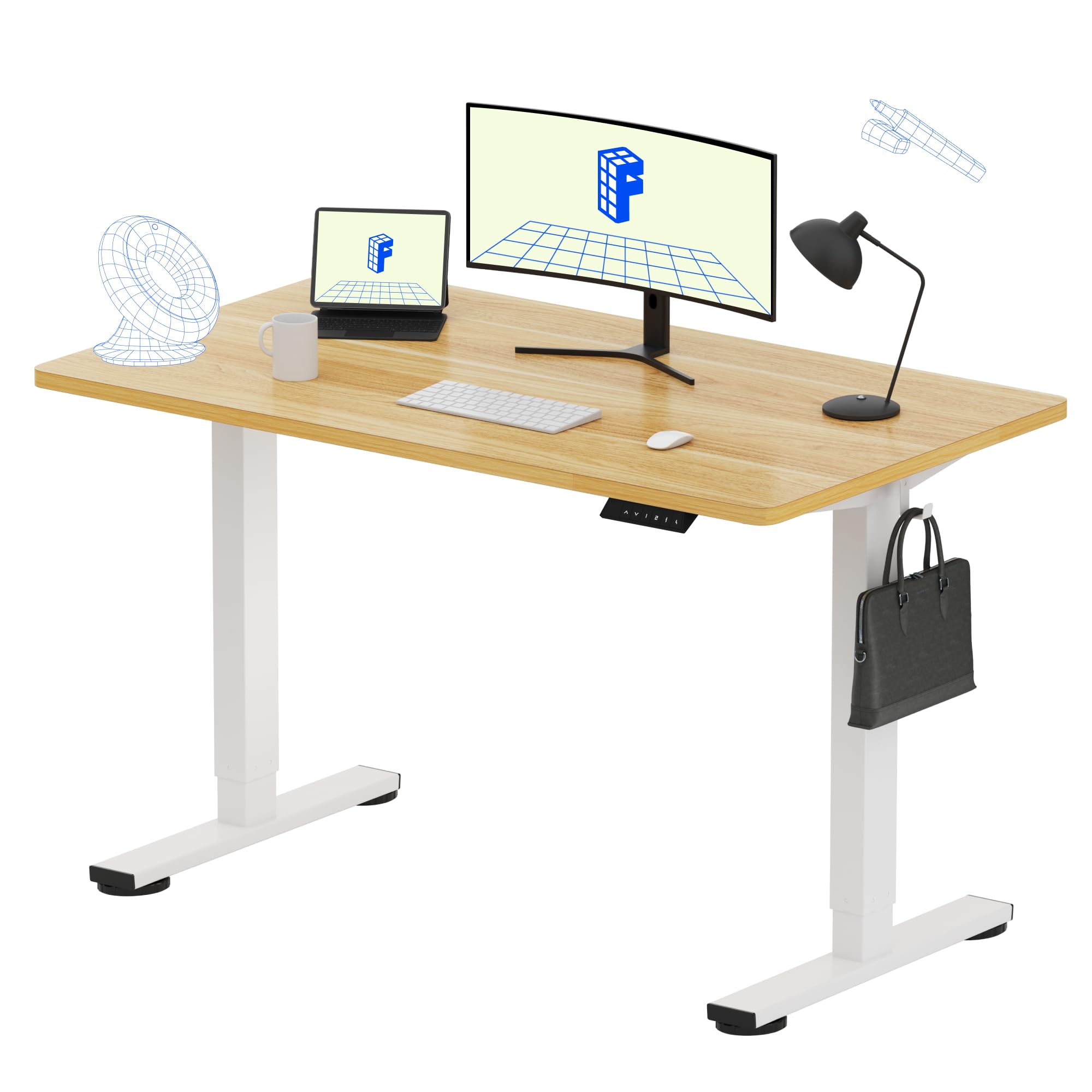
FLEXISPOT EN1

FLEXISPOT EN1

9.0/10 Outstanding
  • Desktop Size: 48 × 24 in, one-piece
  • Height Range: 28–46.5 in
  • Weight Capacity: 176 lb
  • Frame/motor Warranty: 5 years
Check Price on Amazon

Pros

  • One-piece top avoids a center seam
  • Four presets with a 28–46.5 in range
  • Five-year frame and motor warranty

Cons

  • Instruction diagrams can slow assembly

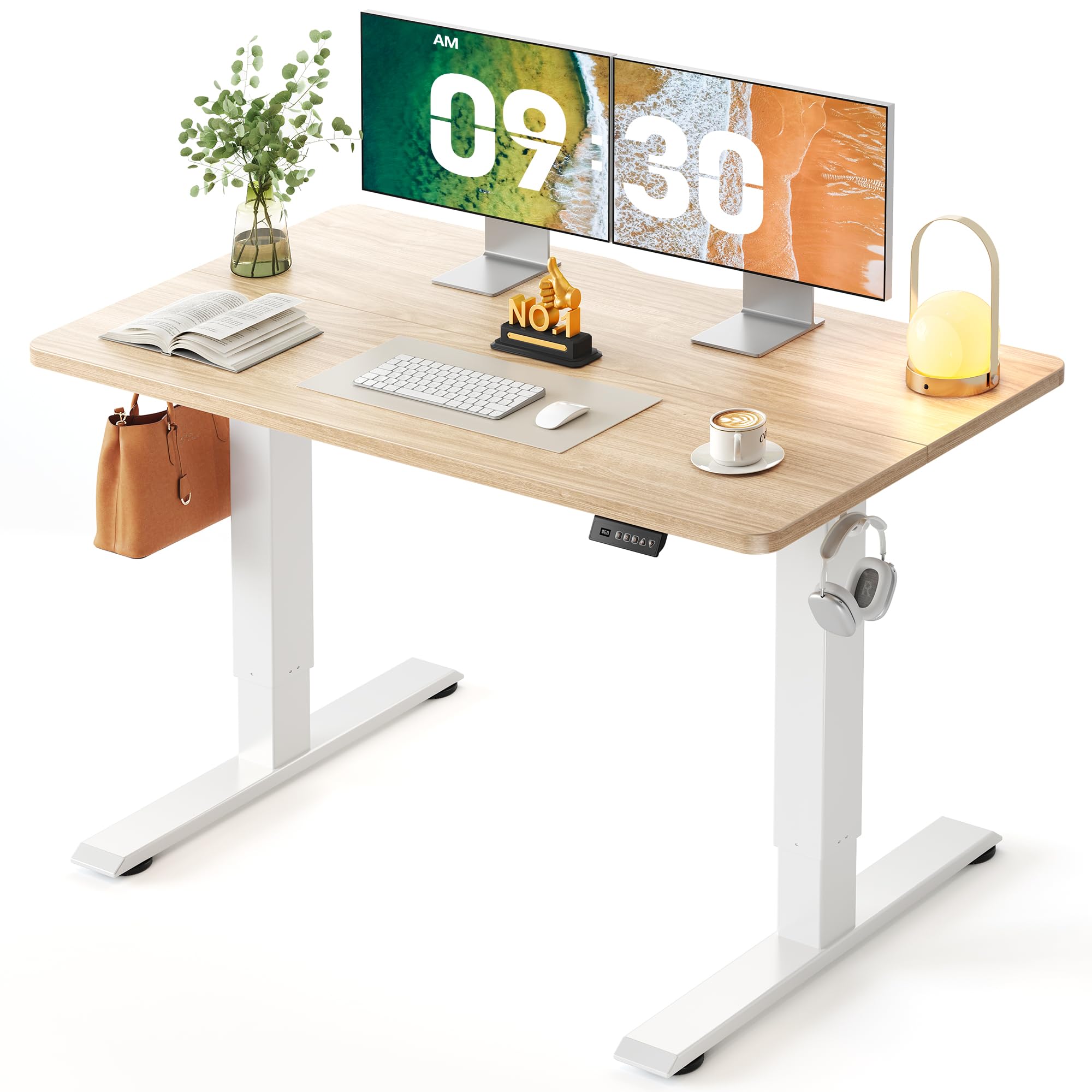
The EN1's desktop is one continuous panel rather than two pieces joined at a seam. That sounds like a small detail until you write across the middle of the desk, clamp a monitor arm to it, or compare it with the spliced tops on most budget models here. We noticed the difference every time we squared a notebook or keyboard to the center line.

The frame runs from 28 to 46.5 inches and carries up to 176 pounds, with four memory presets on the controller. We found the range generous enough for a normal seated position and a standing position that does not force the keyboard too high. The five-year frame-and-motor warranty is the longest stated coverage here, and the two-year electronics cover is a useful detail rather than an afterthought. The included cable clips and headphone hook are small additions, but they keep the top from becoming a tangle.

What settles it for us is how little you give up: a clean top, four presets, and long warranty coverage in one package. It asks for more money than the budget models, which is the main reason to look at the ErGear instead. If you want the cleanest desktop and the longest mechanical coverage, the extra spend is easy to justify.
Bottom Line: The FLEXISPOT EN1 earns our top recommendation: its one-piece top, four presets, and five-year frame-and-motor coverage leave the fewest compromises.
#2

Best Value

ErGear 48-Inch

ErGear 48-Inch

8.9/10 Excellent
  • Desktop Size: 48 × 24 in, two-panel
  • Height Range: 28.35–46.46 in
  • Memory Presets: 4
  • Weight Capacity: 176 lb
Check Price on Amazon

Pros

  • Four presets at a value price
  • 176 lb capacity and steel frame
  • Quiet motor for shared rooms

Cons

  • Two-piece top leaves a center seam
  • Slight movement at full height

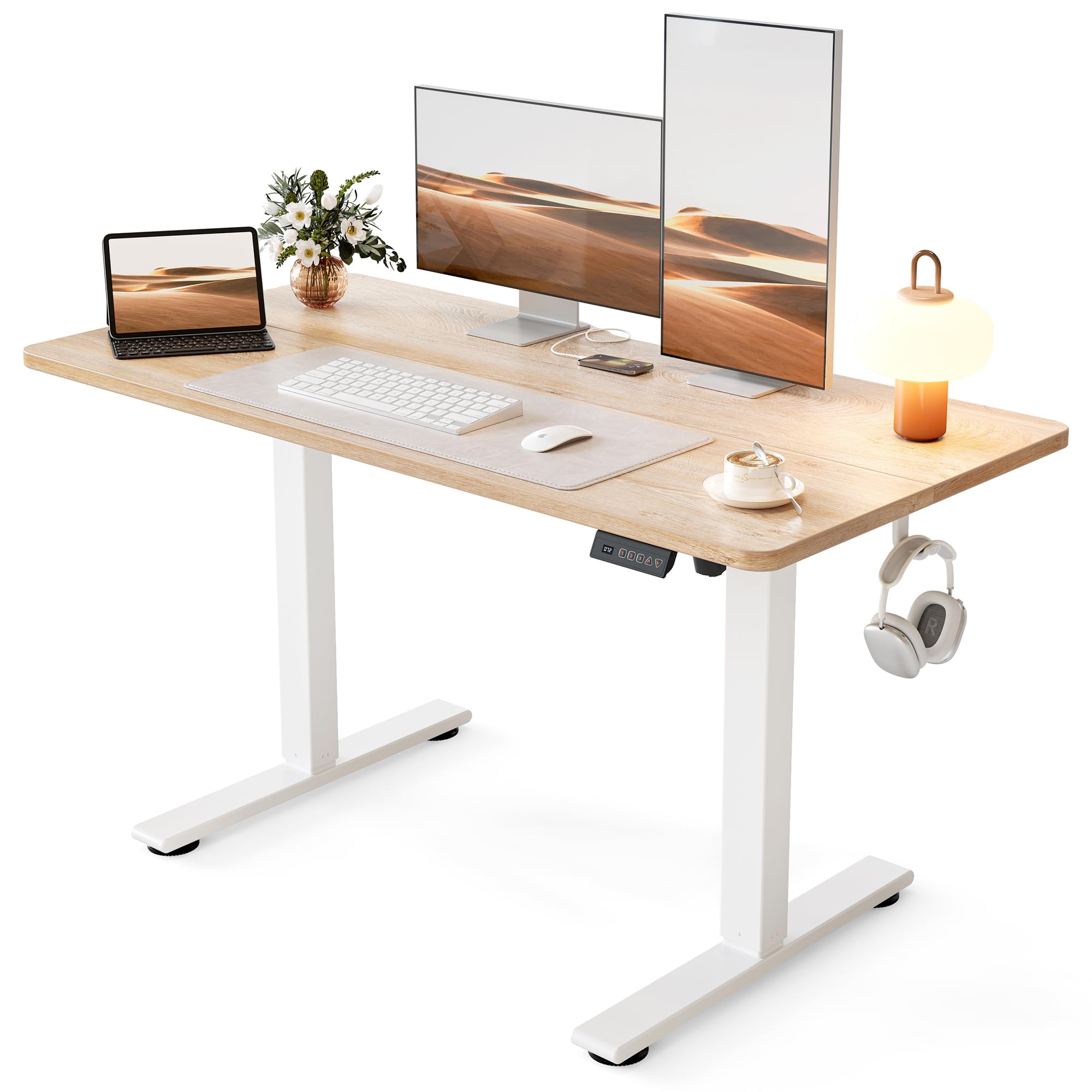
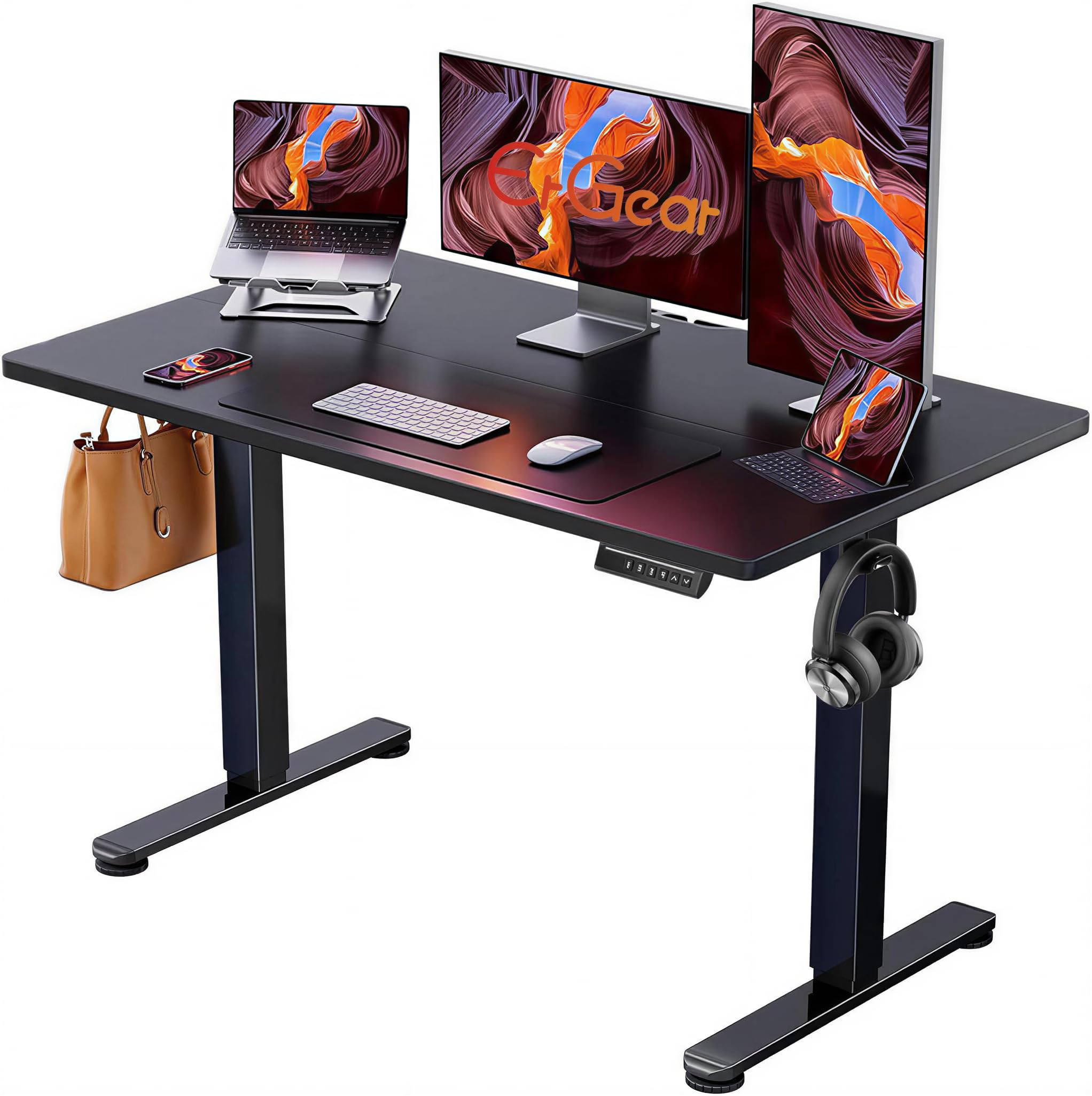
The ErGear is the desk we point to when the essentials matter more than the extras. It gives you a 48-by-24-inch work surface, a 176-pound steel frame, and four memory presets, and it does that for less than the top pick. That combination is why it is our value choice.

The height range runs from 28.35 inches to just over 46 inches, which covers most seated and standing positions. We paid close attention to the low end because a shorter user can feel stranded by a desk that stops above their seated height. At 28.35 inches, the ErGear starts low enough for many setups, and the controller stores four positions so two people can share it. The motor is quiet enough to raise during a call, and the presets are simple to set. The desktop is deep enough for a monitor on a stand and a keyboard, and the frame leaves room for a clamp light or a small speaker.

Bottom Line: For buyers who want a stable 48-inch desk and four presets without the top pick's extras, the ErGear is our value choice.
#3

Best Budget

FEZIBO 48-Inch

FEZIBO 48-Inch

8.9/10 Excellent
  • Desktop Size: 48 × 24 in, spliced
  • Height Range: 28.3–46.5 in
  • Motor Rating: 50,000 cycles
  • Weight Capacity: 176 lb
Check Price on Amazon

Pros

  • Three presets at a low cost
  • 176 lb capacity
  • Motor rated for 50,000 cycles

Cons

  • Visible seam on spliced top

The FEZIBO is aimed at the shopper who needs a real electric standing desk and cannot stretch to the midrange models. It brings a 48-by-24-inch top, three presets, and a 176-pound frame, with a motor rated for 50,000 lift cycles.

We see it as a first standing desk for a spare room or a teenager's study: the controls are simple, the height range starts below 29 inches, and the cost leaves room for a monitor arm or a better chair. The desktop is large enough for a monitor and a keyboard, and the motor is quiet enough to move during a call. It is not the most refined desk here, but it covers the essentials without asking for a big commitment.

Bottom Line: We see the FEZIBO as a first standing desk for shoppers who accept the spliced top in exchange for a lower cost.
#4

Best-Looking

CubiCubi 48-Inch

CubiCubi 48-Inch

9.3/10 Outstanding
  • Finish: Light walnut
  • Desktop Size: 48 × 24 in
  • Height Range: 28–46.5 in
  • Weight Capacity: 176 lb
Check Price on Amazon

Pros

  • Warm light-walnut finish
  • 176 lb capacity
  • Three quiet memory presets

Cons

  • Pre-drilled holes can be misaligned

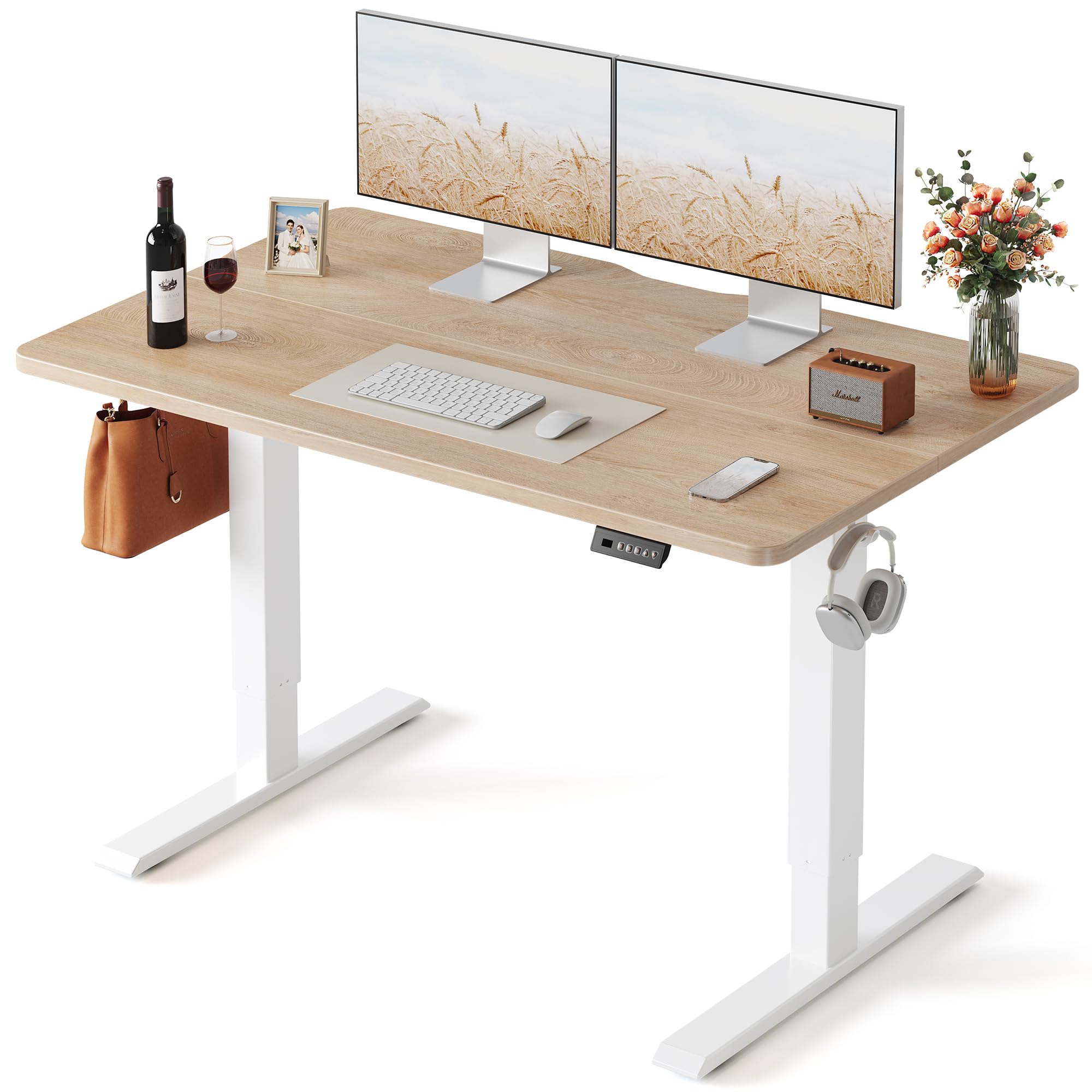
The light walnut finish is what first draws the eye: it makes the CubiCubi look less like an office castoff and more like furniture.

Underneath, it is a familiar 48-by-24-inch electric desk with a 176-pound frame, three memory presets, and a lift that runs from 28 to 46.5 inches. The motor is rated under 45 dB, so it is quiet enough for a shared room, and the top has a scratch-resistant finish.

The desktop is deep enough for a monitor on a stand and a keyboard, and the frame leaves room for a lamp and a pair of speakers. We like that it does not make you choose between a useful size and a color that fits a bedroom or living room. The light walnut is warmer than the usual black, and it hides dust better than a glossy dark top.

We choose it when the desk has to look good in a living space and still cover the standing-desk basics. It is not the desk for a heavy multi-monitor arm or someone who needs four presets, but for a normal home office it is the most attractive value here.

Bottom Line: We choose the CubiCubi when the desk has to look good in a living space and still cover the standing-desk basics.
#5

Best for Shared Spaces

Monomi 48-Inch

Monomi 48-Inch

9.1/10 Outstanding
  • Mobility: Included casters
  • Desktop Size: 48 × 24 in
  • Height Range: 28.35–46.46 in
  • Weight Capacity: 188 lb
Check Price on Amazon

Pros

  • Included casters add mobility
  • 188 lb capacity
  • Three presets and anti-collision
  • Stable shared-desk frame

Cons

  • One side can lag during height changes

Casters are the first thing we look at on the Monomi, because they change how the desk fits a room. It can be moved out of the way when the room needs to serve another purpose, which is rare among the desks here.

The rest of the package is solid: a 48-by-24-inch top, a 188-pound capacity, three presets, and a height range from 28.35 to 46.46 inches. The anti-collision system is a sensible safeguard in a house with children or pets, and the frame is rated higher than most of this group. The casters also make it easier to vacuum underneath.

We pick it for shared rooms where two people need preset heights and the desk has to move. The desktop is the same 48-inch size as most of the group, so the benefit is mobility rather than a smaller footprint. We also like that the controls are simple enough for a guest or a teenager to use without a lesson.

Bottom Line: We pick the Monomi for shared rooms where casters, preset heights, and a higher weight limit matter more than a flawlessly synchronized lift.
#6

Best with Storage

HUANUO Drawer Desk

HUANUO Drawer Desk

9.0/10 Outstanding
  • Storage: 2 drawers and cubby
  • Mounting: C-clamp compatible
  • Height Range: 27.5–46.4 in
  • Weight Capacity: 176 lb
Check Price on Amazon

Pros

  • Two drawers tame desktop clutter
  • C-clamp-friendly rear edge
  • Four presets and 27.5-inch low end
  • 176 lb capacity

Cons

  • More wobble when fully raised
  • Assembly is easier with two people

The two drawers are why we choose this HUANUO over the simpler 48-inch desks here. They swallow pens, cables, a notebook, and the small clutter that otherwise colonizes the desktop, and the open cubby gives a keyboard or tablet a place to land.

The desk also has a rear platform edge that is wide enough for a C-clamp monitor mount, which is a smart detail for anyone who wants the screen off the work surface. The height range runs from 27.5 to 46.4 inches, with four presets and a 176-pound capacity, so it covers the practical side as well. We appreciated the curved front edge when typing for long stretches.

We recommend it when organization and a monitor arm matter more than a rock-solid feel at full height. The extra hardware and storage make it a busier desk than the cleanest picks here, but it solves a problem the plain models ignore.

Bottom Line: The HUANUO drawer desk is our pick when clutter and monitor mounting matter more than a rock-solid feel at full height.
#7

Best Corner Desk

VIVO L-Shaped Desk

VIVO L-Shaped Desk

9.0/10 Outstanding
  • Desktop Size: 63 × 55 in L-shape
  • Height Range: 29–48 in
  • Memory Presets: 4
  • Weight Capacity: 225 lb
Check Price on Amazon

Pros

  • Large reversible L-shaped top
  • 225 lb capacity
  • Four memory presets
  • Three-leg frame

Cons

  • Assembly needs two people and patience

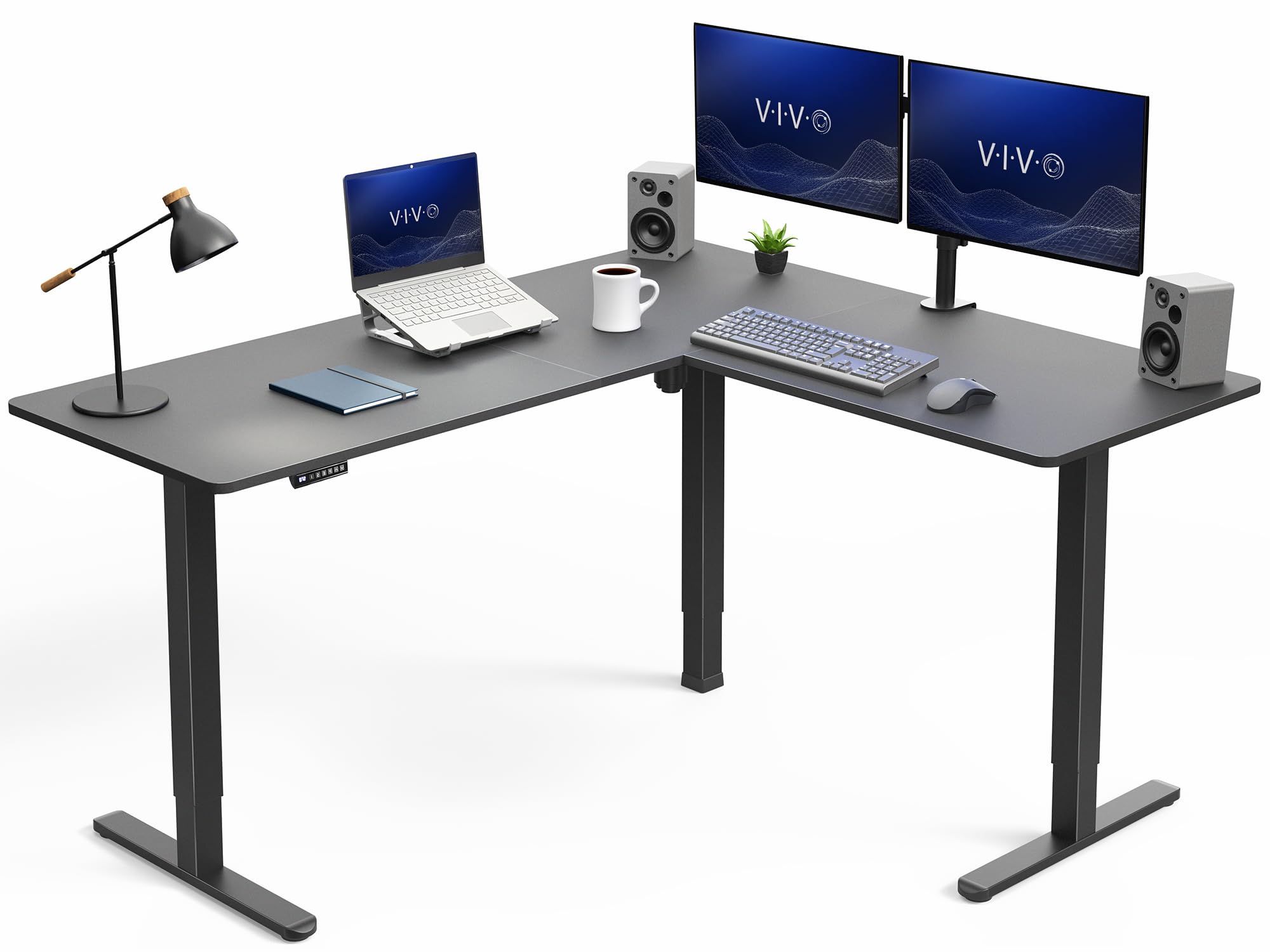
The VIVO is the desk to choose when the room has a corner going spare and a standard 48-inch rectangle wastes it. The 63-by-55-inch L-shaped top gives the monitor and keyboard separate zones, and the reversible design lets you put the return on either side.

We recommend it as the corner-desk choice for a heavy multi-monitor setup. The three-leg frame carries 225 pounds, the height range runs from 29 to 48 inches, and four presets store the positions you use most. We noticed the extra surface is genuinely useful rather than decorative: the return holds a second monitor or a printer without crowding the main desk. The black finish is plain but tidy, and the 0.72-inch top gives monitor clamps something to grip.

Bottom Line: Our corner-desk pick is the VIVO, whose broad L-shaped surface and high capacity justify the extra assembly effort.
#8

Tightest budgets

Cubiker 48-Inch

Cubiker 48-Inch

9.1/10 Outstanding
  • Desktop Size: 48 × 24 in
  • Height Range: 27.16–46 in
  • Memory Presets: 3
  • Weight Capacity: 155 lb
Check Price on Amazon

Pros

  • Lowest price here
  • Sturdy steel frame
  • Three memory presets

Cons

  • 155 lb capacity limits heavy setups
  • Pre-drilled holes can be off

The Cubiker is the lowest-priced full-size desk here, and it still gives you a 48-by-24-inch top, a steel frame, and three memory presets. That is the basic recipe for a usable standing desk, with no decorative extras.

The frame is rated for 155 pounds, and the top is deep enough for a keyboard and a monitor on a stand. The straight legs leave room underneath for a small cart, and the 48-inch width fits two monitors if you keep the stands close together.

Assembly is a one-person job, and the labeled parts make the sequence clear. The motor is quiet enough for a shared room, and the presets are simple to set and recall.

We were surprised by how planted the desk feels for the price; the steel frame does more work than the thin top suggests. The finish is plain, but it wipes clean and does not call attention to itself.

The Cubiker is the desk we suggest for a first home office on the tightest budget, as long as the setup stays modest. It covers the basics without asking you to baby it, and the money saved is better spent on a good chair.

Bottom Line: The Cubiker is the desk we suggest for a first home office on the tightest budget, as long as the setup stays modest.
#9

Wide desktop setups

Veken 55-Inch

Veken 55-Inch

8.9/10 Excellent
  • Desktop Size: 55 × 23.6 in
  • Height Range: 28.3–46.5 in
  • Weight Capacity: 154 lb
  • Cable Management: Built-in
Check Price on Amazon

Pros

  • Wide 55-inch surface
  • Four presets at a midrange price
  • Cable management included

Cons

  • Finish can chip or scratch
  • 154 lb capacity limits heavy towers

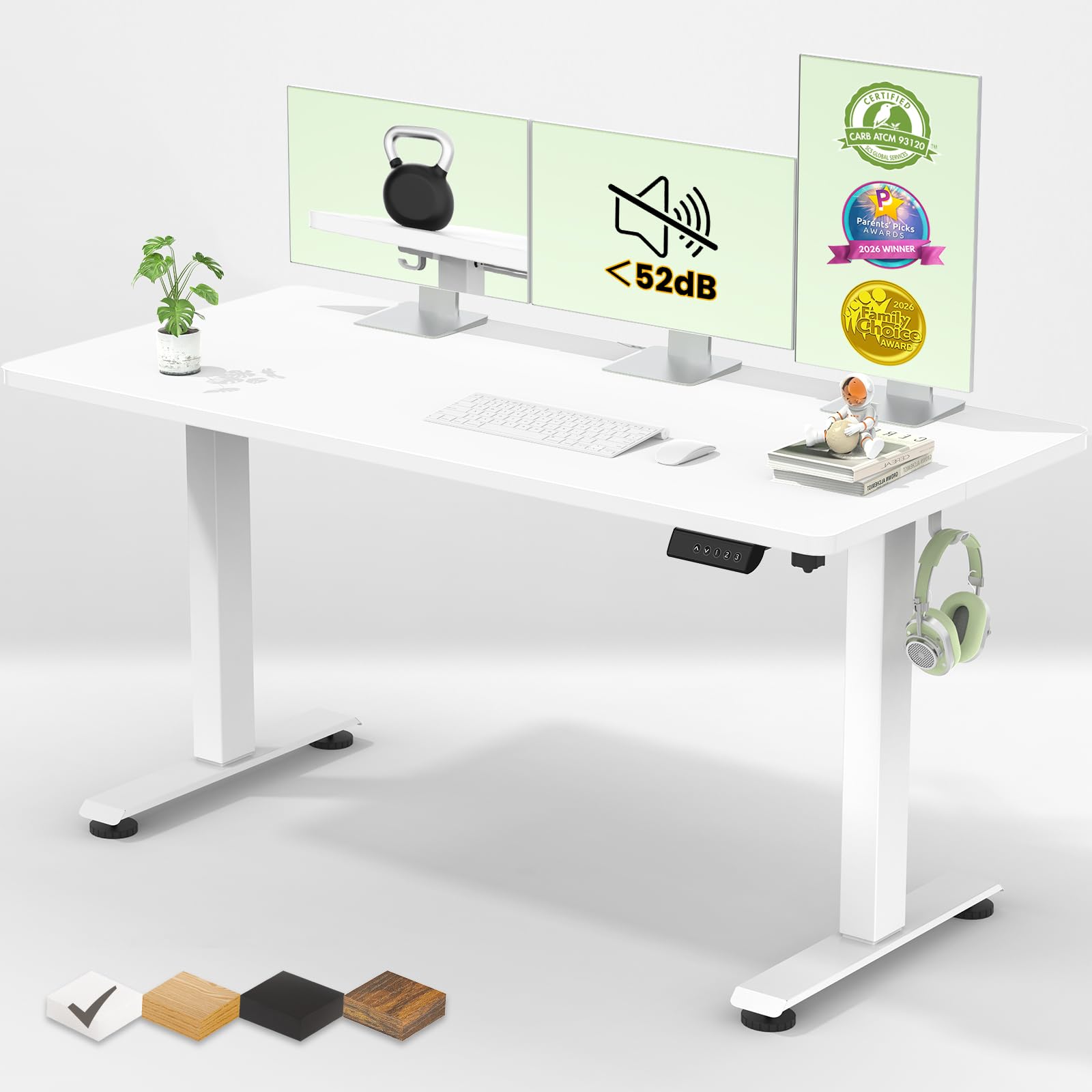
A 55-inch desktop is the whole reason to consider the Veken. It gives two monitors, a laptop, and a notebook room to coexist without the deeper footprint of an L-shaped desk.

The frame runs from 28.3 to 46.5 inches, carries 154 pounds, and stores four preset heights. The motor is rated under 52 dB, so it is quiet enough to adjust during a call, and the included cable clips keep the back edge from turning into a nest.

The top is only 23.6 inches deep, so the extra width comes without stealing floor space. We like that for a spare bedroom or a wall-length office, where the desk can spread sideways but not forward. The white finish is clean and easy to match with light wood or gray walls.

We recommend the Veken for a wide but shallow wall, especially when two monitors need more elbow room than a 48-inch top provides. It is a surface-first desk: the width is the reason to choose it, and the rest is ordinary.

Bottom Line: We recommend the Veken for a wide but shallow wall, especially when two monitors need more elbow room than a 48-inch top provides.
#10

Small rooms

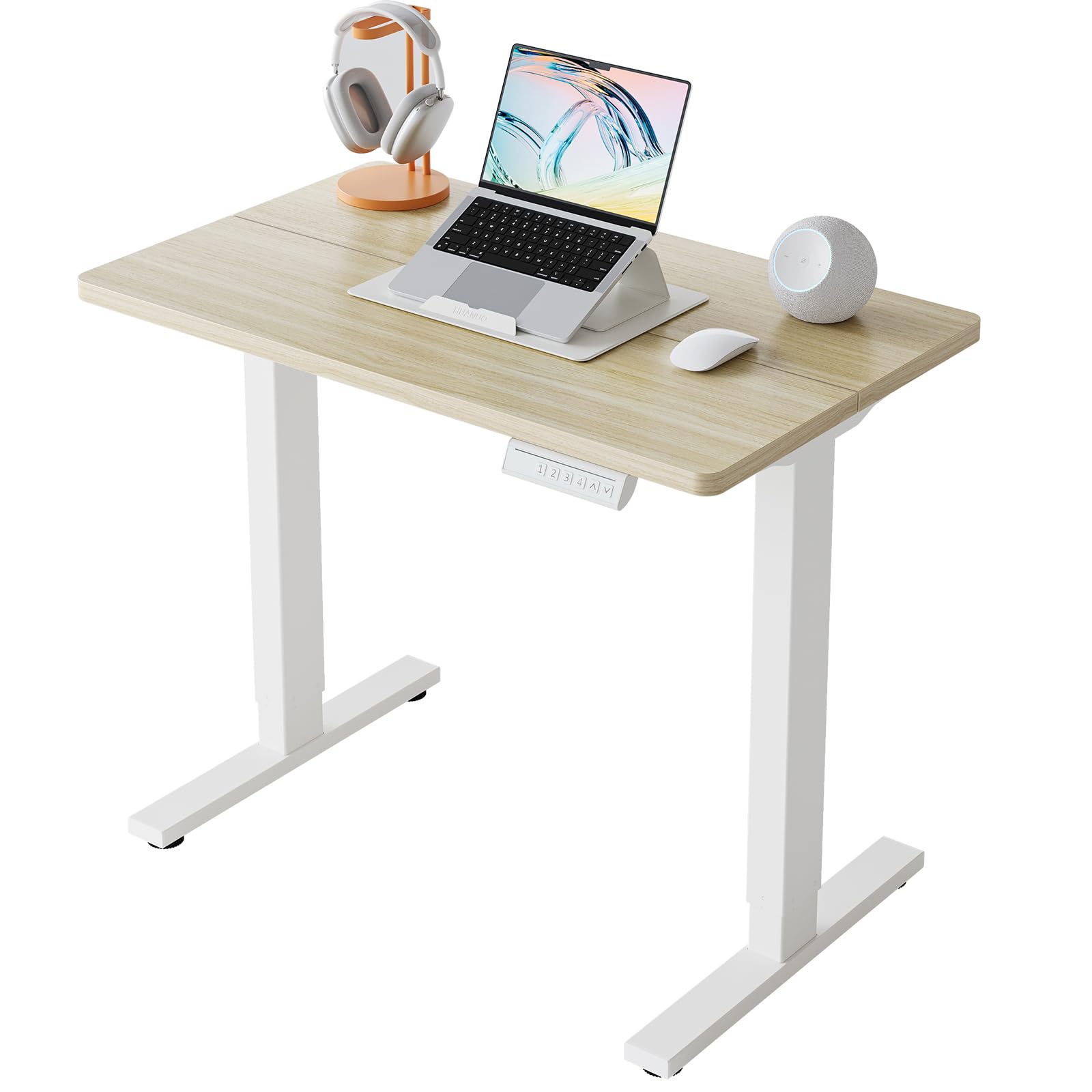
HUANUO 32-Inch

HUANUO 32-Inch

8.7/10 Excellent
  • Desk Weight: 24.5 lb
  • Desktop Size: 32 × 19 in
  • Height Range: 28–45 in
  • Weight Capacity: 176 lb
Check Price on Amazon

Pros

  • Fits tight bedroom corners
  • 176 lb capacity in a small frame
  • Four memory presets
  • Light enough to move alone

Cons

  • 45-inch maximum is short for taller users

The 32-by-19-inch HUANUO solves a different problem: it puts electric sit-stand movement into a bedroom corner or rental nook that cannot take a 48-inch desk. The footprint is small enough to leave floor visible, and the light walnut top keeps it from looking like a hospital cart.

The frame still carries 176 pounds, which is more than the size suggests, and the height range runs from 28 to 45 inches. Four memory presets and a quiet motor give it the same daily controls as the larger budget desks.

At 24.5 pounds, it is light enough for one person to move, and the assembly is a one-person job. The top is spliced from two panels, so there is a line down the middle; on a desk this small, we noticed it most when writing across the center.

We found the low end useful for a shorter user and a dining chair. The depth is best for a laptop and one monitor; a second screen on an arm fits, but the surface gets tight quickly.

We keep the HUANUO 32-inch for small rooms with one monitor, not as a dual-monitor workstation. It earns its place by making the sit-stand habit possible where a full-size desk simply will not fit.

Bottom Line: We keep the HUANUO 32-inch for small rooms with one monitor, not as a dual-monitor workstation.

How We Put 10 Standing Desks Through Eight Months of Real Work

We started with more than 30 models pulled from manufacturer spec sheets and reader questions, then filtered by the things that disqualify a desk before you ever plug it in: whether the height range genuinely works for someone around 5-foot-4 and someone over 6 feet, listed weight capacity, warranty length, and price relative to what the frame is made of. That cut the list to 10 desks, which we bought and set up ourselves.

Each one was assembled solo on a Saturday morning with a stopwatch running and only the instructions in the box. We noted where a step assumed a second person, how many times we had to flip the desk over, and whether the hardware was labeled in a way that matched the diagrams. Any desk that needed a step the booklet never mentioned got flagged.

Then came daily use. We sat and stood at least four times a day, timing how long the desk took to travel and listening for motor strain at the top and bottom of the range. At full height we typed hard with a monitor and a full mug of coffee on the desktop and watched for shake, then leaned our forearms on the front edge to see how much it gave. We rolled each desk across carpet and hardwood, checking whether the casters tracked straight and whether the desk drifted once parked, and measured footprints against a real room to see what actually fit.

To test durability, we ran each motor up and down 20 times back to back and then re-checked the joints for loosening. After eight months we looked for scratches, edge dings, and sagging desktops, and re-priced every pick to confirm it was still a good buy.

How to Choose Adjustable Standing Desks

Start With Height, Then Presets

Most desks here move between roughly 28 and 46 inches, which covers a wide range of adults. The number that matters is not the maximum alone: check the low end against your seated elbow height and the high end against your standing elbow height, with shoes on. If two people share the desk, memory presets turn that check into a one-touch switch. Shorter users should care more about the minimum; taller users should look at the top end before the preset count.

Stability Is the Feature You Feel

A 176-pound rating is common here, but capacity is not the same as steadiness. The taller you raise the desk, the more a light frame can shimmy when you type or lean on it, especially with a monitor arm clamped to the rear edge. Choose a three-leg or L-shaped frame like the VIVO if you run several monitors; otherwise, keep the load centered and check the desk at full height before you commit to the position.

One-Piece Tops Are Worth the Premium

A spliced top can save money, but the join runs through the middle of your writing and mouse area and can catch a monitor clamp. One-piece tops like the FLEXISPOT EN1's are cleaner and usually stiffer, which is why they cost more. If you mostly use a keyboard and monitor on a stand, a seam is easy to ignore. If you draw, write by hand, or clamp accessories to the center, pay for the single panel.

Controls, Storage, and Cable Clutter

Three presets cover sit, stand, and one in-between position; four give a shared desk more room. The controller matters less than where the clutter lands. A drawer desk like the HUANUO keeps supplies out of sight, while a C-clamp-compatible rear edge gets the monitor off the desktop entirely. Check that the rear edge is deep enough for your clamp, and leave room for the cable tray so the desk can still reach its full height.

Measure the Room, Not Just the Desktop

A 48-by-24-inch desk is the default because it fits two monitors and a keyboard without dominating a room. The trap is treating compact as a universal size: a 32-by-19-inch model works in a bedroom nook but is a one-monitor desk, and an L-shaped desk needs corner clearance plus room to assemble it. Tape the footprint on the floor, then check the swing of the door and the space you need to stand up.

Frequently Asked Questions

Final Verdict

The FLEXISPOT EN1 is the desk we recommend first because its one-piece top, broad height range, and five-year frame-and-motor coverage make it the least compromising choice for a normal home office. It costs more than the budget models, and that is the only reason to hesitate.

If the budget is tighter, the ErGear gives you the same 48-inch footprint and four presets for less, with a two-piece top as the trade-off. Choose the VIVO instead only when the corner is the point and you need the larger L-shaped surface.