Home Office

Best Computer Chairs of 2026

A bad office chair never hurts right away — that's what makes it bad. Twenty minutes in, everything feels fine; a week in, there's a dull ache between your shoulder blades at 3 p.m. and you're quietly blaming your monitor. A good chair does the opposite: it holds you up, moves when you move, and then disappears from your attention entirely. What separates the two is rarely looks and only sometimes price. It's adjustability — lumbar support that actually travels, armrests that meet your desk, a seat depth that fits your legs rather than someone else's.

I've logged workdays from a kitchen stool, a folding chair, and one very handsome wooden chair that wrecked my back in under a week, so I don't trust a first impression. Over the past eight months, my team has kept 12 chairs in daily rotation, and the ones that earned a permanent spot were not the most expensive. Assembly, sturdiness, and cushioning that doesn't pancake by month three mattered more than the showroom sit. These are the chairs we're still glad to drop into every morning.

#1

Best Overall

XISHE 929 Ergonomic Office Chair

XISHE 929 Ergonomic Office Chair

8.9/10 Excellent
  • Armrests: Flip-up
  • Seat Depth: 19.29 in
  • Seat Height: 20.5 in
  • Weight Capacity: 300 lb
Check Price on Amazon

Pros

  • Lumbar panel slides to your back
  • Flip-up arms clear a standard desk
  • Mesh back stays cool all day
  • 300-pound rating on a tested frame

Cons

  • No headrest for leaning back
  • PU leather seat holds heat

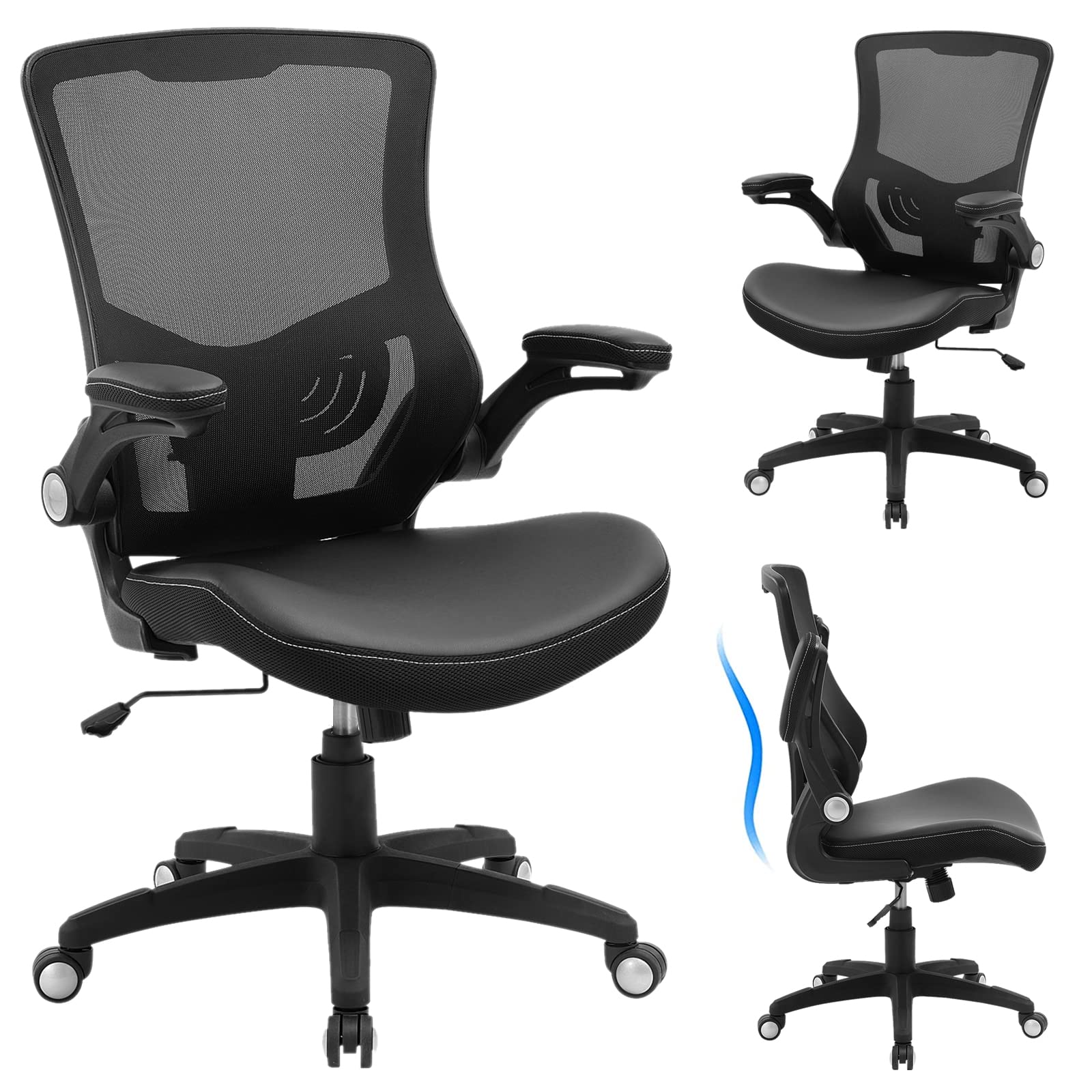
An adjustable lumbar panel is the first thing we check on any chair, and it is why this one took the top spot. The support slides up and down on a track behind the mesh, so you set it against the small of your back instead of accepting a molded bump in whatever position the factory chose. At this end of the market that is genuinely rare, and it is the difference between finishing a long day upright and slouching through the last two hours.

Everything else about the 929 is quietly competent. The mesh back breathes, the seat is PU leather over thick sponge, and the arms flip up so the chair rolls fully under a desk. We found the arms more useful than expected — folded up, the chair tucks into a standard knee hole, the kind of thing you notice every evening when you are done working. Assembly is a 15-minute job with the tools in the box, and between the 300-pound rating and the BIFMA-tested frame it never feels borrowed.

The compromises are small but worth knowing. It is a mid-back chair with no headrest, so if you lean back between calls there is nothing behind your neck, and the PU leather seat runs warmer in summer than an all-mesh pan would. Neither bothers an upright desk worker, and that is who this chair rewards.
Bottom Line: Our pick for most people: an adjustable lumbar panel, a mesh back that stays cool, and a sturdier feel than the budget chairs here.
#2

Best Premium

ELABEST X100 Ergonomic Chair

ELABEST X100 Ergonomic Chair

9.0/10 Outstanding
  • Armrests: 5D flip-up
  • Footrest: 18 in, extendable
  • Seat Height: 18.3 in
  • Weight Capacity: 300 lb
Check Price on Amazon

Pros

  • Five-way arms, including width
  • Lumbar panel tracks your lower back
  • Three-position recline plus 18-inch footrest
  • Most breathable mesh in this set

Cons

  • Heaviest chair here at 43 pounds
  • Narrow seat for broad shoulders

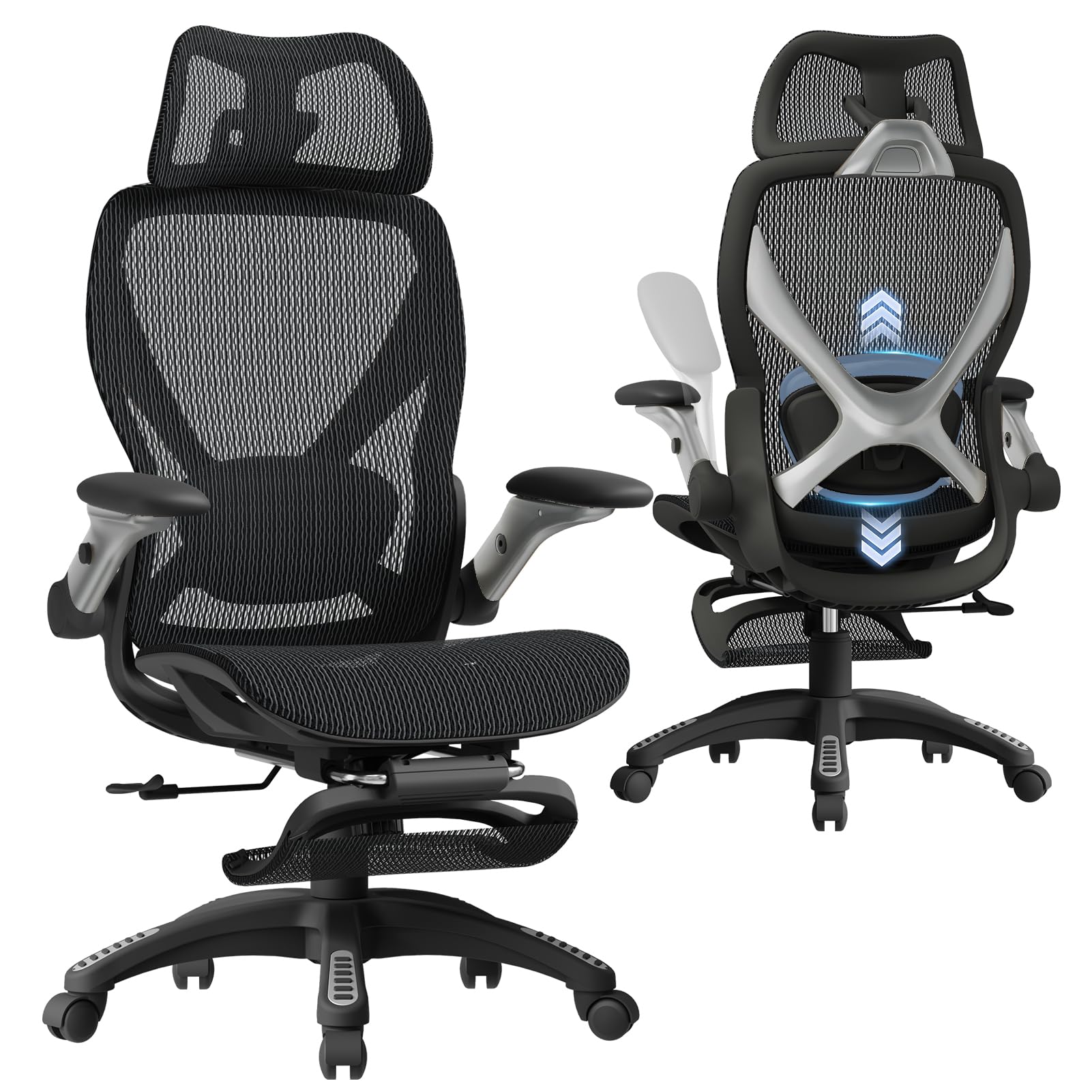
The X100 is the most expensive chair in this roundup, and it spends the money on adjustments rather than trim. Five directions of armrest movement, a headrest on a three-way mount, a lumbar panel with spring-loaded depth travel, and an 18-inch footrest that pulls out from under the seat — the specification reads like a cockpit.

We noticed the difference within an hour of sitting down. The lumbar panel tracks forward and back as you shift your weight, so it stays in contact instead of digging in when you lean, and the arms move up, in, and forward until your elbows rest at desk height without you thinking about it. The mesh is the most breathable in this group, and the three-position recline with the footrest out turns a lunch break into something closer to a nap. If you log eight hours at a desk, these are the adjustments you feel by Thursday.

The cost is weight and width. At 43 pounds it is the heaviest chair here, which matters if you haul it between rooms or up stairs, and the seat runs narrow for broad shoulders — bigger sitters should look at the SIHOO instead. Assembly is tool-free and quick, at least, which softens the first afternoon.

Bottom Line: The chair we recommend when the desk is your whole workday and budget is secondary: five-way arms, a lumbar panel that follows you, and a footrest for breaks.
#3

Best for Bigger Sitters

SIHOO M18 Ergonomic Office Chair

SIHOO M18 Ergonomic Office Chair

8.6/10 Excellent
  • Armrests: 2D adjustable
  • Headrest: Adjustable
  • Seat Height: 20 in
  • Weight Capacity: 330 lb
Check Price on Amazon

Pros

  • 330-pound rating, the highest here
  • Adjustable headrest and lumbar panel
  • Firm foam that supports rather than sinks
  • Breathable mesh back

Cons

  • Armrests adjust only up and down

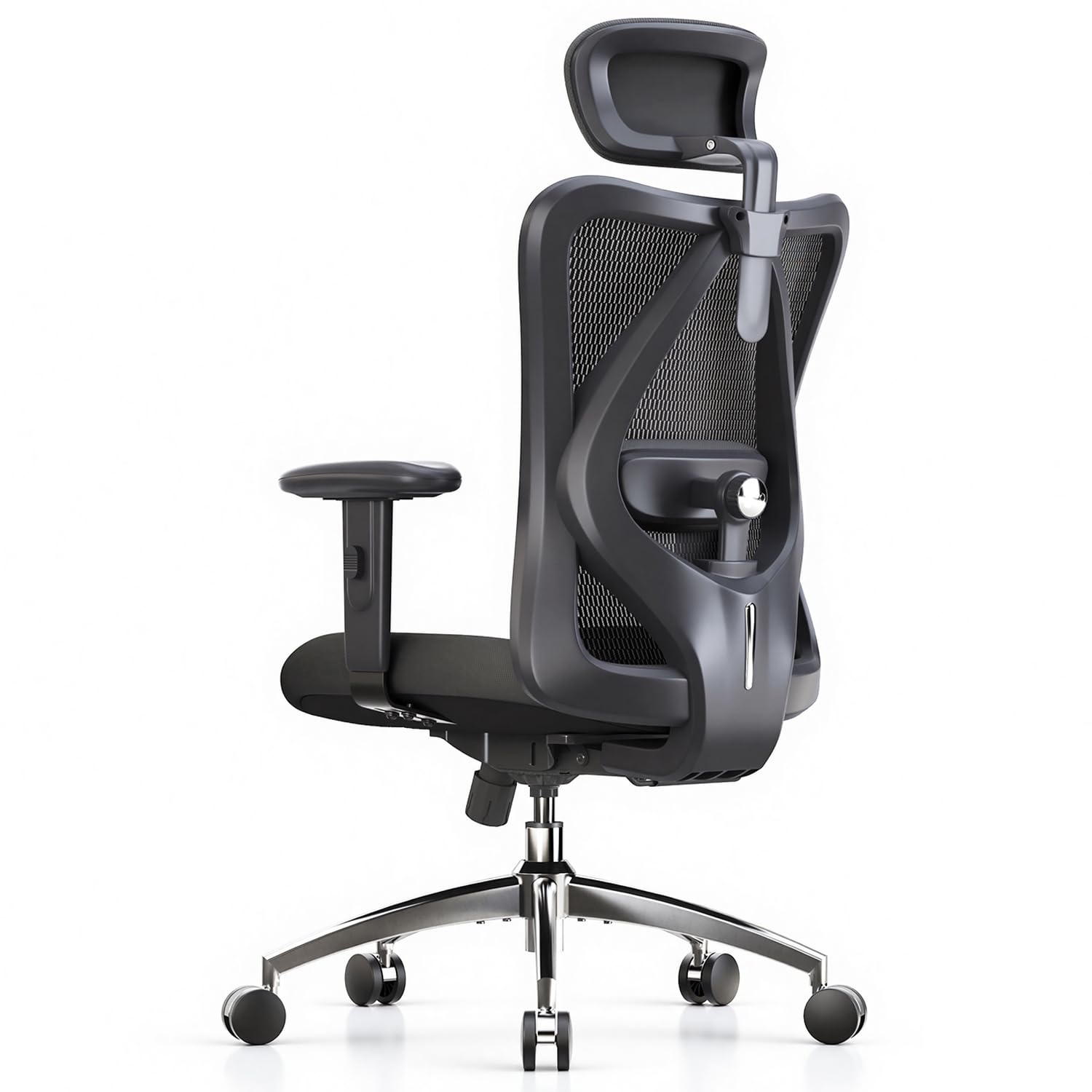
Three hundred and thirty pounds is the highest rating in this roundup, and the M18 earns it with a steel frame rather than a wider plastic base. That alone makes it the chair we point heavier sitters toward, but the rest of the package holds up: a headrest that tilts and rises, a lumbar panel you can move up or down, and a mesh back that stays cool under a larger body.

The seat is firm, deliberately so, and that is the dividing line. Sitting for a full day, we found the padding supportive rather than plush — it doesn't collapse into a hammock the way softer foam does. If you want a chair to sink into, this isn't it; if your lower back complains by mid-afternoon, the firmness is doing you a favor.

Where it lands for us: past about 200 pounds or six feet, this is the chair in the group that actually fits, and the headrest is the reason it beats a mid-back for reclining between tasks. The armrests are the sore point — cupped, which stops your forearms sliding, but vertical only, with no width or angle to set. That is a one-time compromise rather than a daily annoyance, and it is why this sits behind the XISHE for average frames.

Bottom Line: For heavier or taller sitters this is our pick: the highest weight rating in the group, plus a headrest and lumbar support that adjust far enough to matter.
#4

Best Gaming-Style Chair

N-GEN NG2601 Gaming Chair

N-GEN NG2601 Gaming Chair

8.9/10 Excellent
  • Recline: 90–135°
  • Footrest: Retractable
  • Seat Height: 21 in
  • Weight Capacity: 300 lb
Check Price on Amazon

Pros

  • Reclines to 135 degrees with footrest
  • Linkage arms follow the backrest
  • 300-pound rating and one-year warranty
  • Quiet casters on hard floors

Cons

  • Thin seat padding for all-day sitting
  • Footrest is the flimsiest part

A footrest sounds like a gimmick until the first afternoon you pull it out at three o'clock and lean back for ten minutes. That is the case for the NG2601, and it is why this is the gaming chair we recommend for a desk that does double duty: the back reclines to 135 degrees, the footrest slides out from under the seat, and the linkage arms travel with the backrest so your elbows stay supported on the way down.

The rest is standard gaming-chair construction done reasonably well. High-density foam, PU leather that wipes clean with a damp cloth, a 300-pound rating, and a one-year warranty — more coverage than most of this group states. We were also pleased by how quiet it is: the casters roll without the plastic clatter that gives cheap chairs away on a hard floor.

Two things to know before you order. The seat padding is thin for long sessions, so plan on spending a little more for a cushion if you sit all day, and the leg rest is the least sturdy part of the chair — it takes your calves, not your weight. If you mostly sit upright and type, a task chair still does that job better than any recliner.

Bottom Line: The gaming chair we recommend for people who also work at the same desk: it reclines to 135 degrees, the arms follow the back, and the footrest earns its place.
#5

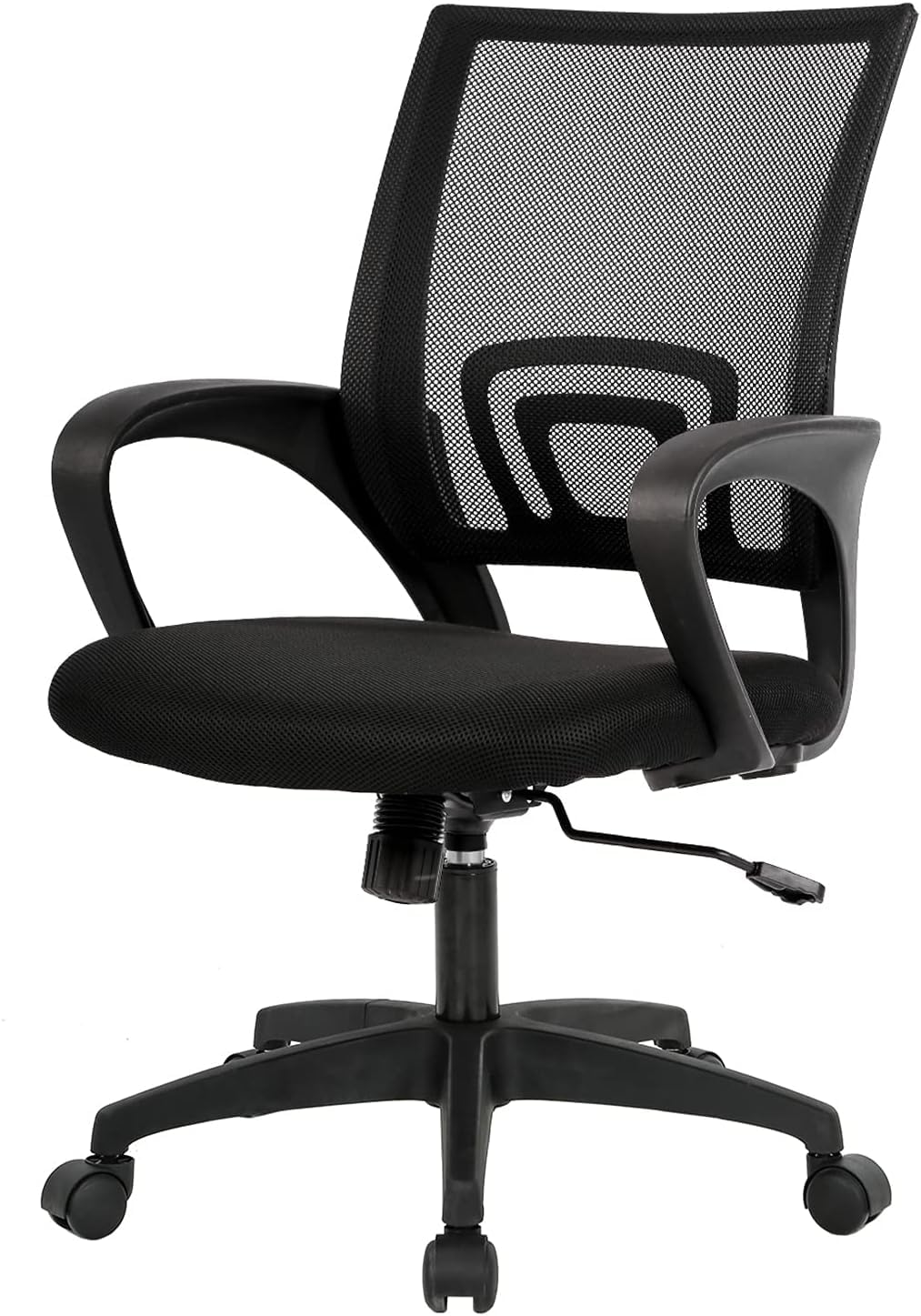
Small frames

BestOffice Mid-Back Desk Chair

BestOffice Mid-Back Desk Chair

8.5/10 Excellent
  • Seat Width: 18 in
  • Back Height: 18.1 in
  • Seat Height: 17.1–20.3 in
  • Weight Capacity: 250 lb
Check Price on Amazon

Pros

  • Mesh back keeps air moving
  • Padded arms at the bottom of the market
  • Fast assembly with spare hardware
  • Light enough to move between rooms

Cons

  • Seat foam flattens with daily use
  • Arms work loose over time

Eighteen inches of seat width is the number that decides this chair. If you are around five foot seven and 160 pounds, the BestOffice fits as though it were measured for you, and the curved mesh back gives your shoulders somewhere to go. If you are broad through the back or much over six feet, it won't — and no amount of height adjustment fixes a seat that is too narrow.

Within that boundary, the basics are all here and they work. A ventilated mesh back, a padded seat with a height range from 17.1 to 20.3 inches, armrests that are actually padded rather than molded plastic, and casters that roll on carpet. The build takes 10 to 15 minutes and the box includes spare bolts, which we appreciated; at 19 pounds it is also light enough to carry upstairs in one trip.

What is missing is adjustability. The arms are fixed in place, the lumbar curve is molded into the mesh rather than adjustable, and there is no headrest. At the bottom of the market that is the trade — you get a shape that suits a particular body and very little room to tune it, which is exactly why the width matters more here than it would on a chair with five-way arms.

Bottom Line: A sensible first desk chair for a small sitter: mesh back, padded arms, and a 250-pound rating, as long as you're not broad across the shoulders.
#6

Tight desks

Sweetcrispy Armless Desk Chair

Sweetcrispy Armless Desk Chair

9.1/10 Outstanding
  • Armrests: Armless
  • Seat Depth: 16.33 in
  • Seat Width: 18.11 in
  • Weight Capacity: 250 lb
Check Price on Amazon

Pros

  • Fits under desks other chairs can't
  • Light and easy to shift around
  • Rolls smoothly on carpet
  • Quick five-to-ten-minute assembly

Cons

  • Too firm and thin for eight-hour days
  • No arms and no adjustable lumbar

Some desks leave no room for a chair with arms — a vanity, a sewing table, a built-in shelf with a 20-inch gap. This armless compact slides under all of them. At 18.11 inches wide and 16.33 inches deep it is the smallest chair in this roundup, and with no armrests there is nothing to catch on the desk edge when you push it in.

What surprised us is how much is packed into that footprint. The seat is high-density foam under PU leather, the height lever moves smoothly through its range, and the casters roll on carpet without snagging, which is the usual failure point for a cheap chair in a bedroom. Assembly takes five to 10 minutes with the tools in the box.

Be clear about what it isn't. There is no arm support, no adjustable lumbar, and no headrest, and the padding is aimed at a couple of hours at a time rather than a full working day. As a second chair, a bedroom desk chair, or the one thing that fits where nothing else does, we think it is excellent value — just don't ask it to be your office.

Bottom Line: The chair we recommend for a desk so tight the seat has to disappear under it: armless, 18 inches wide, and light enough to move with one hand.

How We Tested the Best Computer Chairs

We started with a shortlist of roughly 60 chairs sold by office-supply mainstays, furniture brands, and a handful of direct-to-consumer upstarts, then narrowed it by published specs — seat height and depth ranges, weight capacity, lumbar adjustment, armrest adjustability, warranty length, and whether replacement parts are even sold. Price was a filter, not a ranking, so budget picks and premium picks sat in the same group. Twelve made the cut, and each one lived in a tester's home office for the full eight months rather than a week.

Every chair was assembled by one person, alone, using only the tools in the box, and we timed it. We counted how many steps the instructions actually explained, whether the bolt holes lined up without wrestling, and whether anything needed re-tightening after the first week. A chair that took three hours and a second set of hands got noted as such.

Then came full eight-hour workdays. Testers rolled each chair between desk, printer, and kitchen across both carpet and hardwood, reporting whether the casters dragged or skated. We pressed a palm into the seat pan on day one and again at month six to see how much cushioning had flattened, sat through long stretches without getting up to judge back support, and checked that lumbar height, seat depth, and armrest width could be changed without tools or cursing. Two testers — one over six feet, one at five-foot-two — sat in every chair, which is how we caught seats that felt narrow at the hips and backrests that landed in the wrong spot.

Sturdiness got its own check: we shook each frame side to side, listened for creaks in week one and again at month four, and watched whether the gas lift sank over the course of a day. Value came down to whether the extra money showed up in the sit, not on the spec sheet.

How to Choose Computer Chairs

Fit comes before features

Feet flat on the floor, thighs fully supported, and two fingers of clearance behind your knee. That is a chair that fits, and no lumbar panel rescues one that doesn't. Seat heights here run from 17.1 to 21 inches, which covers most adults at a standard 28- to 30-inch desk.

Seat depth is the number shoppers skip. A pan that presses behind the knee pushes you forward all day, and one that stops mid-thigh leaves you hanging. Remember that compact in a listing means it fits the room, not that it fits you — measure your knee-to-backside length before you commit.

Adjustable lumbar is the upgrade worth paying for

Most chairs mold the lumbar curve into the backrest. That works beautifully if your spine curves in the same place and does very little if it doesn't. A panel that slides up and down — and on the better chairs, in and out — lets you park support against the small of your back rather than your waist.

Our advice is to set it low and only raise it if you feel pressure, then leave it alone for a week. Three chairs here let you adjust the panel; the rest build it in, which is fine for a spare chair and a real limitation for a desk you sit at daily.

Arms decide whether the chair fits your desk

Fixed armrests are the most common reason a perfectly good chair ends up pushed too far from the desk. If the arms can't clear the work surface, you sit forward and lose the back support you paid for. Flip-up arms fold out of the way in a second, which is why we favour them for small rooms.

Measure the gap between your desk underside and the floor, then compare it with the arm height, not the seat height. If you use a keyboard tray, measure from the tray instead — that is the surface the arms actually have to pass under.

Mesh, upholstery, and how these chairs fail

A mesh back breathes and keeps its shape. An upholstered seat wipes clean but the cover is the part that ages first, and a cracked or peeling surface is what usually ends a chair's useful life. If you run hot or sit for eight hours, mesh is the safer bet.

The other wear point is the gas lift that sets your height, and a chair rated well above your weight leaves headroom in the lift and the base. Read the weight rating and the warranty before the color. Buy for the fifth year, not the first week.

Frequently Asked Questions

Final Verdict

The chair most people should buy is the XISHE 929. It gets the two things that matter — a lumbar panel you can put where your back actually curves, and a mesh back that stays cool — and it feels better put together than the budget picks. We stopped thinking about it, which is the highest compliment a desk chair gets.

If you sit for eight hours and want the chair to do the adjusting for you, the ELABEST X100 is worth the step up. If you are over six feet or 250 pounds, start with the SIHOO M18 and its 330-pound rating.