Home Office

Best Computer Hutch of 2026

A hutch is a trade: it hands you shelf space above the monitor and takes back desktop depth underneath. Measure right and a plain desk starts acting like a built-in workstation; measure wrong and your keyboard hangs off the front edge while the screen crowds your face. What actually decides it is usable depth, a frame that doesn't shimmy when the printer kicks on, and a box of hardware that goes together in one Saturday morning instead of three.

We've spent the past six months building, loading, and living with 12 hutches — slim monitor toppers up through full desk-height units — and the spread in quality was wider than the spread in price. A couple felt like real furniture the moment they were squared up; a few looked sharp in the listing photos and tired by month two. My rule now is to measure the opening between the legs rather than the outer width, and to check the shelf clears your monitor by a couple of inches. The picks below earned their footprint.

#1

Best Overall

Aquzee 47-Inch Desk with Hutch

Aquzee 47-Inch Desk with Hutch

9.4/10 Outstanding
  • Assembly Time: About 20 minutes
  • Upper Shelves: 3 shelves, 47 in wide, 6 in deep
  • Weight Capacity: 500 lb
  • Overall Dimensions: 23.6"D x 47.2"W x 65"H
Check Price on Amazon

Pros

  • Three full-width shelves above the desktop
  • Deepest straight desktop in this set at 23.6 inches
  • Rated to 500 pounds with 1.18-inch steel legs
  • Labeled parts and a short quoted build time

Cons

  • Top shelf sits 65 inches up
  • Can sit unsteady on medium-pile carpet

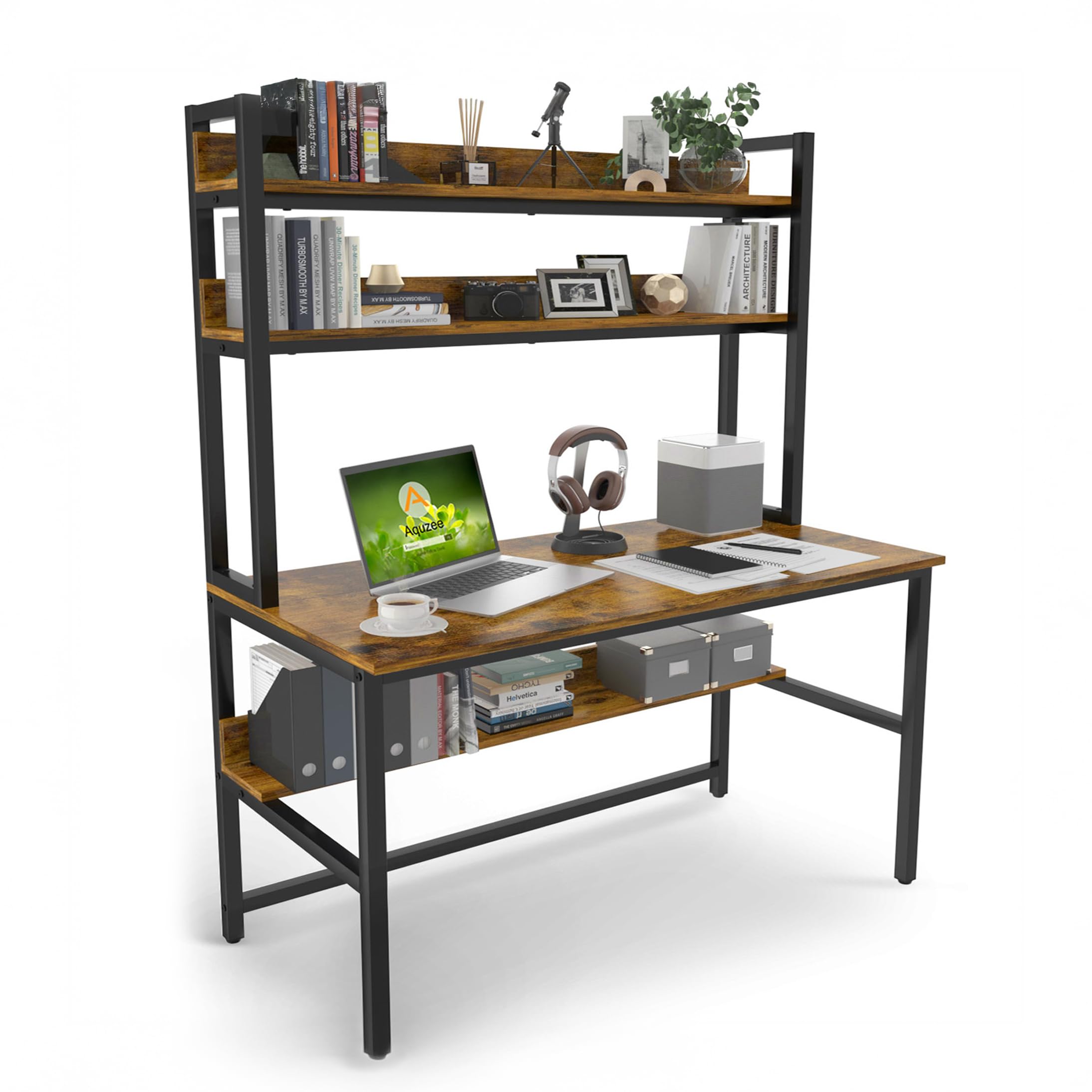
Three shelves, each 47 inches wide, is what puts this desk at the top of our list. Plenty of hutches in this group are really a monitor riser with a lip on top; the Aquzee gives you a genuine bookcase over your keyboard. At 23.6 inches, the desktop is also the deepest straight work surface here, and that is the part we appreciated most — a monitor pushed back toward the wall still leaves room for a keyboard and a notebook in front of it.

The hutch shelves are 6 inches deep, and that figure decides what lives up there. Standard novels sit spine-out with space to spare, a row of small boxes works, a speaker works. A coffee-table book, a storage bin or a printer does not, and it is worth being honest with yourself about which pile you are actually trying to lift off the desk.

The frame is rated to 500 pounds and the steel legs are 1.18 inches across, which is why it does not shiver when you type hard or lean on the front edge. The desktop is finished in walnut over engineered wood, and the whole thing reads as furniture rather than as a kit. What we noticed after a while is the symmetry: three full-width shelves instead of a tower stacked at one end, so two people sharing this desk get equal access to the storage.

Assembly is quoted at about 20 minutes for two people, and the parts arrive labeled for it — the panels and the fasteners are numbered, which is more than several desks here manage. Do not expect to finish it alone in the time on the box; sorting hardware and getting the hutch square takes most of an hour.

Bottom Line: Our pick for most people: the most usable hutch storage here, on a desktop deep enough to actually work at.
#2

Best Add-On Hutch

IOTXY 2-Tier Desktop Hutch

IOTXY 2-Tier Desktop Hutch

9.3/10 Outstanding
  • Frame: Steel with MDF shelves
  • Included: 5 grid hooks, anti-tip hardware
  • Monitor Clearance: Fits up to 27 in
  • Overall Dimensions: 7.9"D x 45.3"W x 38.6"H
Check Price on Amazon

Pros

  • Fits over a monitor up to 27 inches
  • Grid panel with five hooks included
  • Steel frame with double-layer support
  • Anti-tip wall hardware in the box

Cons

  • Only 7.9 inches deep

If your desk is fine and your desktop is buried, this is the piece to buy. It is a hutch in the original sense: a 45.3-inch steel-and-wood frame that sits on the desk you already own, with a bottom opening sized for a monitor up to 27 inches and two tiers above it for everything that has been colonizing your keyboard tray.

The grid panel at the back is what sold us. It works like a pegboard, and the five hooks in the box turn dead shelf space into somewhere to hang headphones, a cable coil, scissors, a dust brush — the small things that otherwise live loose in a drawer. Both tiers hold books and a speaker; at 7.9 inches deep this is a display and storage shelf rather than a place to stack bins, and that is the right call for a topper that has to straddle a monitor stand.

Height is the number to respect. The frame stands 38.6 inches above the desk, which puts the top tier well over a seated eyeline, and the anti-tip brackets that come with it are the reason that is fine rather than worrying. Use them. On a glossy desktop the feet can skate a little, and four adhesive pads take care of that for good.

It goes together with the supplied tools, and at just under 26 pounds one person can lift the finished frame into place without help. The thing not to skip is the tape measure: 45.3 inches of hutch on a 40-inch desk is a mismatch you will notice every single day.

Bottom Line: The best way to add hutch storage without replacing a desk you like, as long as you have 45 clear inches of desktop.
#3

Best Budget Pick

Snughome 44.9-Inch Desk Shelf

Snughome 44.9-Inch Desk Shelf

9.0/10 Outstanding
  • Tiers: 3
  • Layout: Ladder shelves, left or right
  • Shelf Thickness: 0.5 inches
  • Overall Dimensions: 44.9"L x 9.8"W x 29.5"H
Check Price on Amazon

Pros

  • Three tiers with reversible left or right layout
  • Top tier reachable from a chair
  • Warm rustic finish, not another black gaming shelf
  • Tools and clear instructions in the box

Cons

  • L-shape needs clear space at one end

Most desktop hutches spread their storage across the whole width. This one stacks it at one end: three tiers climb in an L from a single side panel, leaving the other half of the desk clear for a monitor. The instructions cover building the ladder on the left or the right, which is the kind of flexibility you only appreciate after you have rearranged a room twice.

At 29.5 inches tall it tops out below eye level for a seated worker, so the top tier is reachable without standing up — rarer than it sounds among the taller hutches here. The 9.8 inches of depth clears a keyboard pushed back and holds a decent row of books or a plant. Panels are half an inch thick, which is fine for paperbacks, a speaker and a few ornaments and is not the shelf to load with hardbacks.

The finish is the specific argument for it: rustic brown panels in a matte black frame, which reads considerably warmer than the all-black metal furniture that dominates this category. If the desk sits in a living room rather than a spare bedroom, that matters as much as another inch of shelf.

Where it gives ground is the shape. An L-shaped topper needs clear space at one end of the desk and a free stretch of surface to stand on, so on a corner desk, or one with a tower parked at the side, it fights for the same real estate. On a plain 48-inch desk with nothing at either end, it is the least fussy way to double your shelf space.

Bottom Line: For a plain desk that needs shelving at one end, this is the one we reach for, and it looks warmer than the black gaming builds here.
#4

Best for Wide Setups

SEDETA 78.8-Inch Desk with Hutch

SEDETA 78.8-Inch Desk with Hutch

9.2/10 Outstanding
  • Lighting: RGB strip, app and remote
  • Upper Storage: Monitor stand and 2 large shelves
  • Weight Capacity: 300 lb
  • Overall Dimensions: 21.6"D x 78.8"W x 60"H
Check Price on Amazon

Pros

  • 78.8-inch top takes two monitors plus speakers
  • Raised monitor shelf lifts screens to eye level
  • 300-pound steel frame
  • CPU holder keeps the tower off the floor

Cons

  • 88.7 pounds and an evening to assemble
  • Needs a long wall

Six and a half feet of desk is a commitment, and this is the only pick here that makes it. At 78.8 inches wide it swallows two monitors, a set of speakers and a second screen without anything hanging over an edge. The hutch above is the reason to choose it over a plain 78-inch table, because that is where the speakers and the collectibles go once the desktop is full.

The upper section is a raised monitor shelf plus two large side shelves, and the monitor shelf earns its keep ergonomically: screens sit higher, closer to eye level, and the space underneath takes a keyboard and a controller. We were less excited by the light strip. Sixty thousand colors and 29 modes through an app is a lot of engineering for something most of us set to warm white and then never touch again.

Sturdiness is where the size pays you back. The frame is steel, the rating is 300 pounds, and the whole thing is heavy enough that it stays where you put it rather than walking across the floor when you bump the corner. What it asks in return is patience: two people, an evening, and a plan for where it lands before the box comes inside.

The CPU holder and the spacing between the two side shelves are what make cable tidying easier than on a plain desk — you can get the tower off the floor and still reach the ports without crawling underneath. If the wall is long enough, that is the whole setup solved in one purchase.

Bottom Line: The widest desk here, and the one we suggest when two monitors plus speakers all need a home above the surface.
#5

Best Corner Desk

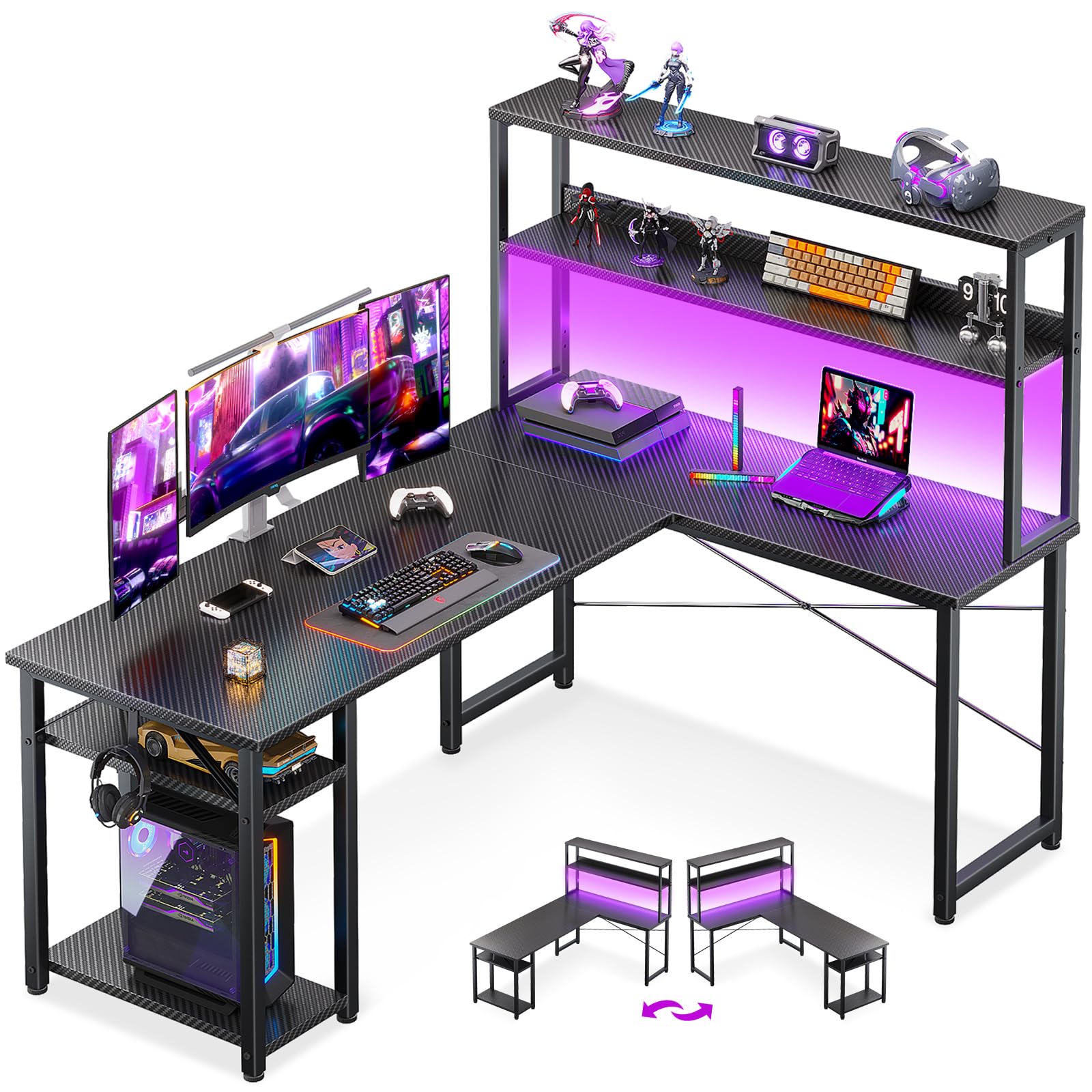
ODK 53-Inch L-Shaped Desk with Hutch

ODK 53-Inch L-Shaped Desk with Hutch

9.2/10 Outstanding
  • Included: CPU stand, headphone hook
  • Materials: Metal frame, MDF top
  • Upper Rack: 2 tiers, two build methods
  • Overall Dimensions: 39.37"D x 53.15"W x 29.9"H
Check Price on Amazon

Pros

  • Upper rack builds in two configurations
  • Deep L-footprint for a genuine corner
  • CPU stand and headphone hook included

Cons

  • Instructions are the weak part of the build
  • Needs a genuine corner, not a flat wall

The two-tier rack above this desk can be built two ways, and that is the most interesting thing about it. Assembled one way it is a shelf; assembled the other it sits back and behaves more like a monitor riser with storage above. On a corner desk, where one arm is for the screen and the other is for everything else, having the overhead storage follow your choice is worth more than another fixed shelf.

The L is a substantial one — 53.15 inches down one side, 39.37 down the other — so it fills a real corner instead of perching a token return beside a chair. Dual monitors and a laptop fit without crowding. The CPU stand on the left lifts the tower off the carpet, which is where the dust and the vacuum live, and the iron hook on the right is the one place in this group to hang headphones at arm's length instead of shoving them aside to reach the mouse.

What you give up is floor space and simplicity. A footprint this deep needs an honest corner and will not tuck under a window ledge. Raising the rack into position takes a second pair of hands, and the instructions are the weakest part of the package — working from the labeled parts rather than the prose got us there faster.

The black powder-coated finish is plain rather than stylish, and on a desk this size that is the right instinct: it disappears under the equipment. Two people can carry and build it in an afternoon, and it settles into a corner without the wobble that taller single-run desks here can show.

Bottom Line: Our corner pick: an L-shaped top with overhead storage you can build to suit whichever arm you work on.
#6

Best for Small Rooms

Cyclysio 39-Inch Desk with Hutch

Cyclysio 39-Inch Desk with Hutch

9.0/10 Outstanding
  • Power: Built-in outlets, RGB strip
  • Side Storage: 5-tier, reversible
  • Weight Capacity: 100 lb
  • Overall Dimensions: 19.7"D x 39.7"W x 58.1"H
Check Price on Amazon

Pros

  • Fits a 39-inch wall gap
  • Reversible five-tier side tower
  • Hutch above a raised monitor stand
  • Outlets and RGB strip built in

Cons

  • 100-pound limit, lowest of the full desks here
  • Instruction sheet is confusing

Thirty-nine inches is not much desk. It is, however, enough for a monitor, a keyboard and a laptop if the storage goes vertical, which is exactly what this one does: a hutch above the monitor stand and a five-tier shelf tower beside it. In a room where a 55-inch desk would block a door, that is the difference between a workspace and no workspace.

The tower is the useful half. Five adjustable tiers give you somewhere for the CPU, a console, files and a plant without any of it landing on the desktop, and because the tower is reversible the whole thing works against a left-hand or right-hand wall. At 58.1 inches overall it is a tall, narrow object rather than a broad one, and that proportion is why it slots into a bedroom.

Two things to weigh. The stated limit is 100 pounds, the lowest of the complete desks here, so a heavy tower plus two monitors plus a printer needs thinking about before anything goes up. And the instruction sheet is where the build slows down — the light strip and the outlets are the easy part; the shelf tower is where the evening goes.

Set against the rest of the set, this is the pick that trades surface for height, and in a small room that is the right trade to make. The outlets and the light strip are what a teenager will like about it; the adjustable shelving is what keeps it useful once the novelty wears off.

Bottom Line: For a bedroom wall where nothing else fits, we point to this one: 39 inches wide, with a five-tier tower for everything else.
#7

Best Cubby Storage

REIBII 8-Shelf Desktop Hutch

REIBII 8-Shelf Desktop Hutch

9.1/10 Outstanding
  • Storage: 8 compartments, 2 fabric drawers
  • Anchoring: Anti-tip wall brackets included
  • Weight Capacity: 100 lb
  • Overall Dimensions: 10"D x 37"W x 31"H
Check Price on Amazon

Pros

  • Eight compartments plus two drawers
  • 10-inch depth, deepest topper here
  • Adjustable dividers for taller items
  • Anti-tip wall brackets included

Cons

  • Fabric drawers, not solid wood

Eight compartments and two drawers across 37 inches, and it is the only pick here that closes some of your clutter behind a front instead of putting it on display. On a dorm desk or a shared surface, that difference is the whole purchase: a shelf shows the mess, a cubby hides it.

The dividers slide, so a compartment can be opened up for a tall box or a stack of paper, and the bottom opening takes a 27-inch monitor, which is the number to check first. At 10 inches it is also the deepest desktop hutch in this group, and that is what separates a shelf that holds a printer from one that holds a paperback.

It arrives with anti-tip brackets, and on a 31-inch unit loaded with books we would use them without hesitating — this is furniture that ends up heavier at the top than at the bottom, and a wall strap is the difference between a wobble and an accident. The rest of the frame reflects the price honestly: three reinforced vertical panels keep it square, and it stands still once it is loaded.

The drawers are fabric with wood inserts rather than solid wood, which is the compromise at this weight. They hold pens, cables and a stapler happily and will sag under a ream of paper. As a hutch you add to a desk you are keeping, it does that job better than any other pick in this set.

Bottom Line: Closed storage is the reason we keep this one on the list: eight compartments and two drawers in a 37-inch footprint.
#8

Compact gaming desks

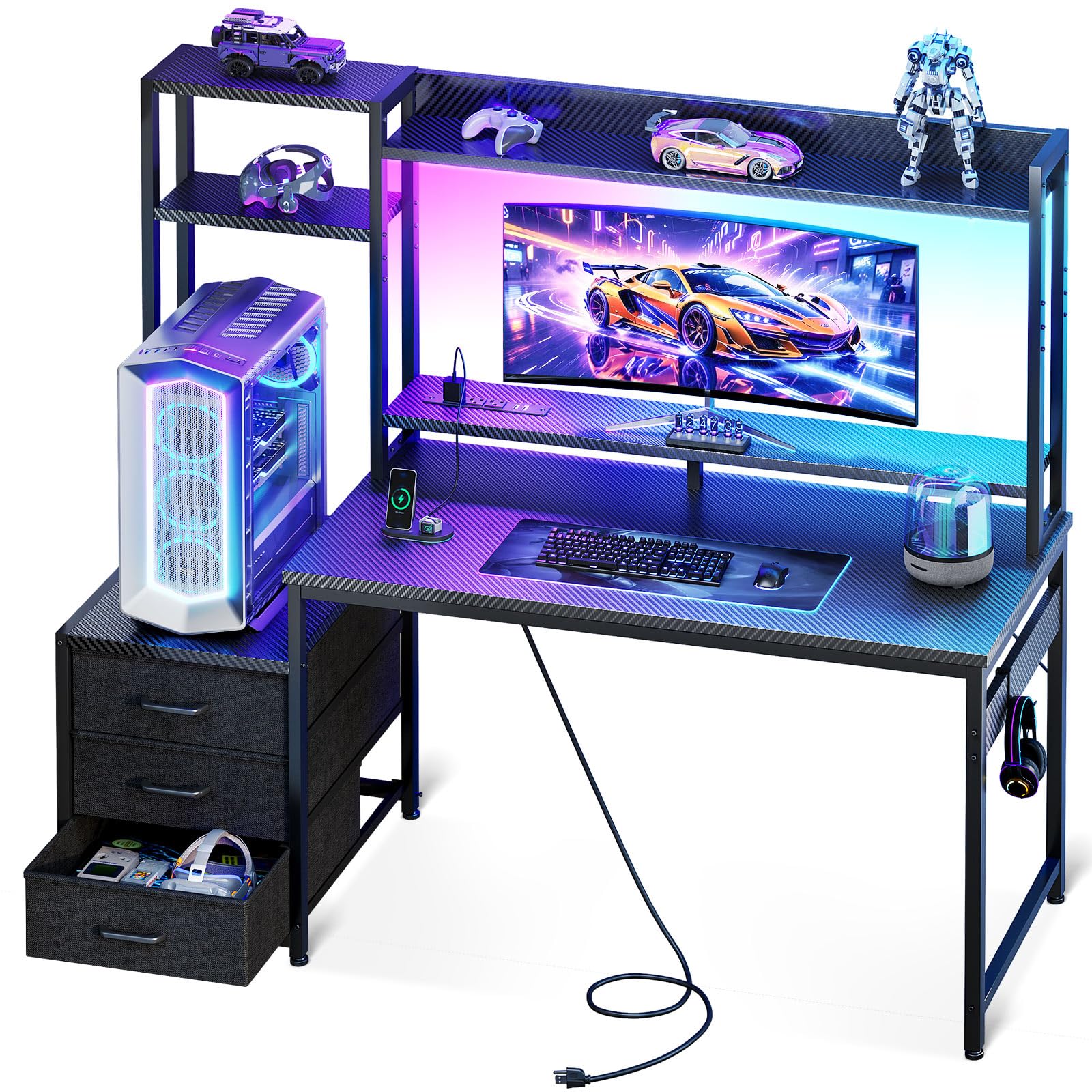
Casaottima 48-Inch Desk with Hutch

Casaottima 48-Inch Desk with Hutch

9.3/10 Outstanding
  • Power: USB charging ports
  • Drawers: 3 fabric drawers
  • PC Shelf: 11.6 inches wide
  • Overall Dimensions: 47.24 x 18.9 x 59.65 inches
Check Price on Amazon

Pros

  • Three drawers plus an overhead hutch
  • 11.6-inch PC tower shelf at desk height
  • USB charging built into the desk
  • Shelves adjust to fit your gear

Cons

  • 18.9-inch desktop is shallow for paperwork

Drawers, a hutch, a tower shelf and a light strip in a 47-inch desk: this is the bundle pick, and the bundle is the reason it earns a place. Three fabric drawers take the paper, cables and controllers that otherwise migrate across a desktop, and the overhead hutch keeps the monitor and speakers up where they belong rather than crowded against the keyboard.

The 11.6-inch PC shelf is the detail we kept coming back to. Putting the tower on a stand at desk height gets it off the floor and out of the dust, and it makes the machine part of the setup instead of something you kick in the dark. Check the width against your case before ordering — 11.6 inches covers most small and mid-tower builds and will not take a full-size workstation case.

The trade-off is depth. At 18.9 inches the desktop is on the shallow side, and once a monitor is pushed back there is just about room for a keyboard and your wrists. That is fine for gaming and tighter if you spread papers out to work. The light strip and the USB ports are the fun part of the package; the drawers are the part you use every day.

The fabric drawers are the piece we would change. They are light, they hold their shape, and they are not the place for anything heavy — a stack of textbooks will bow the bottom over a few months. Build it with two people and it goes together without drama, and the labeled parts make the overhead section less frustrating than on some desks here.

Bottom Line: The compact gaming bundle: drawers, a hutch and a tower shelf from one box, which is what we suggest for a teenager's room.
#9

Bedroom study desk

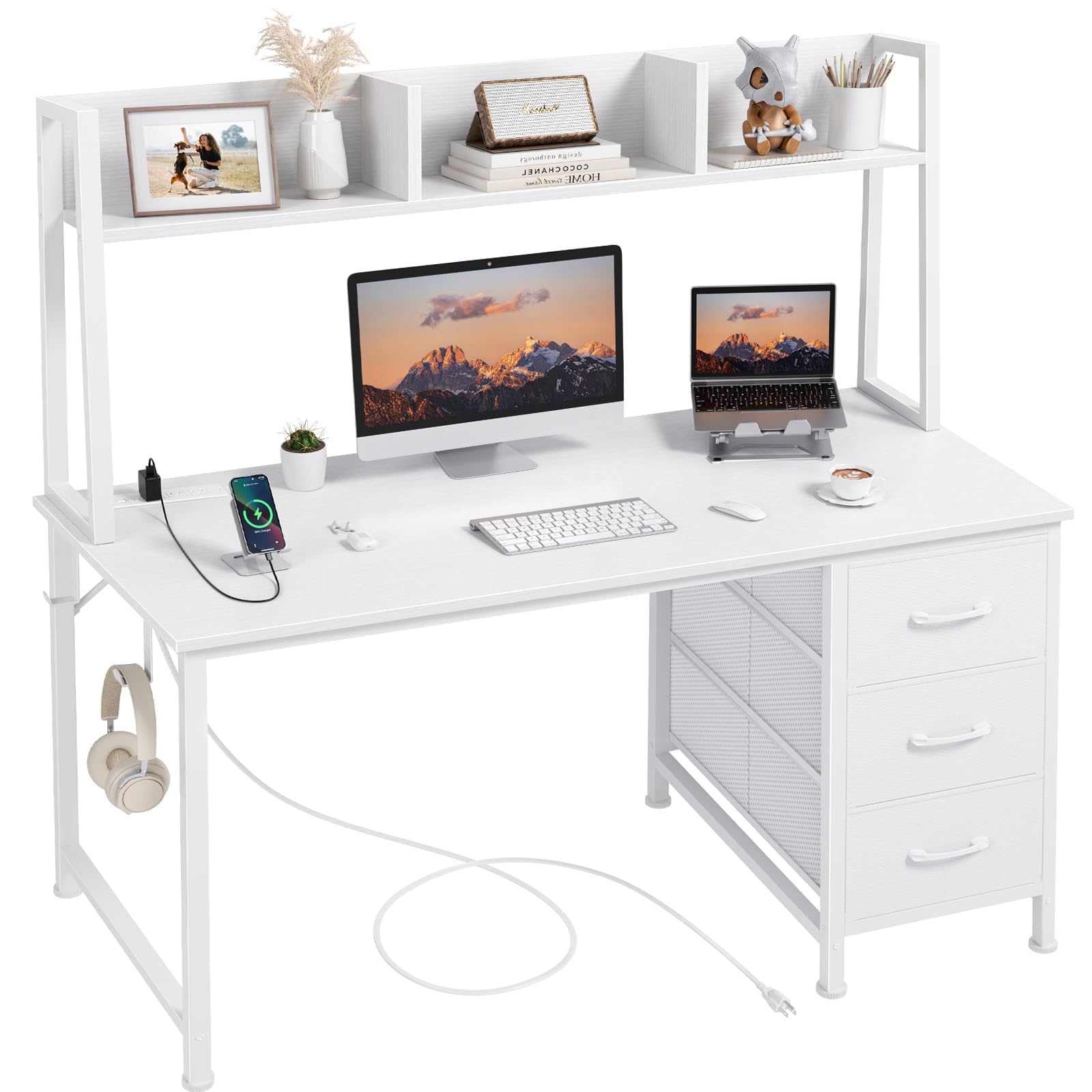
DLisiting 47-Inch White Desk with Hutch

DLisiting 47-Inch White Desk with Hutch

8.8/10 Excellent
  • Weight: 40 lb
  • Drawers: 3 fabric drawers
  • Outlets: 3 AC outlets, 2 USB ports
  • Overall Dimensions: 18.9"D x 47.2"W x 56.1"H
Check Price on Amazon

Pros

  • White finish suits bedrooms and small offices
  • 3 AC outlets and 2 USB ports
  • Adjustable leg pads for uneven floors
  • Shortest overall height of the desk builds here

Cons

  • Hutch is a single fixed shelf

White, 56 inches tall and fitted with three drawers and a power strip, this is the one for a bedroom that has to look like a bedroom. The frame is metal, the panels are engineered wood finished in white, and next to the black gaming furniture in this group the effect is a desk that settles into a wall instead of announcing itself.

Three AC outlets and two USB ports sit on the desktop, which is genuinely useful when the nearest wall socket is behind a bed. The leg pads adjust, so an old floor with a slope in it does not turn into a wobble every time you lean on the front edge. At 56.1 inches overall it is also the shortest of the desk-and-hutch builds here, so the top of the hutch is reachable from a chair and the whole thing feels less looming in a low room.

Depth is 18.9 inches, the same shallow figure as several desks in this set, so plan on a keyboard and a notebook rather than a spread of drawings. That is the compromise that buys the compact footprint, and it is the right one for a teenager's room where the desk doubles as a homework station and a shelf.

Two hooks on the side take a headphone and a bag, and the cable from the power strip runs down the rear leg rather than across the floor. Put it together in about the time quoted and you have a desk that looks like it cost more than it did — which, for a first proper desk, is most of the battle.

Bottom Line: The white one, and our pick if the room is a bedroom rather than an office: reachable hutch, real outlets, calm finish.
#10

Sit-stand desks

CHSSIH Clamp-On Desk Shelf

CHSSIH Clamp-On Desk Shelf

8.6/10 Excellent
  • Clamp Range: Tabletops 1 to 2.75 in thick
  • Weight Capacity: 33 lb
  • Monitor Clearance: Fits up to 28 in
  • Overall Dimensions: 7.9"D x 39.3"W x 37.4"H
Check Price on Amazon

Pros

  • Clamps on with no drilling
  • Rises with a sit-to-stand desk
  • Adjustable shelves clear a 28-inch monitor
  • Leaves the desktop surface free

Cons

  • 33-pound capacity across both shelves
  • Fiddly hardware during assembly

Two C-clamps, a steel column and two shelves: this hutch attaches to the edge of the desk you already have and comes off again without a single hole. That makes it the answer for a rented apartment, a desk you did not choose, and — more usefully — any sit-to-stand desk, because the whole thing travels with the surface instead of staying pinned to the wall behind it.

The clamp takes tabletops from 1 to 2.75 inches thick and tightens by hand, so there is no drilling and no hardware to lose. Both shelves adjust up and down the column, and the lower one clears a 28-inch monitor, the largest opening in this set. Because nothing rests on the desktop, the surface stays entirely yours, and on a narrow desk that is a bigger gain than another shelf.

Assembly is where it costs you. The column and the shelf brackets are fiddly, and the hardware is the part that tests your patience rather than your strength — give the first clamp an hour and accept help. Once it is tight it holds still, and the industrial look, with the open bracket sides and visible bolts, is deliberate rather than unfinished.

One check before you buy: the clamp needs a clear lip on the desk edge. A desk with a full-width drawer unit right under the top, or a rounded waterfall edge, is a no. Measure the thickness of the top and look at what is underneath it before you order.

Bottom Line: For renters and standing desks, this is the clamp-on we recommend: storage that rises with the surface and leaves no holes.

How We Tested (and Assembled, and Reloaded) 12 Computer Hutches

We started by pulling every hutch we could find that published real interior dimensions rather than just an outer width, then filtered for desks between 47 and 60 inches across, since that covers most home-office setups. Anything that couldn't tell us the clearance under the top shelf or the depth left over for a keyboard got cut before it shipped. That left 12, ranging from slim monitor toppers to units with drawers.

Each one was assembled solo at a desk in a home office, on a Saturday morning, with only the tools in the box. I timed the build and logged every time I had to back a screw out because a bracket and pilot hole wouldn't line up, whether the included hex key could actually reach a cam bolt tucked into a blind corner, and whether the hardware came labeled or as a pile of near-identical screws. Two hutches needed a stubby screwdriver and a second pass; one was standing in under half an hour.

Once built, every hutch went onto the same desk and stayed there. We loaded the shelves with a monitor, a printer, a router, and the usual stack of books, then pushed the top corners and typed hard to see how much the frame moved, and set a few up over carpet to check whether they rocked and whether the feet adjusted. After install we measured how much desktop was left — whether a full keyboard and mouse still fit, and whether a 27-inch display cleared the shelf above it or ended up wedged beneath it. Over six months we watched for sagging shelves, chipped edges, and fasteners working loose, and by the end value came down to condition rather than the sticker.

How to Choose the Right Computer Hutch

Start with the desk you already have

If your desk is sound and at least 24 inches deep, an add-on hutch is the cheaper, faster answer. It uses the six to ten inches behind the keyboard, which is dead space you are not working in anyway, and it leaves the front of the surface alone. Below about 19 inches of desktop depth, a topper starts eating the room your wrists need and a complete desk with an integrated hutch is the better buy, because the storage grows upward without taking depth from you. Clamp-on versions suit sit-to-stand desks and anything you cannot put a screw into.

Measure the opening, not the hutch

The number that decides whether a hutch works is the clearance underneath it, where your monitor actually lives. Diagonal screen size tells you nothing here; the height of the monitor on its stand does. Most desktop hutches in this set clear a 27-inch screen, one takes 28, and the full desk-and-hutch builds take whatever you set on the surface. If you use a monitor arm instead of a stand, clearance matters less and shelf depth matters more.

Shelf depth decides what you can store

Six inches of shelf is a bookcase: novels sit spine-out with room to spare, and a coffee-table book, a storage bin or a printer does not. Nine to ten inches is the deepest any topper here goes, and that is roughly the point where a shelf starts taking boxes and a large speaker. On a full desk-and-hutch build, deeper shelves also push the front edge closer to your keyboard, so the model with the most storage is not automatically the one that feels best to sit at.

Stability and the tall-hutch problem

Putting weight above the desktop raises the whole unit's center of gravity, so the taller the hutch, the more the anchoring matters. Fit the anti-tip bracket when one comes in the box, level the feet on a floor that is not flat, and keep the heavy items on the lowest shelf. On medium-pile carpet, a desk with thin legs can feel less planted than it does on a hard floor; a rug pad or a set of wider feet is usually enough to settle it.

Frequently Asked Questions

Final Verdict

For most people the Aquzee is the answer. Three full-width shelves, a desktop deep enough to spread out on, and a frame rated well past anything a home office puts on it — it is the safest recommendation in this group because storage and workspace are not competing for the same inches.

Two requirements change that. If a desk you already like is doing the job, the IOTXY adds the storage without the furniture. If you work standing up, the CHSSIH clamps on and rises with the surface. Everything else here comes down to width, a corner, or a budget, and there is a pick waiting on each of those.